avg —
Salad "Goat in the Garden"

Instructions
I prepare the salad ingredients. All vegetables get thorough washing; root vegetables peel. White cabbage can be replaced with napa cabbage (Peking cabbage) — napa doesn't need the pickling step. Any meat works for this dish — chicken, beef, turkey, ham — adjust per pantry.
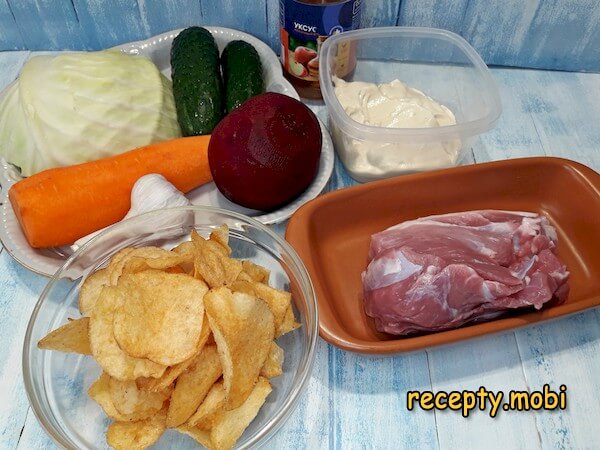
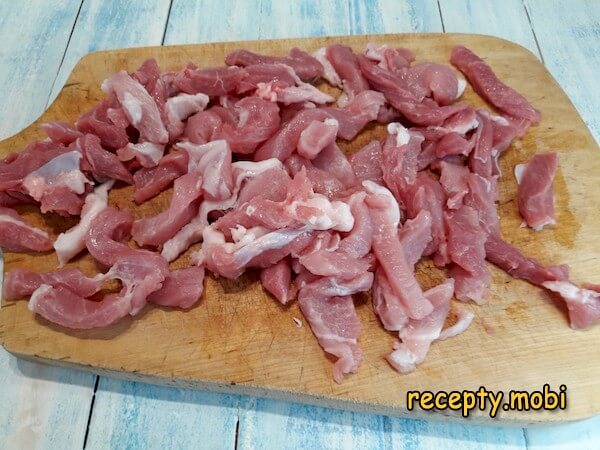
I cut the pork into thin short strips — matchstick-style pieces about 5 cm long.
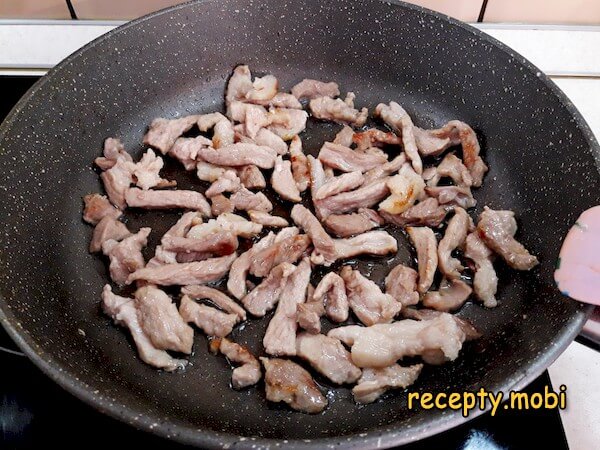
The strips fry in heated oil until just cooked through — about 4 minutes for thin pieces. The thinner the cut, the faster the cook.
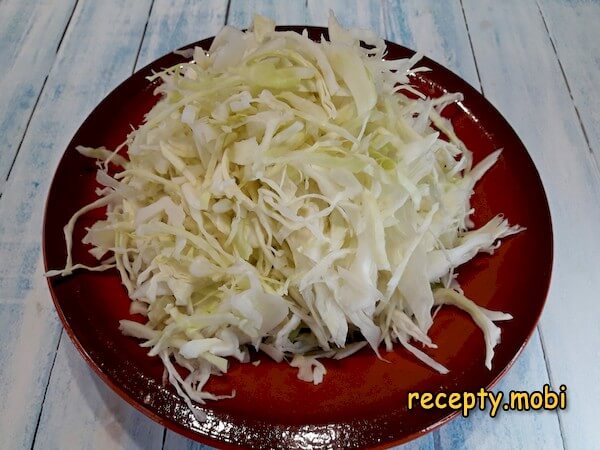
I shred the cabbage into very thin strips — uniform thinness is key for the pickle to penetrate evenly.
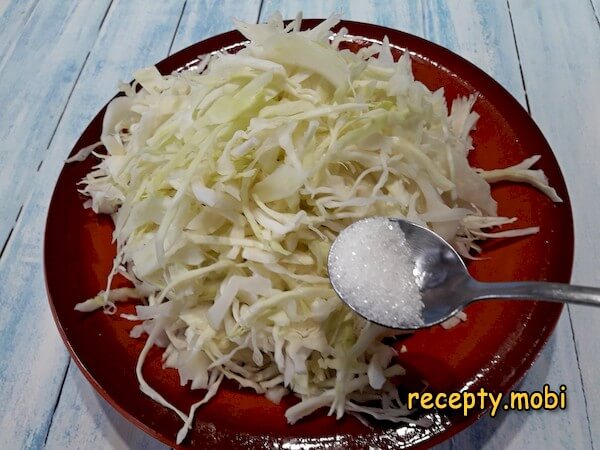
The shredded cabbage gets quick-pickled. I add salt (0.5 tsp) and sugar (0.5 tsp).
Then in goes the apple vinegar (0.5 tbsp).
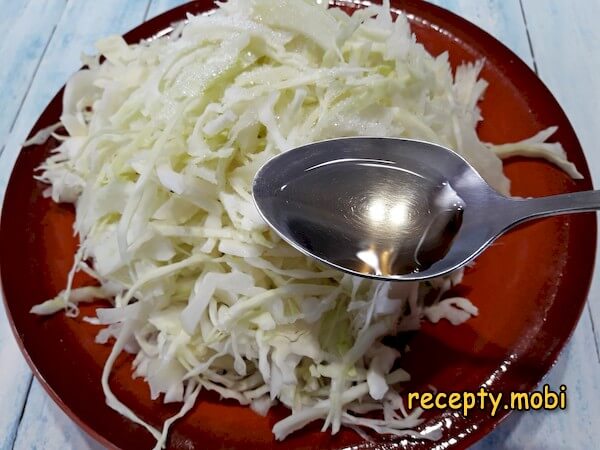
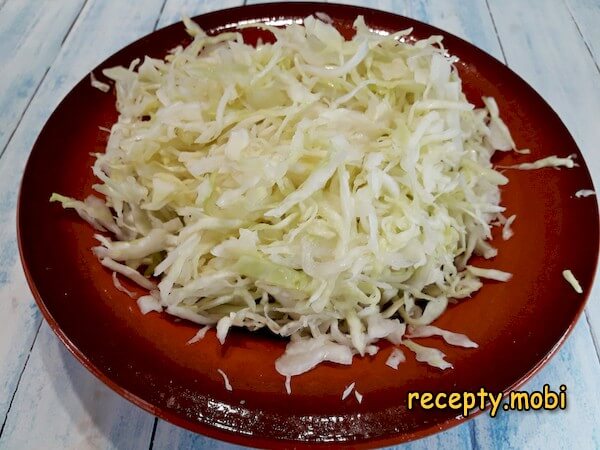
I mash the cabbage with my hands as I mix — bruising the fibres releases water and helps the marinade penetrate. The volume reduces noticeably as the cabbage softens.
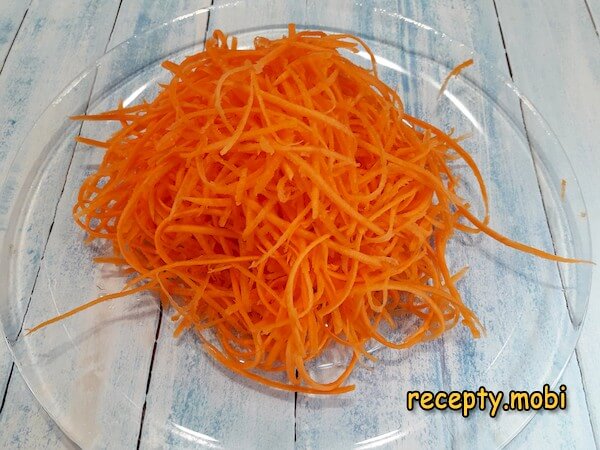
I grate the carrot into long strips using a Korean-style julienne grater. Juicy carrots don't need separate marinating — the natural sweetness shines through.
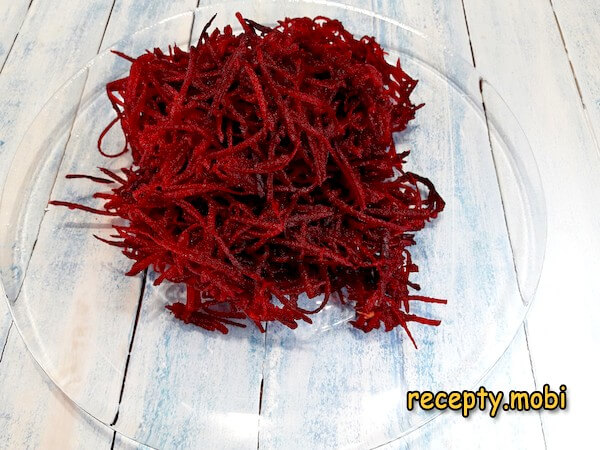
The beetroot grates the same way on the Korean grater. Juicy raw beetroot works perfectly here without pre-cooking.
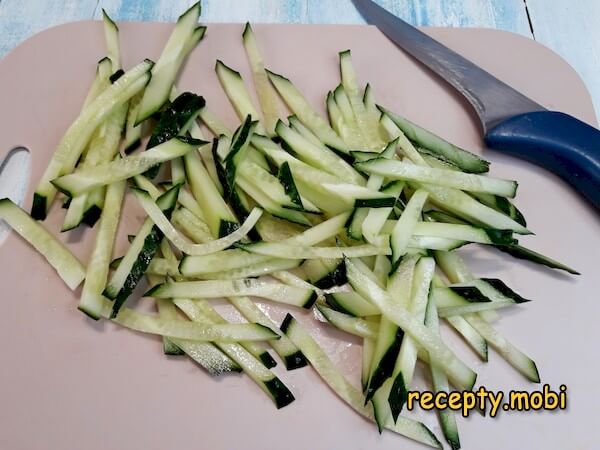
The cucumbers cut first into elongated rounds, then into thin matchsticks.
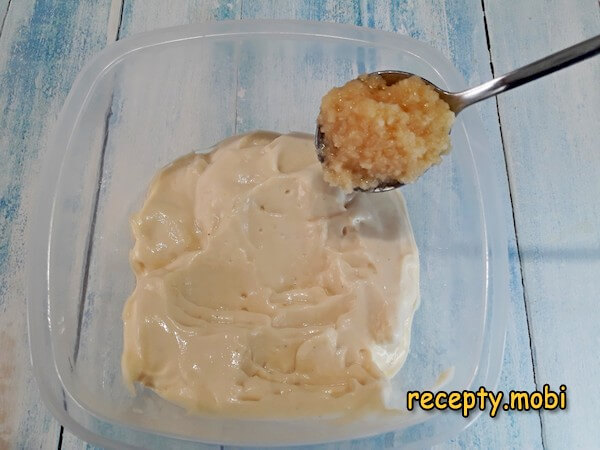
The dressing combines mayonnaise (preferably homemade) with garlic pressed through a press. Three cloves seems like a lot but distributes lightly across the whole salad — the garlic enhances rather than dominates.
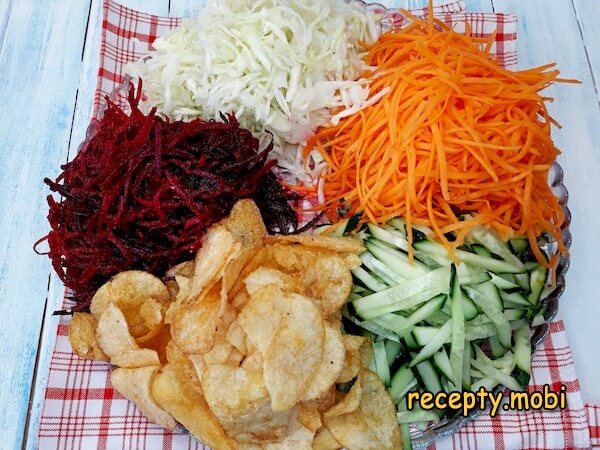
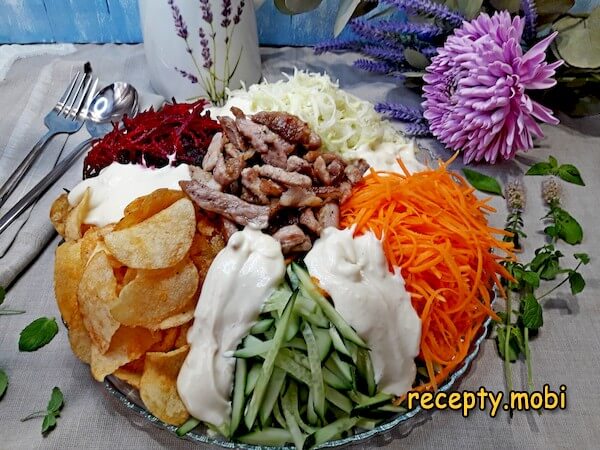
Time to plate. A wide flat dish with low sides is ideal — the visual presentation is the whole point. I arrange the vegetables and chips in coloured sectors around the perimeter, leaving the centre clear for the meat.
The fried meat goes in the centre as the focal point — the "goat" in the garden.
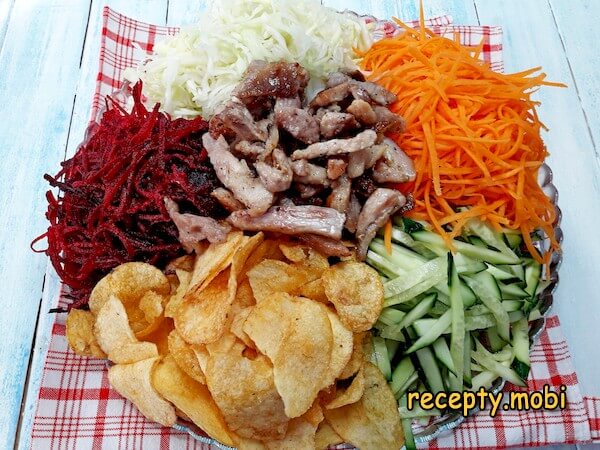
Two tablespoons of garlic-mayonnaise dressing form decorative dividers between the vegetable sectors — like garden paths between flower beds. The visual radiates outward from the meaty centre.Before serving, the salad stays unmixed. Each guest can either spoon a portion onto their plate (which can then be mixed individually) OR take just the sectors they like best — preserving the salad's structure for the next person. The "Goat in the Garden" experience is interactive: guests choose their adventure, and the salad stays bright, crispy, and beautiful until the last spoonful.


Tips
- 1
NEVER MIX BEFORE SERVING. Step 14 ends the assembly — that's where the salad must stay until the table. Mixing destroys three things at once: the visual presentation, the textural contrast (chips go soggy in seconds when touching mayonnaise), and the colour distinction. The "guests serve themselves" model is the correct interpretation. If you must pre-portion, do it on individual plates with the same sector layout in miniature.
- 2
CHIPS GO ON LAST AND SEPARATE. The potato chips are the textural punctuation — they must stay crispy. Add them in their own sector at step 12 right before serving (not earlier). Some hosts even keep the chips in a separate small bowl and let guests sprinkle their own portion. Avoid pre-crushing the chips; large pieces add more dramatic texture than dust. For another beautiful festive layered salad worth comparing, see Olivier Salad with Sausage and Pickles.
- 3
RAW VS COOKED BEETROOT MATTERS. Raw beetroot grated on a fine grater (as in this recipe) gives crunchy texture and earthy fresh flavour — the right choice for "Goat in the Garden." Cooked beetroot would be too soft and would bleed colour into adjacent sectors. If raw beetroot tastes too earthy: a 10-minute marinade with the same sugar-salt-vinegar treatment as the cabbage softens the flavour. Most varieties (especially baby beets) are sweet enough to skip this step.
- 4
CUSTOMISE THE GARDEN. The vegetable selection is flexible — the principle is "varied colours and textures." Possible additions: red bell pepper strips (for a third red note), green peas (small green dots), corn kernels (yellow contrast), grated radish (white-pink), thin sliced apple (yellow-green crunch). The meat substitutes endlessly: smoked chicken, ham, sausage, cooked pork loin, even tofu strips for vegetarian variations. For another layered meat salad worth trying, try Layered Salad with Sausage and Potatoes.
FAQ
Why is it called "Goat in the Garden"? +
The name comes from the Russian-Ukrainian visual metaphor: a goat (the central meat mound) standing in a garden full of vegetables (the radiating vegetable sectors) — the picture every farmer worries about and every gardener prevents. The name is light-hearted and visually descriptive rather than literal — there's no goat meat in the recipe. The salad is sometimes called "kozel v ogorode" (the literal Russian translation) or simply "Garden Salad" in English-language contexts. Like many Soviet-era named dishes, the whimsical title became part of the cultural identity.
Can I make this vegetarian? +
Absolutely. Replace the meat with: thick-cut sautéed mushrooms (champignons or oyster), pan-fried tofu strips marinated in soy sauce, fried halloumi cubes (gives a different but excellent character), or roasted chickpeas (crunchy and protein-rich). The vegetable architecture stays identical; only the centre mound changes. For a vegan version, also swap the mayonnaise for a vegan equivalent — modern plant-based mayos work well in this recipe with no flavour compromise.
What kind of cabbage is best? +
White cabbage (regular green cabbage) is the traditional choice and gives the right amount of crunch when quick-pickled. Napa (Chinese/Peking) cabbage is the easiest substitute — softer, faster, no pickling needed (skip steps 5-7 entirely, just shred fine and add directly). Savoy cabbage works but its leafy structure is too delicate for the salad's robustness. Red cabbage adds dramatic colour but bleeds purple into adjacent sectors. Avoid coleslaw mix (pre-shredded) — too uniform and lacks the proper bite.
Can I prepare components ahead? +
Yes, with attention to timing. Day before: pickle the cabbage (it actually improves with overnight rest), grate the beetroot and carrot (store separately in airtight containers), cut the cucumbers (drain accumulated water before using), fry the meat (refrigerate). Same day: assemble 30 minutes before serving. Don't add chips until just before serving. Don't dress with mayonnaise until plating. The component-prep approach makes this an excellent party salad — minimal last-minute work.
- Comment
or post as a guest
Be the first to comment.