avg —
Samarkand Plov

Instructions
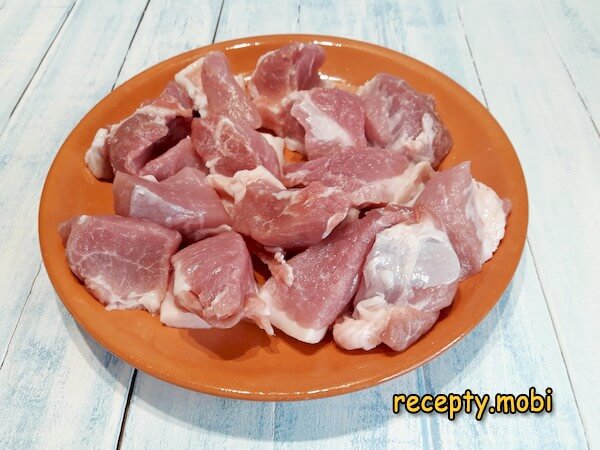
I prepare all the ingredients. Cut meat into LARGE pieces (3×3 cm cubes) — too-small pieces dry out during the high-heat cooking; too-large pieces don't cook through.
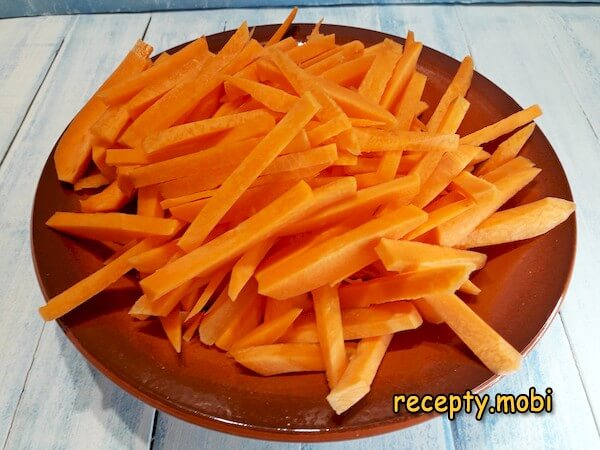
Carrots — DON'T grate. Cut into long thick strips (5 cm × 0.5 cm). The strip shape preserves carrot identity in the finished dish; grated carrots disappear into the rice and lose visual + textural presence.
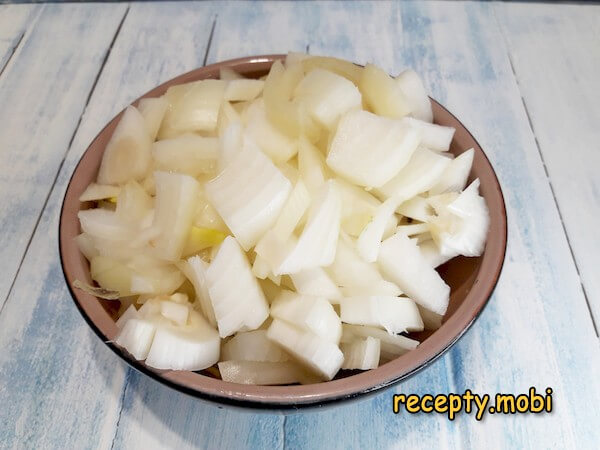
Cut onion into medium-sized random pieces (no specific shape required). Peel the garlic head from outer papery skin BUT keep cloves attached together — the whole head goes into the dish intact.
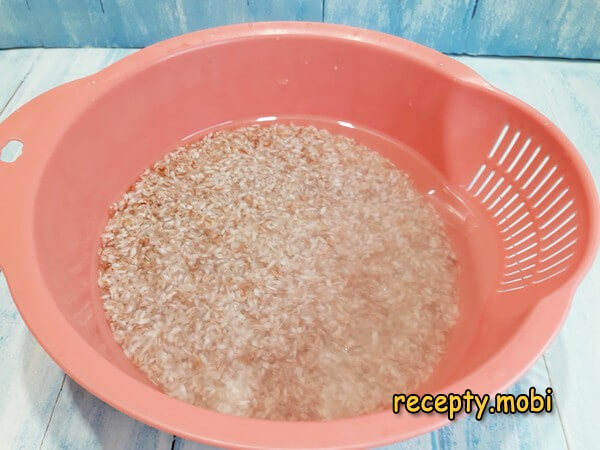
Rinse rice VERY thoroughly — up to 10 times until water runs CLEAR. Removes surface starch that would otherwise produce sticky porridge texture. This step is non-negotiable for proper plov.
Turn stove to HIGHEST heat. In a kazan or other thick-walled pot, heat the oil (or melt the tail fat). When fully hot, add the meat pieces.
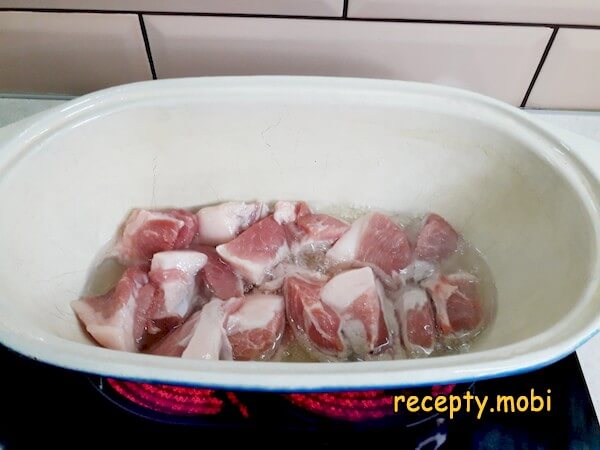
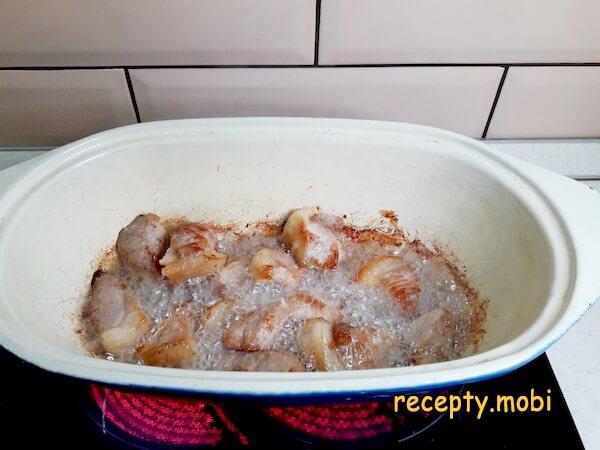
Fry the meat to golden crust formation — about 5 minutes. The Maillard browning is the foundation of plov's deep meaty flavour.
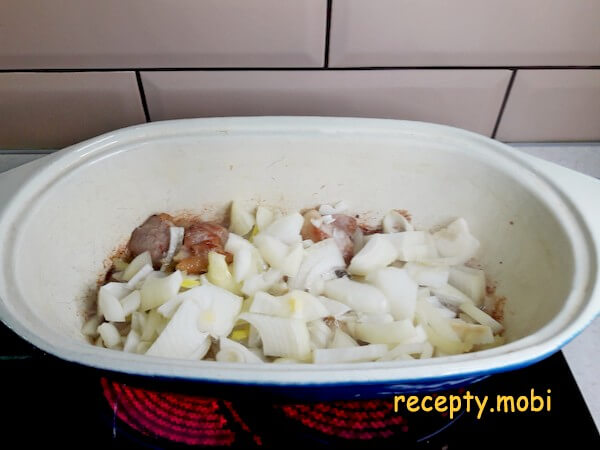
Add the chopped onion to the meat.
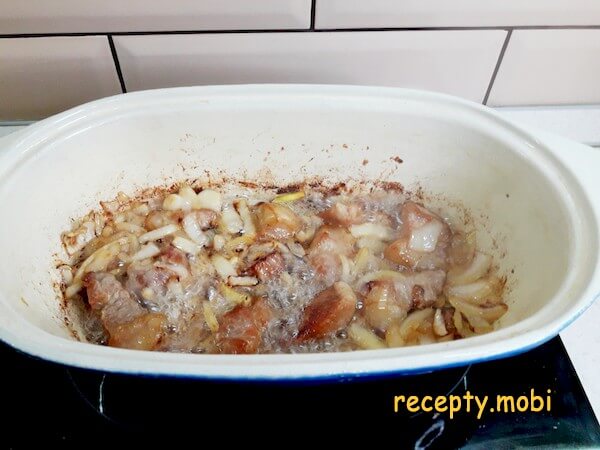
Fry until DEEPLY brown — 5-7 minutes. Going past "translucent" to "browned" is essential — this caramelisation gives plov its signature deep flavour profile. Pale onion = bland plov.
Add a SMALL portion of the carrot strips (1/4 of the total).
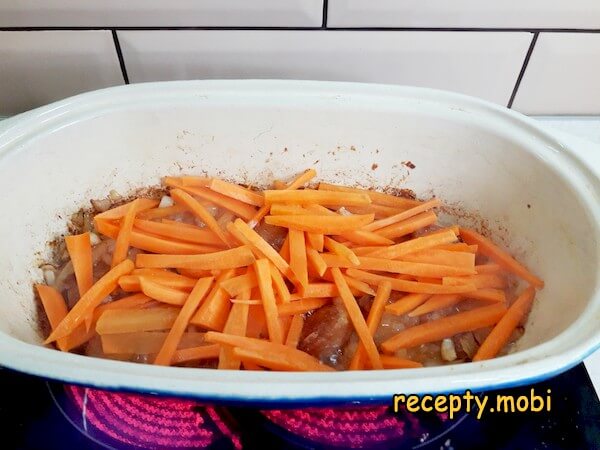
Fry briefly (2 minutes) — this initial carrot layer protects the bottom of the kazan from continued direct-heat burning during the next phase.
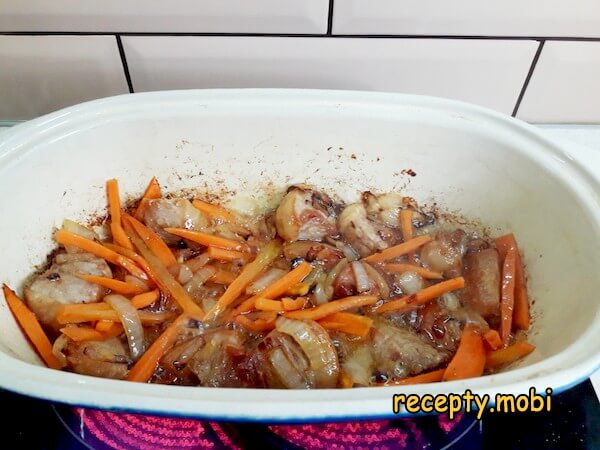
Add the remaining carrot strips.
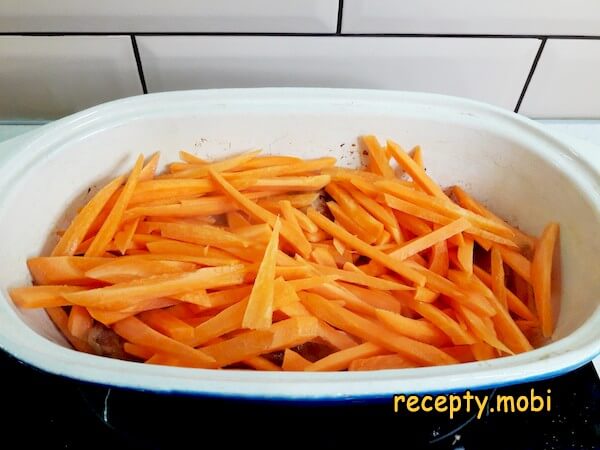
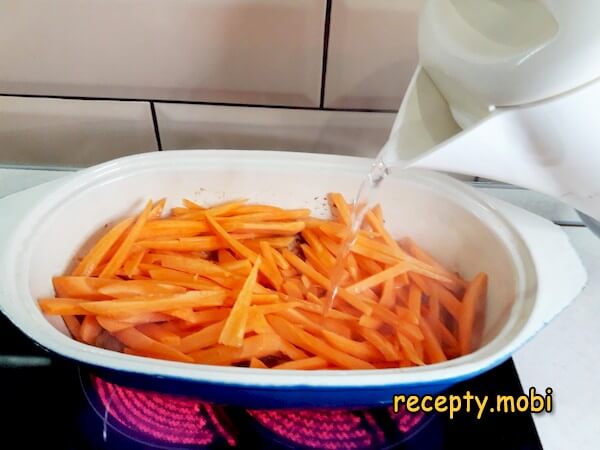
Immediately pour in 100 ml boiling water — start the steam-stewing phase. The carrots release their juice during this stage, contributing to the final broth flavour.
Add the plov seasoning (typical mix: cumin, coriander, dried barberries, paprika, sometimes turmeric — buy a pre-mix or assemble from individual spices).
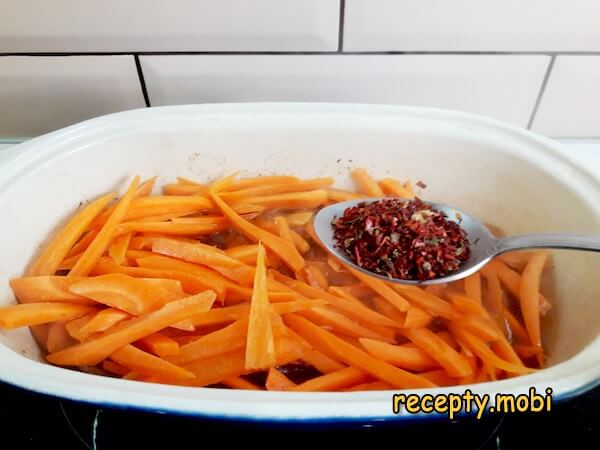
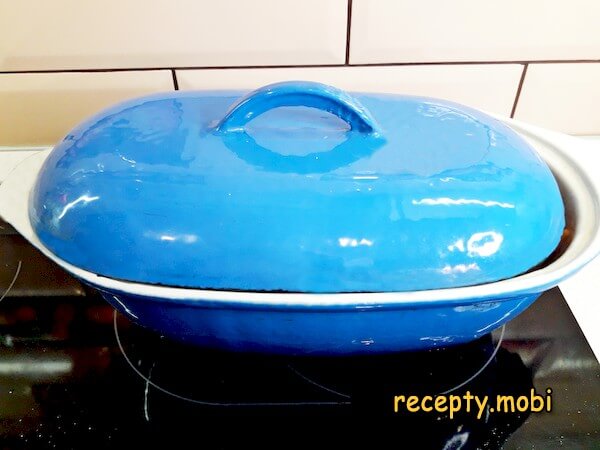
This stage is called "zervak" in Uzbek tradition (the meat-vegetable-broth foundation). Cover with lid, leaving a small gap. KEEP HEAT HIGH. Evaporate 7 minutes without stirring — the layers settle into proper plov structure.
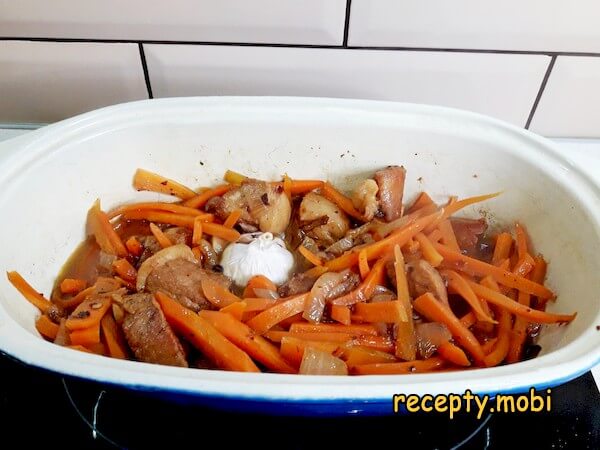
Place the whole garlic head (intact) on top of the zervak — it perfumes the dish during the final cooking phase.
Pour the rinsed rice over everything. Spread evenly to form a uniform top layer.
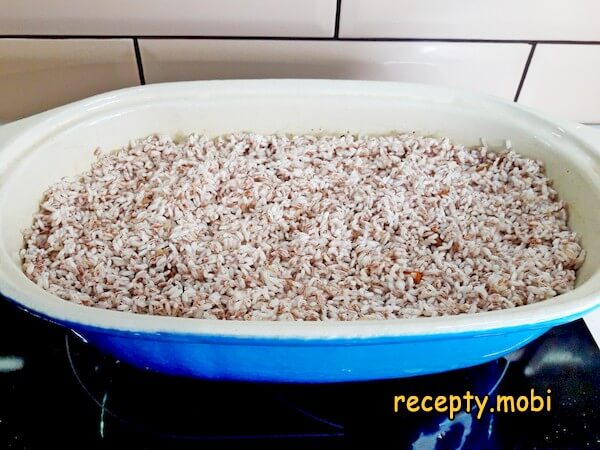
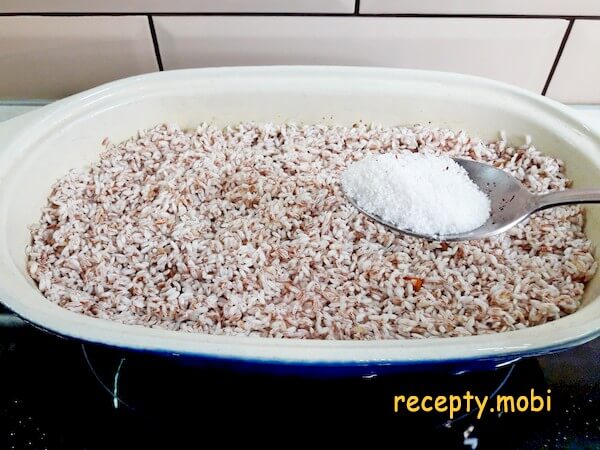
Add the salt — sprinkle evenly over the rice.
Pour in boiling water — but use a slotted spoon to break the stream's force, preventing the rice from being pushed around.
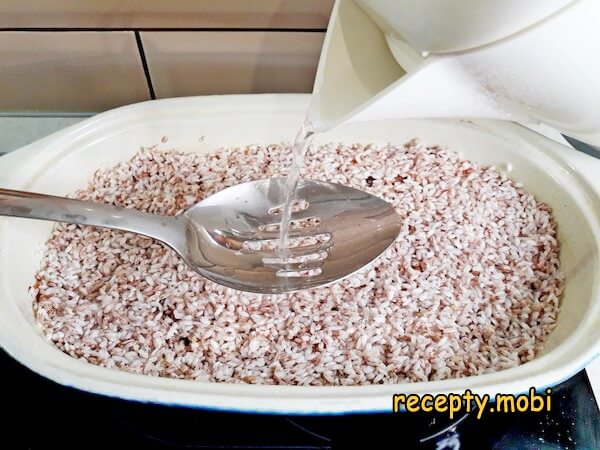
Liquid should reach 1-1.5 cm above the rice surface — this is the precise water depth for proper rice cooking.
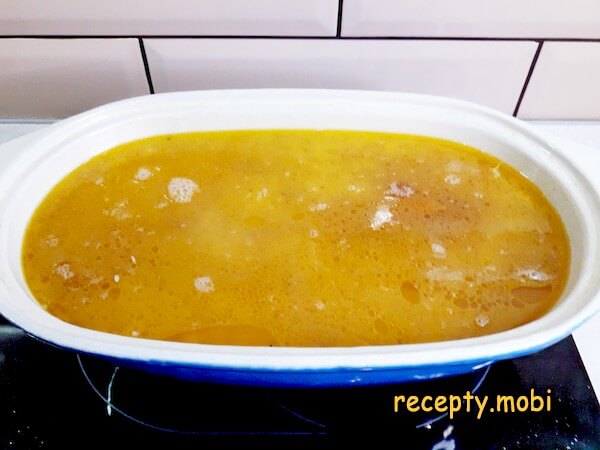
Cover with lid; KEEP HIGH HEAT. Cook 10-15 minutes — the water evaporates, leaving only the oil; the rice surface develops visible steam-vent holes.
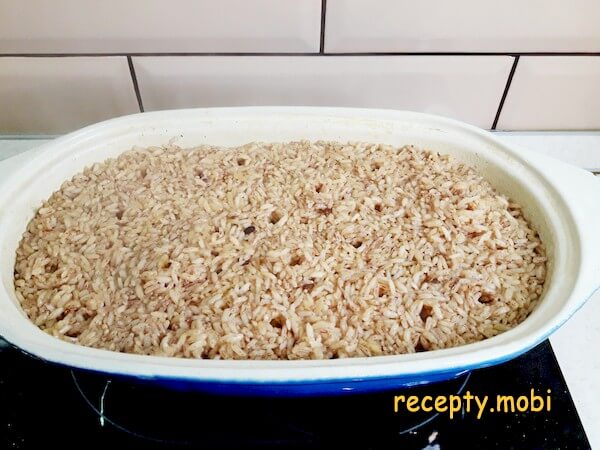
Gather the rice into a mound (without disturbing the lower meat-carrot layers). Avoid mixing the layers — preserves the Samarkand-style stratified structure.
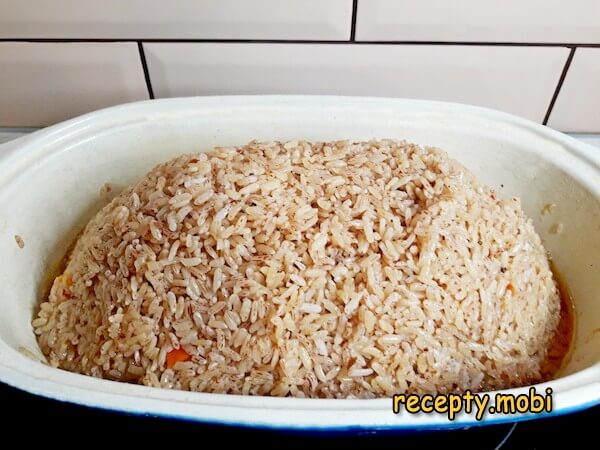
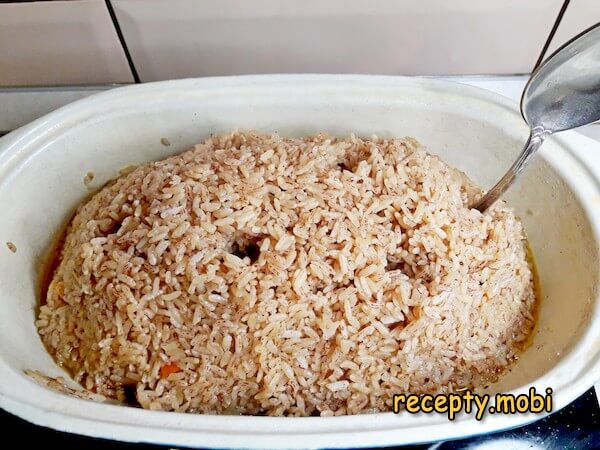
With the back of a spoon, make several deep holes through the rice mound — these allow steam to circulate freely during the final cooking phase.
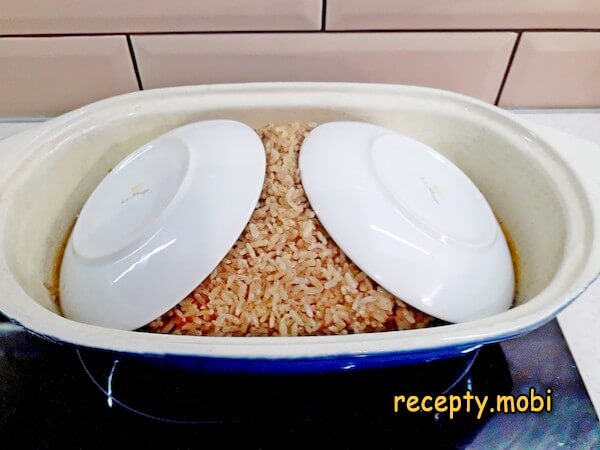
Cover the rice surface with small plates (or a single large plate) — creates additional steam-trapping. Then put on the kazan's main lid. NOW reduce heat to MINIMUM. Steam-finish 30 minutes.
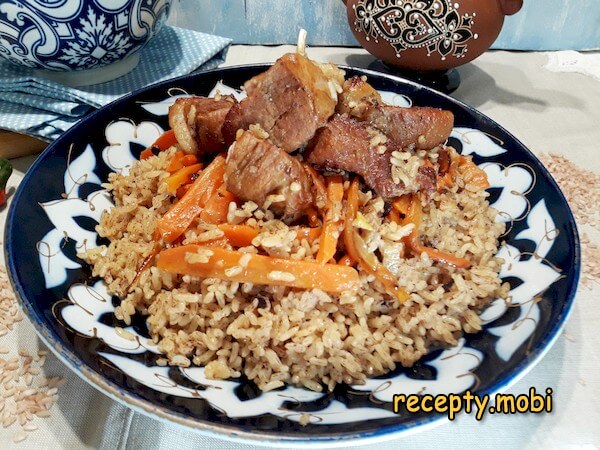
Samarkand plov is ready. Serve hot on a large communal platter, arranged in layers — rice on bottom, carrots in middle, meat on top. Pair with a fresh salad of tomatoes, herbs, and onions. Diners select preferred proportions of each component. Traditionally eaten by hand; many modern eaters prefer cutlery.Try it, bon appétit!


Tips
- 1
THE RICE WASHING IS NON-NEGOTIABLE. Step 4's "rinse 10 times until clear" instruction is the most overlooked yet critical step in plov making. Surface starch on rice is what causes "sticky porridge" plov — the characteristic failure of amateur attempts. Properly rinsed rice produces "grain-by-grain" plov where each rice grain is distinct, slightly chewy, perfectly steamed. Don't shortcut this — set the rice rinsing as background work while preparing other components. Use a fine-mesh sieve for efficient rinsing under running water.
- 2
THE HIGH-HEAT-THROUGHOUT IS SAMARKAND SPECIFIC. Many other plov recipes (Tashkent, Bukhara, Fergana styles) use a slow medium-heat approach. Samarkand uniquely uses HIGH heat throughout the cooking (only reducing to minimum for the final 30-minute steam phase). This produces faster cooking (1 hour total vs 1.5-2 hours for other styles) AND distinct caramelisation that gives Samarkand plov its specific flavour profile. Don't reduce heat early thinking you're being careful — the high heat IS the technique. For another regional plov variation worth comparing, see Shah Plov Azerbaijani Style.
- 3
THE GARLIC-HEAD-INTACT IS AROMATICS DESIGN. Step 15's whole-head garlic isn't decoration — it's controlled aromatics. The intact head perfumes the entire dish during the final cooking phase, releasing slow gentle garlic notes throughout the rice. Crushing the garlic releases too much aromatic compound at once, overwhelming other flavours. The whole-head approach delivers garlic character subtly. The cooked garlic head also tastes incredible spread on the meat at serving — sweet roasted-garlic flavour. Don't pre-crush.
- 4
THE LAYERED PRESENTATION IS CULTURAL. The "rice + carrots + meat in separate layers" presentation isn't just visual — it's the cultural definition of Samarkand plov vs other regional plovs. Mixed-up plov (everything stirred together at serving) is the Tashkent or Bukhara style. The layered presentation lets diners customise their plate (more meat for some, more rice for others), reflecting the communal hand-eating tradition. Same dish technique would not be "Samarkand" if served pre-mixed. For another rice-based traditional dish worth trying, try Rice Kutya with Raisins.
FAQ
What's the difference between plov and pilaf? +
"Plov" is the Russian transliteration; "pilaf" is the Western/English term — same dish family. Both descend from ancient Persian "polo" cooking traditions and spread across Central Asia, the Middle East, and into Europe. Regional variations are enormous: Uzbek plov (this recipe family) uses lamb + carrots; Turkish pilaf uses orzo + chicken; Indian biryani layers spices and rice; Spanish paella uses saffron and seafood. The unifying technique: rice cooked with broth + protein + vegetables, producing distinct grain-by-grain texture. Each cuisine claims its own version as "the original"; in truth, all evolved from the same Silk Road cooking heritage.
What if I can't find proper plov rice? +
Use the most long-grain rice you can find, and rinse it MORE thoroughly. Best alternatives in order: Basmati (universally available, very close to ideal), Jasmine (slightly stickier but workable), Indica (Indian-style rice), Carolina long-grain (American option, acceptable). AVOID: short-grain rice (Arborio, sushi rice — produces sticky porridge), brown rice (different cooking time + texture), parboiled rice (different starch behavior). The recipe quality scales directly with rice quality — invest in proper long-grain rice for serious plov making.
Can I use other meats? +
Lamb is the most authentic and traditional choice — Central Asian cuisine relies on lamb. Substitutes that work well: fatty pork (specifically — lean pork doesn't have enough fat for proper plov flavour), veal (lighter character, valid alternative), beef (if using, choose fatty cuts like brisket or oxtail). Avoid: chicken (too lean, wrong texture, plov tradition treats poultry differently), turkey (similar problems), pure venison (too gamey). The fat content matters — plov gets significant flavour from rendered fat. Choose meats with at least 15% fat content.
Can I make this in advance? +
Plov reheats well — possibly the best of all rice dishes for next-day meals. Method: cool the cooked plov completely, refrigerate covered. Reheat in the same kazan (or any heavy-walled pot) with 50 ml added boiling water + closed lid + low heat for 15 minutes. The water reactivates the steam, restoring nearly-fresh quality. Alternative: portion into individual servings, microwave with damp paper towel covering 2-3 minutes per portion. Refrigerated life: 3 days. Don't freeze — texture suffers significantly. The reheated quality is genuinely close to fresh; plov is a workhorse meal-prep dish.
- Comment
or post as a guest
Be the first to comment.