avg —
Sea bass in the oven in foil

Instructions
I prepare the ingredients. Frozen sea bass needs slow thawing — overnight on the fridge bottom shelf (6-8 hours), then 30-60 minutes at room temperature. Never thaw under hot water; the proteins denature and the texture goes mushy. I preheat the oven to 190 °C with top + bottom heat (no convection).
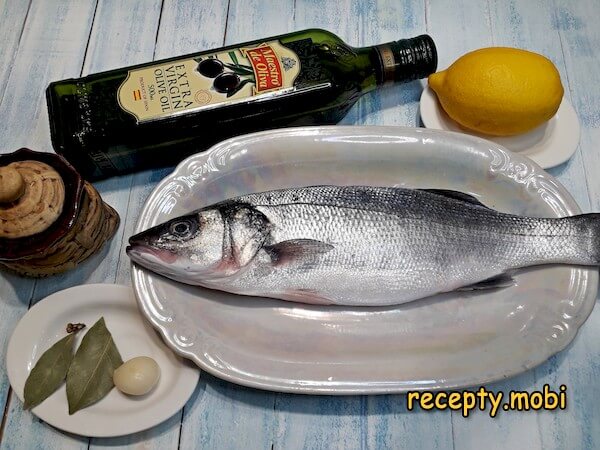
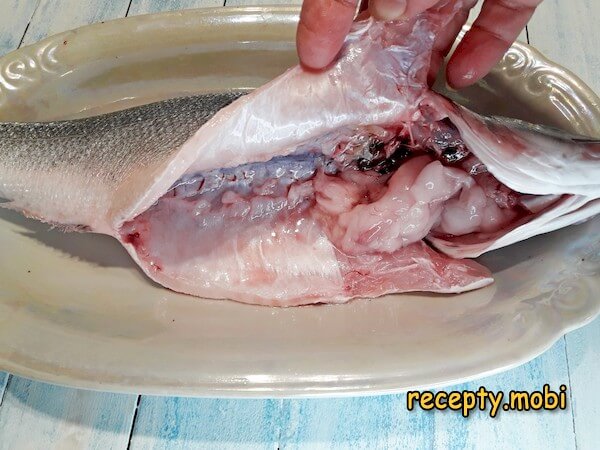
I clean the fish: scale-scrape, trim fins, slit the belly, remove entrails and gills. Rinse under cold water and pat dry — wet fish steams instead of roasts.
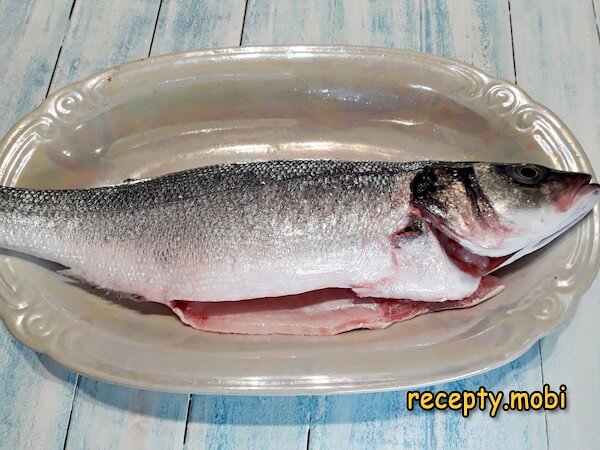
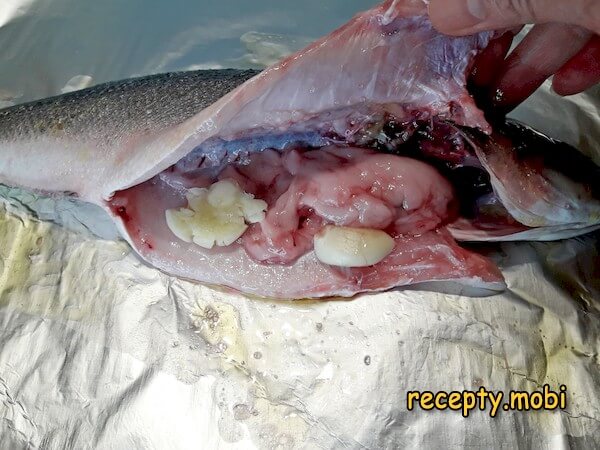
The removed entrails sometimes contain pristine internal fat — this can be separated and tucked back inside the belly cavity for extra flavour during baking. The liver, if intact and clean (no broken bile sac), can also stay. These extras are traditional flavour enhancers; skip them if uncertain.
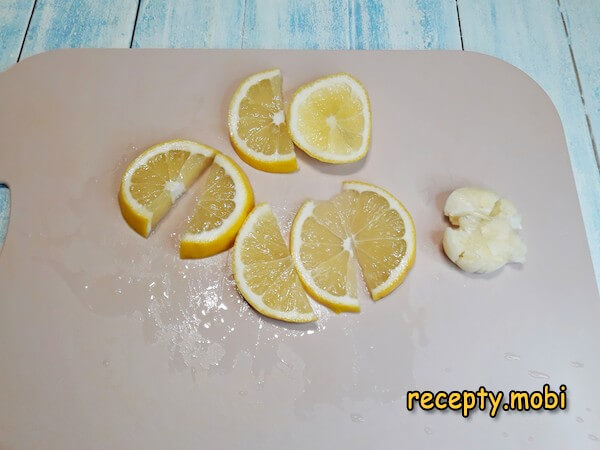
I cut the lemon half into wedges and crush the garlic clove with the side of a knife (don't fully chop — crushed releases aroma without dissolving in the cooking juices).
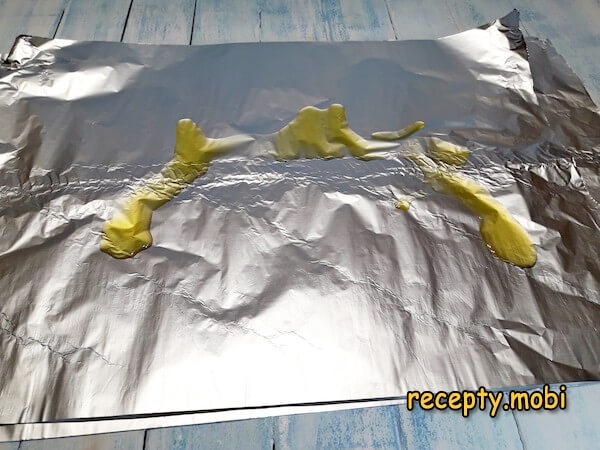
I cut two layers of foil large enough to wrap the whole fish with overlap. I drizzle the olive oil on the foil and spread it across the fish-bed area.
The sea bass goes in the middle of the oiled foil bed.
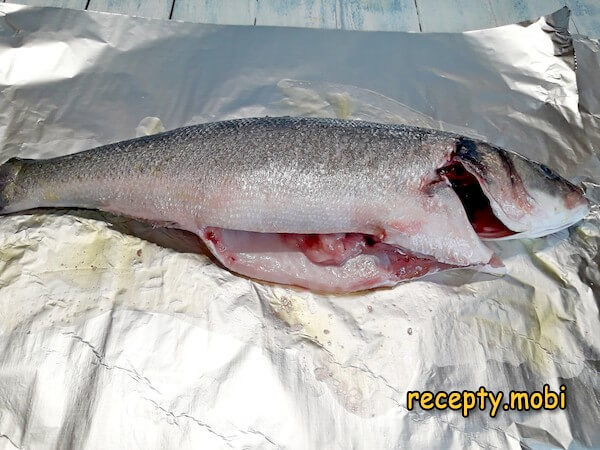
I tuck the crushed garlic clove inside the belly cavity.
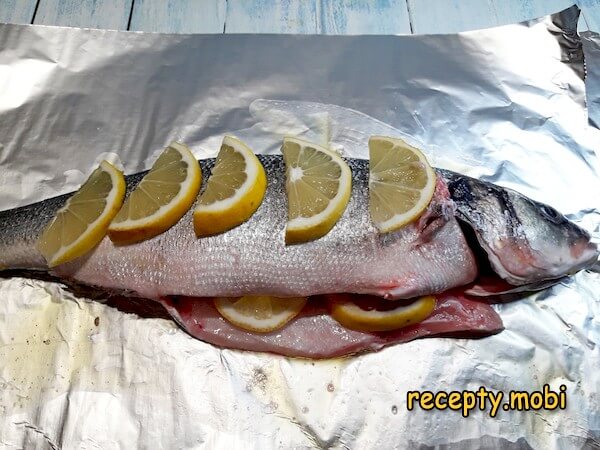
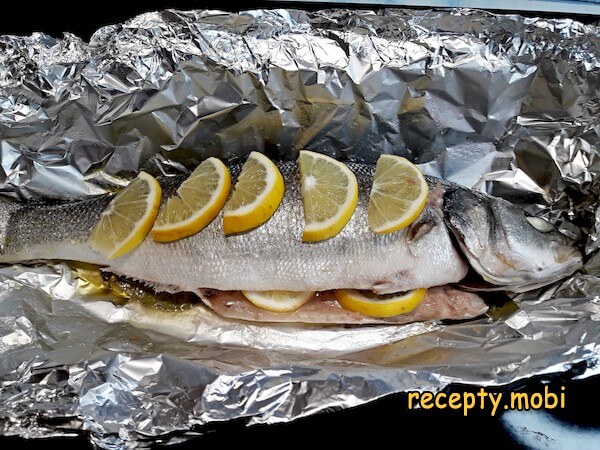
Two or three lemon wedges go inside the belly with the garlic; the remaining wedges sit on top of the back.
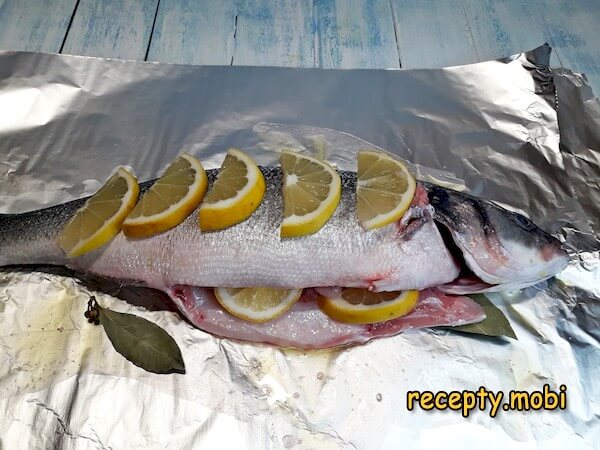
The two bay leaves tuck underneath the fish — direct contact with the foil-and-juice bed releases bay aromatics into the cooking liquid.
I fold the foil edges up and pinch them tight at the seam, but leave generous air space inside the foil packet (don't wrap tight against the fish). The air space allows steam to circulate around the fish during cooking. The packet goes onto a baking sheet, into the centre of the preheated oven.
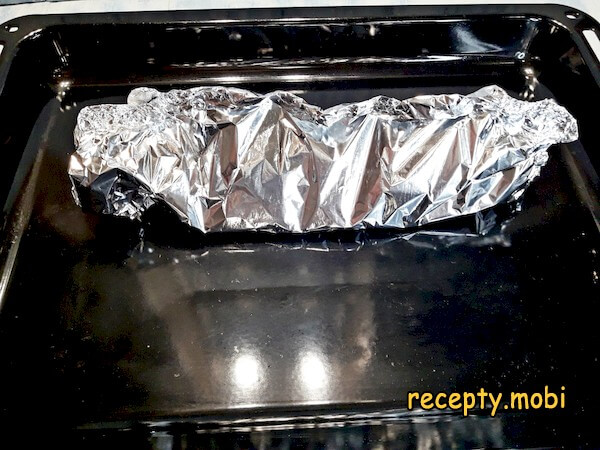
After 15-20 minutes (17 minutes is the sweet spot for a 700 g fish), I pull the packet out and unfold it. The pooled juices in the foil get spooned over the fish at serving — that's where most of the flavour ends up.The baked sea bass stays tender, juicy, and never overcooked — this preparation is dietary-friendly without sacrificing flavour. The fish stands well as a standalone dish or pairs with any neutral side: boiled potatoes, pasta with butter, rice pilaf, or a simple grain. The foil-juices double as pan sauce.


Tips
- 1
17 MINUTES IS THE PRECISE WINDOW. For 700 g sea bass at 190 °C, 17 minutes is the sweet spot. 15 minutes leaves slightly underdone fillet at the spine; 20 minutes starts drying out the flesh. The window is narrow because sea bass has very lean flesh that overcooks quickly. For larger fish (1 kg+), add 3 minutes; for smaller (500 g), subtract 3. The internal temperature target is 60-63 °C at the thickest part — past 65 °C, the proteins squeeze out moisture and the fish goes dry.
- 2
AIR SPACE IN THE FOIL PACKET MATTERS. Step 10's loose-wrap technique is intentional — tightly pressed foil acts like vacuum-sealing and creates uneven cooking with cold spots. Loose foil with air space lets steam circulate around the fish for even cooking. The packet should look like a small inflated tent, not a tight cocoon. For another foil-baked fish recipe worth comparing, see Sea bass in foil in the oven.
- 3
CRUSHED GARLIC, NOT MINCED. Step 4's crushed-with-knife garlic is calibrated to release aroma without dissolving into the cooking juices. Minced garlic dissolves and creates aggressive garlic-everywhere flavour; crushed garlic perfumes the fish without overwhelming. The same applies to lemon — wedges (not slices, not juice) give controlled citrus presence. Whole-aromatic technique is the Mediterranean way.
- 4
SERVE WITH BRIGHT FRESH SIDES. Sea bass's delicate flavour pairs best with simple bright accompaniments: boiled new potatoes with butter and dill, lemon-dressed asparagus, fresh green salad, or simple steamed vegetables. Heavy starches or rich cream sauces overwhelm the fish. The pooled foil-juices serve as the only "sauce" needed. For another foil-baked fish to compare, try Flounder in the Oven in Foil.
FAQ
Can I use frozen sea bass? +
Yes, with proper thawing. Frozen sea bass is often more reliable quality than "fresh" supermarket sea bass that has actually been frozen-and-thawed before display. Slow-thaw in the fridge overnight (6-8 hours) is essential — fast-thaw under running water or in the microwave damages the texture. Once thawed, dry the fish thoroughly with paper towels before cooking; surface moisture causes steaming instead of roasting. Never re-freeze thawed fish.
Why no special seasoning? +
Sea bass has such delicate, naturally sweet flesh that aggressive seasoning would mask its character. Salt + olive oil + lemon + garlic + bay leaf is the Mediterranean minimalism that lets the fish be the star. Avoid: thyme, rosemary, oregano (too pungent), heavy cream sauces (mask flavour), curry or paprika (too bold), or dried herb mixes. If you want more, add fresh dill or parsley as garnish at serving — but resist seasoning during the cook.
What if I don't have whole fish, only fillets? +
Fillets work but require timing adjustment. For 200 g fillets at 190 °C: 10-12 minutes wrapped in foil with the same olive oil + lemon + garlic + bay treatment. Fillets cook faster because there's no bone or skin to insulate. The result is similarly tender but loses some of the visual presentation appeal of whole-fish service. Skin-on fillets retain more moisture than skinless during baking.
Can I add vegetables in the foil packet? +
Yes — modest additions work well. Best: thin slices of fennel (Mediterranean classic with sea bass), cherry tomatoes (halved), thinly sliced shallots or red onion, a small handful of olives. Add at step 9 around and under the fish. Avoid bulky vegetables (carrots, potatoes — they don't cook through in 17 minutes) and watery vegetables (zucchini, bell pepper — they dilute the cooking juices). The vegetable additions create a one-packet meal where the fish and vegetables share aromas during cooking.
- Comment
or post as a guest
Be the first to comment.