avg —
Tatar Tutyrma

Instructions
I prepare the ingredients. The offal proportions can shift to taste as long as total weight stays around 1550 g. Meat broth substitutes 1:1 with milk for a richer, more delicate result.

Chicken gizzards are tougher than liver and hearts and need pre-cooking. I cover them with water (enough that they float freely) and put on heat.
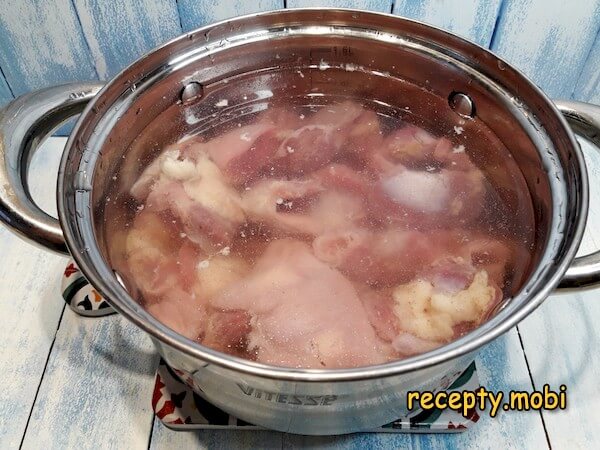
After boiling, I cook the gizzards for 30 minutes (no salt — that comes later) and drain. They're now tender enough to grind smoothly with the raw liver and hearts.
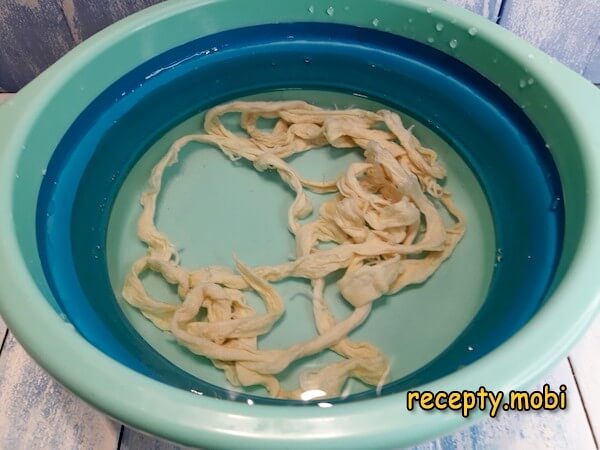
I place the salted pork casing in room-temperature water and leave for 30-35 minutes — this rehydrates and softens the casing for stuffing.
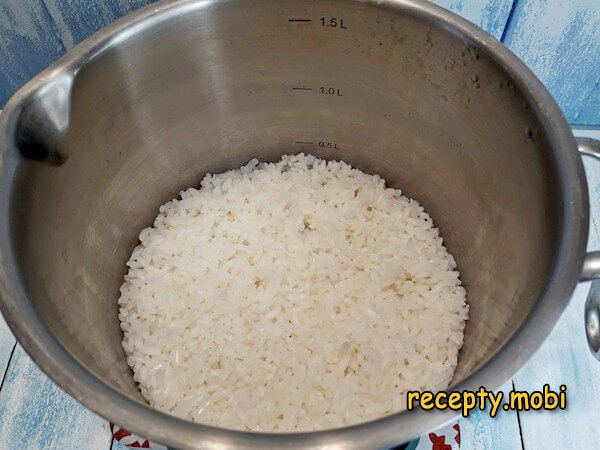
I rinse the rice under cold water until the water runs clear, then cover with water just slightly above the grain level.

I cook the rice on low heat to semi-done — about 3 minutes — until the moisture has been absorbed but the rice is still firm. It will finish cooking inside the sausage during the final poach.
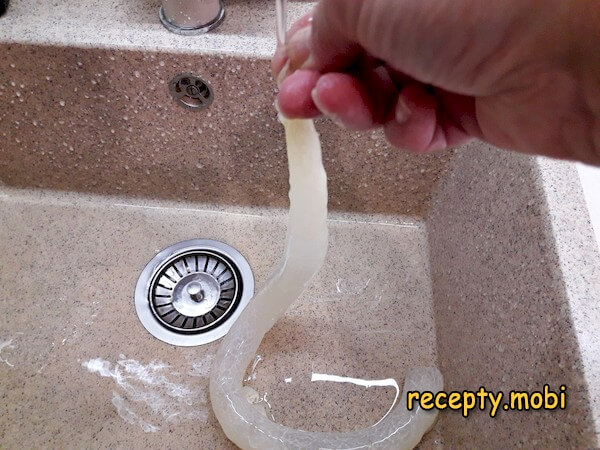
After the casings have softened, I rinse them inside and out under running water — fill with water from the tap, let it run through, repeat several times to remove all the residual salt.
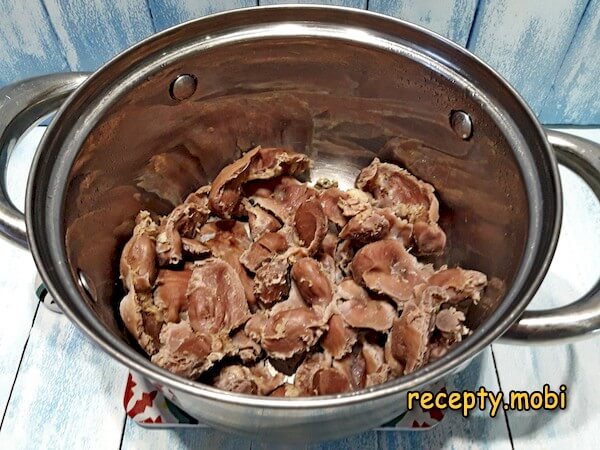
I grind the cooled gizzards together with the chopped onion in a meat grinder or food processor.
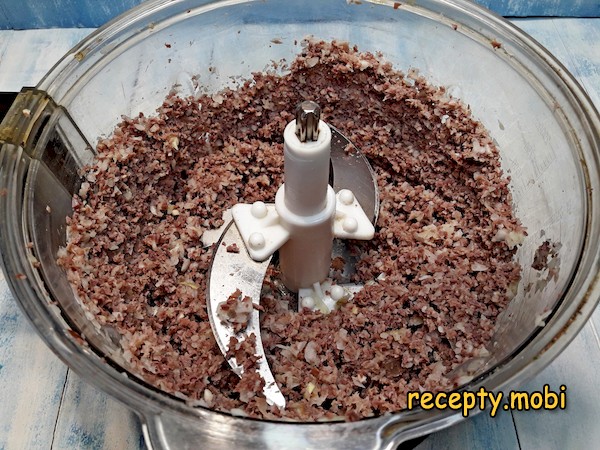
I add the raw chicken liver and hearts and grind everything together a second time for uniform texture.
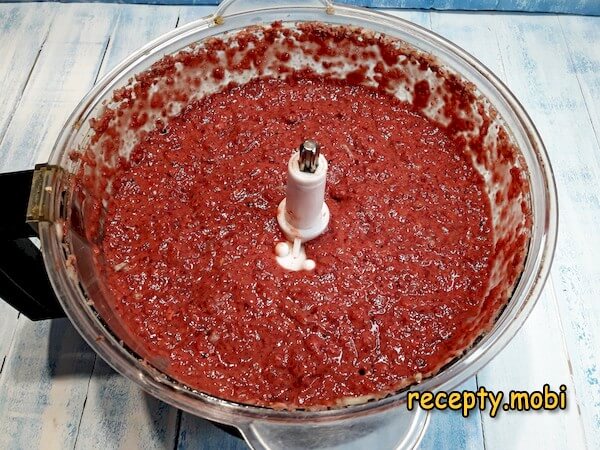
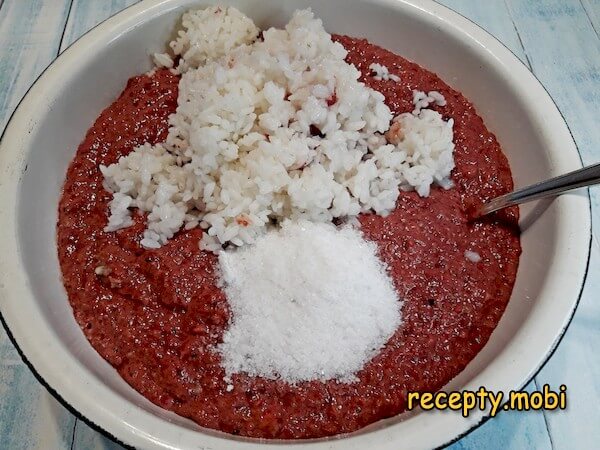
I transfer the ground mixture to a large bowl and fold in the cooled semi-cooked rice and the salt.
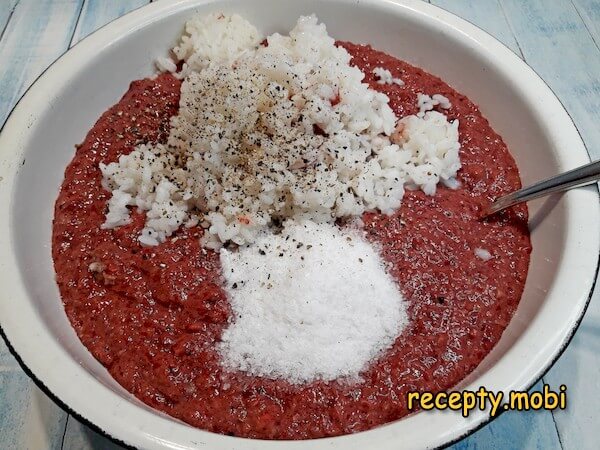
I season with black pepper to taste.
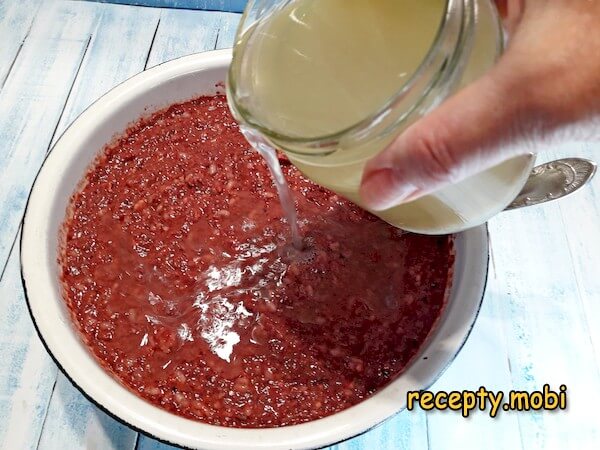
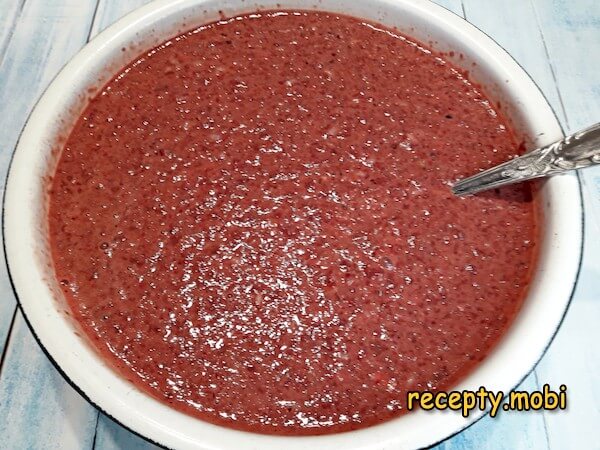
I slowly pour in the meat broth, watching the consistency. The filling should be moist but not runny — should hold shape on a spoon. The 300-400 ml range covers individual variation; start with 300, add more if dry.
I mix thoroughly and refrigerate for 30 minutes — the cold rest lets the filling stabilise and thicken slightly, making stuffing easier.
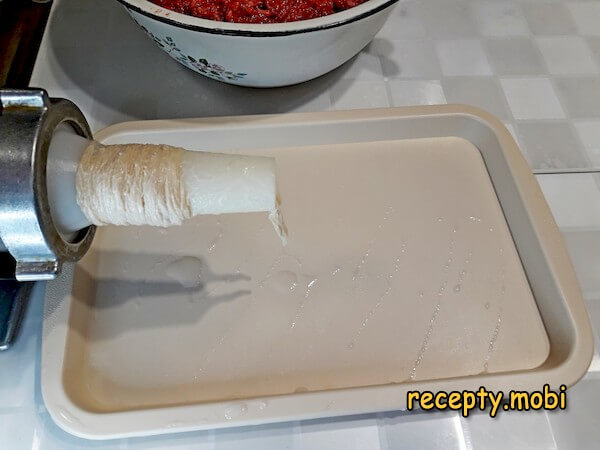
I prepare the meat grinder for stuffing: remove knife and screen, install the sausage-stuffing attachment, and stretch the rinsed casing onto the nozzle (as much as fits comfortably). The tip hangs down free for now — air needs to escape before tying. Cut several pieces of cotton kitchen thread for tying.
I push the filling through the grinder. As it approaches the end of the casing on the nozzle, I tie off the casing tip with thread.
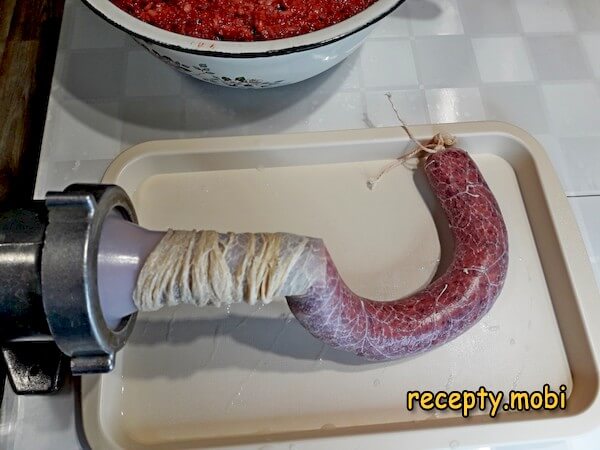
I continue stuffing along the entire casing length, tying segments every 20-30 cm to create individual sausage portions. The ties also prevent any single split from emptying the whole length.
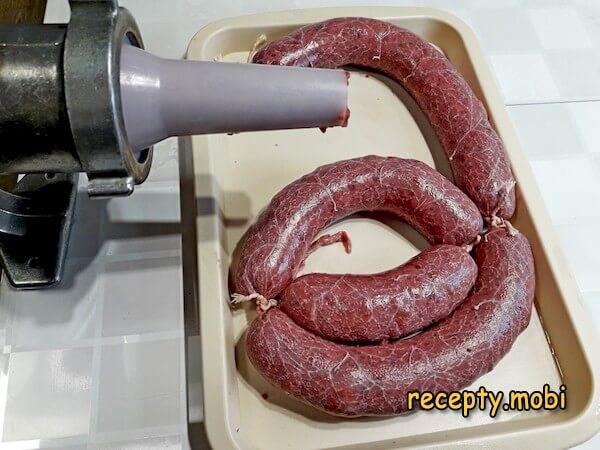
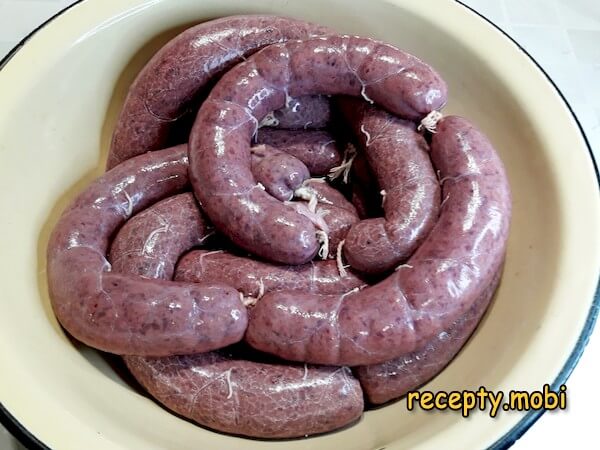
When the first casing is full, I stretch the next casing onto the nozzle and continue. Filled segments wait in a bowl until ready for poaching.
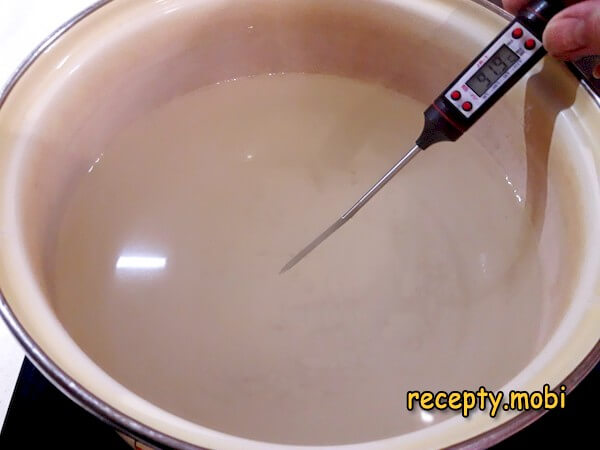
I bring a large pot of water to 90-95 °C — hot but not boiling. The thermometer with probe is essential here; eyeballing the temperature is unreliable.
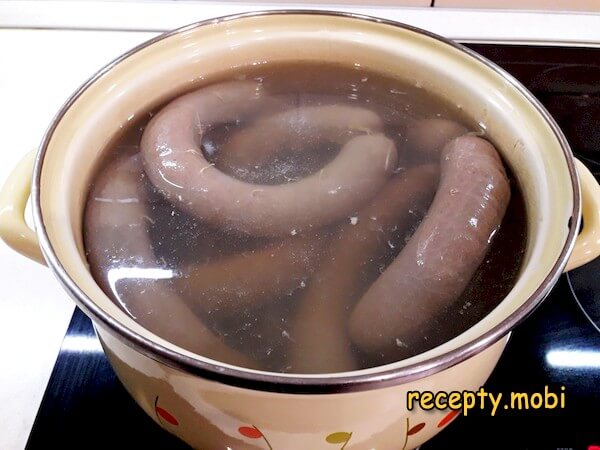
I lower the sausages into the hot water. The temperature drops slightly as the cold sausages enter — this is expected.
I monitor the temperature constantly, adjusting heat to maintain 85-87 °C throughout the poach. Boiling water bursts the casings; cooler water leaves the rice raw inside.
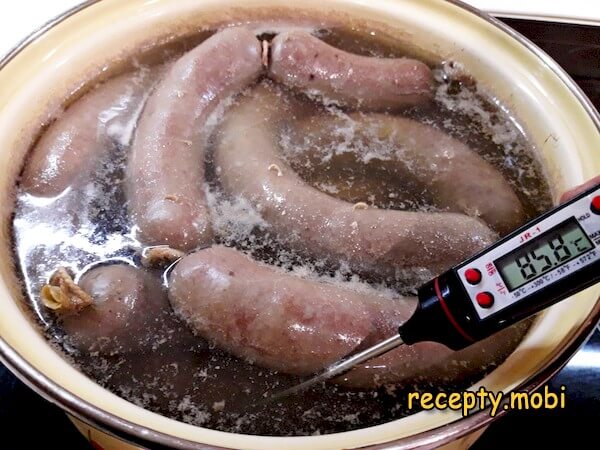
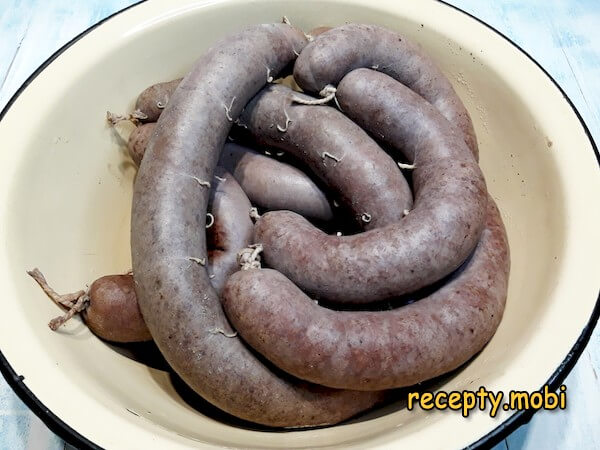
After 20 minutes at 85-87 °C, the tutyrma is fully cooked. I lift the sausages out with a slotted spoon.The tender, juicy Tatar tutyrma is excellent both hot from the pot and cold the next day. Slice and pan-fry briefly for a crispy-edged version, or spread on bread cold like a coarse pâté. Pairs with any starchy side or pickled vegetables.


Tips
- 1
THE TEMPERATURE WINDOW IS NARROW. 85-87 °C is the sweet spot — high enough to cook the rice and pasteurise the offal, low enough to keep the casing intact and the filling tender. Above 90 °C the casings burst and filling spills into the water; below 80 °C the rice stays crunchy. A probe thermometer is non-negotiable; visual judgement of water temperature is unreliable.
- 2
CASING SOURCING IS THE BIGGEST PRACTICAL HURDLE. Pre-salted pork casings are sold at butcher counters in many traditional markets and increasingly online (search "natural pork sausage casings"). Diameter 28-32 mm fits this recipe. Synthetic casings work as a fallback but lose the traditional bite. For another offal-based dish to compare techniques, see Tatar Azu with Pickled Cucumbers and Potatoes.
- 3
ADJUST OFFAL PROPORTIONS TO TASTE. The recipe specifies 450 g gizzards + 650 g liver + 450 g hearts (1550 g total). Liver gives smoothness and richness; hearts give density; gizzards give bite. Increase liver for a more pâté-like texture; increase gizzards for chunkier. Just keep total weight near 1550 g. Lamb or beef offal substitutes work the same way — same total weight, different flavour profile.
- 4
STORAGE AND USES. Cooked tutyrma keeps 5 days in the fridge or 2 months frozen. Slice into 1 cm rounds and pan-fry in butter for crispy-edged second-day breakfasts. Cold-sliced and arranged on rye bread with mustard makes an excellent zakuska. For another Caucasian offal preparation, try Kuchmachi Georgian Style.
FAQ
Can I make tutyrma without a meat grinder? +
Difficult but possible. The grinder serves two functions: grinding the offal smooth and pushing the filling into the casing. Substitute a food processor for grinding (pulse to coarse paste, not smooth). For stuffing, use a wide-mouthed funnel or a piping bag with a wide tip — pull the casing onto the nozzle and push the filling through manually. The result is acceptable but slower; if you make tutyrma regularly, invest in a grinder with a sausage-stuffing attachment. The hand-method works for emergency batches but isn't sustainable.
What if my casing keeps splitting during stuffing? +
Three usual causes. First, casing wasn't soaked long enough — extend the soak to 45 minutes. Second, filling was too dense (too little broth) — add more broth to loosen. Third, you're pushing too aggressively — the casing fills slowly; let the grinder work at its own pace rather than forcing. Salted casings can also have weak spots from manufacturing; if a section repeatedly splits, cut around it and continue with the next section. Test a small length before committing the whole casing.
How long does tutyrma keep? +
Cooked tutyrma stores 5 days in the fridge in an airtight container or wrapped in parchment. The flavour actually develops more depth on day 2-3. Freezer storage: yes, 2 months — wrap individual segments tightly in parchment then in a freezer bag. Thaw overnight in the fridge before using. Frozen-thawed tutyrma is virtually indistinguishable from fresh. Don't try to refreeze after thawing — the rice texture degrades on a second freeze cycle.
Can I cook the sausages by another method? +
The 85-87 °C poach is traditional and gives the best texture, but alternatives work. Steaming (in a steamer basket over simmering water) gives similar results — same 20 minutes, slightly drier filling. Baking at 160 °C for 25-30 minutes gives a more sausage-like exterior with crisp edges; brush with oil first to prevent the casing drying out. Avoid grilling or high-heat frying — the casings burst and filling sprays out. Once poached, the sausages can also be briefly grilled or pan-fried for a crispy finish without the bursting risk.
- Comment
or post as a guest
Be the first to comment.