avg —
Torsh

Instructions
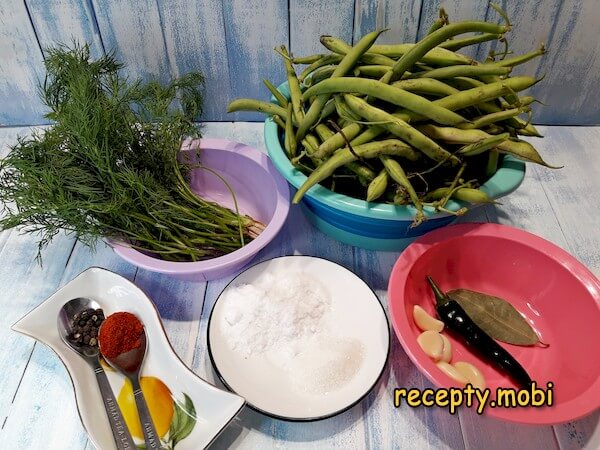
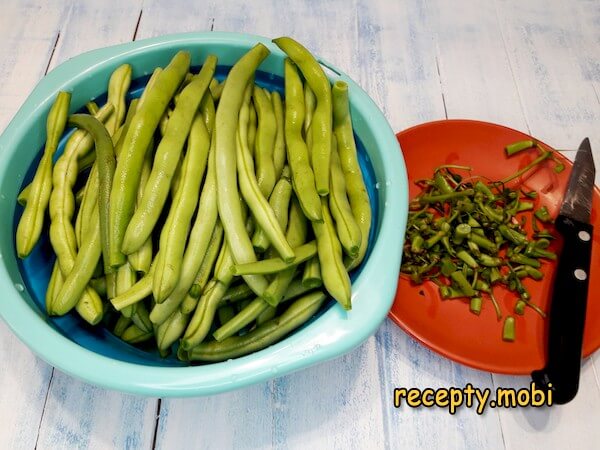
I prepare the ingredients. Asparagus beans must be young — if a tough vein pulls when you trim the tip, the pod is old and unsuitable. Save older pods for other recipes.
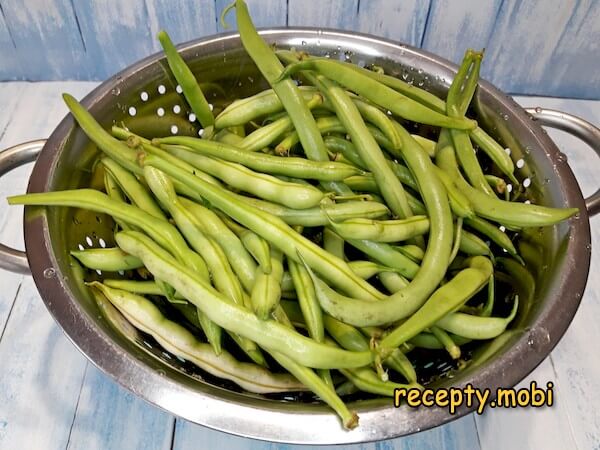
Beans wash thoroughly under running water.
Trim both ends of each bean. Watch the longitudinal vein — in young pods it stays attached and doesn't trail; old pods have visible long tough veins.
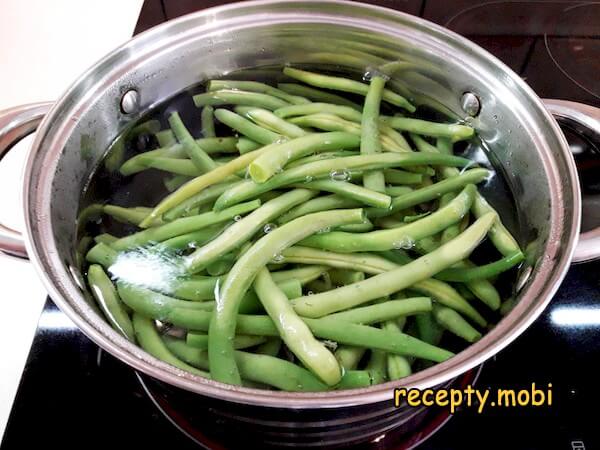
In a large pot of unsalted boiling water, beans go in for 2 minutes — no longer. The brief blanch removes raw character but keeps crispness intact (the defining tursha texture).
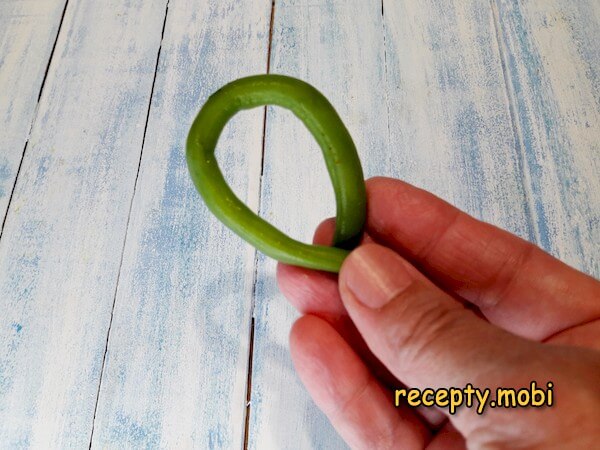
Test doneness by pulling out a bean and bending it in half — if it forms a soft arc without breaking, it's ready. Sharp bend or break = undercooked; floppy droop = overcooked.
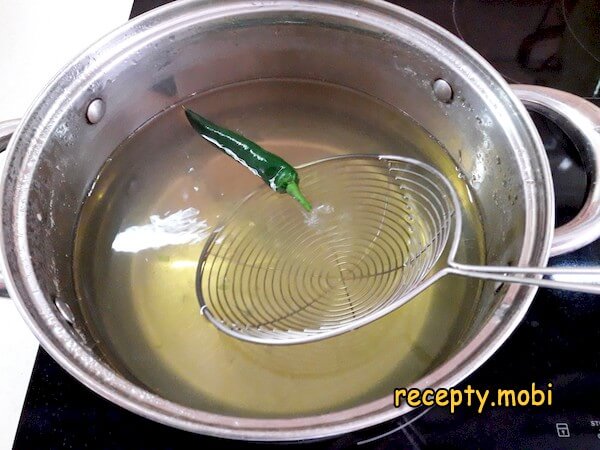
Hot pepper goes into the same boiling water for 20 seconds — quick blanch.
Beans + pepper transfer immediately to ice water — stops cooking AND preserves bright green colour through fermentation.
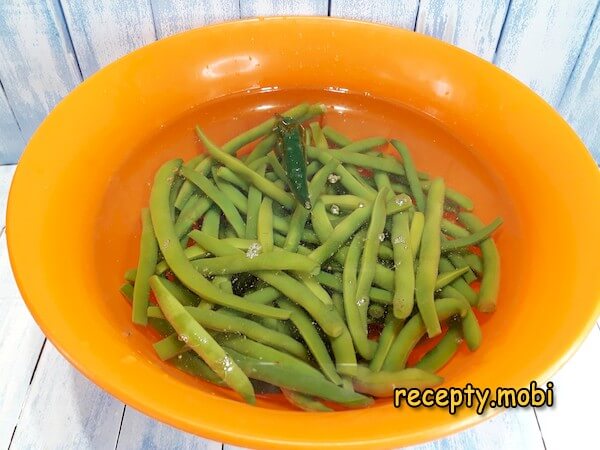
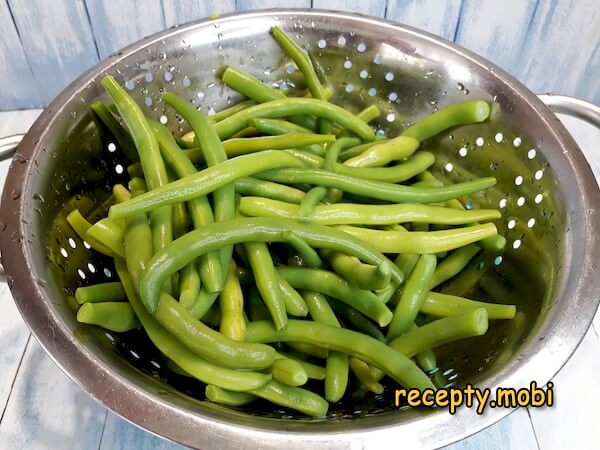
After full cooling, transfer to colander and let drain completely.
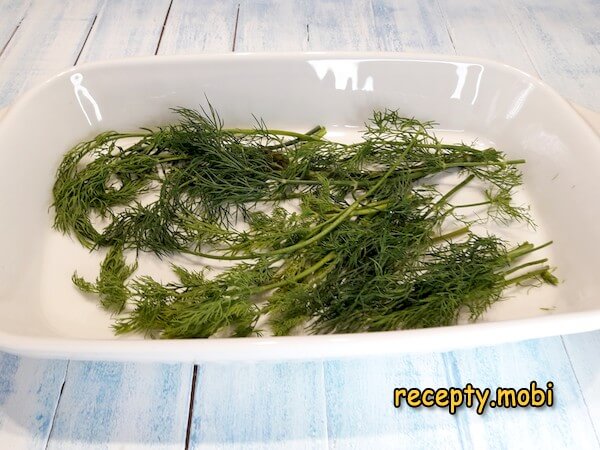
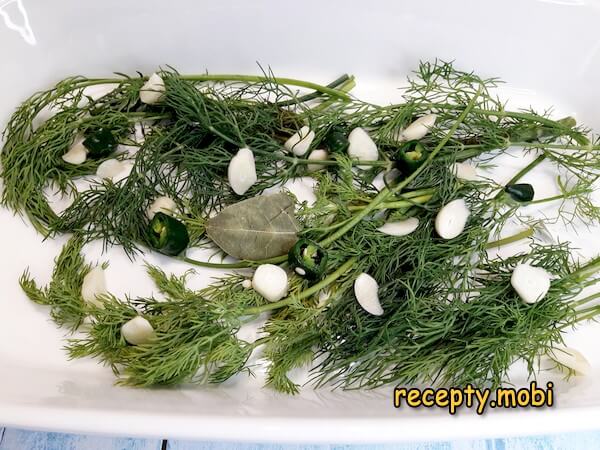
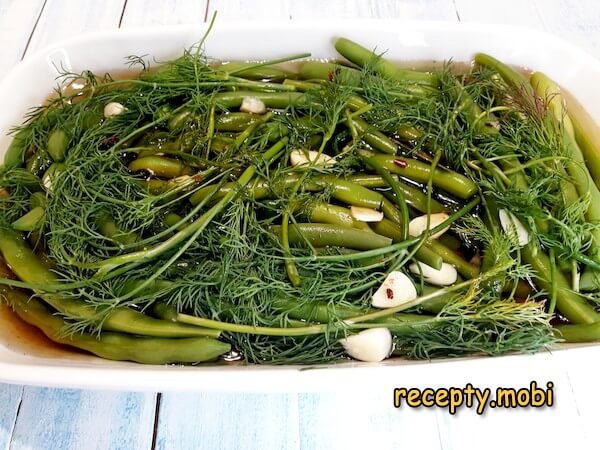
In the fermentation container bottom, half the dill lays as the herb bed.
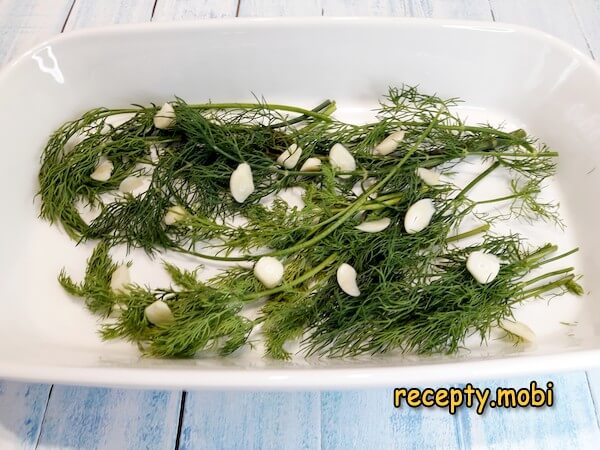
Half the sliced garlic distributes on the dill bed.
Hot pepper rings and bay leaf pieces sprinkle on, reserving some for the second layer.
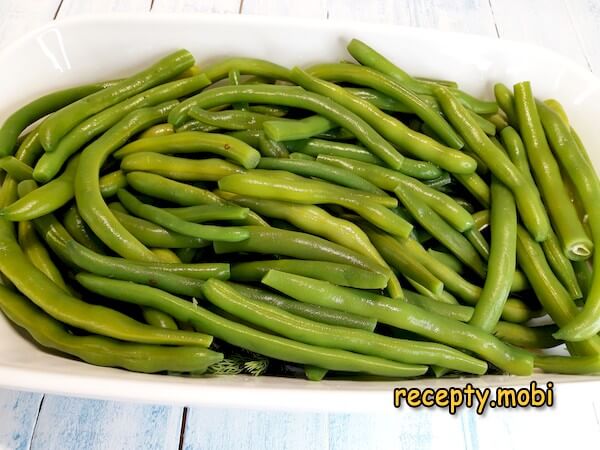
The blanched asparagus beans lay on top of the aromatic bed.
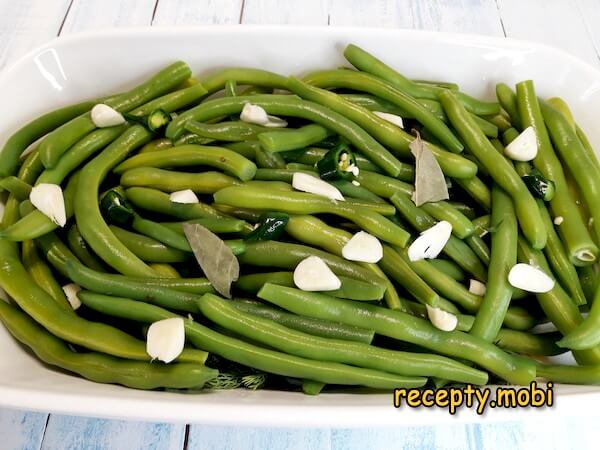
Remaining spices (garlic, hot pepper, bay) sprinkle over the beans.
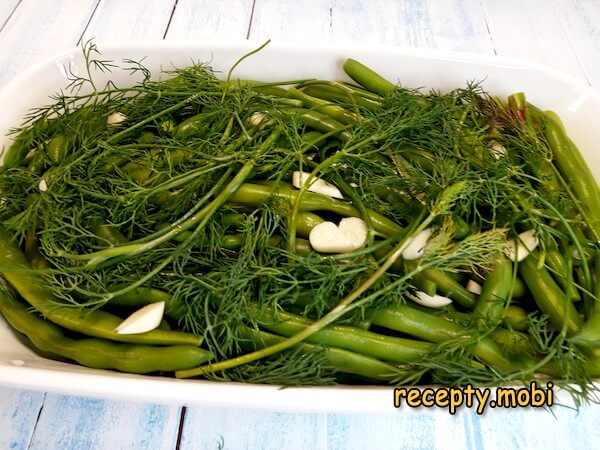
Remaining dill covers the top — herb bed top and bottom flanks the beans.
For 0.5 kg beans, 0.5 L brine. In a small pot, combine water + peppercorns + paprika + salt + sugar. Boil 1 minute.
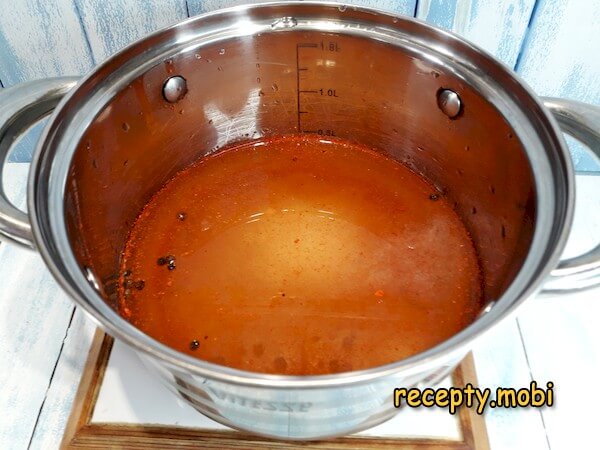
When brine cools to room temperature, pour over the bean-herb arrangement.
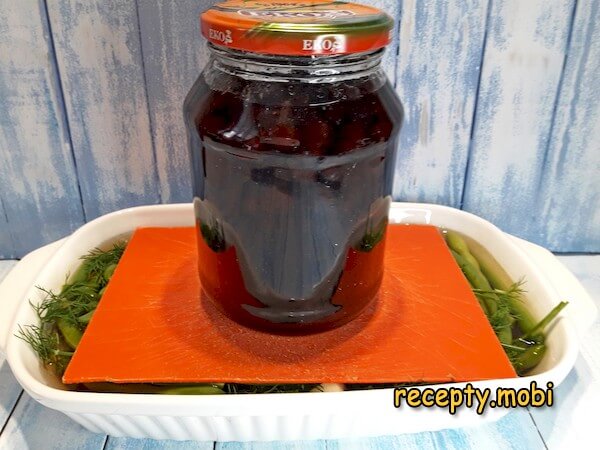
Weight on top keeps everything submerged in brine. Container stays at room temperature 3-4 days for fermentation. Hot weather (28+ °C) reduces this to 2.5 days; cool weather (18-20 °C) extends to 4-5 days.
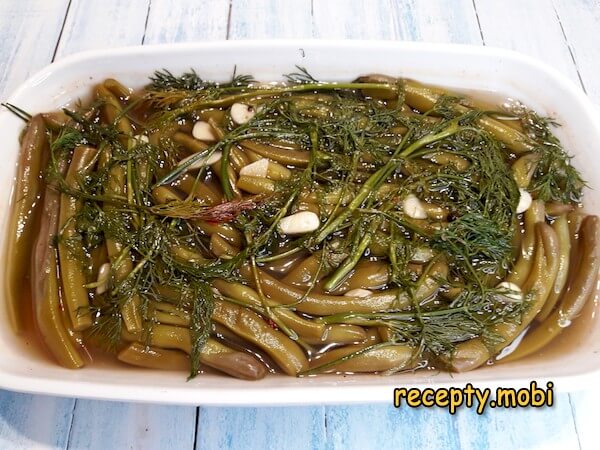
After 3 days, fermentation completes. The pods change colour (slightly olive-green) and absorbed the aromatic spice profile. Torsh is ready.Torsh from green beans stays crispy like lightly-salted cucumbers, with moderate spice from chili and sharpness from garlic. This snack pairs perfectly with kebabs (Caucasian shashlik), regular grilled meat, or grilled fish — disappears in minutes from any table. Pack into liter jars covered with brine, refrigerate. Keeps up to 6 months in fridge.Try it, bon appétit!


Tips
- 1
THE 2-MINUTE BLANCH IS PRECISE. Step 4's brief blanch is calibrated to set the bean colour and slightly soften without compromising crispness. Less than 2 minutes: beans stay raw-tasting. More than 2 minutes: beans go soft and lose crunch (defeats the purpose of tursha — crunch is the point). The bend-test in step 5 confirms doneness. The ice-bath shock in step 7 stops cooking instantly — both elements together ensure proper texture.
- 2
THE HERB-SANDWICH ARCHITECTURE. Steps 9-14's "dill bottom + spices + beans + spices + dill top" architecture isn't decorative — it ensures even spice distribution through the fermentation. The herbs and spices contact the beans from both sides, infusing flavour evenly. Single-layer placement (all spices at bottom or top) gives uneven results. The sandwich approach is universal across Caucasian fermented preserves. For another cauliflower-beetroot pickled snack worth comparing, see Pickled Cauliflower with Beetroot "Pink Clouds".
- 3
FERMENTATION TIMING WITH WEATHER. The 3-4 day fermentation is calibrated for typical room-temperature kitchens (20-22 °C). Hot weather speeds fermentation dramatically — at 28+ °C, fermentation completes in 2-2.5 days; at 30+ °C, even faster. Cool weather slows everything; basement at 15 °C may need 5-6 days. Visual cues: bean colour changes from bright green to slightly olive-green, brine becomes slightly cloudy with active fermentation. Taste daily after day 2 to catch the optimal moment.
- 4
THE 6-MONTH FRIDGE STORAGE. Once fermented and refrigerated, tursha keeps 6 months easily. The active fermentation continues very slowly in the fridge but doesn't over-ferment in this timeframe. The flavour gradually deepens — fresh tursha is sharp and crisp, aged tursha (3+ months) develops more complex umami notes. Both phases are pleasant. For another pickled-onion variation worth trying, try Pickled Onions for Salads and Snacks.
FAQ
What does "tursha/torsh" mean? +
"Torsh" / "tursha" / "torshi" / "turşi" — variations of the same word across Persian, Armenian, Turkish, and other regional languages, broadly meaning "pickled" or "fermented vegetables." Different cultures have their own torshi traditions: Iranian torshi-e liteh (mixed vegetable medley), Turkish turşu (cabbage-based), Armenian tursha (often green-bean focused), Georgian tarsh (cabbage-and-vegetables). The shared etymological root reflects the deep Caucasian-Persian fermentation tradition. The DB title "Torsh" preserves the Persian/Iranian transliteration; the body uses "tursha" which is the Armenian variant — both refer to the same dish family.
Why no vinegar? +
Tursha is a true ferment — preserved through lactic-acid bacterial action rather than chemical acid (vinegar). The 3-4 day room-temperature stage is when wild lactic-acid bacteria multiply, converting natural sugars into lactic acid that preserves the beans and gives the characteristic tang. The salt-only brine is what enables this — vinegar would inhibit the fermentation. Vinegar-pickled beans (a different recipe entirely) are pleasant but not tursha. The natural fermentation also provides probiotic benefits that vinegar pickling can't match.
Can I use other vegetables besides green beans? +
Yes — the technique works for many vegetables. Best alternatives: cauliflower (florets), young white cabbage (shredded), green bell peppers (cut into strips), young carrots (julienned), small whole cucumbers (pickling type), small green tomatoes. Each vegetable gives different texture and flavour. Mixed-vegetable tursha is traditional — combine 50% green beans + 50% mixed vegetables for variety. Avoid: leafy greens (don't ferment well), root vegetables larger than carrot (don't soften enough), watery vegetables like ripe tomatoes (dilute the brine).
How do I know fermentation is done correctly? +
Three indicators of healthy fermentation: cloudy brine (visible bacterial activity), colour change from bright green to olive-green, taste shift from raw-vegetable to lacto-tangy. Bad signs: pink/red/black mould (NOT the white kahm yeast scum on the surface, which is normal — just skim off), mushy texture (over-fermented or temperature too high), unpleasant rotten smell. Good fermented tursha has tangy-bright smell, slightly cloudy brine, firm crispy beans. If unsure on first batch, taste a small piece — properly fermented tursha tastes sour-salty-spicy, not foul.
- Comment
or post as a guest
Be the first to comment.