avg —
Watermelon Jam from Pulp

Instructions
Lay out every ingredient before starting. The recipe quantities yield two jars of 350 ml each, perfect for a small batch that fits easily into a busy weekend afternoon. Scale up the quantities proportionally if you want to fill a larger pantry shelf with this colorful preserve.
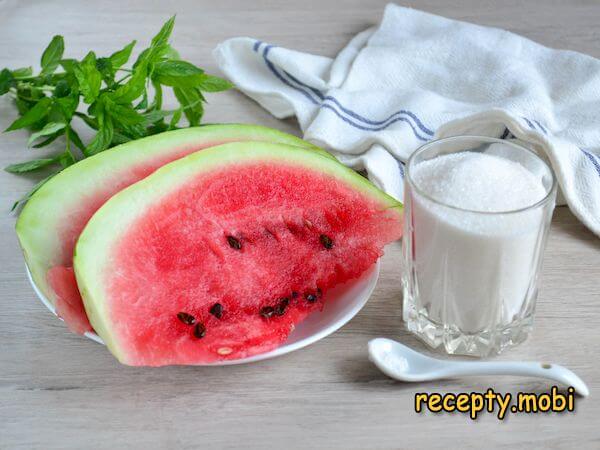
Cut the watermelon pulp into pieces and remove the seeds carefully. The exact size of the pieces is up to your preference: large chunks stay distinctly visible in the finished jam and feel substantial on the spoon, while smaller pieces soften further during cooking and produce a smoother more spreadable preserve closer to traditional fruit jam.
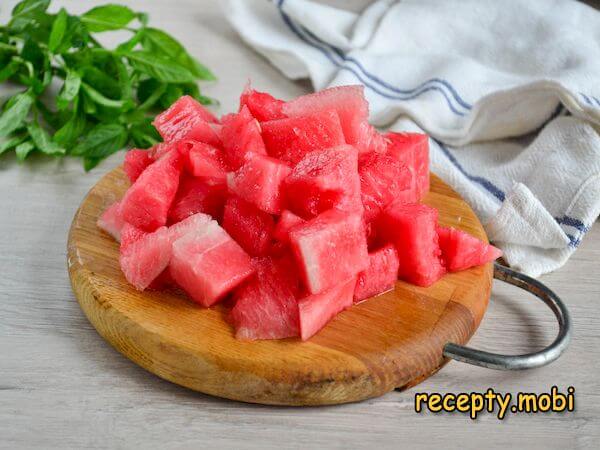
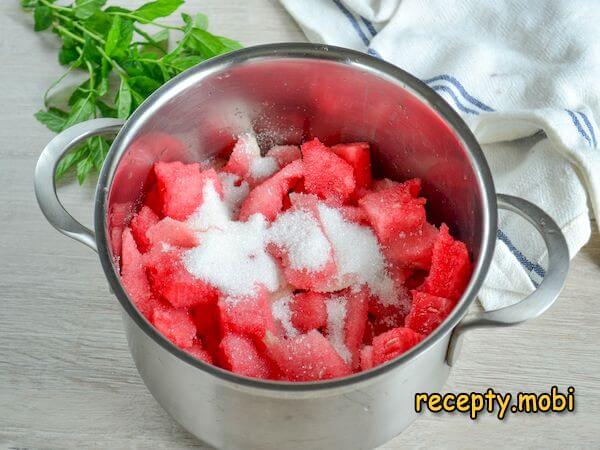
Move the watermelon cubes into a heavy-bottomed saucepan, add the sugar, and let the mixture sit undisturbed for one hour so the watermelon naturally releases its juice. Then place the saucepan over medium heat, bring the contents to a boil, and cook for twenty minutes, stirring occasionally to prevent scorching at the bottom of the pot.
Cool the partially cooked jam at room temperature for one to two hours. Then return it to the heat and boil again for fifteen more minutes. The two-stage cooking method preserves the integrity of the watermelon pieces while concentrating the syrup gradually toward the desired thick consistency.
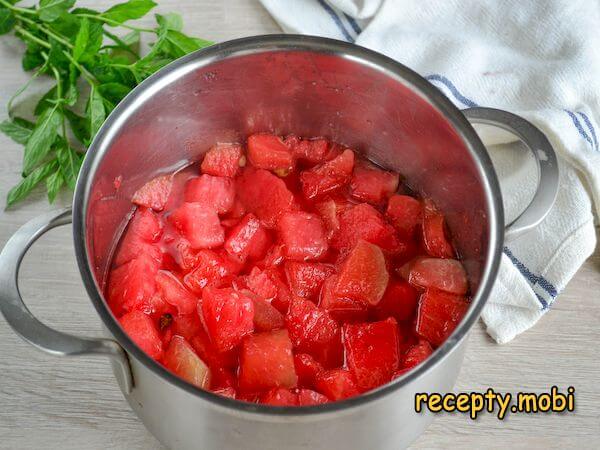
After another one to two hour rest, boil the jam for ten more minutes and add the citric acid during this third cooking. The citric acid is essential for long shelf life because watermelon naturally contains very little acid of its own. The pieces will have softened noticeably by this point but, thanks to the staged cooking, they hold their shape rather than disintegrating into mush. The syrup turns thick and beautifully fragrant.
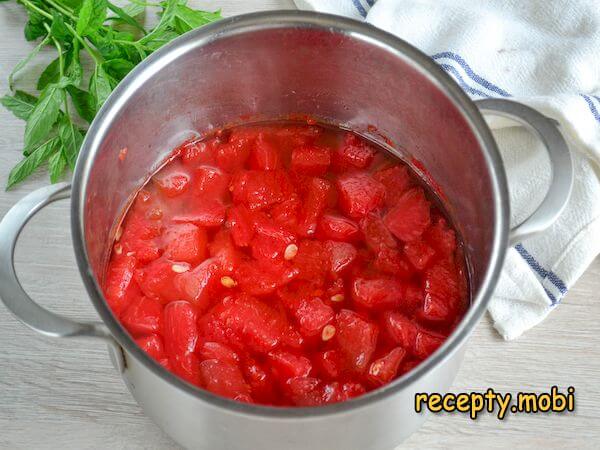
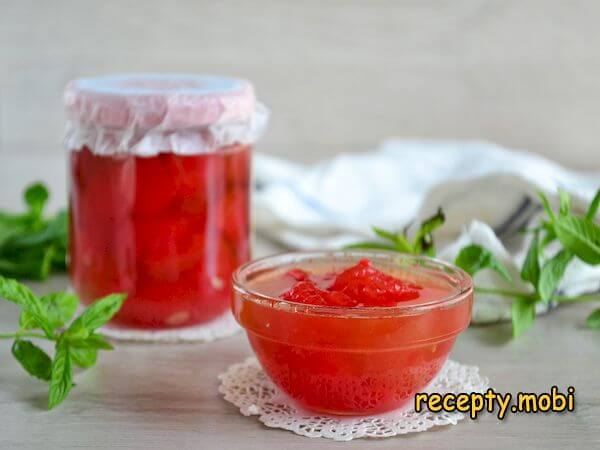
Seal the jam in sterilized jars after the third cooking, or boil it for a fourth round if you prefer an even thicker syrup. The watermelon jam from pulp is ready. Try this beautiful preserve with afternoon tea and watch how the bright pink jewels brighten any cold winter morning. Bon appetit alongside good company at the tea table.


Tips
- 1
Choose well-ripened firm watermelon for the best jam results. Soft overripe watermelon turns to mush during cooking and produces a watery thin jam without the satisfying chunks that make this preserve special. Underripe watermelon lacks the natural sweetness needed for proper jam balance and produces a flat dull flavor regardless of how much sugar you add. Test sweetness by tasting a small piece before starting; sweet watermelon gives sweet jam.
- 2
Save the watermelon seeds; they make a wonderful snack when toasted lightly with salt in a dry skillet. The seeds contain protein and healthy fats and toast in about three minutes over medium heat. The zero-waste approach makes this lengthy preserve project even more rewarding for the home kitchen. Pair the finished jam with the rustic zucchini jam with lemon for winter for a creative summer-preserve tea spread.
- 3
Use the staged cooking method (boil-rest-repeat) faithfully rather than trying to shortcut to a single long boil. The staged approach preserves the watermelon piece integrity and produces a clearer brighter syrup than continuous cooking. The patient method requires more total time but the same total active attention; the rest periods do not need supervision. The few extra hours of waiting transform an ordinary watermelon jam into something genuinely special.
- 4
Sterilize the jars and lids thoroughly before filling. Boil the lids for five minutes in a separate small saucepan and either bake the empty jars at one hundred and twenty degrees for fifteen minutes or steam them over a kettle of boiling water. Properly sterilized vessels are the single most important factor in the long shelf life of any home preserve. Pair the jam with the seasonal apple jam for winter.
FAQ
How long does watermelon jam keep on the shelf? +
Properly canned and sealed watermelon jam keeps for up to one year in a cool dark cellar or pantry shelf without significant loss of flavor or color. After one year, the bright pink color may fade slightly and the texture can soften further, though the jam remains safe for another six months. Always check the seal before opening: a properly sealed jar shows a slightly concave lid that does not pop when pressed. Once opened, refrigerate and use within three weeks. Always use clean utensils when scooping out portions to prevent contamination.
Can I make this jam without citric acid? +
Citric acid is highly recommended for long shelf life because watermelon naturally contains very little acid of its own; without it, the jam can spoil within weeks even when sealed. If citric acid is unavailable, substitute with two tablespoons of fresh lemon juice during the third cooking. The lemon juice provides similar acidity and adds a pleasant subtle citrus note that complements the watermelon flavor. Avoid making the jam without any acid at all; the safety risks outweigh any flavor purity benefits in this case.
What can I serve this jam with besides plain tea? +
Several uses transform the basic jam into different culinary experiences. Spoon over vanilla ice cream for a quick refreshing summer dessert. Use as a glaze for roast pork or duck where the sweetness pairs beautifully with savory meat. Stir into Greek yogurt with fresh berries for a quick parfait breakfast. Spread between sponge cake layers as an unexpected fruit filling. Mix into cocktails (especially mojitos and margaritas) for a creative seasonal twist. Serve alongside a cheese board where the bright pink color contrasts beautifully with aged sharp cheeses on the platter.
Can I substitute the watermelon with another fruit? +
Yes, several fruits work beautifully with the same staged cooking technique. Cantaloupe melon produces a similarly bright orange jam with a distinct musky aroma. Honeydew melon creates an elegant pale-green preserve with delicate sweetness. Strawberries combined with a small amount of watermelon produce an extraordinarily fragrant pink jam. Whichever fruit you choose, taste it raw first; the natural sweetness determines the success of the finished preserve. The basic recipe ratios (one part fruit to one part sugar) work for almost any sweet juicy fruit you choose.
- Comment
or post as a guest
Be the first to comment.