avg —
Zucchini Pancakes with Semolina in a Pan

Instructions
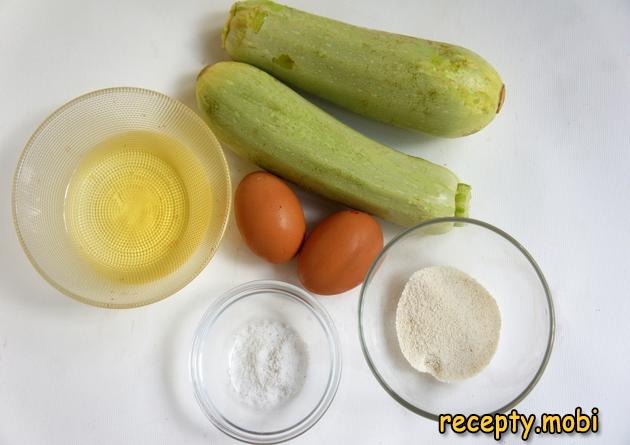
Lay out the products on the work surface. Wash the young zucchinis (2 pcs. of medium size, about 600 g in total weight) thoroughly under running water. Young zucchini with thin, tender skin does not have to be peeled – the skin has not toughened and chews easily. On older, large zucchini with thick skin, peel it off with a vegetable peeler and remove the loose core with the seeds.
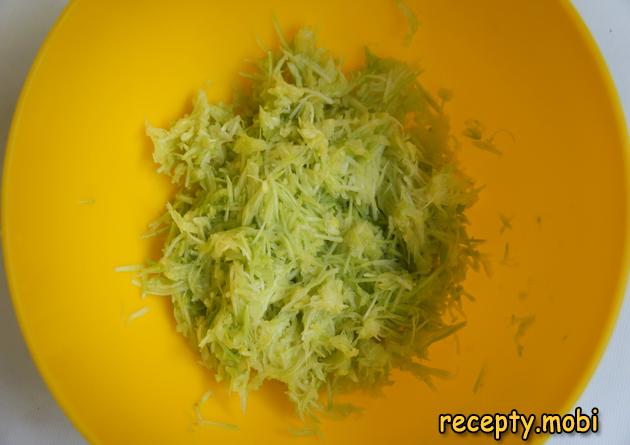
Grate the zucchini on a grater with medium holes – this gives the pancakes a nice texture rather than the pasty mush you get from a fine grater. You can also use a vegetable slicer with a coarse julienne attachment.
Key step: lightly squeeze the grated zucchini by hand to remove the excess juice. There is no need to squeeze it bone-dry as you would for potato draniki – some of the juice is needed for the semolina to swell. The aim is to get rid of the puddle of juice and leave the mixture lightly moist.
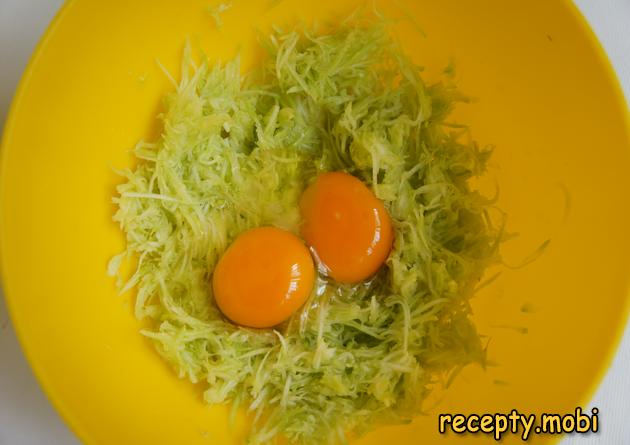
Transfer the lightly squeezed zucchini to a large bowl for mixing the batter. To give the batter its binding quality, add a raw egg (1–2 pcs., 110 g in total weight) – it is the ingredient that holds everything together. Mix thoroughly with a silicone spatula until smooth.
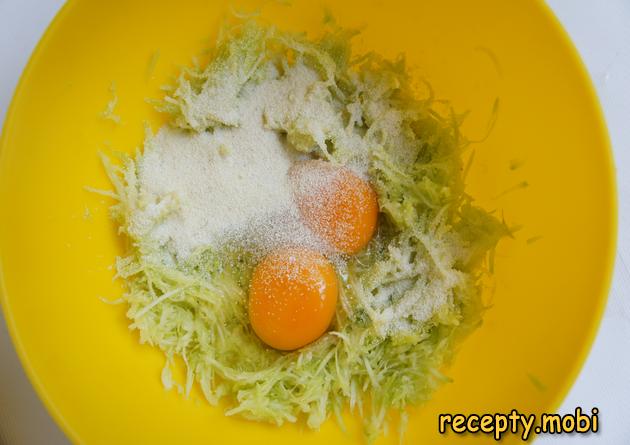
Add the semolina. The amount depends heavily on how juicy the zucchini is: young, juicy zucchini needs 3 tbsp. of semolina (75 g), while older zucchini needs 1–2 tbsp. (25–50 g). Start with 2 tbsp. and adjust to the consistency. The batter should become a thick mass, not a runny porridge.
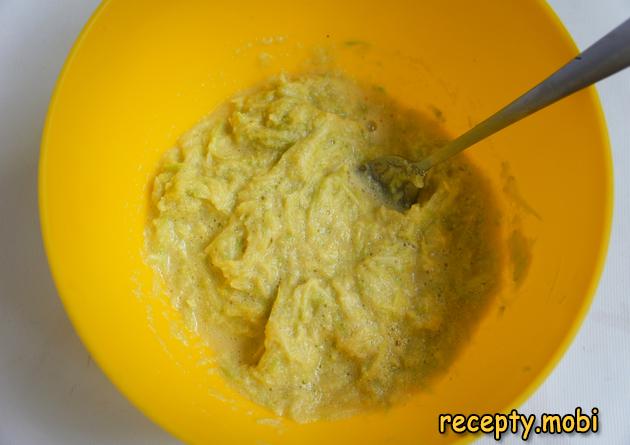
If you like, add fresh chopped garlic (2 cloves through a press) for a bit of bite and chopped dill or parsley (½ bunch) for freshness. These ingredients are optional – the pancakes are tasty without them too. Mix thoroughly until evenly distributed.
Key step: leave the finished batter to rest at room temperature for 15 minutes – the semolina needs to swell fully in the zucchini juice. Without this step the semolina stays grainy in the finished pancakes and the batter will not bind properly. This step is essential.
After 15 minutes, add the salt (1 tsp) and ground black pepper to taste. It is crucial to add the salt right at the end – salt added early draws the juice out of the zucchini and the batter becomes too runny. Mix thoroughly again.
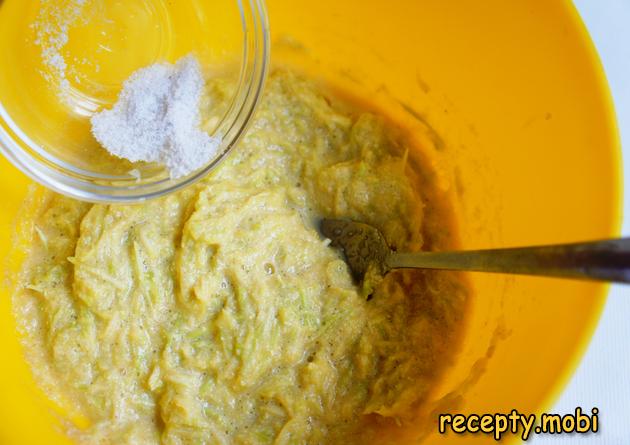
Check the consistency of the finished batter: it should be a thick porridge that you can scoop with a tablespoon and that does not run straight off the spoon. If the batter is runny, add 1 tbsp. of semolina, mix, and let it rest for another 5 minutes. If it is too thick, add 1–2 tbsp. of milk or water.
Heat the vegetable oil well in a non-stick frying pan (24–26 cm in diameter). The layer of oil should be 3–5 mm, a moderate amount for frying the pancakes. The pan should be well heated over medium heat – a drop of batter should sizzle immediately on contact.
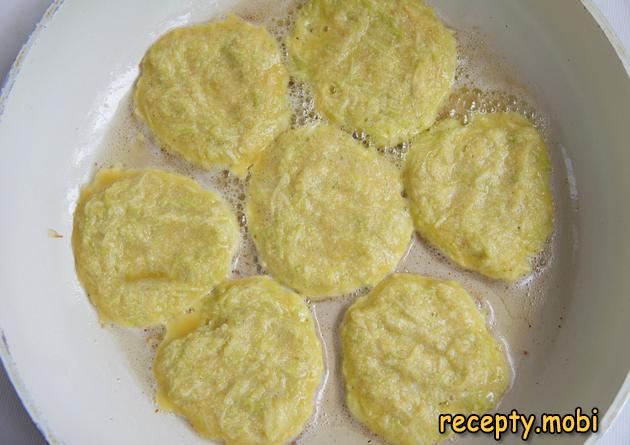
Using a tablespoon, place the zucchini mass on the pan in small patties 7–8 cm in diameter, 2–3 cm apart from each other. Do not make them too thick (1 cm high at most) – thick pancakes stay raw inside. If the batter sticks to the spoon, dip the spoon in cold water from time to time.
Fry the pancakes for 2–3 minutes on one side until the underside is golden. Do not turn them too early – the pancakes may fall apart if the crust has not formed yet. Carefully turn each pancake with a silicone spatula.
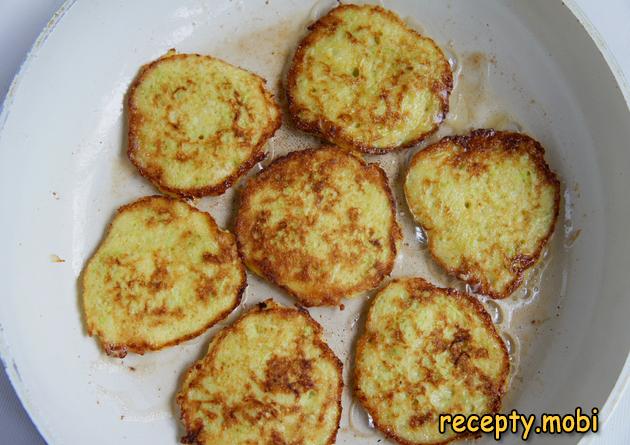
Fry on the other side for another 2 minutes until just as golden. The total cooking time for one batch is 4–5 minutes. If the pancakes are coming out thick, cover the pan with a lid while the second side cooks so they cook through better inside.
To make the finished snack less greasy, place the cooked pancakes on a plate lined with paper towels to absorb the excess oil. Fry the whole mixture this way in batches of 5–6 pancakes at a time.

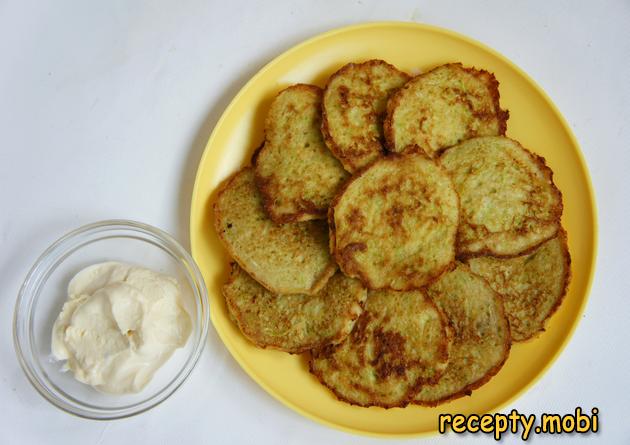
The zucchini pancakes with semolina in a pan are ready! Serve them warm or chilled with 20% sour cream and freshly chopped dill or parsley. They are perfect for breakfast, a light supper, or a snack. They are also good served cold as a nibble with tea.


Tips
- 1
Be sure to let the batter rest for 15 minutes after adding the semolina – this is the secret to a consistency that holds its shape.
- 2
Add the salt right at the end – salt added early draws the juice out of the zucchini and the batter becomes too runny.
- 3
A grater with medium holes gives the right texture – a fine one produces a pasty mush. I make zucchini draniki with egg on a similar principle.
- 4
Adjust the amount of semolina to the juiciness of the zucchini – young ones need more (75 g), older ones less (25 g).
FAQ
What is the advantage of semolina over flour in pancakes? +
Semolina has several advantages for pancakes made from juicy vegetables. Better liquid absorption: semolina absorbs water about twice as effectively as flour – crucial for juicy zucchini. Denser texture: pancakes with semolina turn out firmer and more textured, and hold their shape better. More fibre and vitamins: semolina made from durum wheat is more wholesome than ordinary flour. Gluten-free: it suits people with a gluten intolerance (choose gluten-free semolina). Flour is the universal classic, while semolina is the specialist for juicy vegetables. You can use a 50/50 mix of semolina and flour as a compromise.
Can I replace zucchini with other vegetables? +
Yes, the technique works for various juicy vegetables. Suitable options: courgette (green or yellow, an ideal swap), pumpkin (a more autumnal version, with turmeric for colour), young carrot (for sweet pancakes – add 1 tsp of sugar), aubergine (salt it first and drain off the bitter juice for 30 minutes), boiled beetroot (for pink pancakes), potato (the classic draniki – soak it to remove the starch in that case). For mixed versions, try zucchini and carrot 50/50, or zucchini and potato 50/50. Each vegetable gives its own character. Zucchini is the summer classic for light, diet-friendly pancakes.
How long do the finished pancakes keep? +
Freshly made pancakes are best eaten on the day they are cooked – they are tastiest warm. They keep in the refrigerator for up to 2 days in an airtight container – before serving, reheat them in a dry frying pan for 1–2 minutes per side, or in the oven for 3 minutes at 150°C. Do not reheat them in the microwave – they will go soft. You can freeze the cooked pancakes for 1 month in airtight bags with parchment between the layers – before serving, thaw them fully at room temperature for 30 minutes and warm them in a pan. Do not freeze the raw batter – the semolina loses its binding properties.
What do you serve zucchini pancakes with? +
The classic Russian way is with 20% sour cream and freshly chopped herbs (dill, parsley, spring onion). For sauces – garlic sauce (sour cream + garlic + herbs + salt), homemade tomato sauce, tkemali (Georgian), Greek tzatziki (yoghurt + cucumber + garlic), or hummus. As a dish in their own right – for breakfast or a light supper. As a side – with fried chicken, beef cutlets, or grilled fish. For a light lunch – with a vegetable salad and chicken breast. For drinks – kompot, fruit drink, kvass, kefir, black or green tea, or coffee with milk. For a dacha lunch – with shashlik and grilled vegetables as a summer menu.
- Comment
or post as a guest
Be the first to comment.