avg —
How Long to Boil Quail Eggs: Soft, Jammy and Hard-Boiled

Instructions
Take the eggs out of the fridge 20-30 minutes before cooking, so the shells are less likely to crack in boiling water. Check them and set aside any cracked eggs. If a shell is dirty, rinse it under warm water just before cooking.
Bring water to the boil in a small pan and add the salt: if a shell cracks, the white sets faster in salted water and does not leak out. Turn the heat down to medium so the water boils steadily rather than violently.
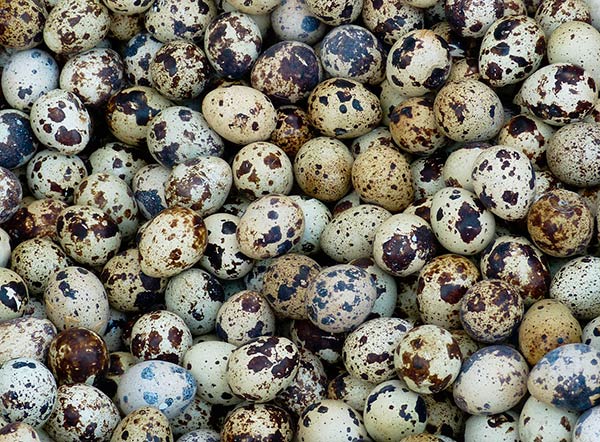
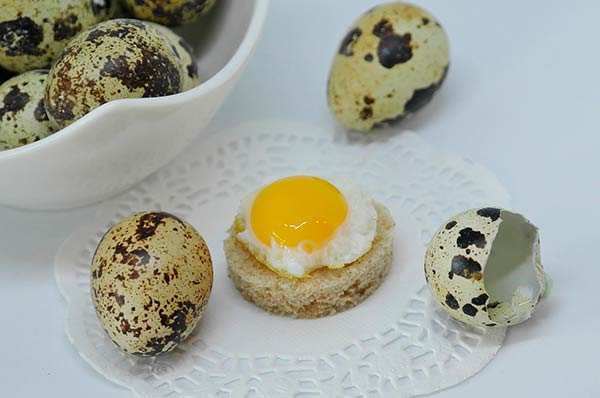
Lower the eggs into the boiling water one at a time with a tablespoon and start the timer when the last one is in: soft-boiled 1.5-2 minutes, jammy 2.5 minutes, hard-boiled 3.5-4 minutes.
Lift the eggs straight into a bowl of iced water with a slotted spoon to stop the cooking. Soft-boiled and jammy eggs need 30-60 seconds and are served warm. Leave hard-boiled eggs in the cold water for 5 minutes, which helps the shell come away.
To peel a hard-boiled egg, roll it on the worktop with light pressure so the shell cracks all over, then peel off the shell and the membrane under cold running water, starting from the wide end. Soft-boiled eggs are not rolled: slice off the top with a knife.


Tips
- 1
Timing depends on size: give large 13-15 g eggs 15-20 seconds more and small 8-9 g eggs the same amount less. Use a timer.
- 2
Do not boil quail eggs for longer than 5 minutes: the white turns rubbery and the yolk dry, with a grey edge.
- 3
A batch of hard-boiled eggs is easiest to peel in a jar: put in 10-15 cooled eggs with a little cold water, close the lid and shake hard for 20-30 seconds. The shells crack all over and come off easily.
- 4
Check freshness in a glass of water: a fresh egg lies on the bottom, an older one stands on its wide end or floats, because the air cell grows over time. A floating egg is not necessarily bad: crack it into a separate bowl and check the smell.
- 5
Children, pregnant women, older people and anyone with a weakened immune system should only have quail eggs hard-boiled, with the white and yolk fully set.
Quail Egg Boiling Times
| Doneness | Time |
|---|---|
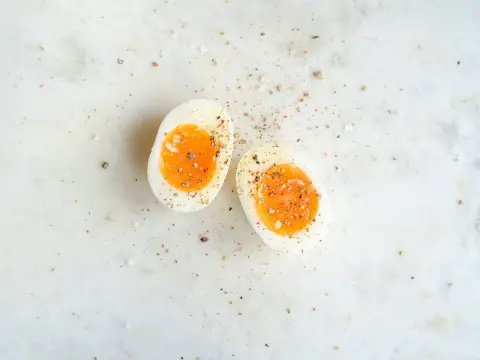
| Soft-boiled white set, runny yolk | 1.5-2 min in boiling water |
| Jammy thick, jam-like yolk | 2.5 min in boiling water |
| Hard-boiled firm yolk | 3.5-4 min in boiling water |
| Hard-boiled, cold-water start timed from the boil | 3 min |
| For salads and canapés firm but not dry yolk | 4 min in boiling water |
| Iced water after cooking | 30-60 s for soft eggs, 5 min for hard-boiled |
Producers and food magazines give anything from 1 to 3 minutes for soft-boiled quail eggs and from 2.5 to 5 minutes for hard-boiled: they time them differently and use eggs of different sizes. The chart gives reliable results for 10-12 g eggs from the fridge. If the yolk comes out firmer than you like, take 15 seconds off next time.
Why Soft-Boiled Quail Eggs Go Only into Boiling Water
A small egg in cold water heats up together with the water, so by the time it boils the yolk is already thickening. That is why a cold-water start only suits hard-boiled eggs: bring the water to the boil over medium heat, cook for 3 minutes and move the eggs to iced water. For a runny yolk, always lower the eggs into water that is already boiling.
How to Peel Quail Eggs Quickly
- Chill hard-boiled eggs in iced water for 5 minutes: the white shrinks slightly and comes away from the shell.
- Roll each egg on the worktop, or shake several eggs in a closed jar with cold water.
- Start from the wide end, where the air cell is, and peel off the shell together with the thin membrane under running water.
- Dissolving the shells in white vinegar works, but it takes several hours and can leave a taste. For boiled eggs the jar is easier.
FAQ
How long do you boil quail eggs for hard-boiled? +
3.5-4 minutes in boiling water, or 3 minutes after the boil if you start them in cold water. Then give them 5 minutes in iced water so they cool down and peel easily.
How long do you boil soft-boiled quail eggs? +
1.5-2 minutes from the moment the eggs go into boiling water. The white sets and the yolk stays runny. Put them in cold water for 30 seconds to stop the cooking and serve straight away.
How long do you boil quail eggs for a jammy yolk? +
2.5 minutes in boiling water: the white is firm and the yolk thick, like jam. They are good in salads, on toast and in soups.
Can children eat quail eggs? +
Yes, but only hard-boiled: the NHS advises that quail eggs for children should be cooked until both the white and yolk are solid. Cut them into quarters for young children, as you would grapes or cherry tomatoes: a whole round egg is a choking hazard.
Is it true that quail eggs cannot carry salmonella? +
No, that is a myth. Studies in Turkey and Iran found salmonella in quail eggs, and in Germany in 2017 quail eggs were linked to a salmonella outbreak. That is why pregnant women, children, older people and anyone with a weakened immune system should only have them hard-boiled, just like hen's eggs.
Can people allergic to hen's eggs eat quail eggs? +
Do not use them as a substitute without medical advice. Quail and hen egg proteins are similar, and an allergy to one often extends to the other. Whether they can be tried is a decision for an allergist.
How long do boiled quail eggs keep? +
Hard-boiled eggs keep in the fridge for up to 7 days, the limit the US Food and Drug Administration (FDA) gives for boiled eggs. Peeled eggs are best eaten within 1-2 days and soft-boiled eggs straight after cooking. Do not leave boiled eggs at room temperature for more than 2 hours, and do not freeze them: the white turns tough and watery.
How many calories are in a quail egg? +
158 kcal per 100 g, according to the US Department of Agriculture (USDA). One egg weighs 9-12 g, which is 14-19 kcal.
How long do you boil chicken eggs? +
An egg of about 60 g straight from the fridge, lowered into boiling water, takes 6 minutes for soft-boiled, 8 minutes for jammy and 10-11 minutes for hard-boiled. With a cold-water start, time from the boil: 3, 5 and 7-8 minutes. A chart by egg size and method is in how long to boil eggs.
- Comment
or post as a guest
Be the first to comment.