How Long to Cook Beans: Red and White, Soaked and Unsoaked
Dried beans are soaked first for 6-8 hours or overnight, otherwise they take a very long time to cook. After soaking, red beans are ready in 50-60 minutes and white beans in 40-50 minutes. Without soaking, add 30-40 minutes. In a slow cooker, cook them for 1.5-2 hours on the Stew setting; in a pressure cooker, 20-30 minutes. Season with salt only at the end, or the skins will turn tough. Tinned beans are already cooked, so there is no need to boil them.
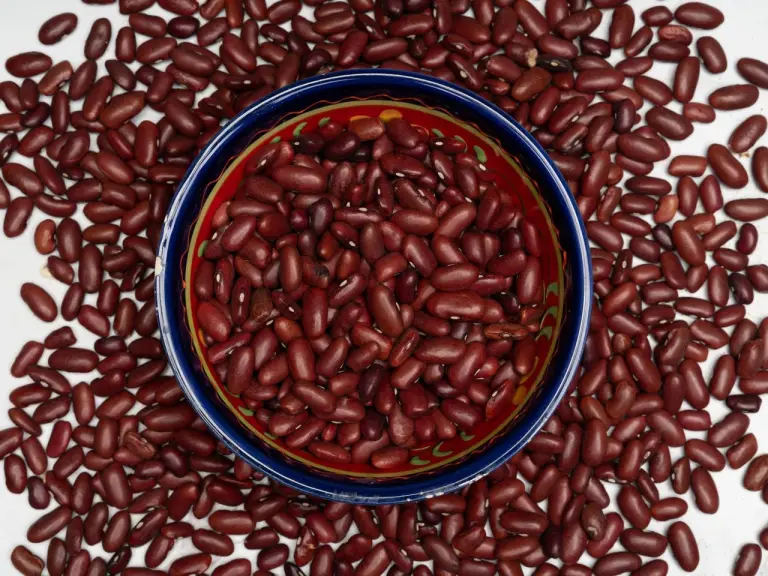
How long to cook beans: times by type and method
| Type or method | Soaking | Cooking time |
|---|---|---|
| Red kidney beans | Yes, 6-8 h | 50-60 min |
| White beans | Yes, 6-8 h | 40-50 min |
| Red beans, unsoaked | No | 80-100 min |
| White beans, unsoaked | No | 70-90 min |
| Slow cooker (Stew) | Yes, 6-8 h | 1.5-2 h |
| Pressure cooker | Yes, 6-8 h | 20-30 min |
| Pressure cooker | No | 40-50 min |
| String beans (green) | Not needed | 5-7 min |
| Tinned | Not needed | Ready, warm through 2-3 min |
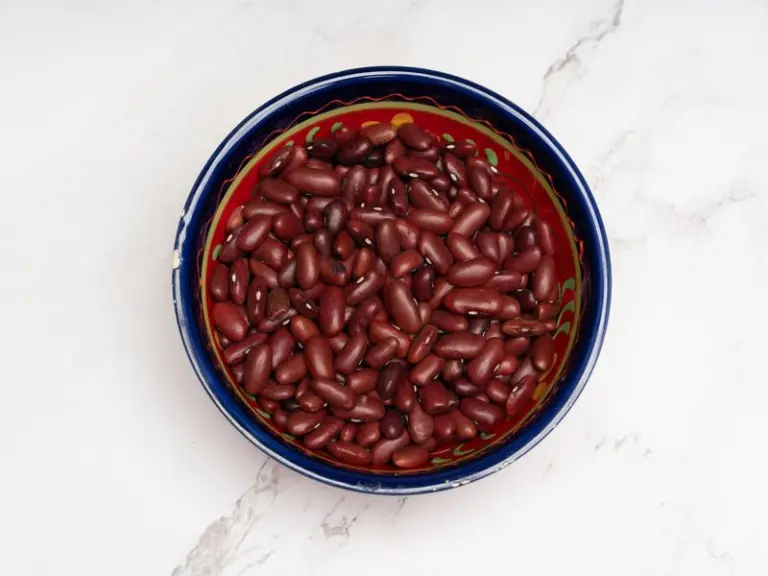
How long to cook beans: by type and method
1. Red beans with soaking
The classic method for firm red beans: soaking shortens the cooking time and makes the beans tender. Once they have swelled, cook them in fresh water, keep the lid slightly ajar, and add salt right at the end.
- Soaking: 6-8 hours in cold water, using three times as much water as beans (1 cup of beans to 3 cups of water), then drain the soaking liquid.
- Water and salt: cook in fresh water, covering the beans by 2-3 cm; add salt (about 1 tsp per litre) 5 minutes before they are done.
- Timing and tips: 50-60 minutes after soaking; keep a brisk boil for the first 10 minutes and cook the red beans until completely tender.
Recipe: Step-by-step recipe for red bean lobio.
2. White beans with soaking
White beans cook faster than red ones and have a more delicate skin. Soaking them overnight speeds up cooking, while a gentle heat keeps the beans from splitting.
- Soaking: 6-8 hours, ideally overnight; three times as much water as beans, then drain.
- Water and salt: fresh water 2-3 cm above the beans, a gentle simmer; salt at the end, about 1 tsp per litre.
- Timing and tips: 40-50 minutes after soaking; a rapid boil splits the delicate skin, so keep the heat low.
3. Without soaking
If you did not have time to soak them, the beans take almost twice as long to cook. Keep the beans under a layer of boiling water and top up only with boiling water so the skin does not toughen.
- Timing: red beans 80-100 minutes, white beans 70-90 minutes.
- Water: cover the beans by 3-4 cm and top up only with boiling water, as cold water makes the skin tough.
- Salt and tips: add salt 5-10 minutes before the end; the time depends on how fresh the beans are, so check them for tenderness.
4. In a multicooker
A convenient hands-off method: the Stew setting brings the beans to tenderness in a couple of hours. Pour in water just above the level of the beans and add salt at the end.
- Water: 2-3 cm above the beans, roughly 1 cup of beans to 2.5 cups of water.
- Timing: 1.5-2 hours on the Stew setting; soaked beans are ready closer to 1 hour.
- Salt and tips: add salt at the end, about 1 tsp per litre; open the lid only after the steam has been released.
5. In a pressure cooker
The fastest method: under pressure the beans are ready in 20-50 minutes. Do not overfill the pot and release the steam gently so the foam does not spurt out.
- Timing: with soaking 20-30 minutes, without soaking 40-50 minutes.
- Water: cover the beans by 2-3 cm and do not fill the pot above the max mark.
- Tips: release the steam gently and add salt only after the pressure has dropped.
6. Green beans (French beans)
Young pods cook in just a few minutes and need no soaking. Cook them in salted boiling water, and for a bright colour cool them straight away.
- Timing: 5-7 minutes in salted boiling water (about 1 tsp of salt per litre).
- Tips: do not defrost frozen beans, drop them straight into boiling water.
- For a vibrant colour: after cooking, plunge them into iced water for a couple of minutes.
7. Tinned
Tinned beans are already cooked, so you just need to heat them through. Rinse the beans of the brine to remove excess salt and any tinny taste.
- Timing: ready straight away, heat through for 2-3 minutes.
- Tips: tip into a colander and rinse under running water to wash off the brine.
- Uses: in salads, soups, lobio and side dishes with no extra cooking.
Tips and tricks
- Soak them the night before: 6-8 hours overnight saves up to an hour of cooking and makes the beans evenly tender.
- Change the water: after soaking, drain off the liquid and add fresh cold water, so there is less bloating.
- Salt right at the end, 5-10 minutes before they are done: salt added early toughens the skins and lengthens the cooking.
- Cook at a gentle simmer with the lid ajar, skimming off the foam: this keeps the liquid clear.
- Do not stir the beans with a spoon: they burst and turn to mush, just give the pan a shake.
- Check for doneness on 2-3 beans: they should mash easily between your fingers.
Common mistakes
- Salt at the start of cooking: the skins harden and the beans stay tough even after an hour.
- Acid added early (tomato, vinegar, lemon): it also stops the beans from softening, so add it at the end.
- Topping up with cold water: the temperature shock toughens the beans, so top up with boiling water only.
- High heat: a rolling boil tears the skins and turns the liquid cloudy.
- Stirring with a spoon: whole beans break up and you end up with a puree instead of a side dish.
Why and how to soak beans
Soaking does three jobs at once. It cuts the cooking time by 30-40 minutes, helps the beans cook evenly and washes out some of the heavy compounds that cause bloating. That is why this step is all but essential for red and white beans.
It is all very simple. Pick over the beans, rinse them and cover with cold water at a ratio of roughly 1 part beans to 3 parts water. Leave them for 6-8 hours, most conveniently overnight. The beans will soak up the water, almost double in size and turn smooth.
In the morning, drain off the soaking water and do not use it for cooking: this is exactly where the compounds that are hard on the stomach end up. Add fresh cold water and put the pan on the hob. If you are in a real hurry, there is a quick method: cover with boiling water, bring to the boil, take off the heat and leave to stand under the lid for 1 hour.
How to cook beans so they turn out soft
Start with cold water. Cover the prepared beans so the water sits 2-3 cm above them and bring to the boil over medium heat. As soon as foam appears, skim it off with a slotted spoon: it is leftover protein and starch that clouds the liquid.
Next, turn the heat down to a gentle simmer. Beans do not like a fierce, rolling boil: it tears the skins, and the outside of the beans overcooks before the inside turns soft. Keep the lid ajar and do not stir the contents with a spoon, just give the pan a shake if needed.
Add salt and any acidic ingredients right at the end, 5-10 minutes before they are done. If the beans stay tough for a long time, there are usually three reasons: early salt or acid, topping up with cold water, or old beans from a previous year's harvest. Fresh beans from the current year always cook faster and softer.
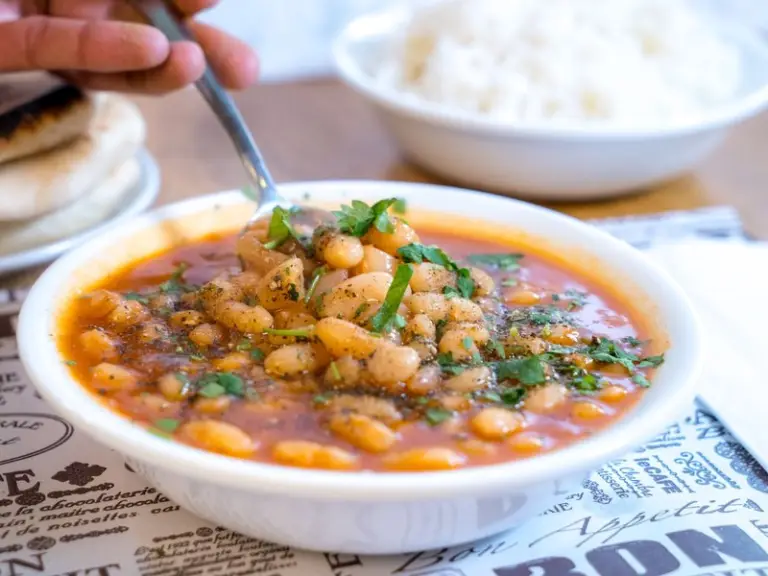
Are raw and undercooked red beans dangerous: the phasin toxin
Red beans, especially the kidney variety, contain a natural toxin called phasin, also known as phytohaemagglutinin. Raw and undercooked beans are high in it: just 4-5 raw beans are enough to bring on nausea, vomiting, stomach cramps and diarrhoea within 1-3 hours. It is important to understand that soaking does not remove the toxin; only high heat destroys it.
The safety rule is this. After soaking, drain the water, add fresh water, bring it to a hard boil and let the beans boil rapidly, at a rolling boil, for at least 10 minutes, or 20-30 to be safe, and only then turn the heat down to a gentle simmer and cook until soft. This is a caveat to the general advice about gentle simmering: slow simmering suits the middle and end of cooking, but red beans must first be boiled hard on a high heat.
A separate word about low-temperature settings. Do not cook raw red beans on low heat alone. In a multicooker on the Stew setting and in a slow cooker the temperature can sit for a long time at around 75-80°C, and this does not destroy phasin and sometimes even makes its effect stronger. So in a multicooker first bring the contents to a rapid boil, using the Steam, Soup or Fry with water setting for 10-15 minutes, and only then switch to Stew. This is less of a concern for white, black and green beans, but every kind must be cooked right through to full doneness.
How much water you need and how much cooked beans you get
For cooking, use roughly 2.5-3 cups of water per 1 cup, about 200 g, of dried beans. A 450-500 g packet will take around 1.5-2 litres. The water should sit 2-3 cm above the beans, and as it boils away top up only with boiling water so the beans stay covered at all times.
Now for the yield of the finished product. During soaking and cooking the beans take up water and increase by roughly 2-2.5 times in both volume and weight. One cup of dried beans gives about 2.5 cups cooked, which is around 500-550 g. So a 500 g packet of dried beans is enough for about 1.2-1.3 kg cooked, roughly 8-10 side portions or a large pot of soup. When planning borscht or lobio for a crowd, measure out about two to three times less dried beans than the cooked amount you need.
Calories and nutritional value of cooked beans
Cooked beans without oil or dressing contain roughly 120-130 kcal per 100 g. That same 100 g has about 7-8 g of plant protein, 21 g of carbohydrate, less than 1 g of fat, around 0.5 g, and plenty of fibre, in the region of 6-7 g. Red and white beans are similar in calories, with a difference within 10-15 kcal. Green beans stand apart: they have only about 25-30 kcal per 100 g, which makes them a vegetable rather than a source of starch.
For anyone watching their weight, beans are handy. They have a low glycaemic index, around 30-40 units, so they keep you full for a long time and do not cause sharp spikes in blood sugar. You can easily estimate the exact value for a portion with a particular side dish or sauce in our glycaemic index calculator. Fibre and plant protein make beans a good replacement for part of the meat, but remember that the calorie count of the finished dish rises sharply with oil, lard, a fried onion and carrot base, and fatty meat in the same borscht or lobio.
How to speed up cooking and rescue old beans
If there is no time to soak overnight, use the quick, hot soak method. Cover the rinsed beans with water 2-3 cm above them, bring to the boil, boil for 2-3 minutes, take off the heat, put the lid on and leave to stand for 1 hour. Then drain the water, add fresh water and cook as usual: this takes about the same time as cooking after an overnight soak. For red beans you must still give them a rapid boil of at least 10 minutes afterwards.
Two more tricks help soften tough skins and speed up cooking. First: a pinch of bicarbonate of soda, roughly a quarter to half a teaspoon per 1 litre of water when soaking or at the start of cooking, especially if the water is hard or the beans are old. Do not add too much, or you will get a soapy aftertaste and destroy some of the vitamins. Second: soaking in lightly salted water, a brine at a rate of 1-2 teaspoons of salt per 1 litre. Sodium ions displace calcium and magnesium from the skin, and it becomes softer. This is the case where salt during soaking does no harm and actually helps. Something else does harm: a very acidic or heavily salted liquid from the very start of cooking, that is tomato, vinegar, lemon and a lot of salt all at once. It toughens the skin, and the beans take noticeably longer to soften.
Another common reason beans will not soften is hard water with a high content of calcium and magnesium. If your tap water is hard, cook with filtered, boiled or bottled water, or add that same pinch of bicarbonate of soda. Old beans give themselves away with a dull, wrinkled skin and long cooking. Cook them longer than usual, by 20-40 minutes, and with bicarbonate of soda if possible, while beans that are completely dried out are best replaced: they may never become soft.
Black, speckled (pinto, borlotti) and lima beans: how long to cook
Besides the familiar red and white, you will often come across other varieties, and it is handy to keep their cooking times close by. After a 6-8 hour soak, use these as a guide:
black beans, about 45-60 minutes, the skin is firm but the flesh is tender, and they hold their shape well in salads and stews;
speckled, pinto and borlotti, also known as cranberry beans, about 50-60 minutes, they break down beautifully into purées and pâtés, and during cooking the bright speckled colour fades to a uniform brown, which is normal;
lima, the large white moon-shaped bean, about 45-60 minutes, very tender and softens easily, so watch that you do not turn it to mush if you want whole beans.
Without soaking, add roughly 30-40 minutes to these figures. The exact time always depends on how fresh the beans are and how hard the water is, so at the end check for doneness on 2-3 beans.
What level of doneness you need for different dishes
The same beans are cooked to different degrees of softness for different dishes, and this noticeably affects the result.
For salads and side dishes, where keeping the whole shape matters, cook them slightly underdone: the bean is soft inside but holds its shape and does not burst.
For purées, pâté, lobio and bean spreads, on the other hand, cook them more thoroughly, to a creamy flesh, so the mixture comes out smooth and is easy to mash or blitz in a blender.
For soup and borscht, cook them until fully soft and add the beans already cooked: if you drop dry or half-raw beans into an acidic liquid with tomato and cabbage, they will cook for a very long time and stay tough.
For home preserving, use slightly underdone beans: during sterilising in the jar they will reach the right softness and will not cook down to mush.
And remember the safety point: red beans, in any of these options, are first brought to a rapid boil for at least 10 minutes.
Cooking video
More cooking guides in culinary tips →
See also
❓ Frequently asked questions
Do you need to soak beans?
It is advisable to soak red and white beans. This cuts the cooking by 30-40 minutes and makes the beans easier on the stomach. String beans and tinned beans do not need soaking.
Why are the beans tough after cooking?
Most often because of salt or acid added at the start, topping up with cold water, or old beans. Salt at the end and top up with boiling water only. Fresh beans from the current year cook softer.
When should you salt beans?
Only at the end, 5-10 minutes before they are done. Salt added early toughens the skins and lengthens the cooking. Do the same with tomato and vinegar.
How long to cook beans for lobio, soup and salad?
For lobio and soup, cook red beans for 50-60 minutes after soaking until fully soft. For a salad, cook white beans a little less, 40-45 minutes, so the beans stay whole and do not turn mushy.
Can you eat tinned beans without cooking them?
Yes, they are completely ready to eat. Just drain off the liquid and rinse away the brine. If you like, heat them through for 2-3 minutes in soup or in a frying pan.
Can you cook beans without soaking?
You can, but it takes longer. Red beans then cook in 80-100 minutes, white ones 70-90. Top up with hot water as it boils down so the beans do not toughen.
How long to cook string beans?
Cook fresh and frozen green string beans for 5-7 minutes in boiling salted water. Add frozen ones without thawing. After cooking you can plunge them into iced water for colour.
Should you drain the water after soaking?
Yes, drain off the soaking liquid and use fresh cold water. The soaking water holds compounds that cause bloating, so it is not used for cooking.
How long to cook beans in a slow cooker?
On the Stew setting for 1.5-2 hours. Soaked beans will be ready nearer 1.5 hours, unsoaked ones nearer 2 hours. Pour in water 2-3 cm above the level of the beans.
How to store cooked beans?
In the fridge in a sealed container for 3-4 days, ideally in a little of the cooking liquid. For longer storage, freeze in portions, keeping for up to 6 months.
Are raw and undercooked red beans dangerous, can they give you food poisoning?
Yes, raw and undercooked red beans are dangerous: they contain the toxin phasin (phytohaemagglutinin), which brings on nausea, vomiting, cramps and diarrhoea within 1-3 hours. Just a few raw beans are enough. The toxin is only destroyed by a rapid boil of at least 10 minutes, so always boil red beans hard at a rolling boil rather than merely simmering them at a low temperature.
How much salt should you add when cooking, per litre of water or per cup of beans?
Go by the volume of water: about 1 teaspoon of salt per 1 litre, or to taste. Add it at the end, 5-10 minutes before the beans are done, so the skin does not toughen. For soaking in salted water, though, 1-2 teaspoons per litre is more appropriate, and that salt actually makes the skin softer.
Can you cook red and white beans together?
You can, but they have different cooking times: white beans are usually done in 40-50 minutes after soaking, while red beans need 50-60 minutes and a compulsory hard start to the boil. If you cook them together, soak both varieties, make sure the water boils rapidly for at least 10 minutes for the sake of the red beans' safety, and bear in mind that the white beans may overcook slightly. It is more reliable to cook the varieties separately and combine them in the finished dish.
How can you tell the beans are cooked?
A cooked bean is easily crushed against the roof of your mouth with your tongue or between your fingers, there is no hard core inside, the flesh is smooth and creamy, and the skin is intact but soft. Check on 2-3 beans from different parts of the pot, because they do not cook completely evenly. If even one still has a hard centre, cook them a little longer.
What should you do if the beans are still tough, can you carry on cooking them?
Yes, undercooked beans can safely be cooked further. Top up with boiling water so the beans are covered, and keep cooking at a gentle simmer, checking every 15-20 minutes. If the cause is old beans or hard water, a pinch of bicarbonate of soda and a switch to soft, filtered water will help, and do not add salt or acid until the beans are fully soft, as these slow down the softening.
Can you put dried beans straight into soup or borscht without cooking them separately?
Dried beans are best cooked separately and added to soup or borscht already done. In an acidic environment with tomato, cabbage and salt, raw beans cook for a very long time and often stay tough, and red beans also need a safe, hard boil. The only things you can put straight into the pot are green beans, 5-7 minutes before the end, or tinned beans, to heat through.
Can you cook beans in the microwave?
Green beans and tinned beans can be cooked or heated through in the microwave, but dried beans are awkward and not worth cooking this way: they heat unevenly, and with red beans it is hard to guarantee the required rapid boil of at least 10 minutes, so there is a risk of leaving them undercooked and toxic. For dried beans a normal pot, a pressure cooker or a multicooker that reaches a boil is more reliable.
What is the maximum time you can soak beans, and what should you do if they have gone sour?
Soak for no longer than 10-12 hours, and in hot weather put the bowl in the fridge, otherwise the beans will start to ferment. The signs of souring are foam, bubbles and a sour, yeasty smell. Drain that water at once and rinse the beans well. If the smell has gone and the beans are intact, you can still cook them, but if a sour whiff remains or there is a slimy film, it is better not to risk it and to replace them.
How can you reduce the wind that beans cause?
To make beans less gassy, always drain the water after soaking and the first cooking water, and better still change the water once more during cooking. Cook the beans thoroughly until fully soft and add carminative spices: cumin, fennel, bay leaf and dill. If pulses are a rare thing in your diet, introduce them gradually, in small portions, so your gut gets used to them.
From what age can you give beans to a child?
As a well-cooked purée without salt or spices, beans are usually offered from 8-10 months, in small portions and while watching for a reaction. Whole beans are given closer to 2-3 years, when the child chews confidently, because it is easy to choke on a round bean. Beans for a child must be cooked until fully soft, and red beans, as for adults, are first brought to a rapid boil for at least 10 minutes.