How long to cook chickpeas: cooking times for hummus, soups and salads
Dried chickpeas are first soaked for 8-12 hours in cold water, then cooked. Soaked chickpeas become tender in 1-1.5 hours on the hob. Without soaking they take longer, 2-3 hours. In a pressure cooker soaked chickpeas are ready in 20-25 minutes, and unsoaked ones in 35-40 minutes. In a slow cooker on the Stew setting they need 2-2.5 hours. For hummus, chickpeas are cooked until very soft, so they mash easily, while for soups and salads a tender texture with a slight bite is enough. Always salt at the end, otherwise the beans stay hard.
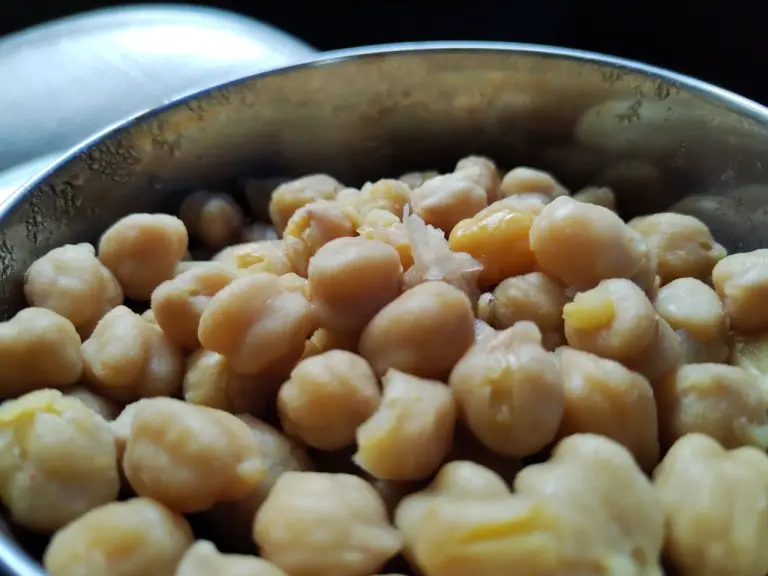
How long to cook chickpeas: methods and times
| Method | Soaking | Time |
|---|---|---|
| On the hob, soaked | 8-12 hours | 1-1.5 hours |
| On the hob, unsoaked | not soaked | 2-3 hours |
| Pressure cooker, soaked | 8-12 hours | 20-25 minutes |
| Pressure cooker, unsoaked | not soaked | 35-40 minutes |
| Slow cooker, Stew setting | 8-12 hours | 2-2.5 hours |
| For hummus, until very soft | 8-12 hours | 1.5-2 hours |
| Tinned | not needed | ready, reheat 3-5 minutes |
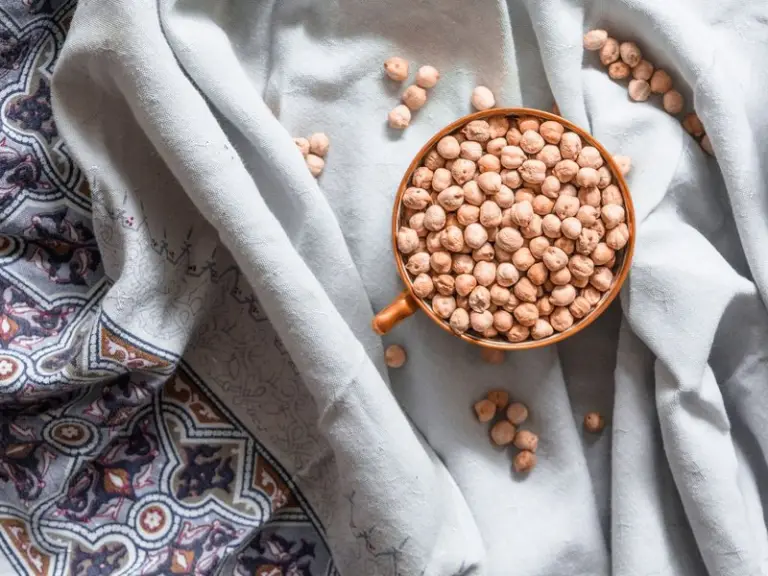
How to cook chickpeas: methods and times
1. Soaking chickpeas
An essential step for dried chickpeas: cover the beans with plenty of cold water, as they swell to 2-3 times their size. Soaking them overnight is the most convenient option.
- Water ratio: 1 part chickpeas to 2-3 parts cold water (about 2.5-3 cups of water per 1 cup of chickpeas)
- Time: 8-12 hours; in summer keep the bowl in the fridge so the chickpeas do not turn sour
- Tip: a pinch of bicarbonate of soda softens the water and speeds up the later cooking
2. Chickpeas on the hob
The classic method. Rinse the soaked chickpeas, cover with fresh cold water and simmer with the lid slightly ajar until tender.
- Time: 1-1.5 hours if soaked, 2-3 hours without soaking
- Water ratio: fresh water 3-5 cm above the beans (roughly 1 part chickpeas to 3 parts water)
- Tip: skim off the foam in the first few minutes of boiling and season with salt only at the end
3. Chickpeas in a pressure cooker
The quickest method: high pressure softens chickpeas many times faster. Start counting the time once full pressure is reached.
- Time: 20-25 minutes if soaked, 35-40 minutes without soaking (once full pressure is reached)
- Water ratio: 3-4 cm above the level of the chickpeas
- When to use: whenever you need to cook chickpeas as quickly as possible
4. Chickpeas in a slow cooker
Handy when you want to leave the chickpeas unattended. Cover the soaked chickpeas with water and cook on the stew setting, checking for tenderness towards the end.
- Time: Stew setting 2-2.5 hours or Beans setting 1.5-2 hours; 2.5-3 hours for unsoaked chickpeas
- Water ratio: 2-3 times the volume of the chickpeas
- Tip: soak the chickpeas first for 8-12 hours
5. Chickpeas with bicarbonate of soda
Bicarbonate of soda speeds up softening and helps remove the skins, which is especially important for smooth hummus. The key is not to overdo it.
- Ratio: 0.5 tsp bicarbonate of soda per 1 litre of water
- When to use: speeds up cooking, softens hard water and makes peeling the skins easier
- Tip: too much bicarbonate of soda gives a soapy taste, so keep to the measure
6. Chickpeas for hummus
For hummus the chickpeas are cooked until very soft, so they mash easily into a paste. This usually takes 1.5-2 hours for soaked beans, often with a little bicarbonate of soda added.
- Time: 1.5-2 hours, until the beans crush between your fingers with no effort
- Ratio: 0.5 tsp bicarbonate of soda per litre of water for a smooth texture
- Tip: peel the skins off the cooked chickpeas for a uniform paste
Recipe: Step-by-step recipe for homemade hummus.
7. Tinned chickpeas
Tinned chickpeas are already fully cooked, so there is no need to boil them. Simply drain the liquid, rinse the beans and warm them through if you like.
- When to use: ready straight away, and for hummus and salads you can use them without cooking
- Tip: always rinse off the brine before use
- Time: warm through for 3-5 minutes if the dish should be served warm
Tips and tricks
- Always salt chickpeas right at the end of cooking, salt added early makes the beans hard and slows down softening.
- Soak with plenty of water, as chickpeas swell to 2-3 times their size.
- Skim off the foam in the first few minutes of boiling, then the cooking liquid comes out cleaner and clearer.
- Do not pour away the chickpea cooking liquid (aquafaba), it replaces egg white in baking, mousses and vegan sauces.
- Check doneness with your fingers: a soft bean crushes easily with no hard centre.
- For salads cook the chickpeas a little less so they hold their shape, and for pureed soups and hummus cook them longer, until mushy.
Common mistakes
- Salting at the start of cooking: the chickpeas stay hard and take a long time to soften.
- Skipping the soak when you are short of time: cooking drags on for 2-3 hours instead of an hour and a half.
- Adding too much bicarbonate of soda: a soapy aftertaste appears and the flavour of the chickpeas is lost.
- Cooking over high heat with the lid tightly closed: the chickpeas fall apart and the foam boils over.
- Adding too little water: the chickpeas swell and become exposed, and the top beans stay half-raw.
How to tell when chickpeas are done
Cooked chickpeas crush easily between your fingers or with a spoon, and inside they are soft and uniform, with no hard centre. For salads leave the beans slightly firmer so they hold their shape. For pureed soup and hummus cook until the chickpeas mash into a soft pulp. If the beans still spring back and are hard inside, top up with boiling water and carry on cooking, checking every 15-20 minutes. Remember that cooked chickpeas swell noticeably and turn tender in flavour.
Why chickpeas sometimes will not soften
The most common reason is old chickpeas: the longer the beans have been stored, the tougher the skin and the longer the cooking. Hard water with a high salt content also slows softening, and here a pinch of bicarbonate of soda helps. Early salt and acidic ingredients (lemon, tomatoes) in the pot stop the chickpeas from softening, so they are added only right at the end. If the chickpeas simply will not come good, extend the cooking and top up with hot water, not cold, so as not to interrupt the process.
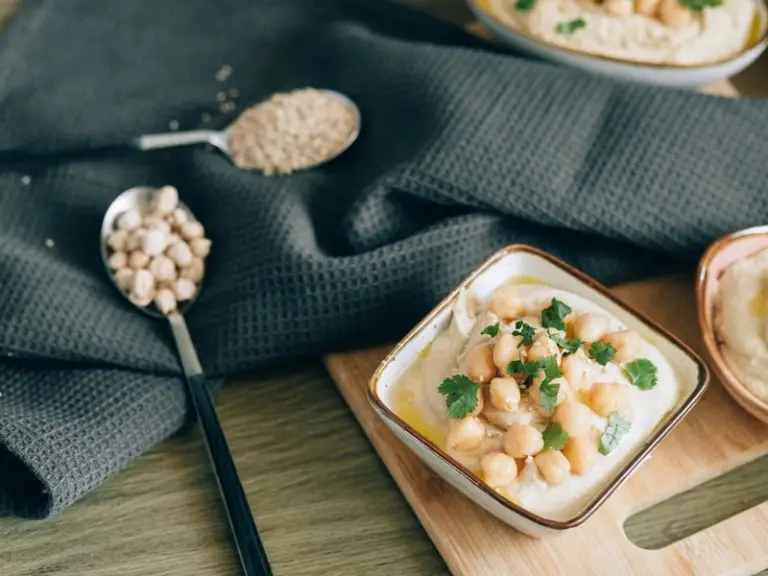
Quick (hot) chickpea soak in 1 hour
If you do not have 8-12 hours for the classic soak, the hot (express) method comes to the rescue. Rinse the dry chickpeas and cover them generously with freshly boiled water so it sits 3-5 cm above the beans, or bring the chickpeas to the boil in a pan and simmer for 3-5 minutes. Take them off the heat, cover with a lid and leave for 1 hour: in that time the chickpeas will take up almost as much moisture as they would overnight in cold water. Then drain, rinse the chickpeas and cook them like ordinary soaked ones, that is 1-1.5 hours until soft. In the summary table this adds one more row: hot soak 1 hour plus cooking 1-1.5 hours.
When it comes to water, the rule is the same for any soak: soaked chickpeas are tipped out, rinsed and cooked in fresh water that covers the beans by 3-5 cm (roughly 1 part chickpeas to 3 parts water), topping up with hot water as it boils away. A little salt (about 1 tsp per litre) can be added to the soaking water itself: it slightly softens the skins and does not hinder cooking, unlike salt added at the start of cooking, which makes chickpeas tough.
In summer, soak chickpeas in the fridge. In the warmth, pulses start to ferment and turn sour over 8-12 hours: the water goes cloudy, foam appears and there is a sour smell. The fridge prevents this.
Chickpeas for falafel: soaked but not cooked
Falafel is the one case where chickpeas are absolutely never cooked. For it, dry chickpeas are soaked in cold water for 12-24 hours (you can add a spoonful of bicarbonate of soda for softness), and then, while still raw and merely swollen, they are ground in a blender or mincer together with onion, garlic, herbs and spices. Balls are shaped from this raw mixture and deep-fried: the chickpeas cook through during frying.
It is important not to confuse the two approaches. For hummus, chickpeas are cooked until very soft, whereas for falafel you use them raw and soaked. If you make falafel from cooked or tinned chickpeas, the mixture turns out too wet and loose, the balls fall apart in the oil and soak up fat. Boiled chickpeas are no good for falafel, only raw soaked ones.
How to store and freeze cooked chickpeas
In the fridge, cooked chickpeas keep for 3-4 days. It is best to store them right in their cooking liquid or in a tightly sealed container: that way the beans do not dry out or become leathery. If you leave the chickpeas uncovered, the surface goes tough and they spoil faster.
For longer storage, chickpeas are frozen. Tip the cooked chickpeas into a colander, let the water drain and pat them slightly dry, spread them in a single layer on a board or tray and part-freeze for 1-2 hours, then pour them into a bag or container. Frozen loose this way, the beans do not clump into a lump, and you can take out just the portion you need. In the freezer, chickpeas keep for 3-6 months.
You do not have to thaw them before cooking: frozen chickpeas can go straight into soup, stew, braised vegetables or a frying pan, and they warm through in a few minutes. For a salad or hummus, let them thaw in the fridge or pour boiling water over them.
How to keep chickpeas from causing bloating
Bloating after pulses is caused by oligosaccharides (raffinose and others), which the body breaks down poorly. A few tricks help keep the discomfort to a minimum:
- always soak the chickpeas and always tip away the soaking water, do not cook them in it;
- cook them in fresh water until completely soft, as undercooked chickpeas are harder to digest;
- add cumin, fennel, bay leaf or a pinch of asafoetida while cooking: these spices traditionally make pulses easier to digest;
- a pinch of bicarbonate of soda in the cooking water also slightly reduces the amount of gas-forming substances, but do not overdo it or you will get a soapy aftertaste;
- remove the skins from the cooked chickpeas: the tough coats are the hardest of all to digest. The easiest way is to tip the warm chickpeas into a bowl of water and rub the beans lightly between your palms, the skins will come away and float up, and you simply pour them off with the water. This same trick gives perfectly smooth hummus.
Start with small portions so your gut flora can get used to them: over time the reaction usually eases.
How long to cook chickpeas for a particular dish
Go not only by the clock but also by how soft they are, since different dishes call for different chickpeas:
- part-cooked, about 30 minutes after the water returns to the boil, the beans are still firm inside. Good for when the chickpeas will finish cooking in the dish itself. Raw soaked chickpeas can even be added straight to soup and finished off in the stock over 1-1.5 hours;
- soft but holding their shape, 45-60 minutes, the chickpeas keep their shape and do not fall apart. Ideal for salads, side dishes, snacks and frying with seasonings;
- very soft and easy to mash, 90-120 minutes, the beans crush easily into a paste. Needed for hummus, purées, fillings, cream soups, patties and rissoles.
In a multicooker, soaked chickpeas are done in 1.5-2 hours on the Beans/Pulses or Stew setting, while setting it to 2.5-3 hours only makes sense for unsoaked chickpeas. Always check doneness with your fingers: a crushed bean should be soft inside, with no hard core.
Calories, macros and glycaemic index of cooked chickpeas
One cup of dry chickpeas (about 200 g) yields roughly 500-550 g cooked: the beans take up water and increase 2-2.5 times in weight and 2-3 times in volume. This is handy to bear in mind when shopping, as you need noticeably less dry chickpeas than the finished dish would suggest.
The calorie content of cooked chickpeas is about 130 kcal per 100 g in most domestic tables (USDA data puts it closer to 160 kcal, the spread being down to how well cooked they are and how much water they have absorbed). In 100 g of cooked chickpeas there is roughly 8-9 g of protein, about 27 g of carbohydrate, 2.5-3 g of fat and plenty of fibre, so they are very filling and often replace meat in fasting and vegetarian dishes.
The glycaemic index of cooked chickpeas is low, around 28-35, they raise blood sugar gently and suit carbohydrate-controlled diets and diabetes. You can work out the glycaemic load of your portion using the glycaemic index calculator on our site.
Cooking video
Related guide: how long to boil beans. More in culinary tips →
See also
❓ Frequently asked questions
Do you need to soak chickpeas?
Dried chickpeas must be soaked if you want to shorten the cooking and get an even softness. Cover the beans with cold water for 8-12 hours, most conveniently overnight. Chickpeas will cook without soaking too, but the time rises to 2-3 hours.
How long do you cook chickpeas for hummus?
For hummus, chickpeas are cooked until very soft, about 1.5-2 hours for soaked beans, often with added bicarbonate of soda. The chickpeas should mash easily into a paste between your fingers. For a smooth texture the skins are removed.
Why add bicarbonate of soda when cooking chickpeas?
Bicarbonate of soda softens the water, speeds up cooking and helps loosen the skins, which matters for smooth hummus. Just 0.5 tsp per litre of water is enough. Do not add more, or a soapy aftertaste will appear.
Why are my chickpeas hard and will not soften?
The main reasons are old chickpeas, hard water, early salt or acidic ingredients in the pot. Add salt and lemon only at the end of cooking. If the chickpeas will not come good, top up with hot water and extend the time, adding a pinch of bicarbonate of soda if needed.
Do you need to cook tinned chickpeas?
No, tinned chickpeas are already fully cooked. Drain the liquid, rinse the beans and use them straight away. If you like, reheat for 3-5 minutes when the dish should be warm.
How long do you cook chickpeas without soaking?
Without soaking, chickpeas take 2-3 hours on the hob until tender. In a pressure cooker that is 35-40 minutes. Bear in mind that unsoaked chickpeas cook less evenly, so check the beans towards the end.
When should you salt chickpeas?
Salt is added right at the end of cooking, a few minutes before they are done. If you salt at the start, the beans stay hard longer and soften less well. The same goes for lemon and tomatoes.
Do you need to skim the foam and remove the skins?
Skim the foam in the first few minutes of boiling, then the cooking liquid will be cleaner. You only need to remove the skins for smooth hummus: after cooking, rub the chickpeas in a bowl of water and the skins will float up. For soups and salads it is not necessary.
Can you soak chickpeas for longer than 12 hours?
You can soak for longer than 12 hours, but in a warm room the chickpeas will start to ferment. If you need to leave them for a long time, put the bowl in the fridge and change the water. Usually 8-12 hours is quite enough.
How much cooked chickpeas do you get from a cup of dried?
From 1 cup of dried chickpeas you get roughly 2-2.5 cups of cooked, since the beans swell to 2-3 times their size during soaking and cooking. Bear this in mind when choosing a pot and the amount of water.
How can I soak chickpeas quickly if I do not have 8-12 hours?
Use the hot soak. Cover the rinsed chickpeas with freshly boiled water, or bring them to the boil and simmer for 3-5 minutes, take them off the heat, cover with a lid and leave for 1 hour. Then drain, rinse the chickpeas and cook them like ordinary soaked ones, 1-1.5 hours. The result is almost the same as after an overnight soak.
Can I cook chickpeas in the water they were soaked in?
No, the soaking water should be tipped away, and the chickpeas rinsed and covered with fresh water. The old water holds the oligosaccharides that cause bloating, along with grit and cloudy foam. In fresh water, chickpeas are both easier to digest and cleaner in flavour.
Do chickpeas for falafel need to be cooked?
No. For classic falafel the chickpeas are not cooked: they are soaked for 12-24 hours and ground raw, merely swollen, with spices, and they cook through when the balls are deep-fried. Falafel made from cooked or tinned chickpeas falls apart, so only raw soaked ones are used.
How long do cooked chickpeas keep, and can they be frozen?
In the fridge, cooked chickpeas keep for 3-4 days, ideally in their cooking liquid or a sealed container. They freeze well: pat the beans dry, part-freeze them spread loose in a single layer, then pour them into a bag, with a storage life of 3-6 months. You do not have to thaw them, as frozen chickpeas go straight into soup, stew or a frying pan.
Why do chickpeas cause wind, and how can I avoid it?
Bloating is caused by oligosaccharides, which the body finds hard to break down. To reduce the effect, always soak the chickpeas and tip away the soaking water, cook them in fresh water until completely soft, add cumin, fennel, bay leaf or a pinch of asafoetida, and skim off the foam. Start with small portions so your gut gets used to them gradually.
How many calories and how much protein are in cooked chickpeas, and what is their glycaemic index?
In 100 g of cooked chickpeas there are about 130 kcal (up to 160 by various tables), roughly 8-9 g of protein, 27 g of carbohydrate and 2.5-3 g of fat, plus plenty of fibre. The glycaemic index is low, around 28-35, so chickpeas suit sugar-controlled diets. You can work out the load for your portion using the glycaemic index calculator on the site.
How do chickpeas differ from peas and mung beans in cooking time?
Soaked chickpeas cook in 1-1.5 hours, they are the firmest of the three. Split peas cook in 30-60 minutes without soaking, whole peas are closer to chickpeas but usually a little quicker. Mung beans need no soaking at all and cook in 30-40 minutes, so you cannot swap them for one another in a recipe without adjusting the timing.
Can you eat raw or undercooked chickpeas?
You cannot eat dry raw chickpeas: raw pulses are barely digestible and contain lectins that can cause nausea and an upset stomach. Chickpeas must be soaked and cooked until completely soft. Raw soaked chickpeas are used only for falafel, but even there they undergo heat treatment during frying. Undercooked chickpeas are also best avoided, so cook them until soft.
How long do you cook sprouted chickpeas?
Sprouted chickpeas cook far faster than ordinary ones, 15-20 minutes is enough. You can even skip cooking the sprouts and simply blanch them for 2-3 minutes or add them to warm dishes, but a short cook is preferable for easy digestion, especially for children and sensitive stomachs.
What should I do if the chickpeas have overcooked and fallen apart?
No harm done: overcooked chickpeas are perfect for hummus, purée, filling for flatbreads, vegetable patties and rissoles or cream soup. Just mash them with a masher or blitz them in a blender. And for a salad, where the shape of the beans matters, next time cook them for 45-60 minutes and not over a high heat.