How long to cook mushrooms: times for champignons, wild, dried and frozen
Champignons and oyster mushrooms cook in 5-7 minutes, chanterelles in about 20 minutes, porcini in 35-40 minutes, and birch boletes, aspen boletes and honey fungus in 40-50 minutes. Dried mushrooms are first soaked for 2-3 hours, then boiled for 30-40 minutes. Frozen mushrooms go straight into boiling water without thawing and cook for 15-20 minutes. Fresh champignons do not need pre-boiling before frying, while wild mushrooms are better boiled in advance. Skim the foam off with a slotted spoon and add salt right at the end of cooking.
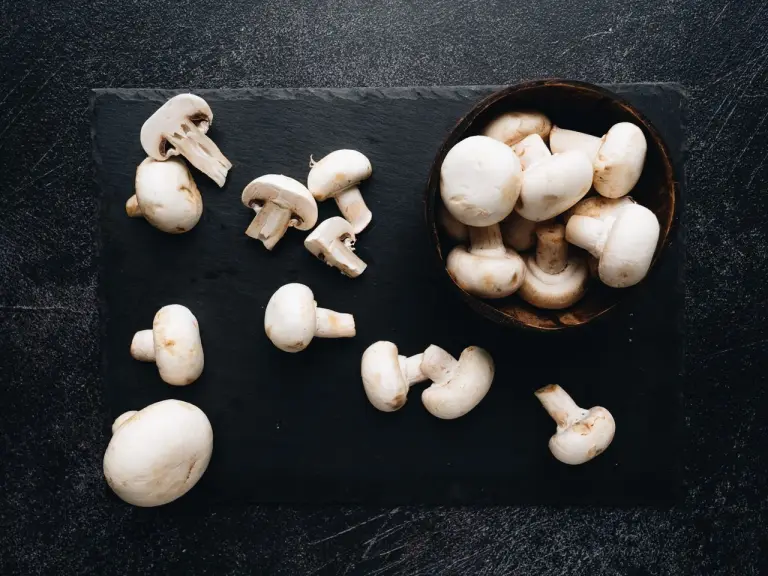
Mushroom boiling times
| Mushroom | Boiling time | Notes |
|---|---|---|
| Champignons | 5-7 minutes | No need to boil before frying |
| Oyster mushrooms | 5-7 minutes | Cut the stem smaller than the cap |
| Porcini (ceps) | 35-40 minutes | Firm flesh, season at the end |
| Birch boletes | 40-50 minutes | Best to drain the first water |
| Aspen boletes | 40-50 minutes | They turn blue when cut, that is normal |
| Chanterelles | about 20 minutes | A pinch of salt removes any bitterness |
| Honey fungus | 40-50 minutes | Boil in two stages, changing the water |
| Dried | soak 2-3 hrs, boil 30-40 minutes | Strain the soaking liquid into the soup |
| Frozen | 15-20 minutes | Add without thawing |
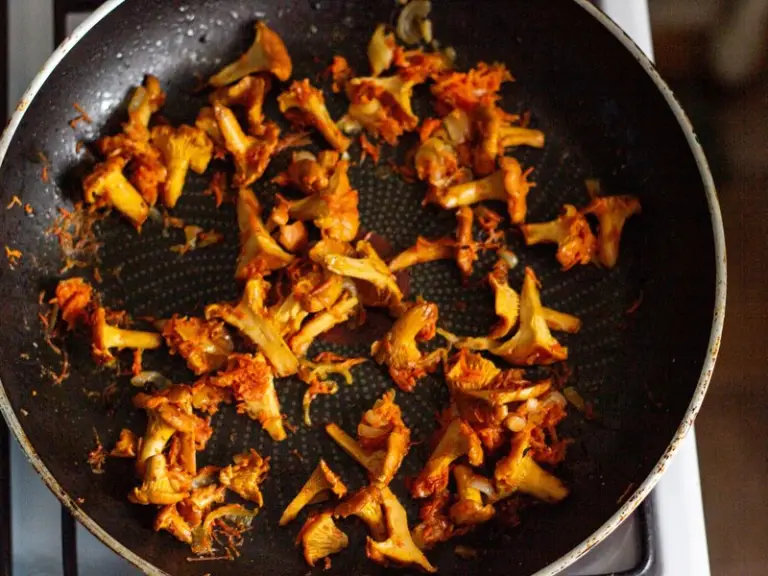
How long to boil each type of mushroom
1. Button mushrooms
The quickest mushrooms to cook. Fresh button mushrooms boil for 5-7 minutes once the water returns to the boil. You need not boil them at all before frying, simply washing and slicing them is enough.
- Time: 5-7 minutes after the water returns to the boil
- Note: they will not darken if you add a little lemon juice to the water
- Best for: soups, salads, fillings, side dishes
Recipe: Step by step recipe for button mushroom soup.
2. Oyster mushrooms
Soft cultivated mushrooms that barely need boiling. It is enough to keep them in boiling water for 5-7 minutes. Trim off the tough base of the stem, and cut large stems smaller than the caps.
- Time: 5-7 minutes in boiling water
- Note: trim off the tough base of the stem
- Best for: frying, soups, salads, sauces
Recipe: Classic mushroom julienne.
3. Porcini (ceps)
The king of the forest, with firm flesh and a rich aroma. Fresh porcini are boiled for 35-40 minutes. Salt the water only towards the end, otherwise the mushrooms turn rubbery.
- Time: 35-40 minutes when fresh
- Note: clean before boiling, cut large ones into pieces, salt at the end
- Best for: soups, roasts, freezing for later
4. Birch boletes and orange boletes
Firm woodland mushrooms that need long boiling, 40-50 minutes. The orange bolete turns blue where it is cut, which is a normal reaction and does not affect the flavour. It is sensible to drain the first water once it comes to the boil.
- Time: 40-50 minutes
- Note: drain the first water once it comes to the boil
- Best for: soups, roasts, freezing, fillings
5. Chanterelles
Bright yellow mushrooms with a nutty flavour and a pleasantly firm texture. They boil for about 20 minutes, and there is no need to keep them in the water any longer. Once cooked, chanterelles shrink slightly and darken.
- Time: about 20 minutes
- Note: a pinch of salt removes the slight bitterness
- Best for: frying in soured cream, soups, sauces
6. Honey mushrooms
Small woodland mushrooms that grow in clusters. Despite their size, they need long boiling, 40-50 minutes. Drain the first water once it comes to the boil to remove any bitterness and woodland debris.
- Time: 40-50 minutes
- Note: boil in two stages, changing the water
- Best for: pickling, frying, soups, mushroom pâté
7. Dried mushrooms
A concentrate of mushroom aroma, most often porcini. First soak the mushrooms in cold water for 2-3 hours, then boil them for 30-40 minutes. Strain the soaking liquid and add it to the dish for extra flavour.
- Time: soak for 2-3 hours, boil for 30-40 minutes
- Note: do not throw away the soaking water, strain it instead
- Best for: rich soups, sauces, gravies
8. Frozen mushrooms
Cooked straight from the freezer, with no need to defrost. Drop the mushrooms into boiling salted water and boil for 15-20 minutes. If they were already boiled before freezing, halve the time, to 7-10 minutes.
- Time: 15-20 minutes without defrosting
- Note: add to boiling salted water
- Best for: soups, roasts, a quick dinner
Tips and tricks
- Put wild mushrooms into cold water and bring them to the boil gradually, this way they release debris and bitterness more effectively.
- Season the water right at the end of boiling: salting too early makes the flesh tough and rubbery.
- Skim off the foam with a slotted spoon, as it collects traces of soil and forest debris.
- Judge readiness by eye: boiled mushrooms sink to the bottom of the pan, while raw ones float on top.
- For a clear stock with birch boletes, aspen boletes and honey fungus, drain the first water once it boils and pour in fresh boiling water.
- Cut the mushrooms into evenly sized pieces so they cook through evenly.
Common mistakes
- Salting at the start of boiling. This makes the mushrooms tough and they give less aroma to the stock.
- Overboiling champignons and oyster mushrooms. Cultivated mushrooms need only 5-7 minutes, and any longer turns them rubbery.
- Thawing mushrooms before boiling. They lose their shape and release excess water, so add them straight from the freezer.
- Underboiling wild mushrooms. Porcini need 35-40 minutes, and birch boletes and honey fungus a full 40-50, otherwise they are hard to digest.
- Throwing away the soaking liquid from dried mushrooms. Most of the aroma stays in it, so strain it and return it to the dish.
How to boil mushrooms step by step
Sort and rinse the mushrooms, trimming off any darkened patches and bits of mycelium. Cover wild mushrooms with cold water and set them over a medium heat, while cultivated ones can go straight into boiling water. Slow heating helps wild mushrooms release grit and excess bitterness.
Once it boils, a grey foam will form on the surface, so skim it off with a slotted spoon. With birch boletes, aspen boletes and honey fungus it is sensible to drain the first water completely, pour in fresh boiling water and carry on boiling. This gives a clear stock and a cleaner flavour.
Season the water a couple of minutes before the end, not at the start. Look out for a simple sign: cooked mushrooms sink to the bottom of the pan. Once boiled, tip them into a colander, let the water drain off and use them as the recipe requires.
Mushrooms for soup, for salad and before frying; storing boiled mushrooms
For soup, wild mushrooms are boiled in advance, and the stock can be strained through muslin if you like. For salad, boil the mushrooms until fully done, then cool and slice them, as excess moisture is unwelcome here. Before frying, champignons and oyster mushrooms need not be boiled, but wild mushrooms are best at least partly boiled for safety.
Boiled mushrooms keep in the fridge in a sealed container for 1-2 days. If you need longer, divide the cooled mushrooms between bags or containers and freeze them, and they will keep for several months. Frozen boiled mushrooms then cook more quickly, needing only 5-10 minutes.
How long to cook slippery jacks, milk caps, russulas and other types
The main table covers the popular mushrooms, but a forager's basket goes well beyond them. Let's look at the types people often search for separately.
Slippery jacks are boiled for 25-30 minutes after you peel the sticky, slimy film off the caps: it turns the stock bitter, cloudy and dark.
Milk caps and woolly milkcaps must be soaked for 1-2 days in cold water before cooking, changing the water 2-3 times a day. Without this they keep a burning milky juice that irritates the stomach and gut. Once soaked, they are boiled for 15-20 minutes.
Russulas, despite what their Russian name suggests, are not eaten raw: boil them for 20-30 minutes.
Saffron milk caps only need 15-20 minutes, but more often they are not boiled at all and are salted or pickled almost raw, as this is a classic mushroom for salting.
King oyster mushrooms (eryngii) cook quickly, in 7-10 minutes.
Fresh shiitake are boiled for 5-7 minutes, while dried ones are first soaked for 1-2 hours and then boiled for about 20 minutes.
Why you should parboil wild mushrooms and which ones can't simply be boiled
Parboiling wild mushrooms is not only about tenderness. Boiling removes bitterness and fine grit, and along with the first water it draws out some of the heavy metals and radionuclides: mushrooms act like natural sponges and pull these up from the soil. That is why the first water is drained off once it comes to the boil, and for several types the water is changed twice.
Draining the first water is essential for birch boletes, orange oak boletes and honey fungus, as well as for all bitter and conditionally edible mushrooms: it removes bitterness and grit and lowers the load of accumulated substances. Button mushrooms, oyster mushrooms and ceps do not need the water drained and are boiled in a single go. Honey fungus, however, is parboiled in two changes of water precisely for a clean stock and to remove the slight bitterness, so the water-changing step is not one to skip.
A word about mushrooms you can't simply boil and eat. False morels contain the poisonous compound gyromitrin, so they are safer left out altogether. Brown roll-rims, including the common thin brown roll-rim, are officially classed as poisonous: their toxins build up in the body, which is why they are avoided. True morels are prepared only after parboiling with a change of water and then drying. Milk caps, woolly milkcaps and rufous milkcaps are inedible without soaking because of their burning milky juice.
The key safety rule: boiling does not turn a poisonous mushroom into an edible one. The heat-stable toxins of the death cap and fly agaric are not destroyed by boiling. You should only boil and eat mushrooms you are 100 percent sure of.
How to prepare mushrooms for boiling
Both flavour and safety depend on proper preparation. First sort through the mushrooms, throwing out any that are wormy, limp or suspect, then trim the base of the stem and any darkened spots.
Button and oyster mushrooms are only rinsed quickly under running water: they must not be soaked, as they absorb water like a sponge and turn watery. Wild mushrooms are cleaned of needles, leaves and soil, and large specimens are cut into pieces so they cook through evenly. The sticky film is peeled off the caps of slippery jacks. Frozen mushrooms go into boiling water without thawing, otherwise they collapse into mush. Dried mushrooms are soaked for 2-3 hours in cold water first, and that same water can then be strained and used for stock. For more on initial preparation, see our separate guide on how to clean mushrooms.
Cooking mushrooms in a multicooker, pressure cooker, steamer and microwave
The hob is not the only option. The timing changes depending on the appliance.
In a multicooker on the Boil or Soup setting, button and oyster mushrooms take 10-15 minutes and wild mushrooms 30-40 minutes.
In a pressure cooker under pressure, wild mushrooms are done faster, in about 15-20 minutes, and cultivated ones in 8-10 minutes.
In a steamer, button mushrooms take about 10 minutes, and steaming keeps more of their flavour without taking on extra water.
In the microwave, button mushrooms cook in 5-7 minutes: put them in a bowl, add a little water, cover with a lid and set the power to maximum.
Important: only reliably edible, well-cleaned mushrooms are suitable for the pressure cooker and microwave, while wild types that need a change of water are better parboiled the usual way first.
Basic rules for boiling: water, heat, salt and when to start timing
A few things that are often overlooked, yet they are exactly what determines the result.
Use enough water for the mushrooms to float freely, roughly twice their volume. Boil over medium heat at a gentle, steady simmer, with the lid slightly ajar so the froth does not boil over. Always skim off the froth with a slotted spoon: it collects the last of the soil and grit.
Add salt at a rate of about 1 teaspoon per litre of water. For wild mushrooms and ceps, add it towards the end of cooking, otherwise the flesh turns tough and the mushrooms darken. To stop pale mushrooms from darkening, add a little lemon juice or a pinch of citric acid to the water: this works not only for button mushrooms but also for ceps, oyster mushrooms and other pale types.
Start timing not from the moment the mushrooms go in, but from the moment the water comes back to the boil after you have added them. Large whole mushrooms take longer, small pieces are quicker. With a big batch the water needs more time to return to the boil, but the cooking time after that barely changes: the main sign to watch is doneness, and for most mushrooms that is the point when they sink to the bottom.
How to boil mushrooms for freezing, pickling and stock
Mushrooms are boiled differently depending on the purpose.
For freezing, wild mushrooms are boiled for 20-30 minutes (button mushrooms 5-7 minutes), tipped into a colander, cooled completely and patted dry, then divided into portions in bags or containers. There is no need to freeze the cooking liquid: keep only the mushrooms themselves and they will last several months. You will find the details in our guide on how to freeze mushrooms.
For pickling, wild mushrooms are boiled for 15-20 minutes, until they sink to the bottom, then covered with the marinade. For a rich mushroom stock, boil for longer, 40-50 minutes, and do not drain the liquid, as it is what gives the flavour and aroma. For a creamy mushroom julienne, button mushrooms only need 5-7 minutes, or you can go straight to braising them in cream.
Cooking video
More cooking guides in culinary tips →
See also
❓ Frequently asked questions
Do you need to boil champignons before frying?
No, fresh champignons can be fried raw, you just need to wash and slice them. They are only boiled for soup or salad. Boiling before frying would make the mushrooms watery.
How long should you boil mushrooms for soup?
Cultivated mushrooms go straight into the soup for 5-7 minutes. Wild ones are boiled separately and added once done: porcini need 35-40 minutes, birch boletes and honey fungus 40-50 minutes, and chanterelles about 20.
When should you salt mushrooms while boiling?
Add the salt right at the end, a couple of minutes before they are done. Salting too early draws out moisture and makes the flesh tough. At the end, the flavour spreads evenly.
How can you tell the mushrooms are cooked?
Cooked mushrooms sink to the bottom of the pan, while raw ones float on the surface. The flesh also becomes firmer and shrinks slightly in volume.
Do you need to thaw mushrooms before boiling?
No, frozen mushrooms go into boiling water straight from the freezer and boil for 15-20 minutes. Thawing spoils their shape and adds excess water.
How long should you boil dried mushrooms?
First soak them in cold water for 2-3 hours, then boil for 30-40 minutes. Strain the soaking water and use it for stock, as it holds plenty of aroma.
Do you need to boil oyster mushrooms?
Yes, but only briefly, 5-7 minutes. Oyster mushrooms are often fried straight away, but a light boil softens the flavour and removes any possible bitterness in larger specimens.
How long should you boil wild mushrooms?
Porcini are boiled for 35-40 minutes, birch boletes and aspen boletes for 40-50, honey fungus also 40-50, and chanterelles about 20 minutes. Wild mushrooms are always boiled longer than cultivated ones.
Can you skip draining the first water?
With porcini and chanterelles you can boil in a single change of water. With birch boletes, aspen boletes and honey fungus it is better to drain the first water, giving a cleaner and lighter stock.
How long can you store boiled mushrooms?
Boiled mushrooms keep in the fridge for 1-2 days in a sealed container. For longer storage, freeze them for several months.
How long should you cook mushrooms in a multicooker and pressure cooker?
In a multicooker on the Boil or Soup setting, button mushrooms take 10-15 minutes and wild mushrooms 30-40 minutes. In a pressure cooker under pressure, wild types are done in 15-20 minutes and cultivated ones in 8-10 minutes. For wild mushrooms that need a change of water, it is better to drain the first water on the ordinary hob.
How long should you boil mushrooms before freezing?
Wild mushrooms are boiled for 20-30 minutes and button mushrooms for 5-7 minutes. They are then tipped into a colander, cooled completely, patted dry and divided into portions in bags. The cooking liquid is not frozen: only the mushrooms themselves are kept, for up to several months.
Does boiling destroy the poison and toxins in mushrooms? Can you be poisoned by cooked mushrooms?
Boiling does not make a poisonous mushroom edible. The deadly toxins of the death cap and fly agaric are heat-stable and are not destroyed by boiling, so it is possible to be poisoned by cooked mushrooms. Only reliably edible mushrooms may be cooked and eaten, and parboiling wild types merely reduces bitterness and the amount of accumulated substances.
How long should you cook slippery jacks, milk caps and russulas?
Slippery jacks are boiled for 25-30 minutes after you peel the slimy film off the caps. Russulas take 20-30 minutes. Milk caps are first soaked for 1-2 days with changes of water to remove the burning bitterness, and only then boiled for 15-20 minutes.
Why do mushrooms darken during boiling and how can you avoid it?
Pale mushrooms darken because of oxidation in the air and from adding salt too early. To keep their colour, add a little lemon juice or a pinch of citric acid to the water and salt them towards the end of cooking. This works for button mushrooms, ceps, oyster mushrooms and other pale types.
How long should you boil mushrooms for pickling and salting?
For pickling, wild mushrooms are boiled for 15-20 minutes, until they sink to the bottom, then covered with hot marinade. Saffron milk caps and milk caps are often not boiled at all but salted after soaking. The exact time depends on the type: firm mushrooms are kept in longer.
Do you need to wash and soak mushrooms before boiling?
Wild mushrooms are rinsed and cleaned of grit, and bitter or conditionally edible types are soaked as well. Button and oyster mushrooms, on the other hand, must not be soaked: they absorb water and turn watery, so a quick rinse is enough. Dried mushrooms are soaked for 2-3 hours before boiling.
When should you start timing: from adding the mushrooms or from the water returning to the boil?
Start timing from the moment the water comes back to the boil after the mushrooms go in, not from when you add them. Large whole mushrooms take longer, small pieces are quicker. With a big batch the water needs more time to come back to the boil, but the cooking time itself barely changes.
Why parboil wild mushrooms at all before frying?
Parboiling removes bitterness and fine grit, and draining off the first water takes away some of the heavy metals and radionuclides that mushrooms accumulate from the soil. This matters especially for birch boletes, orange oak boletes and honey fungus. Button mushrooms, oyster mushrooms and ceps can be fried without parboiling first.