How many grams in a teaspoon and tablespoon
How many grams of sugar are in a tablespoon? What about flour or salt? These questions come up constantly when a recipe lists ingredients in grams but you do not have a kitchen scale handy. Our detailed chart covers over 30 common dry and liquid ingredients measured in tablespoons and teaspoons. For each product we provide the weight both heaped and level, so you can measure with confidence. You will find accurate values for sugar, flour, salt, cocoa, cornstarch, sour cream, honey and many more. Bookmark this page and never worry about conversions again – it will come in handy every time you cook.
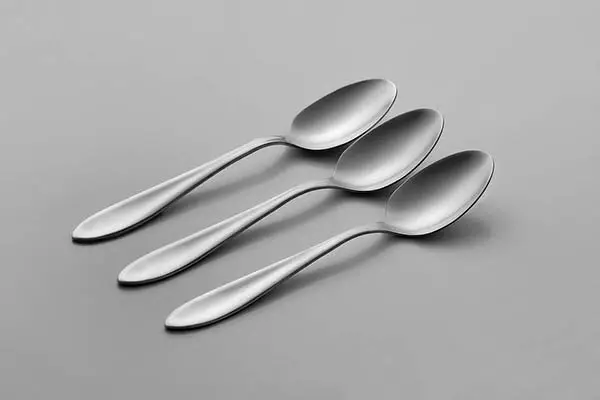
I often prefer to measure ingredients with spoons – sometimes small amounts of one product or another are simply more convenient to measure out with a spoon, especially when there is no kitchen scale to hand. All you need is to know how many grams of that substance a spoon holds. It should be understood that this method will not give absolute precision, but in cooking recipes minor inaccuracies do not matter and are perfectly acceptable.
Important. When a recipe calls for a tablespoon of a product, it means you should scoop with a small mound rising above the edges. When it says "level", the substance is scooped flush with the edges of the spoon.
Standard volumes of spoons:
- teaspoon — 5 ml;
- dessert spoon — 10 ml;
- tablespoon — 15 ml.
The weight of a product equals its volume when it comes to water and liquids of the same density. To work out the weight of different products (sugar, salt, flour) with a spoon, you need to know how many grams of these products a spoon holds.
How many grams of sugar in a spoon
- tablespoon — 25 grams heaped, 20 grams leveled;
- teaspoon — 8 grams heaped, 5 grams leveled.
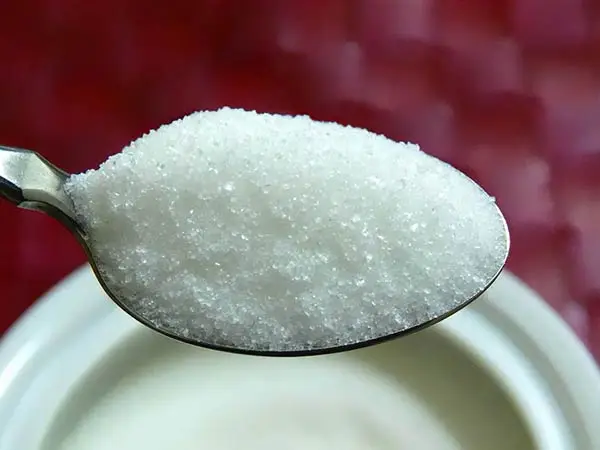
Weight in a tablespoon of bulk products
The products are taken in a dry state.
- salt — 30 g heaped, 20 g leveled;
- baking soda — 28 g heaped, 20 g leveled;
- sugar — 25 g heaped, 20 g leveled;
- powdered sugar — 25 g heaped, 20 g leveled;
- baking powder — 15 g heaped, 10 g leveled;
- starch — 30 g heaped, 20 g leveled;
- flour — 30 g heaped, 15 g leveled;
- gelatin — 15 g heaped, 10 g leveled;
- dry yeast — 12 g heaped, 10 g leveled;
- citric acid — 20 g heaped, 15 g leveled;
- protein powder — 25 g heaped, 15 g leveled;
- dry milk — 25 g heaped, 12 g leveled;
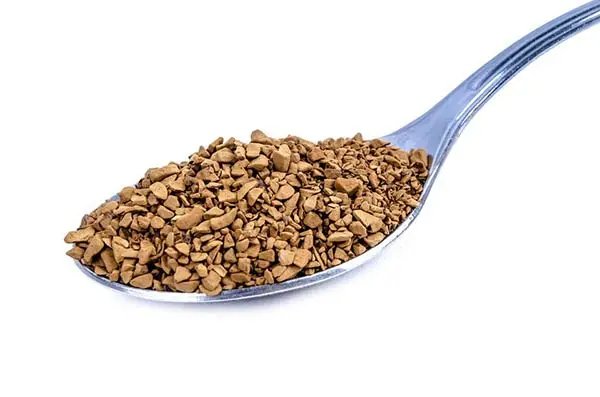
- instant coffee — 18 g heaped, 12 g leveled;
- ground allspice — 13 g heaped, 7.2 g leveled;
- ground red pepper — 11 g heaped, 5.38 g leveled;
- ground black pepper — 12 g heaped, 7 g leveled;
- cocoa powder — 15 g heaped, 10 g leveled;
- semolina — 16 g heaped, 10 g leveled;
- buckwheat — 25 g heaped, 18 g leveled;
- millet — 25 g heaped, 20 g leveled;
- corn grits — 20 g heaped, 15 g leveled;
- oat flakes — 16 g heaped, 12 g leveled;
- pearl barley — 25 g heaped, 20 g leveled;
- poppy seeds — 15 g heaped, 10 g leveled;
- barley groats — 20 g heaped, 15 g leveled;
- rice — 30 g heaped, 20 g leveled.
Weight in a tablespoon of liquid products
The weight of liquid products is given for the standard tablespoon, which holds 15 ml of liquid.
- water — 15 g;
- vinegar — 15 g;
- soy sauce — 21 g;
- sour cream — 20 g;
- kefir — 18 g;
- mayonnaise — 25 g;
- milk — 15 g;
- condensed milk — 30 g;
- cream — 15 g;
- yogurt — 25 g;
- vegetable oil — 17 g;
- tomato paste — 30 g;
- honey — 21 g.
Weight in a teaspoon of bulk products
The weight of dry bulk products in a teaspoon is given as heaped / leveled.
- sugar — 10 g heaped, 7 g leveled;
- sorbitol (dry sugar substitute) — 7 g heaped, 5 g leveled;
- rock salt — 12 g heaped, 8 g leveled;
- fine salt — 10 g heaped, 7 g leveled;
- baking soda — 10 g heaped, 7 g leveled;
- baking powder — 8 g heaped, 5 g leveled;
- starch — 9 g heaped, 6 g leveled;
- flour — 12 g heaped, 9 g leveled;
- citric acid — 8 g heaped, 5 g leveled;
- cocoa powder — 12 g heaped, 9 g leveled;
- dry milk — 14 g heaped, 12 g leveled;
- dry cream — 6 g heaped, 5 g leveled;
- gelatin — 8 g heaped, 5 g leveled;
- dry yeast — 8 g heaped, 5 g leveled;
- mustard powder — 7 g heaped, 4 g leveled;
- instant coffee — 5 g heaped, 4 g leveled;
- ground coffee — 9 g heaped, 7 g leveled;
- tea — 3 g heaped, 2 g leveled;
- raisins — 10 g heaped, 7 g leveled;
- poppy seeds — 12 g heaped, 8 g leveled;
- ground pepper — 8 g heaped, 5 g leveled;
- ground cinnamon — 12 g heaped, 8 g leveled;
- buckwheat — 10 g heaped, 7 g leveled;
- barley and pearl barley — 11 g heaped, 8 g leveled;
- semolina — 12 g heaped, 8 g leveled;
- rice — 8 g heaped, 5 g leveled;
- beans — 12 g heaped, 10 g leveled;
- lentils — 9 g heaped, 7 g leveled;
- corn flakes — 4 g heaped, 2 g leveled;
- oat flakes — 8 g heaped, 6 g leveled;
- dry egg powder — 12 g heaped, 10 g leveled;
- dry potato puree — 12 g heaped, 10 g leveled;
- potassium permanganate — 18 g heaped, 15 g leveled;
- bread crumbs — 7 g heaped, 5 g leveled;
- nuts — 13 g heaped, 10 g leveled.
Weight of liquid products in a teaspoon
- water — 5 g;
- vegetable oil — 5 g;
- vinegar — 5 g;
- tomato paste — 5 g;
- liqueur — 7 g;
- honey — 10 g;
- red caviar — 7 g;
- condensed milk — 12 g;
- whole milk — 5 g;
- cottage cheese — 4 g;
- sour cream — 10 g;
- mayonnaise — 10 g;
- butter — 5 g;
- melted margarine — 4 g;
- fruit puree — 17 g;
- soy sauce — 5 g.
These tables make it easy to gauge how many grams of different products a spoon (tablespoon or teaspoon) holds. To determine the exact weight, it is better to use electronic scales.
❓ Frequently asked questions
Why is the weight different in different spoons?
The weight of a product in a spoon depends on its density and structure. Liquids with a density close to water (milk, vinegar) weigh almost the same as their volume in millilitres. Denser ones (honey, tomato paste, condensed milk) weigh more. As for bulk products, large particles (rice, buckwheat) take up more volume at a lower weight, while fine ones (flour, powdered sugar) are packed more tightly and weigh more. "Heaped" and "level" give a difference of 30–50% in mass. That is why it is always important to check which type of measurement the recipe means.
Which is more accurate – a spoon or scales?
Electronic scales are far more accurate – a difference of 1–5 grams when measuring with a spoon makes no difference for most cooking recipes, but it is critical for confectionery (for example, in macarons or marshmallows). For "technical" products that need precise dosing (gelatin, yeast, baking powder, citric acid) always use scales. For simple dishes (soups, salads, main courses) a spoon is sufficient. Mechanical scales accurate to 5 g are the "golden mean" between convenience and precision.
Why are measurement tables needed?
For convenience: there is no need to "guess" how much flour or grain to add. For accuracy: a repeatable result is the key to consistent recipes. For dieting: calorie control requires precision in measurements. For culinary education: understanding ratios helps you to "feel" recipes. In old recipes (Soviet, pre-revolutionary) the measures are often given in spoons and glasses – tables help to convert them into modern grams.
How can you check your own spoons?
Modern tablespoons can be of different volumes (12–20 ml) and do not always match the standard of 15 ml. To check: pour water into the spoon up to the edges and measure it with a syringe – it should be 15 ml ± 2 ml. For precise measurements, buy measuring spoons with a guaranteed volume (5, 10, 15 ml). They usually come in a set of 4–6 pieces and are sold in cookware shops. A universal "lifehack" is to use a measuring cup graduated in millilitres for liquids and electronic scales for solid products.