avg —
How to Bake Beets in the Oven

Instructions
I wash the beets thoroughly, running a brush over every dip and fold of the root. I never cut off the tail – otherwise the precious juice will leak out through the cut and the flesh will dry out. I preheat the oven to 200 degrees, top-and-bottom heat without convection.
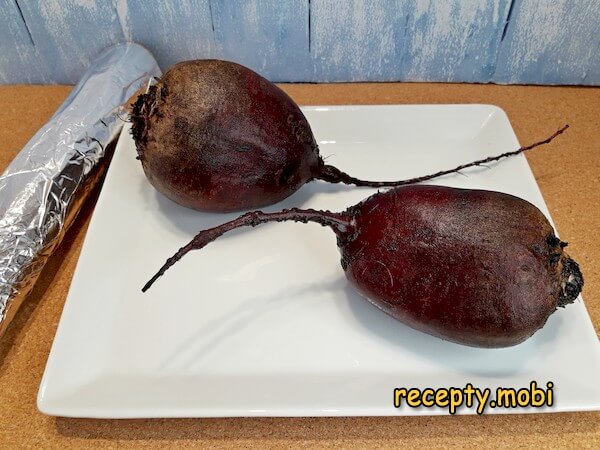
I wrap each beet in foil separately – this way they heat more evenly and do not give their juice to a neighbour. I take a piece of foil with some to spare, so the beet can be fully wrapped in one or two layers.
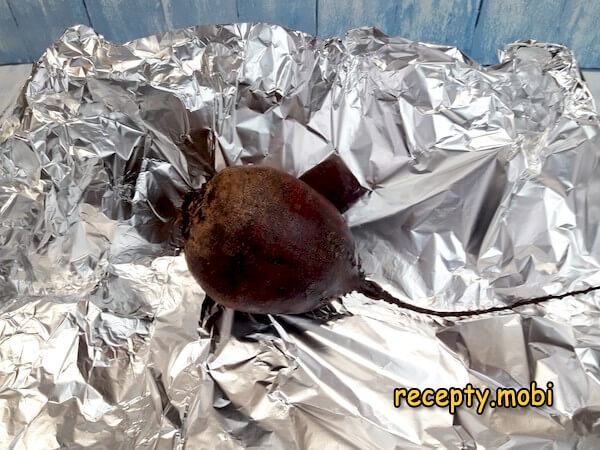
I fold the edges in tightly and wrap an improvised cocoon – the tighter the packet, the less steam escapes and the juicier the flesh turns out after baking.
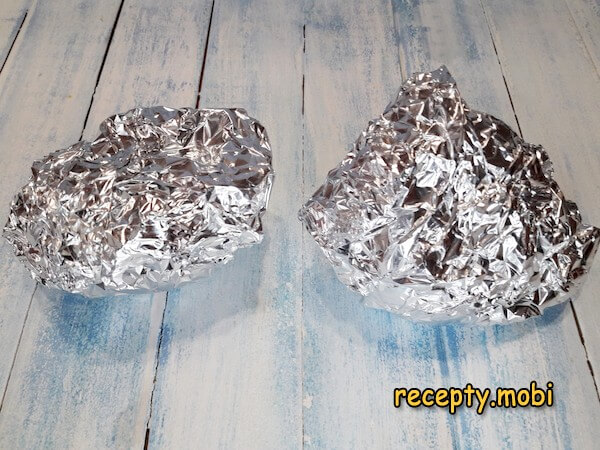
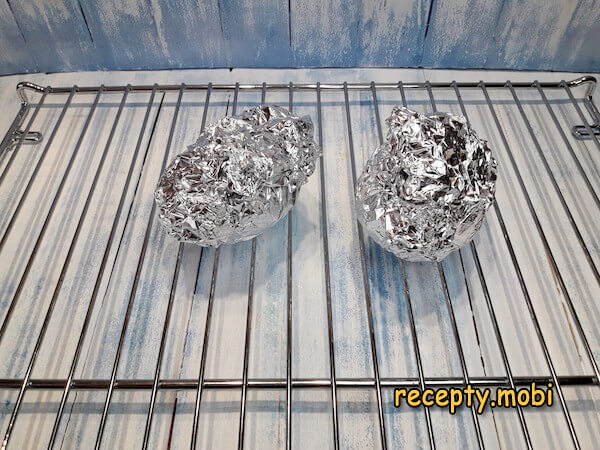
I place the packets on the oven rack – on the rack the beet is bathed in hot air better than on a baking sheet, even without convection switched on. As a result, baking takes less time and the bottom does not scorch.
I test the beet for doneness with a long wooden skewer – it should pierce right through without any effort. A medium beet needs one hour; for small roots the time drops to 40-45 minutes.
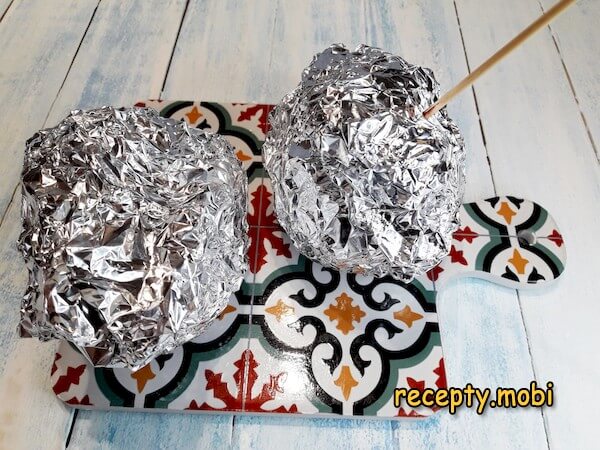
I take the beet out of the foil packet and let it cool right on the rack – this way the root releases excess steam evenly and the flesh does not over-steam. I do not use sudden cooling in water – it spoils the texture.
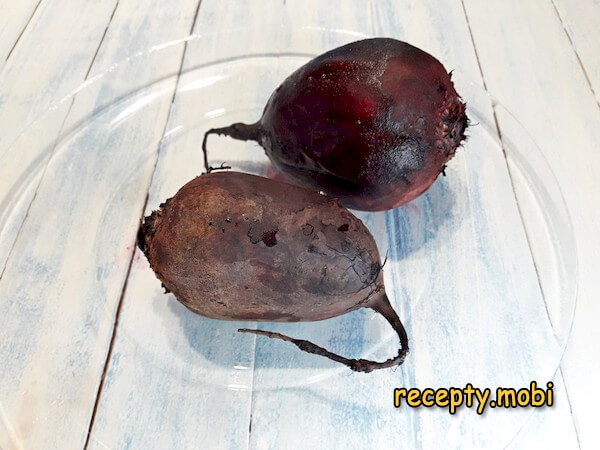
I peel off the thin skin – on a baked beet it comes away by hand, like the skin of a boiled jacket potato. A knife is barely needed – just to lift the edge by the tail.
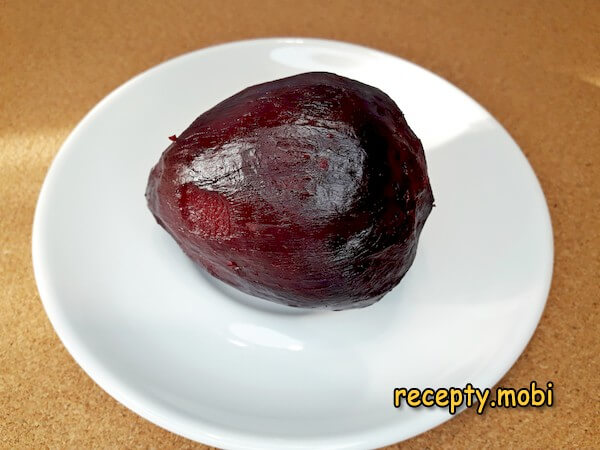
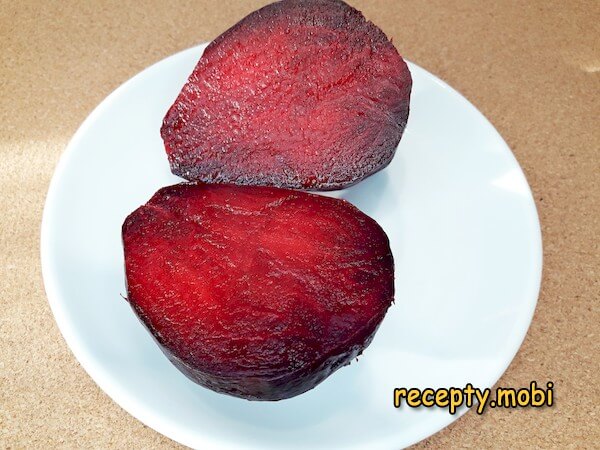
When you cut the root into two halves you can see that the flesh right in the centre is well baked and has kept its juiciness. The colour is a deep burgundy all across the cut, the texture firm and even with no raw patches.Once you know how to bake beets in the oven, you can prepare the roots in advance for salads, vinaigrettes and snacks. Baked beets keep for 3-4 days in the fridge in an airtight container with no loss of flavour or colour.


Tips
- 1
DO NOT CUT THE TAIL – the "secret" to juiciness. If you cut the tail off before baking, all the juice leaks out through the cut and the flesh comes out dry and fibrous. I leave the tail and the top whole – the juice stays inside the root and the flesh turns out juicy and sweet.
- 2
ONE SIZE – the "secret" to even cooking. I choose beets of the same size for one batch – then all the roots reach doneness at the same time. If the sizes differ, the small ones will burn while the large ones are still raw.
- 3
RACK, NOT BAKING SHEET – the "secret" to even heat. On the rack the beet is bathed in hot air from all sides, bakes evenly and does not scorch underneath. On a baking sheet the bottom heats more strongly – the crust darkens and turns bitter. If you have no rack, line the baking sheet with parchment and turn the beet after 30 minutes.
- 4
A QUICK ALTERNATIVE – the "secret" for those short on time. If an hour of baking is a luxury, I boil the beets using the method from the article How to Properly Boil Beets – The Easiest Methods. The "boil with a cold shock" method cuts the time down to 30 minutes – the result is less flavourful, but it suits borscht and vinaigrette.
FAQ
How long should beets bake in the oven? +
A medium root weighing 200-250 g needs exactly one hour in foil on the rack at 200 degrees. Small beets up to 150 g are ready in 40-45 minutes, large ones from 300 g – up to 90 minutes. I check for doneness with a long wooden skewer – it should slide freely into the thickest part of the root without any effort. If the skewer goes in stiffly, I extend the baking by another 10-15 minutes and check again.
Why wrap the beet in foil? +
The foil creates a sealed environment in which the root bakes in its own juice and steam – the flesh comes out juicy, evenly heated and not dried out. Without foil the top layer dries, loses some of its sweetness and becomes denser with a dark crust. If the dish needs a dry beet, for example to serve as a snack on its own, you can skip the foil. For salads and vinaigrettes the foil is essential – you need juicy flesh.
Can you bake beets without foil? +
Yes, this method works if the juice would be excess in the finished dish and you need firmer flesh. I place the beet straight on the rack or on a parchment-lined baking sheet and bake at 180 degrees for about an hour. From time to time I turn the roots so they brown evenly on all sides. The surface will turn dark, almost caramelised, and the flesh – less juicy and more concentrated in flavour. This suits serving as a snack.
How do you store baked beets? +
In the fridge in an airtight container, or tightly wrapped in cling film, baked beets keep for 3-4 days with no loss of flavour or colour. A peeled root is better grated or cut into cubes and put in the freezer – stored this way it will keep for up to three months. It is convenient to thaw it straight in the salad at room temperature – the beet quickly gives up the cold and does not lose its rich burgundy colour. For borscht I put the thawed beet straight into the pot.
- Comment
or post as a guest
Be the first to comment.