avg —
How Long to Boil Pelmeni After They Float: Frozen and Homemade

Instructions
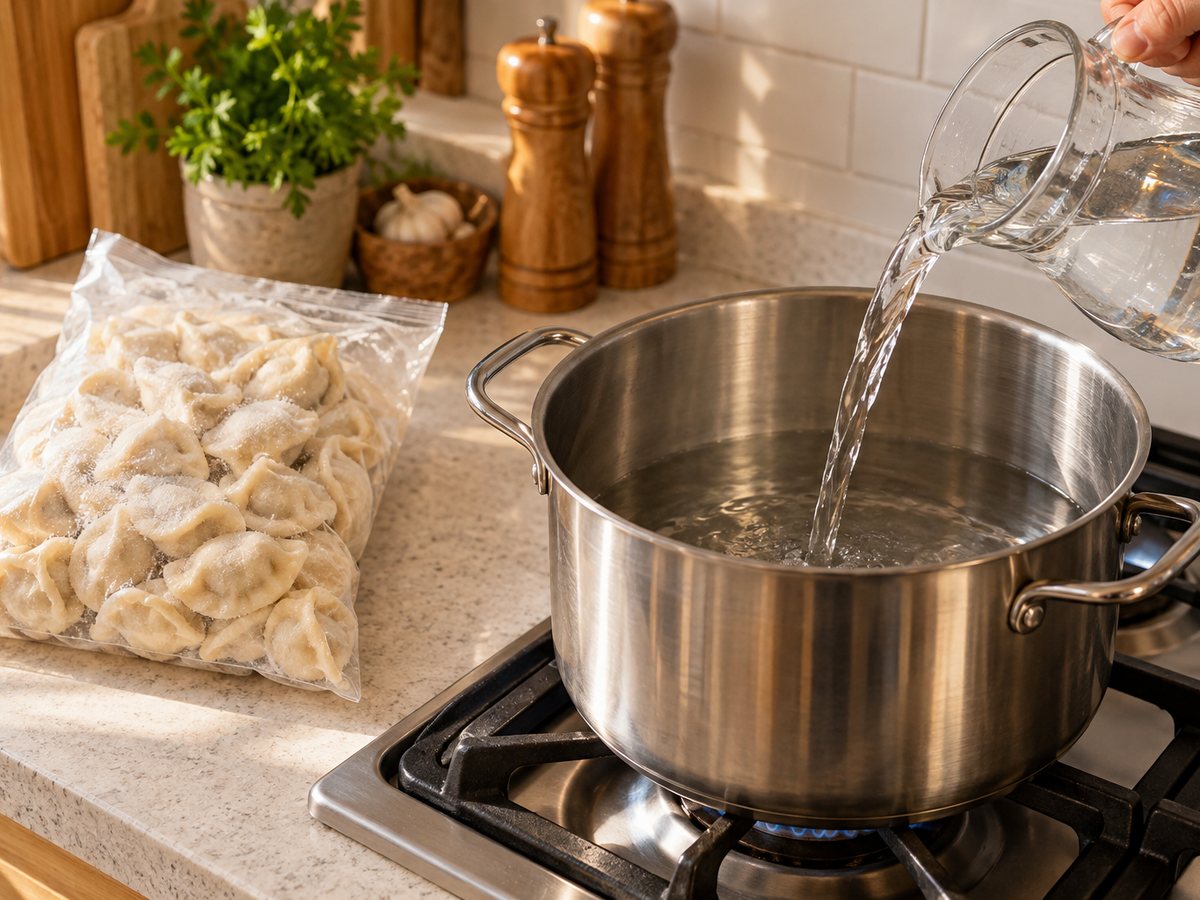
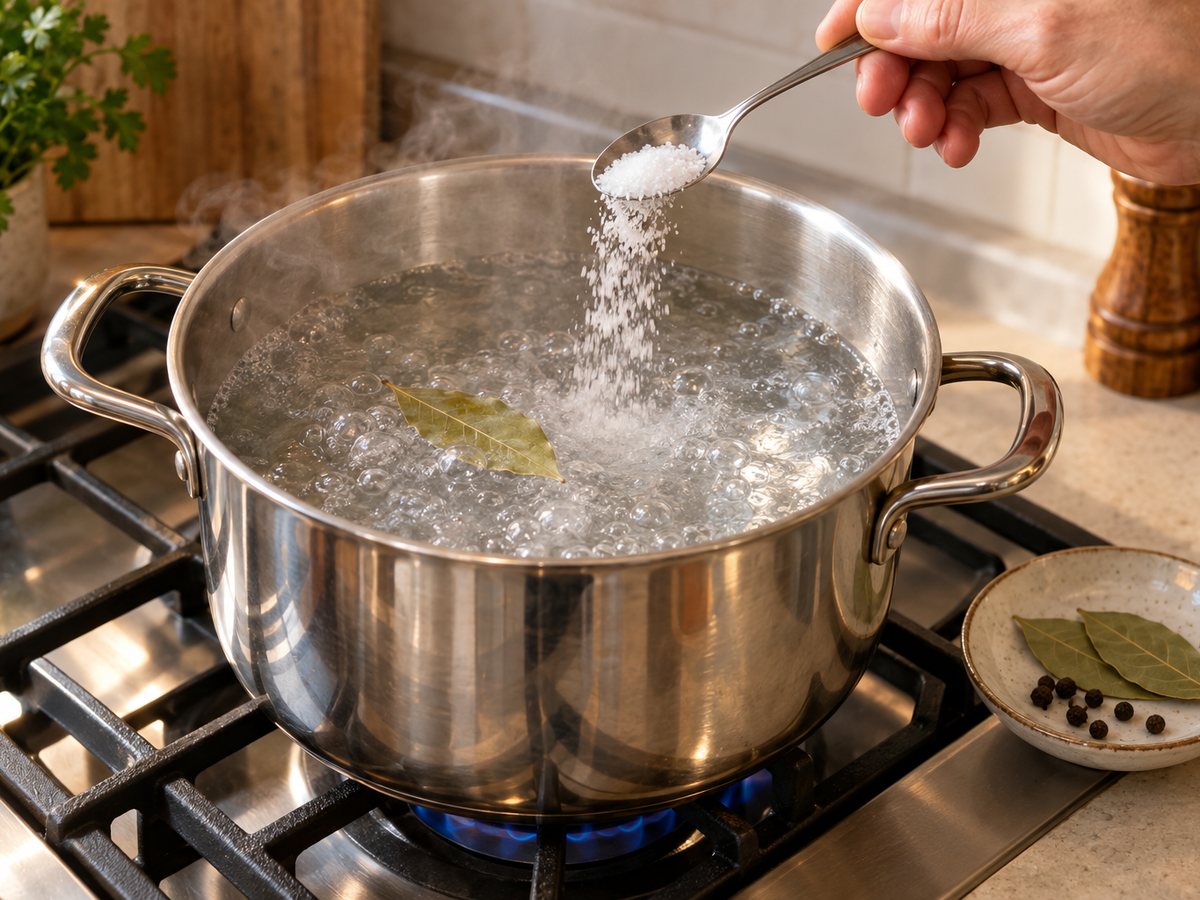
Pour water into a roomy pot: 1.5 litres per 500 g of pelmeni, at least 3 litres per 1 kg. In a small pot the dumplings stick together and the water takes a long time to boil again.
Bring the water to a rolling boil with the lid on.
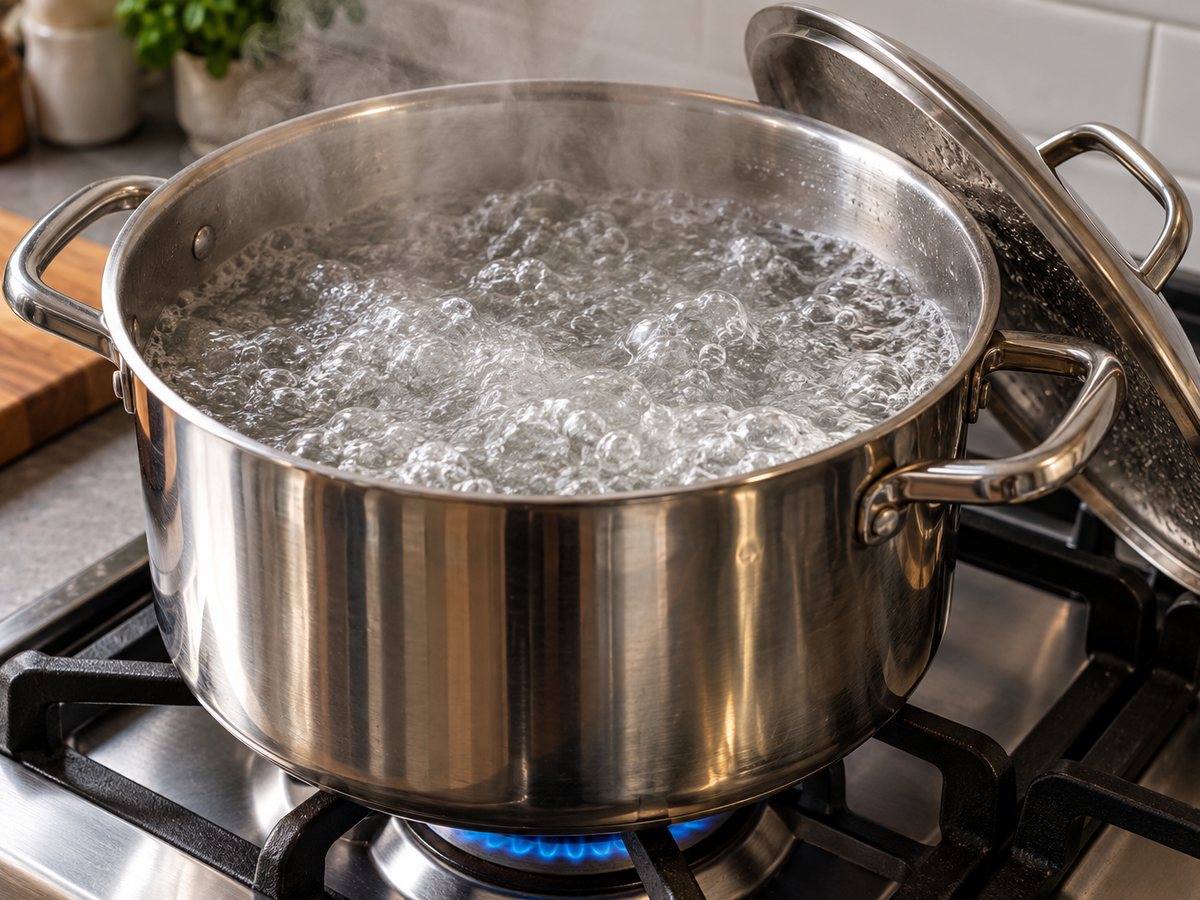
Salt it: 1 tsp of salt per litre. For flavour add the bay leaves and a few black peppercorns.
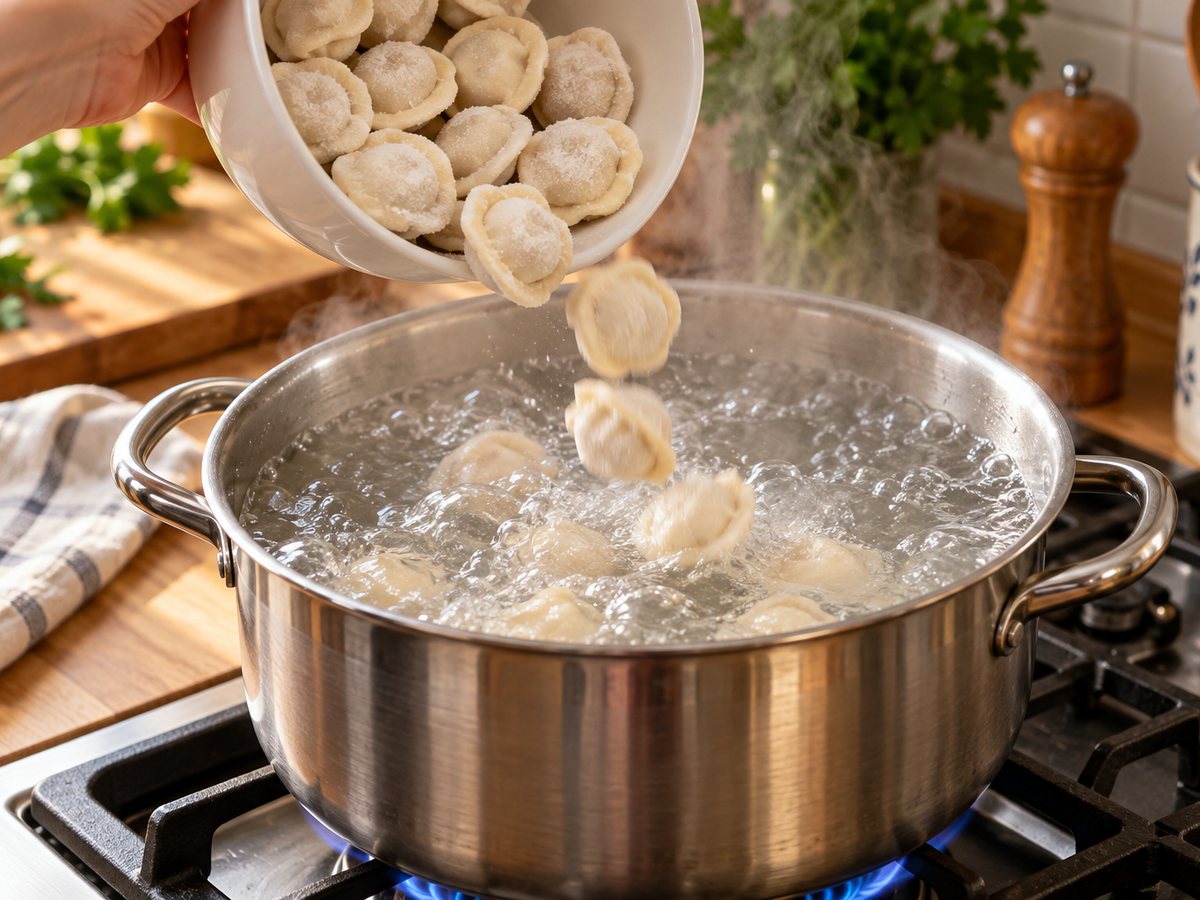
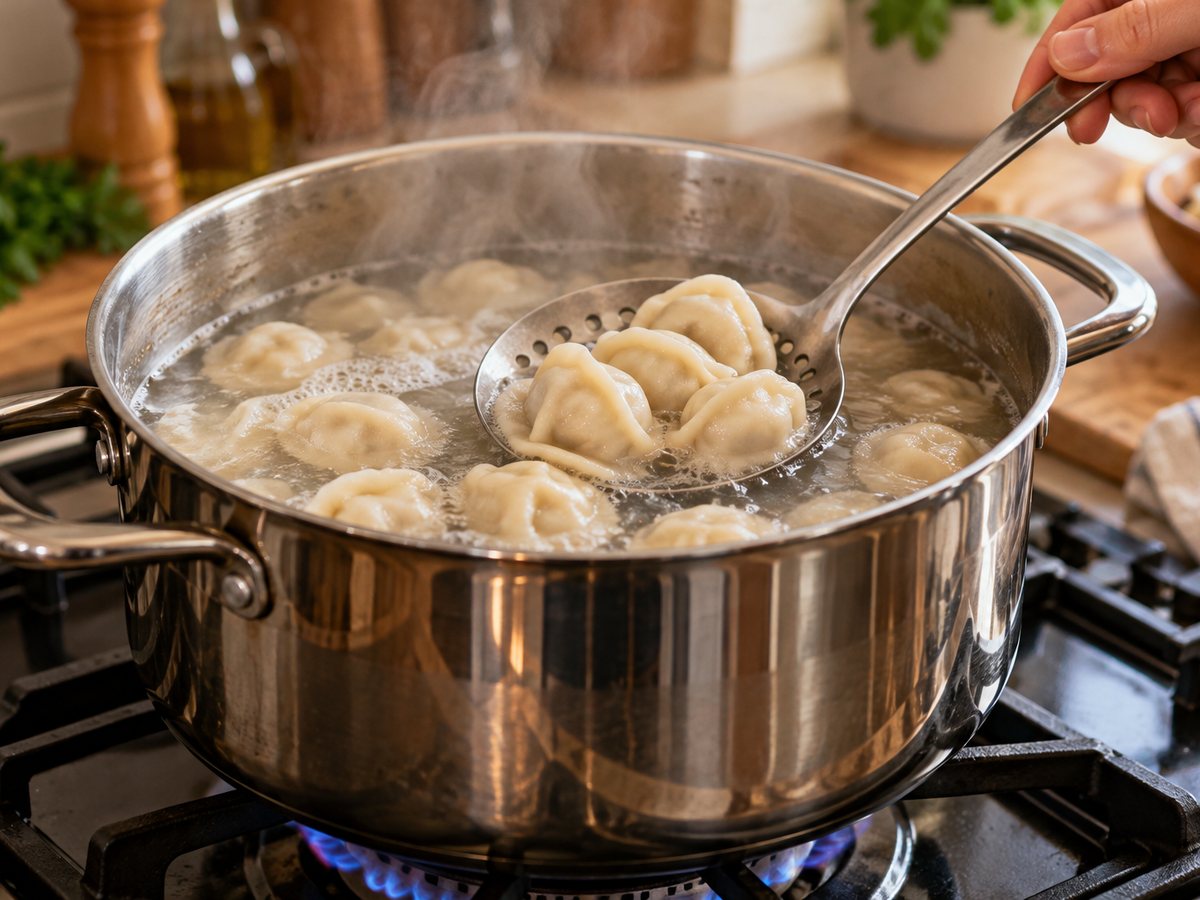
Drop the frozen pelmeni into the boiling water without thawing and stir straight away so they do not stick to the bottom or to each other.
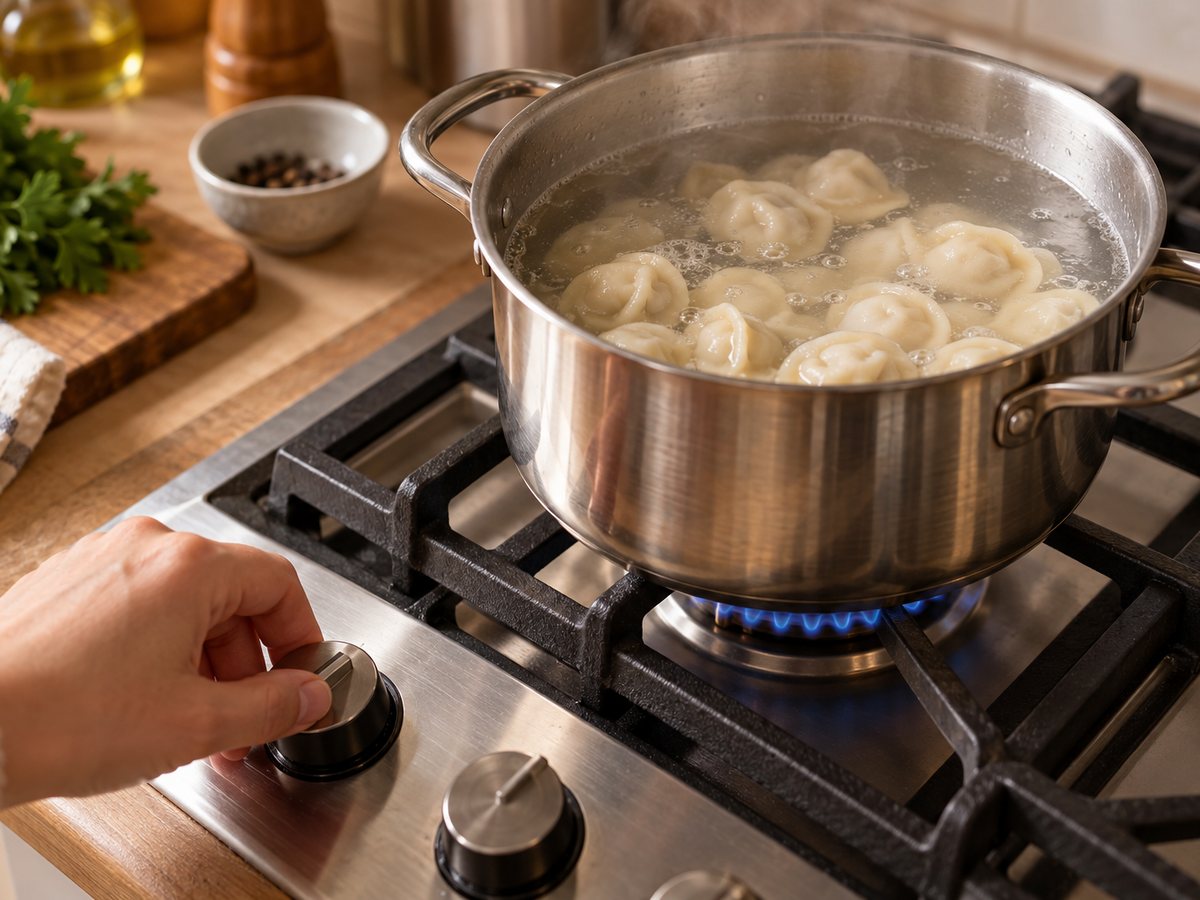
Wait for the water to boil again and turn the heat down to medium: a hard boil tears the dough.
Once the pelmeni float, cook them for another 5-7 minutes, large ones for 7-10 minutes. If the pack gives a different time, follow it: producers differ.
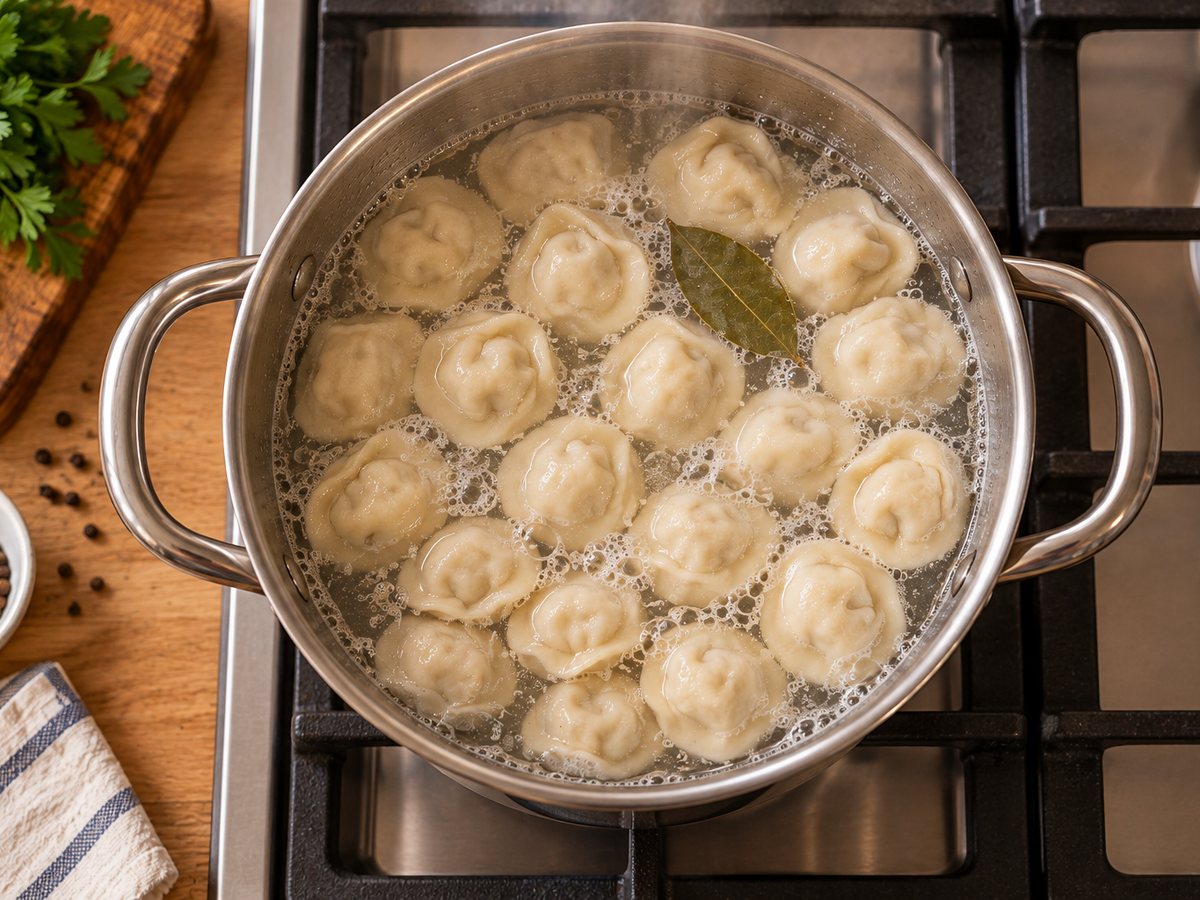
Stir gently once or twice while they cook.
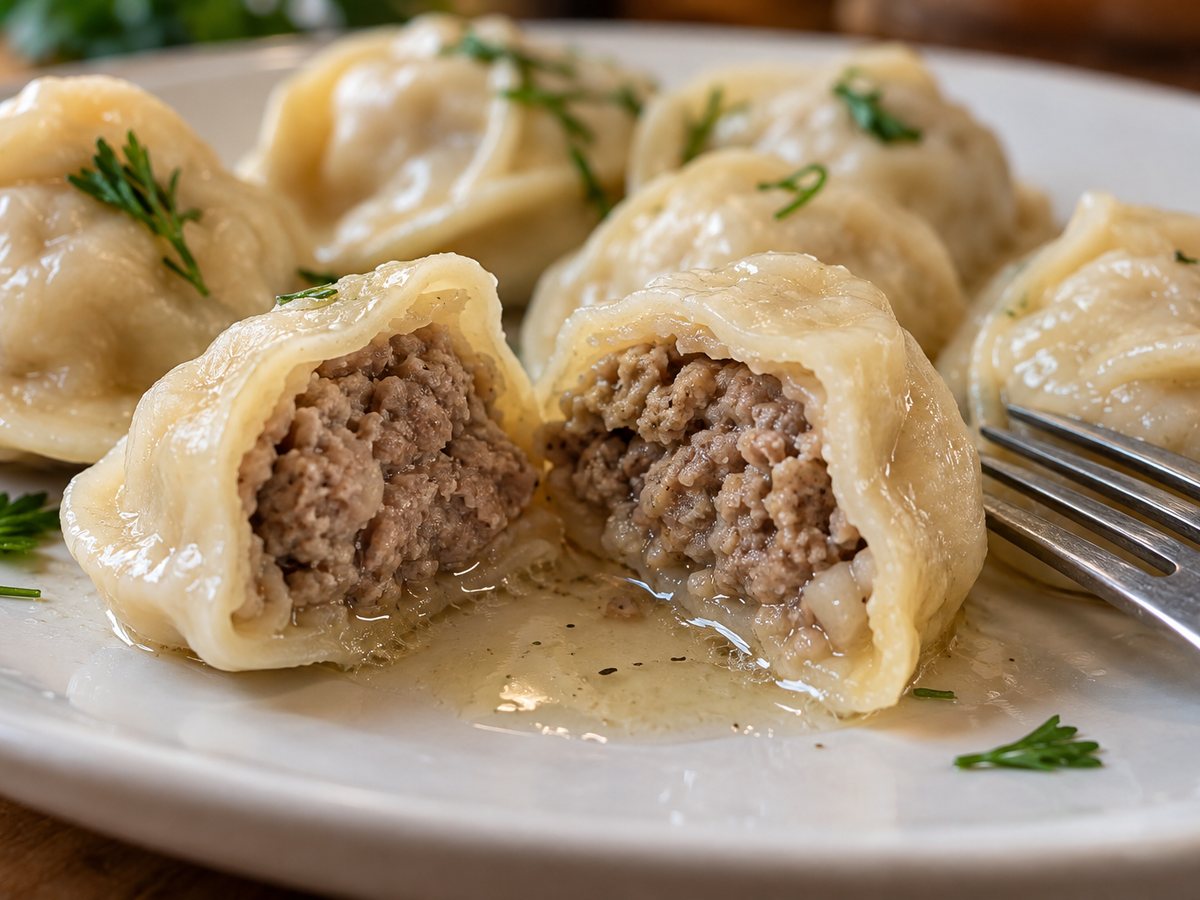
Check for doneness: take one out and cut it open. The filling should be grey all the way through with no pink, and the juices clear.
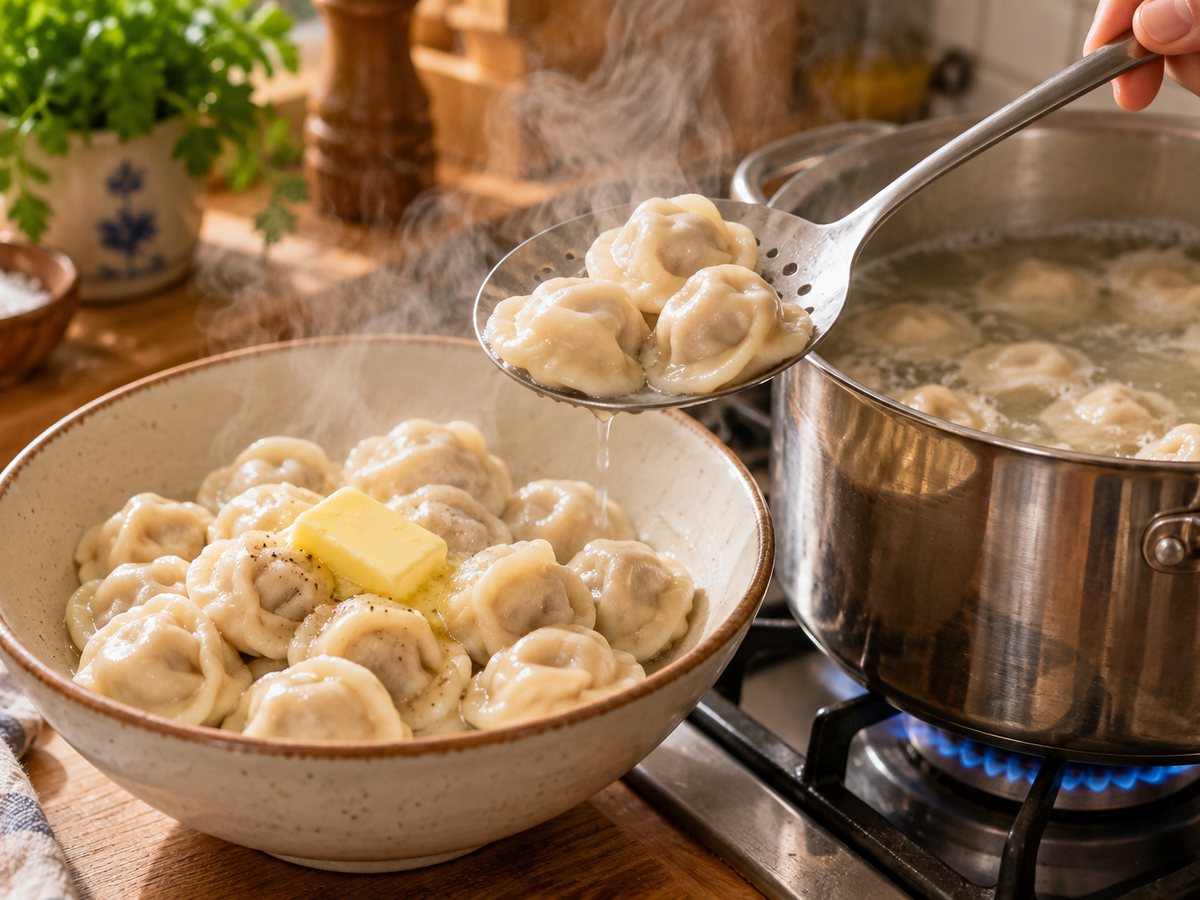
Lift the pelmeni out with a slotted spoon, add a knob of butter so they do not stick, and serve with sour cream, mustard, vinegar or in broth.


Tips
- 1
Do not thaw pelmeni before boiling: thawed dough turns soggy, sticks and tears. Producers state on the pack that no thawing is needed.
- 2
To stop pelmeni sticking, use plenty of water and stir right after adding them. You can add 1-2 tbsp of vegetable oil to the water.
- 3
The time on the pack matters more than general figures: some producers give 5-7 minutes after floating, others 5-8.
- 4
Serve pelmeni straight away: in hot water they keep swelling, and on a plate without butter or sour cream they stick together.
How Long to Boil Pelmeni: Times
Time is counted from the moment the pelmeni float. The figures for frozen ones come from the packs of major producers, the rest from kitchen practice and appliance manuals.
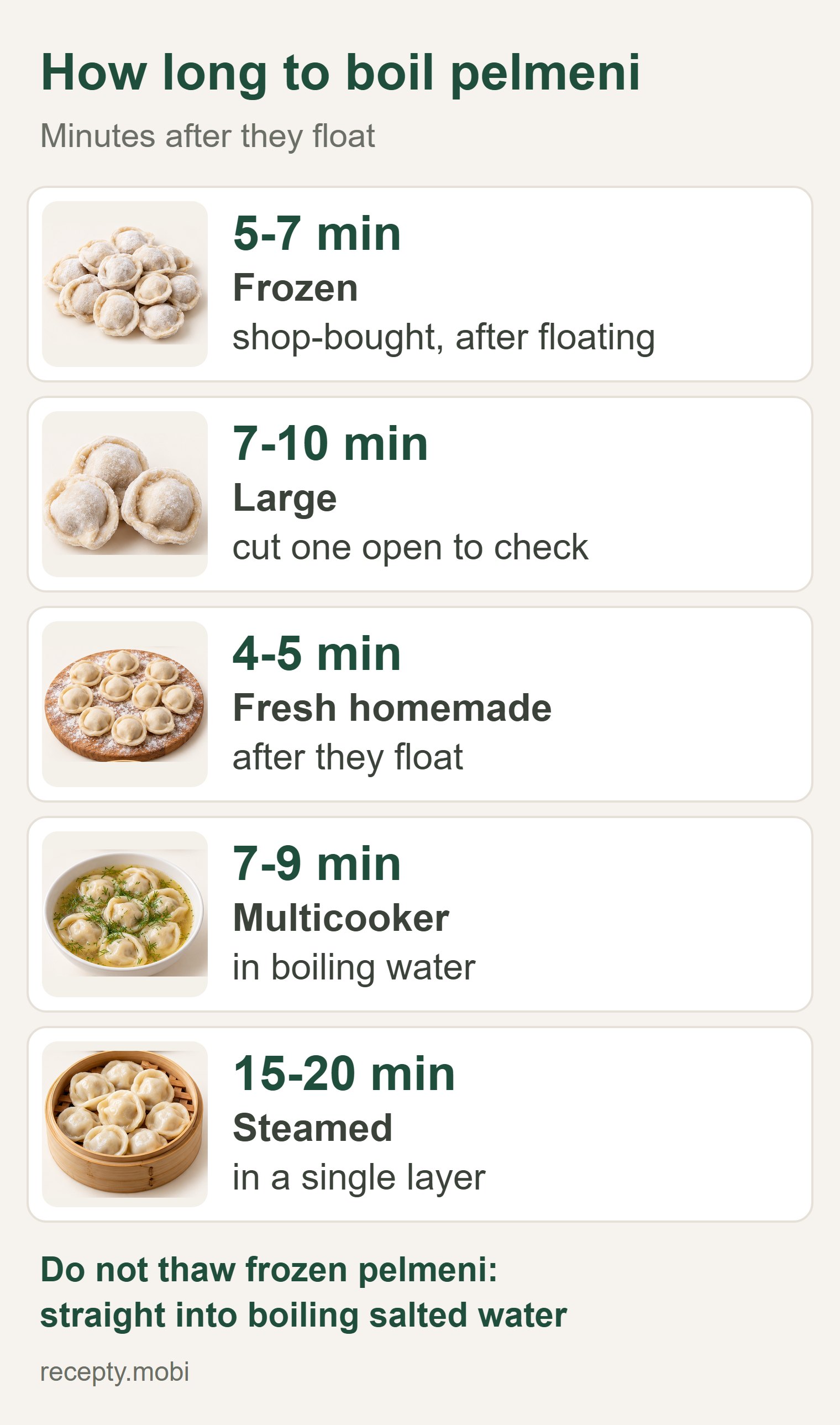
| Pelmeni | Time |
|---|---|
| Frozen, shop-bought after floating | 5-7 min |
| Large after floating | 7-10 min |
| Fresh homemade after floating | 4-5 min |
| Frozen homemade after floating | 5-7 min |
| In soup after floating | 5-7 min |
| Multicooker in boiling water | 7-9 min |
| Steamed in a single layer | 15-20 min |
| Microwave in water, full power | 5-8 min |
How to Tell When Pelmeni Are Done
Pelmeni float because the dough swells and steam forms inside. The meat may still be raw at that point, which is why they are cooked for a few more minutes and then checked by cutting one open.
- The filling is grey all the way through, with no pink.
- The juices are clear, not pink.
- With a thermometer: 71 °C (160 °F) in the centre of a pork or beef filling and 74 °C (165 °F) for poultry. These are the USDA minimum temperatures for ground meat.
Homemade Pelmeni: What Is Different
Fresh, just-shaped pelmeni cook faster than frozen ones: 4-5 minutes after they float. Homemade pelmeni from the freezer are boiled like shop-bought ones, for 5-7 minutes, also without thawing. The filling in homemade pelmeni is raw and often larger, so cutting one open is a must.
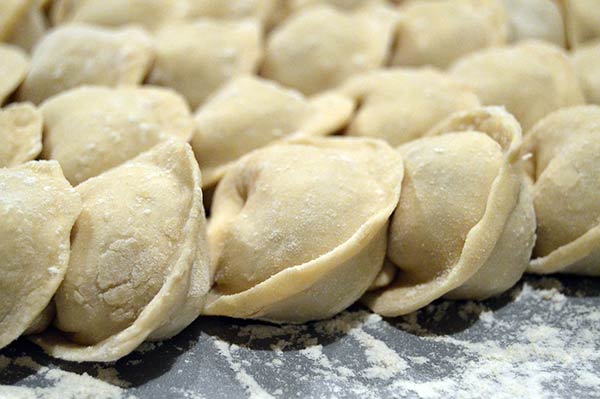
Recipes: pelmeni on custard dough without eggs and dumpling dough with boiling water and egg.
Pelmeni in a Multicooker, Steamer and Microwave
- Multicooker, in water. Bring water to the boil on the soup or boil setting, salt it, add the pelmeni and cook for 7-9 minutes.
- Steamed. Arrange the pelmeni in a single layer in an oiled steamer basket and cook for 15-20 minutes. Larger dumplings such as manti and khinkali take 30-35 minutes.
- Microwave. Cover the pelmeni with hot salted water in a deep dish, put a lid on and cook at full power for 5-8 minutes, stirring 2-3 times.
Pelmeni in Broth, in Soup and Fried
- In broth, pelmeni take as long as in water. Soups: dumpling and potato soup, dumpling and mushroom soup.
- Fried: fried dumplings with sour cream and fried frozen dumplings in a pan.
- Similar dishes with their own timings: khinkali and manti. Vareniki have a separate table: how long to boil vareniki.
Common Mistakes When Boiling Pelmeni
- Starting in cold or lukewarm water. The dough goes soggy and sticks before the meat heats through. The water must be boiling.
- Using a small pot. The boil stops for a long time after the pelmeni go in; they sink and stick to the bottom.
- Thawing in advance. Thawed pelmeni clump together before they even reach the pot.
- Not stirring in the first minute. That is exactly when pelmeni stick to the bottom and to each other.
- Keeping a hard boil to the end. A rolling boil tears the dough and the filling falls out. Turn the heat down once the water boils again.
- Taking them out as soon as they float. The meat inside may still be raw: they need another 5-7 minutes and a cut test.
How to Choose Pelmeni in a Shop
- The pelmeni in the pack should be separate and pour freely: a solid clump and snow inside mean the product has been thawed.
- Under the GOST standard, packs carry a category from A to D (А-Д): the closer to A, the more muscle meat in the filling.
- Check the ingredients: meat should come first, not water, soy protein or starch.
- The cooking time on the pack allows for the size and dough thickness of those particular pelmeni, so it is more accurate than general tables.
How Much Water and Salt
Use 1.5 litres of water per 500 g of pelmeni, about 3 litres per 1 kg, and roughly 1 tsp of salt per litre. A bay leaf, peppercorns and half an onion make the cooking liquid more fragrant. With too little water the boil stops for a long time after the pelmeni go in, and they stick together.
What to Serve with Pelmeni
- The classics: sour cream, butter, black pepper and chopped dill.
- Sharper: mustard, horseradish, vinegar diluted with the cooking liquid, or soy sauce.
- In broth: cover the pelmeni with the hot liquid they were cooked in and add herbs.
How to Store Pelmeni
Frozen pelmeni are stored at -18 °C or below; the usual shelf life on the pack is 180 days. Thawed pelmeni should not be refrozen: the packs say so, and the dough clumps together after a second freeze.
Refrigerate cooked pelmeni within 2 hours. In a closed container they keep for 3-4 days according to the USDA; Food Standards Scotland advises eating leftovers within 2 days. Reheat until hot before eating: fry them or dip them in boiling water for 1-2 minutes.
Calories in Pelmeni
Producers list 230 to 295 kcal per 100 g: it depends on the share and fat content of the meat. Protein is about 10 g per 100 g. Sour cream and butter add another 30-70 kcal per serving.
FAQ
How long do you boil pelmeni after they float? +
Frozen shop-bought ones 5-7 minutes, large ones 7-10 minutes, fresh homemade ones 4-5 minutes. Then cut one open and check the filling.
How long do you boil frozen pelmeni? +
5-7 minutes after they float, in boiling salted water. There is no need to thaw them first.
How long do you boil homemade pelmeni? +
Fresh ones 4-5 minutes after floating, frozen homemade ones 5-7 minutes. Check the filling by cutting: it should be grey with no pink.
Should pelmeni be thawed before boiling? +
No. Frozen pelmeni go straight into boiling water: thawed dough sticks and tears.
Do pelmeni go into cold or boiling water? +
Boiling salted water. In cold water the dough turns soggy before the filling heats through.
How much water per 1 kg of pelmeni? +
About 3 litres; 1.5 litres is enough for 500 g. Use 1 tsp of salt per litre.
Why do pelmeni stick together and fall apart? +
Too little water, no stirring right after they go in, too hard a boil, or thawing before cooking.
How can you tell when pelmeni are cooked? +
Cut one open: the filling is grey all the way through and the juices are clear. With a thermometer, 71 °C in the centre of a meat filling and 74 °C for poultry.
How long do pelmeni take in a multicooker? +
7-9 minutes in boiling water, or 15-20 minutes steamed in a single layer.
How long do cooked pelmeni keep? +
3-4 days in a closed container in the fridge. Refrigerate them within 2 hours of cooking.
How many calories are in pelmeni? +
230 to 295 kcal per 100 g depending on the producer, not counting sour cream and butter.
- Comment
or post as a guest
Be the first to comment.