avg —
How to Boil Potatoes Correctly – The Simplest Methods

Instructions
I wash the potatoes well under cold running water with a brush, especially if the skin is covered in soil. Young potatoes have thin skin and can simply be washed by hand. Old, dirty potatoes need a brush, otherwise grit will end up in the finished dish. Clean skin also matters if you plan to boil the potatoes in their jackets.
I peel the potatoes with a peeler or knife, removing the eyes and any dark or greened patches. Greened pieces contain toxic solanine and are harmful to health, so always cut them off with a 3–5 mm margin. Drop the peeled potatoes straight into cold water so they do not darken from oxidation.
I cut the potatoes into large cubes of 3–4 cm, or into halves for large tubers. The pieces must be the same size, which is critical for even cooking. Unevenly sized pieces cook differently: the small ones overcook into mush, while the large ones stay raw. This is the main rule.
I cover the potatoes with cold water 2–3 cm above the level of the tubers and put the pot on high heat. Cold water ensures even heating from the inside, so the potatoes cook the same on the outside and in the middle. Hot water cooks only the surface, while the centre stays raw even after long boiling. I bring it to the boil over high heat.
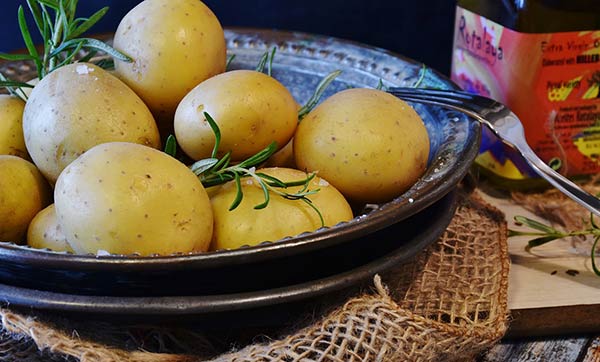
Once it boils, I reduce the heat to medium and salt the water to taste (about 1 teaspoon per litre). I cook the potatoes for 15–20 minutes depending on the size of the pieces – small ones 15, large ones 20. I add the salt now, after it has come to the boil, because added at the cold stage it slows down the cooking of the vegetables and draws out starch.
I check for doneness with a sharp knife – it should go in easily, without resistance. If it goes in with a grinding feel, I cook for another 3–5 minutes. If it slides in as if into butter, the potatoes are ready. Exact timing depends on the variety: “Sineglazka” cooks in 15 minutes, “Lorkh” in 20–25 minutes, and young potatoes in 10–12 minutes.
I drain the water through a colander and leave the potatoes for 2–3 minutes to dry off. If you leave the potatoes in the hot water, they will keep “cooking” from the residual heat and may fall apart. Drying also removes excess moisture from the surface, which matters if you are going to fry or roast them afterwards.
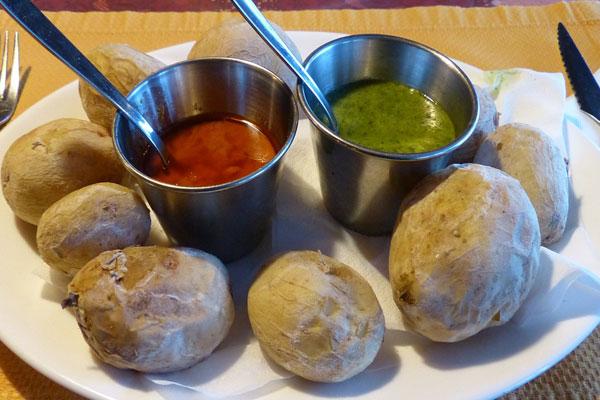
The boiled potatoes are ready to use. I serve them with a knob of butter, finely chopped fresh dill and a pinch of freshly ground black pepper – the classic Russian way. From hot boiled potatoes I also make mash, okroshka, vinegret and Olivier salad.


Tips
- 1
Put the potatoes into cold water – that way they cook evenly from the inside. Hot water only cooks the surface.
- 2
Add 2–3 cloves of garlic, a bay leaf or a sprig of dill to the water for aroma – simple spices transform the flavour.
- 3
A knob of butter in the water before it boils speeds up cooking and gives a creamy taste. Mashed potatoes are made on a similar principle.
- 4
Do not pour away the potato cooking water – use it as a base for soup, béchamel sauce or yeast dough. It contains starch and vitamins.
How to boil potatoes in their jackets
For salads, vinegret and serving with lightly salted herring, it is better to boil potatoes in their skins – they stay firm and do not fall apart, as the skin acts as a protective shell.
- Pick tubers of exactly the same size – for even cooking;
- Wash them well with a brush without peeling the skin;
- Cover with cold water 3–5 cm above the potatoes;
- Boil for 20 minutes after it comes to the boil over medium heat;
- Check for doneness with a knife – it should go in easily;
- Drain the water and let them cool in their skins, peeling them once cold.
FAQ
Why do potatoes boil down into mush? +
The main reasons are: boiling them too long without checking for doneness, cutting them too small, using a starchy variety (good for mash, but not for a side dish), or forgetting to lower the heat after it comes to the boil (vigorous boiling destroys the structure). Use low-starch varieties such as “Red Scarlett”, “Adretta” or “Udacha”. They hold their shape well during boiling. Watch the time closely – 15–20 minutes at most for large pieces.
How long should you boil young potatoes? +
Young potatoes with thin, delicate skin cook much faster than old ones – just 10–15 minutes after it comes to the boil. Whole small tubers from the spring harvest take 10 minutes, medium ones 12 minutes, and large ones 15 minutes. Young potatoes are often boiled in their jackets – the skin is very thin and edible, and does not need peeling. I serve them with dill, sour cream and spring onions – a classic of the spring table.
Can you cook potatoes in the microwave? +
Yes, for express cooking. Prick a whole potato in its skin with a fork in several places, wrap it in a damp paper towel and cook at maximum power for 8–10 minutes per 1–2 medium tubers. For peeled, cut potatoes, cover them with water and put on a lid – 10–12 minutes at full power. The microwave is the fastest method, but the taste and texture will be poorer than with classic boiling. It is fine for quick cooking.
How do you boil potatoes so they do not darken as they cool? +
Use only enamelled or stainless steel cookware – cast iron and aluminium cause potatoes to darken on contact. Add 1 tablespoon of vinegar or lemon juice to the water – the acid sets the colour. Do not leave the potatoes in the hot water after boiling – drain them through a colander straight away. Eat the cooked potatoes within 1–2 hours or turn them into mash at once. After they have cooled completely, potatoes will inevitably darken a little – this is normal.
- Comment
or post as a guest
Be the first to comment.