How to choose quality butter
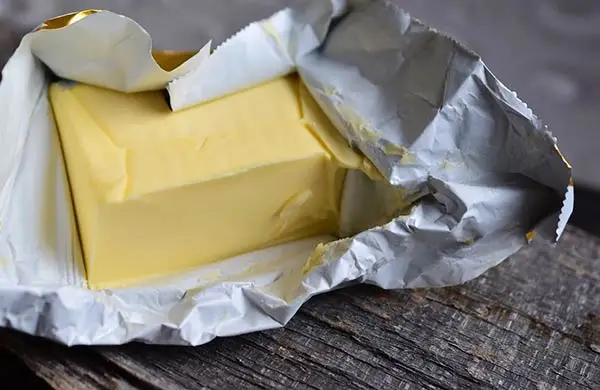
I choose quality butter in the shop by several tried-and-tested criteria – the ingredients, the name, the price and the packaging. From my own experience, the main problem with modern "butter" is widespread deception on the part of manufacturers. According to tests by Roskachestvo and Roscontrol, up to 50% of the products sold as "butter" on shop shelves are actually spread or margarine with milk-fat substitutes (palm and coconut oils). Knowing the basic rules of selection protects both your health and your wallet.
In this guide I share my complete approach to choosing butter: the difference between butter, margarine and spread, how to read the ingredients according to the standard (GOST), the classification by grade and fat content, and how to check butter at home with 5 simple tests. Save it to your bookmarks – it will be a real help on every shopping trip. After reading it, you will be able to tell genuine butter from a fake within 30 seconds of inspecting the packaging.
Butter, Margarine and Spread – What Is the Difference
There are three similar products in the shops that are often confused:
- Butter – made ONLY from cow's milk and cream (at least 82.5% milk fat for the classic type). It is a natural product rich in micronutrients. The price is high – it takes 20 litres of milk to produce 1 kg of butter. The shelf life is short, 30–35 days;
- Margarine – based on vegetable oils (palm, rapeseed, coconut). It appeared in the nineteenth century as a cheap replacement for expensive butter. It contains trans fats (harmful to the blood vessels and heart). The shelf life is 6–12 months. Under the Russian standard it is not allowed to be called "butter";
- Spread – a mixture of animal and vegetable fats (50/50 or in other proportions). The packaging often reads "soft butter" or "light butter" – this is a marketing ploy. By law a spread cannot be called butter. Its benefits are doubtful, as it contains both trans fats and natural fats.
Types and Grades of Butter
The Russian standard (GOST) distinguishes 2 grades of butter: highest (premium, even flavour, no off-odours) and first (minor flavour defects are permitted). For your purchase choose only the highest grade – the price difference is 20–30%, but the quality is considerably higher.
By fat content, butter is divided into:
- classic 82.5% – "real" butter according to the Soviet standard;
- traditional 80% – the modern Russian standard;
- amateur 78% – medium fat content;
- country 72.5% – low fat content, for sandwiches;
- sandwich 61.5% – the lowest fat content, for a lighter diet.
By flavour there is: salted (salt is added for longer storage), unsalted (the classic choice for baking and porridge), sweet cream (made from pasteurised cream – most of the butter on the shelf), and sour cream (made with special lactic acid bacteria, for a deeper flavour).
The Ingredients on the Packaging – What to Look For
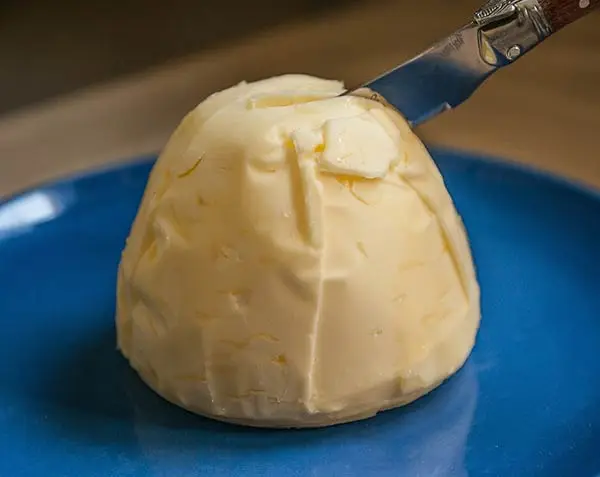
What SHOULD be in the ingredients: only whole cow's milk and cream (on the packaging: "whole milk cream" or "pasteurised cream"). The permitted additives are lactic acid bacteria (for sour cream butter), buttermilk (a natural milk product) and salt (for salted butter).
What should NOT be in the ingredients:
- Vegetable fats – listed as "milk fat substitutes", "palm oil", "coconut oil" or "rapeseed oil". If there is even one vegetable fat in the ingredients, it is no longer butter but a spread or margarine. You can also check by colour: genuine butter is pale yellow, while a spread is almost white;
- Preservatives – natural butter keeps for a maximum of 30–35 days in the refrigerator. If the shelf life is 6 months or more, it certainly contains preservatives and is no longer a natural product;
- Flavourings – genuine butter has almost no smell (a light milky aroma). A sharp "buttery" smell means flavourings that mask the absence of natural taste;
- Colouring agents – a bright yellow colour (a carrot shade) gives away a spread that has been tinted to imitate butter. Natural butter is pale yellow or almost white (in winter), turning a creamy yellow (in summer, when the cows eat fresh grass rich in carotene).
The Product Name on the Packaging
Margarine and spread manufacturers play tricks with names. The packaging may read "Real Butter", "Best Country", or "Grandma's Butter" – but this is marketing, and the actual product may turn out to be a spread. What to LOOK FOR:
- "Butter" – must be at least 82.5% fat (according to the standard);
- "Country butter" – at least 72.5% fat;
- "Amateur butter" – at least 78% fat.
The key point is that the word "BUTTER" must appear in the name. Under Russian law, manufacturers of spreads and margarines are prohibited from using the word "butter" on the packaging. Adjectives are allowed – "sour cream", "salted", "Vologda" – they specify the characteristics, but "butter" remains the key word.
The Price of Real Butter
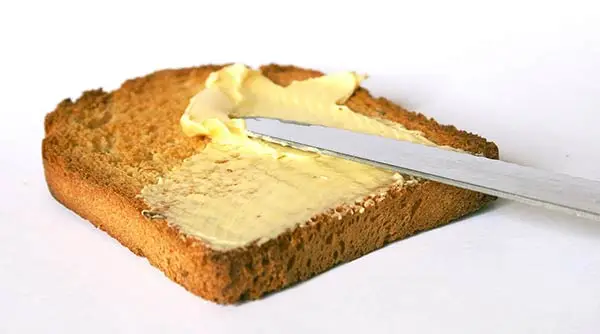
Natural butter cannot be cheap. Producing 1 kg of butter requires 20 litres of milk, plus the energy cost of churning and the packaging. The minimum production cost of 1 kg of genuine butter is 600–800 roubles (at 2026 prices). At retail, a 180 g pack of quality butter costs from 200–300 roubles and upwards. If you see 180 g of butter for 80–100 roubles, it is a spread or margarine with fat substitutes. "Discounts" on butter in shops often mean a fake is being cleared from the shelf before it is withdrawn.
Butter Packaging – Which to Choose
Choose packaging made of materials that protect the butter from light and foreign odours:
- Foil packaging – the best choice. The aluminium layer protects against light (which destroys vitamins), against odours (butter absorbs them like a sponge) and against air (which oxidises the fats). The shelf life is longer;
- Cardboard box – good protection from light, but permeable to odours. Suitable for short-term storage of 1–2 weeks;
- Paper wrapper – an outdated option. It lets through light (which destroys vitamins A and D), odours and moisture. The butter spoils quickly. Do not buy it.
The packaging must be INTACT, with no damage, creases or tears. Greasy stains on the box are a sign of leakage (the butter has already partly melted and frozen again – it is spoiled). As for the production date, fresher is always better, ideally no more than 1–2 weeks from the date of manufacture.
5 Ways to Check Butter at Home
You cannot check packaged butter in the shop, but at home there are 5 simple tests:
- Colour: genuine butter is pale yellow (a milky shade). Too white means a spread with vegetable fats. Too bright a yellow (a carrot shade) means a tinted spread;
- Structure of frozen butter: cut cold butter with a knife. Natural butter "crumbles" into characteristic flakes and thaws gradually and evenly. If it crumbles at room temperature, there have been production faults;
- The cut: quality butter looks dry and shiny on the cut. If droplets of water appear, it is a spread or margarine with a water emulsion. Single droplets are acceptable in natural butter;
- Behaviour in the mouth: genuine butter melts quickly and evenly and leaves no "greasy film" on the palate. Margarine melts slowly, sticks to the teeth and leaves a "waxy" aftertaste;
- The frying-pan test: place a piece on a hot frying pan. Natural butter melts quickly and evenly, WITHOUT releasing water or foam. Margarine sizzles and releases foam and water – it contains many impurities. The boiling-water test: butter dissolves without a trace, while margarine breaks up into flakes.
❓ Frequently asked questions
Which butter is best for baking and for sandwiches?
For baking – classic butter with 82.5% fat (according to GOST 32261-2013). The high fat content gives the dough the right structure (crumbly, flaky) and stops it from "running" during baking. Unsalted butter will not spoil the taste of sweet bakes. For sandwiches – country 72.5% or amateur 78% (it spreads on bread more easily). For porridge – any butter, but classic 82.5% gives the richest milky flavour. For frying – clarified butter (ghee) with a high smoke point of 250°C; ordinary butter burns at 150°C.
How long does butter keep?
In the refrigerator, natural butter keeps for 30–35 days in sealed packaging at 2–6°C. Once the packaging is opened, no longer than 14 days (contact with air speeds up oxidation and a bitter taste appears). In the freezer at -18°C it keeps for up to 12 months in foil packaging or a sealed bag. After thawing, use it within 7 days. Clarified butter (ghee) keeps for 3–12 months at room temperature, and once opened, in the refrigerator for up to 6 months. Signs of spoilage are yellow spots, a rancid smell and a sour taste.
Can you eat butter every day?
Yes, in moderate amounts (10–30 g a day for an adult). Butter contains vitamins A, D, E and K, lecithin (for the brain) and saturated fatty acids (a source of energy). Recent research (from the 2020s) has disproved the myth about the "harm" of saturated fats – the problem lies in the trans fats from margarine and spread, not in natural butter. However, people with high cholesterol and cardiovascular disease should limit it to 5–10 g a day. For children from 6 months – 1–2 g in porridge to support the development of the nervous system.
How can you tell a spread from butter without opening the packaging?
Without opening the packaging you cannot tell with 100% certainty, but there are clues: 1) Price – genuine butter costs from 200 roubles per 180 g, while a spread is cheaper; 2) Shelf life – natural butter up to 35 days, a spread 6–12 months; 3) Name – it should read "butter / country butter / amateur butter" with the fat content stated; 4) Ingredients on the label – ONLY milk and cream, no "milk fat substitutes" or "palm oil"; 5) Manufacturer – well-known regional dairies are more reliable than "new" brands; 6) Fat content – below 72.5% it is no longer butter according to the standard, but a spread. Combine 3–4 of these checks and it will be hard to make a mistake.