How to Cook Rice Porridge with Milk – the Simplest Methods
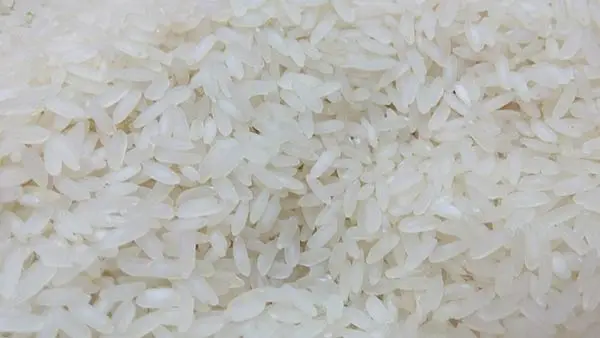
Rice porridge with milk makes a filling breakfast instead of sandwiches, and it is also served at lunch. If you keep to the proportions and the order in which the ingredients go in, the porridge comes out tender, creamy and aromatic. It takes 30-40 minutes to cook.
Below are two simple methods: one for thin porridge and one for thick. They differ in the ratio of grain to liquid, the order in which the ingredients go in and the cooking time.
Ratio of grain to liquid
Everyone is different – some people like thick rice porridge, while others prefer it very thin. For a thin porridge, take 6 cups of liquid per cup of rice (2 cups of water and 4 cups of milk). Do you like a thick, viscous rice porridge? Then keep to these proportions – 1 cup of rice and 4 cups of liquid (equal amounts of milk and water).
Important note. Measure the rice and the liquid with the same cup. It is best to use a measuring cup – that way the proportions will be precise.
Method 1. Thin rice porridge
This is exactly the kind of porridge served in kindergartens. It stays thin for a long time, even after it cools, and reheats well. It is handy to cook it the evening before for breakfast: cool the porridge within an hour of cooking, put it in the fridge and eat it within 1 day.
You will need the following:
- cow's milk (skimmed is fine) – 800 ml;
- water – 400 ml;
- rice – 200 g;
- salt, butter, sugar – to taste.
Method:
- Rinse the rice: lower a sieve of grain into a bowl, cover with water and stir with a spoon. Drain the water and repeat a few times until it runs clear. This removes dust and excess starch.
- Pour the water into a pot of at least 2 litres, add the rice and place over medium heat. Bring to the boil with the lid on, then reduce the heat and cook for 10 minutes.
- In another pot, bring the milk to the boil, add the salt and sugar and stir until they dissolve. Stirring the rice, pour in the hot milk and cook over the lowest heat for 20-30 minutes, stirring often. When the rice is soft, take the pot off the heat, add a little butter and stir. Wrap the pot in a towel for 10 minutes, then serve.
Method 2. Thick rice porridge
Thick porridge is served warm or hot. As it cools it thickens quickly and sticks to the sides of the pot when reheated, so it is cooked to be eaten straight away.
Ingredients for cooking:
- clean water – 0.4 l;
- cow's milk – 0.4 l;
- rice (white) – 0.2 kg;
- granulated sugar – 1.5 tbsp;
- natural butter – a small piece;
- salt – one pinch.
Method:
- Sort through the rice, removing any unhulled grains, debris and small stones. Rinse the grain thoroughly in several changes of water until the water running off it is clear.
- Pour the water into a heavy-bottomed pot, add the rice and place over medium heat. Stir actively until it boils so the grain does not stick to the bottom and sides. Once it boils, cook the rice for 15 minutes, stirring regularly so it does not burn.
- Pour in the hot milk, add salt and sugar and cook over low heat until thick, about 20 minutes.
- Take the pot off the heat, add a piece of butter, cover with a lid and leave for 10 minutes. The porridge is then ready.
Tips for the perfect rice porridge
Tip 1. Always rinse the rice thoroughly before cooking – this removes the excess starch, so the porridge will not be "slimy" and will not stick to the bottom of the pot.
Tip 2. Add the milk to the rice already cooked in water ONLY hot – cold milk will "stop" the process and the porridge will take significantly longer to cook. A similar principle applies to other milk porridges.
Tip 3. Wrap the finished porridge in a towel for 10 minutes – in that time the rice will "rest" and absorb the remaining milk, and the flavour and texture will become perfect.
Tip 4. Round-grain white rice (Krasnodar, the porridge type) is preferable to long-grain. It contains more starch and gives the porridge a creamy, tender texture.
❓ Frequently asked questions
Which rice is best for milk porridge?
For milk porridge, varieties with a high starch content are preferable: round-grain rice (Krasnodar, arborio) and medium-grain. They give a creamy, tender texture and absorb milk well. Long-grain rice (basmati, jasmine) is not the best choice: the grains stay "separate" and the porridge comes out "dry". Parboiled rice is not suitable either – it takes a long time to cook and gives a slightly firm texture. Wild or brown rice is not used for classic milk porridge – they require different proportions and cooking times.
What can replace the milk?
For a vegan or dairy-free version: oat milk (the closest substitute in taste), almond milk (a light nutty note), rice milk (a neutral taste, but less "creamy"), coconut milk (a bright, exotic flavour). All the plant-based options make the porridge less "creamy" than cow's milk. For an ordinary lactose-free porridge, lactose-free milk works well – in taste it is almost indistinguishable from regular milk. The proportions are the same as in the recipe.
How to make the porridge even tastier?
When serving, add: honey (instead of sugar, 1–2 tsp), fresh berries (raspberries, strawberries, blueberries), any jam (1–2 tsp), grated chocolate, ground cinnamon (1/4 tsp per plate), chopped nuts, raisins or dried apricots. For a more "grown-up" porridge, salt it a little more and add a bit more butter. Children prefer it sweet, with berries and honey. Made with milk, cinnamon and raisins, it is the classic "Russian" version.
How long does the finished porridge keep?
No more than 1 day in the fridge in a closed container, whether it is thin or thick. Rice can contain spores of Bacillus cereus bacteria: they survive cooking, and in warm porridge they germinate and produce a toxin that is not destroyed by reheating. That is why the UK National Health Service (NHS) and Food Standards Agency (FSA) advise cooling cooked rice dishes as quickly as possible, preferably within an hour, and keeping them in the fridge for no more than 1 day. Porridge that has stood overnight at room temperature is best thrown away. Reheat it only once, until very hot all the way through, on the stove with 50-100 ml of milk or water to restore the consistency; in the microwave it may scorch at the edges. Rice porridge is not worth freezing: after thawing the rice turns cottony.
How long do you cook rice as a side dish?
White long-grain rice simmers for 15-18 minutes after the water boils, covered, over the lowest heat, then rests off the heat for 10 minutes; use 1.5-2 cups of water per cup of rice. Times for basmati, brown, wild and other types are in the table: how to cook rice.