How to Cook Rice: Cooking Times and Water Ratios by Type
White long-grain rice is simmered for 15-18 minutes after the water boils, over the lowest heat with a tight lid, then rests off the heat for 10 minutes. Use 1.5-2 cups of water and 1/2 tsp of salt for 1 cup of rice. Basmati takes 10-12 minutes, parboiled rice 20-25 minutes, brown rice 35-45 minutes, wild rice 45-60 minutes. White rice is rinsed until the water runs clear before cooking and is not stirred while it cooks.
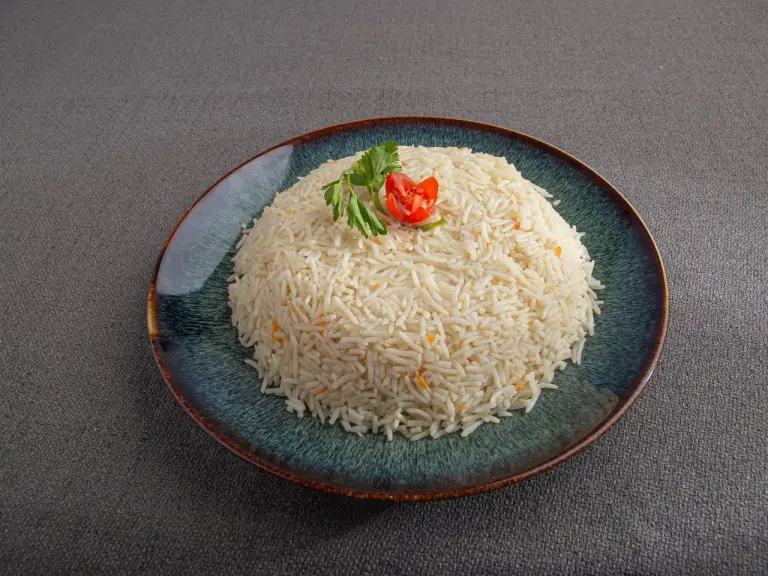
How long to cook rice: table by type
Start timing when the water boils. Then turn the heat down to the lowest setting, cover the pot tightly and keep it closed until the end. Measure the rice and water with the same cup: a 250 ml (1 cup) measure holds about 230 g (8 oz) of rice, and white rice roughly triples in volume as it cooks.
| What you cook | Cooking time and water per cup |
|---|---|
| White long-grain Rinse until the water runs clear | 15-18 min + 10 min covered water: 1.5-2 cups |
| Basmati Soak for 20-30 min | 10-12 min + 10 min covered water: 1.5 cups |
| Jasmine Rinse, do not soak | 12-15 min + 10 min covered water: 1.25-1.5 cups |
| Short-grain as a side Soft and slightly sticky | 15-20 min + 10 min covered water: 2 cups |
| Parboiled Does not stick | 20-25 min water: 2-2.25 cups |
| Brown (unpolished) Soak for 1-2 h | 35-45 min + 10 min covered water: 2.25-2.5 cups |
| Red Grains stay chewy | 25-35 min + 10 min covered water: 2-2.5 cups |
| Black Turns the water purple | 30-40 min + 10 min covered water: 2 cups |
| Wild Done when the grains split open | 45-60 min water: 3-4 cups, drain the excess |
| Sushi rice More on sushi rice | 15-20 min + 10-15 min covered water: 1.1-1.2 cups |
| Arborio for risotto Risotto with spinach | 16-18 min about 3 cups of broth, added gradually |
| Boil-in-bag rice Check the package | 15-20 min 1-1.5 litres per bag |
| Parcooked For cabbage rolls and stuffed peppers | 7-10 min water: 5-6 cups, drain |
| In soup Rice soup with chicken | last 15-20 min of cooking 1/3-1/2 cup per 2.5-3 litres of soup |
Sushi rice, jasmine and basmati need the least water, unpolished and wild rice the most. The package gives the exact time and ratio for a specific brand.
How to cook fluffy rice in a pot: step by step
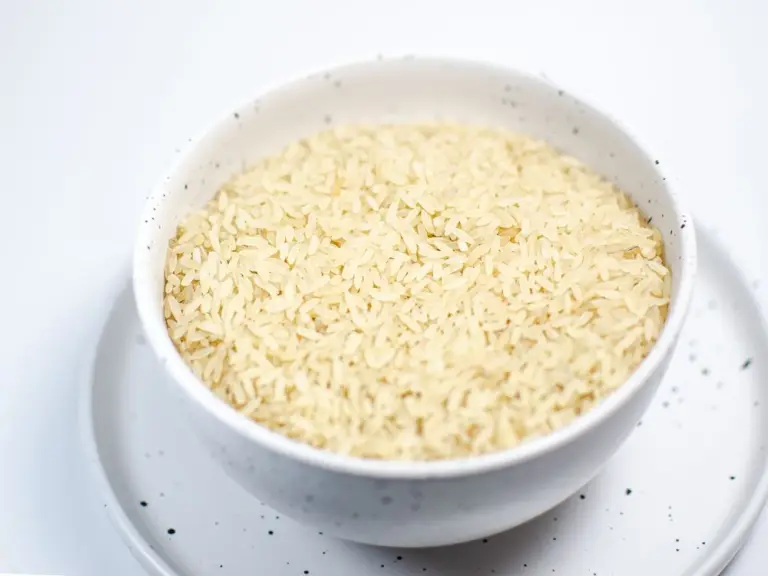
1. Rinse the rice
Put the rice in a bowl, cover with cold water, swirl it with your hand and pour off the cloudy water. Repeat 3-5 times, until the water is almost clear. Rinsing removes the starch dust on the surface of the grains that makes rice stick. Rice for risotto is not rinsed: that dish needs the starch.
2. Measure the water and salt
For long-grain rice, take 1.5-2 cups of water per cup of rice, for short-grain rice as a side dish 2 cups. Jasmine needs 1.25-1.5 cups, soaked basmati 1.5 cups. Add 1/2 tsp of salt per cup of rice.
3. Bring to a boil
Pour the water into a heavy-bottomed pot with a tight lid, add salt and bring to a boil. Add the rice, stir once so the grains do not stick to the bottom, and wait for the water to boil again. For a more fragrant side dish, you can first heat the rice in the pot with a spoonful of oil for 1-2 minutes and then pour in the boiling salted water.
4. Simmer covered over the lowest heat
Turn the heat down to the minimum, cover the pot and cook white rice for 15-18 minutes, basmati for 10-12 minutes. Do not lift the lid and do not stir: moisture escapes with the steam, and a spoon breaks the grains and releases starch.
5. Let the rice rest
Take the pot off the heat and leave it closed for 10 minutes. The moisture spreads evenly, and the bottom layer is no longer wetter than the top. Then fluff the rice with a fork.
6. If something goes wrong
- The rice is done but water is left: keep the pot uncovered over low heat for 2-3 minutes.
- There is no water left but the grains are hard: add 2-3 tbsp of boiling water, cover and keep over the lowest heat for 5 more minutes.
- The bottom has burned: do not stir; move the top layer to another dish, otherwise all the rice will smell burnt.
Two methods: covered and in plenty of water
The covered method above is the main one: the rice absorbs all the water along with the flavour and salt. The second method is like cooking pasta.
- Bring 1.5-2 litres of water per cup of rice to a boil and add salt: 1 tsp per litre.
- Add the rinsed rice and cook uncovered, tasting the grains: white rice is usually done in 10-12 minutes, brown rice in 25-30 minutes.
- Drain the rice in a sieve, let the water run off and return it to the pot, covered, for 5 minutes.
This way the rice is much less likely to stick, and part of the inorganic arsenic that rice absorbs from the soil goes into the water. Researchers at the University of Sheffield tested a middle-ground option: the rice is boiled for 5 minutes, the water is drained, fresh water is added and the rice is finished over low heat until it absorbs it. This removed more than half of the inorganic arsenic from brown rice and about 74% from white rice, while the rice lost no more minerals than when cooked in plenty of water. The method is useful for kids and for anyone who eats rice often.
Basmati and jasmine
Basmati
A long, fragrant rice from India and Pakistan. It is rinsed 3-4 times and soaked for 20-30 minutes: the grains break less and lengthen more as they cook. Use 1.5 cups of water per cup of rice, cook for 10-12 minutes covered and leave off the heat for 10 more minutes.
Jasmine
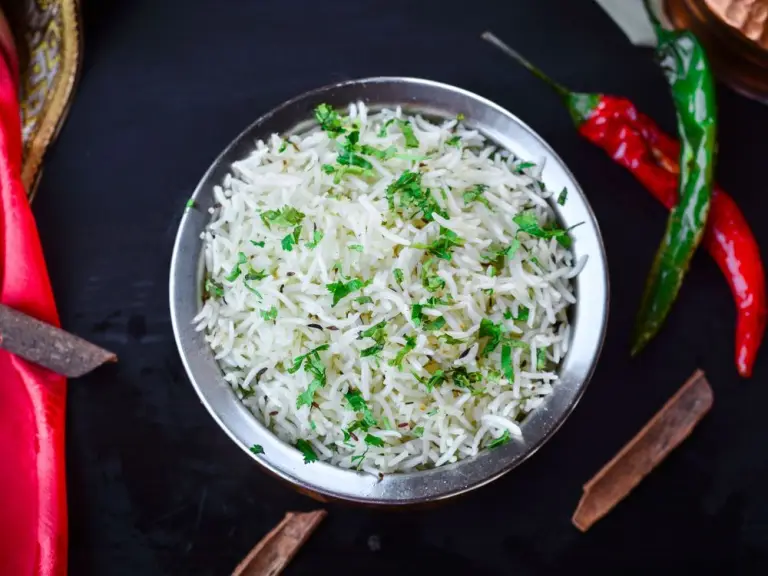
A fragrant Thai rice, a little softer and stickier than basmati. It is rinsed but not soaked: use 1.25-1.5 cups of water, cook for 12-15 minutes and leave covered for 10 minutes. Jasmine suits Asian dishes such as Thai-style rice with chicken.
Brown, red, black and wild rice
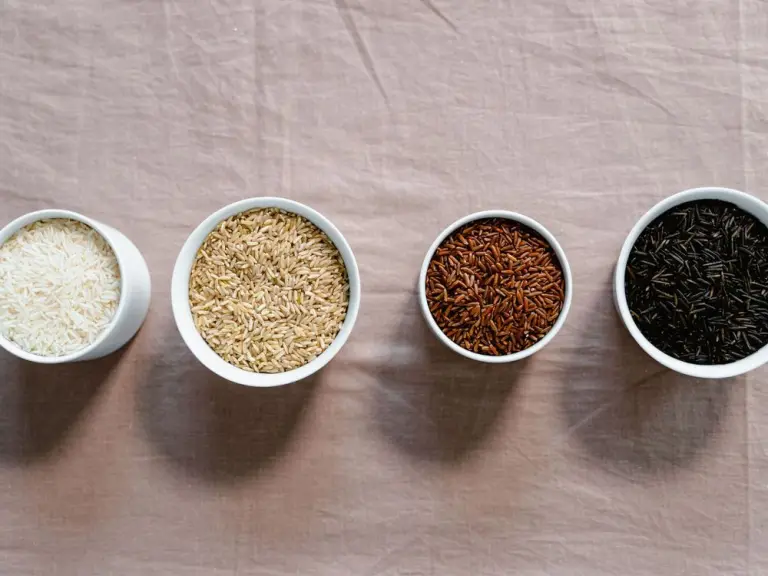
Unpolished rice keeps its bran layer, so it cooks 2-3 times longer than white rice and absorbs more water. Soaking for 1-2 hours shortens the cooking and makes the grains softer.
- Brown: 2.25-2.5 cups of water per cup of rice, 35-45 minutes plus 10 minutes covered. Cooked brown rice is tender inside and slightly chewy outside.
- Red: 2-2.5 cups of water, 25-35 minutes plus 10 minutes covered. The grains keep their shape and nutty flavour.
- Black: 2 cups of water, 30-40 minutes plus 10 minutes covered. It stains the water and cookware purple, so it is cooked separately from other grains.
- Wild: the seeds of an aquatic grass (Zizania), not rice in the strict sense. It is cooked in 3-4 cups of water for 45-60 minutes, until some grains split open, and the excess water is drained.
- Ready-made blends of white and wild rice are cooked for the time stated on the package.
Brown rice works well in unpolished rice with vegetables and mussels with brown rice.
Rice for sushi, risotto, pilaf, porridge and salad
- For sushi and rolls, use Japanese short-grain rice: rinse it until the water runs clear, cook for 15-20 minutes with water at 1:1.1-1.2, leave covered for 10-15 more minutes and season with rice vinegar. Details in how to cook rice for sushi.
- For risotto, use arborio or carnaroli. The rice is not rinsed; it is heated in butter or oil and cooked for 16-18 minutes while hot broth is added gradually, about 3 cups per cup of rice in total. Example: risotto with spinach and cream.
- For pilaf, the rice is not boiled in advance: rinsed long-grain rice goes in raw on top of the meat and vegetables and finishes cooking with them. Examples: fluffy chicken pilaf in a skillet and pork pilaf in a multicooker.
- Milk porridge needs short-grain rice: how to cook rice porridge with milk.
- For salads, rice is cooked a little less so the grains stay firm: how to cook rice for salad.
How long to cook boil-in-bag rice
Boil-in-bag rice is usually parboiled, so it does not stick. A small portion in plenty of boiling water cooks faster than in a pot: in 15-20 minutes. The exact time is printed on the package.
- Bring 1-1.5 litres of water per bag to a boil and add salt: 1 tsp per litre.
- Drop the whole bag into the boiling water. There is no need to pierce it: the water gets in through the holes.
- Cook for 15-20 minutes over medium heat.
- Lift the bag out by its loop with a fork, let the water drain, cut the bag open and tip out the rice.
How to cook rice in a multicooker or rice cooker
In a multicooker
- Put the rinsed rice into the bowl and add water: 1.5-2 cups per measuring cup of long-grain rice, 2 cups for short-grain rice. Add salt.
- Select the Rice, Grain or Pilaf mode. The program sets the time, usually 25-40 minutes depending on the model.
- After the signal, leave the rice on Keep Warm for 10 minutes and fluff it with a spatula.
In a rice cooker
A rice cooker detects when the rice is done: once the water is absorbed, it switches to Keep Warm. Fill the water to the marks on the bowl for the amount of rice you use. After it switches over, leave the rice closed for 10-15 more minutes.
Parcooked rice and rice in soup
- For cabbage rolls and stuffed peppers, rice is usually boiled for 7-10 minutes in plenty of salted water and drained in a sieve: it finishes cooking in the filling. Such rice suits homemade cabbage rolls with meat and rice and peppers stuffed with meat and rice. Check the recipe for the exact time: sometimes raw rice goes straight into the mince, as in hedgehog meatballs in tomato sauce.
- In soup, white rice goes in 15-20 minutes before the end of cooking; 1/3-1/2 cup is enough for 2.5-3 litres of soup. Example: rice soup with chicken and potatoes.
- Brown rice for soup is easier to boil separately until almost done, otherwise the vegetables fall apart before it softens.
Common mistakes
- Not rinsing white rice. Starch dust glues the grains together. Rinse the rice until the water is almost clear.
- Eyeballing the water. Too much water turns the side dish into porridge, too little leaves the grains hard. Measure the rice and water with the same cup.
- Stirring rice while it cooks. A spoon breaks the grains and they release starch. Stir only once, when the rice goes into the boiling water.
- Lifting the lid. Moisture escapes with the steam, and the top layer stays hard.
- Cooking over high heat. The water boils away before the rice is cooked, and the bottom burns. After the boil, keep the heat at the minimum.
- Using the wrong type. Short-grain rice is always a little sticky. For a fluffy side dish, use long-grain, basmati or parboiled rice.
How to store cooked rice safely
Raw rice can contain spores of the bacterium Bacillus cereus. They survive cooking, and if cooked rice is left at room temperature for a long time, the spores germinate, the bacteria multiply and produce a toxin that reheating does not destroy. Food poisoning shows up as vomiting or diarrhoea 1-5 hours after eating. That is why the UK National Health Service (NHS) and the Food Standards Agency (FSA) advise:
- serve rice as soon as it is cooked, and cool leftovers as quickly as possible, preferably within an hour;
- keep cooked rice in the fridge for no more than 1 day before reheating;
- reheat rice only once, until it is very hot all the way through.
Rice cools fastest spread in a thin layer on a flat dish. Do not leave rice overnight in a pot on the stove or on Keep Warm in a multicooker. To freeze, pack the rice in portions and put it in the freezer within an hour of cooking: it keeps there for up to 1 month. Thaw it in the fridge and reheat it only once, until it is very hot all the way through.
What to cook with rice
- Rice side dish in chicken broth.
- Rice with chicken.
- Rice with curry and vegetables.
- Meatballs with rice and gravy.
- Salad with crab sticks and rice.
- Homemade rolls.
- Rice kutya with raisins.
Calories for dry and cooked rice by portion are in the calorie guide. The other basic side dish is covered in how to cook buckwheat.
Video: how to cook fluffy rice
A Russian-language video from the Luchshie Retsepty channel shows the traditional method: 1 cup of long-grain rice to 2 cups of hot water.
❓ Frequently asked questions
How long do you cook rice after the water boils?
White long-grain rice 15-18 minutes, basmati 10-12, jasmine 12-15, parboiled 20-25, brown 35-45, wild 45-60 minutes. After cooking, white rice rests covered for 10 more minutes.
What is the rice to water ratio?
For white long-grain rice 1:1.5-2 by volume, for basmati 1:1.5, for short-grain as a side dish 1:2, for sushi 1:1.1-1.2, for brown 1:2.25-2.5, for wild 1:3-4. Measure the rice and water with the same cup.
Do you need to rinse rice?
White rice for a side dish is rinsed 3-5 times, until the water is almost clear, so it sticks less. Rice for risotto is not rinsed, and parboiled rice needs only one quick rinse.
When should you salt rice?
Add salt to the water before the rice: 1/2 tsp per cup of rice for the covered method, or 1 tsp per litre if the rice is cooked in plenty of water.
How do you cook rice so it does not stick?
Use long-grain, basmati or parboiled rice, rinse it until the water runs clear, measure the water with a cup, simmer covered over the lowest heat and do not stir. After cooking, let the rice rest for 10 minutes and fluff it with a fork.
How long do you cook brown rice?
35-45 minutes after the water boils, with 2.25-2.5 cups of water per cup of rice, then 10 minutes covered. Soaking it for 1-2 hours shortens the cooking.
How long do you cook basmati rice?
Rinsed basmati soaked for 20-30 minutes cooks in 10-12 minutes with 1.5 cups of water per cup of rice, then rests covered off the heat for 10 minutes.
How long do you cook boil-in-bag rice?
15-20 minutes in boiling salted water, 1-1.5 litres per bag. The time depends on the type and is printed on the package.
How long can cooked rice be stored?
The NHS and FSA advise cooling rice as quickly as possible, preferably within an hour of cooking, and keeping it in the fridge for no more than 1 day before reheating. It is reheated only once, until very hot all the way through. Rice left out overnight at room temperature is best thrown away.
How many calories are in cooked rice?
About 130 kcal per 100 g of white long-grain rice cooked without fat, and 365 kcal per 100 g of dry rice (USDA data). Portions are easy to count in the rice calorie guide.