avg —
Khmeli-Suneli – how to prepare it at home

Instructions
Grind the dried cilantro seeds in a mortar or coffee grinder until fine. Freshly ground coriander is far more aromatic than ready-bought ground coriander – do not skip this step.
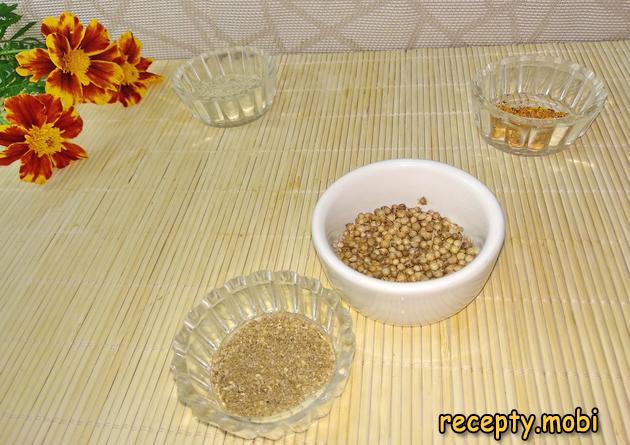
In this recipe, utscho suneli is the dried petals and stamens of marigold flowers, finely ground. This is the base of the seasoning's aroma, its main "soul".
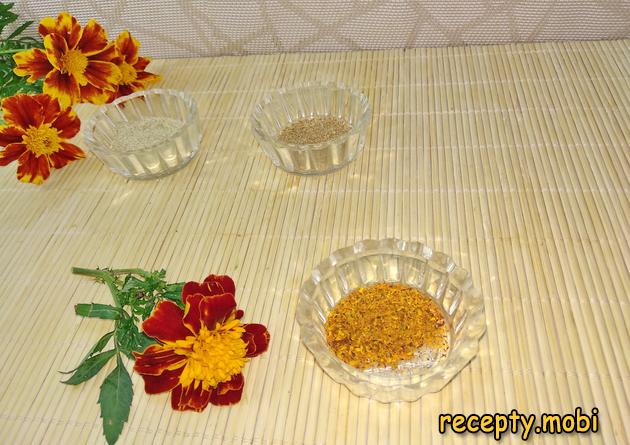
In another tradition, utscho suneli is blue fenugreek. You can buy it in specialty shops or at the market. In different regions of Georgia this name means different things – both options are suitable for the basic seasoning.
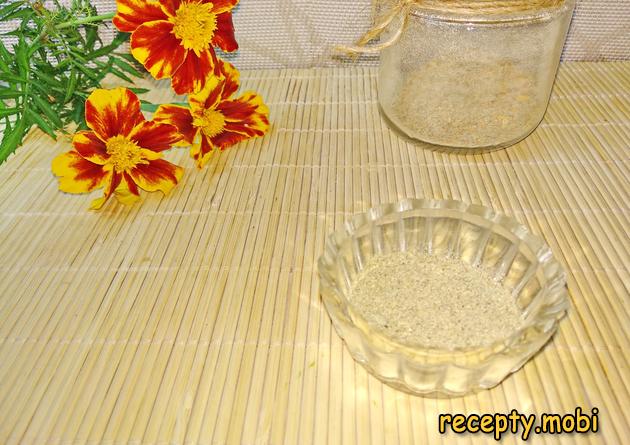
I mix all the spices in a clean, dry bowl. It is the dryness of the dish that matters – the slightest moisture will shorten the seasoning's shelf life.
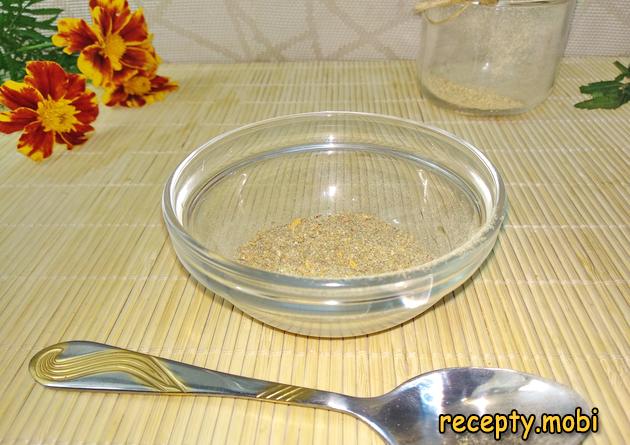
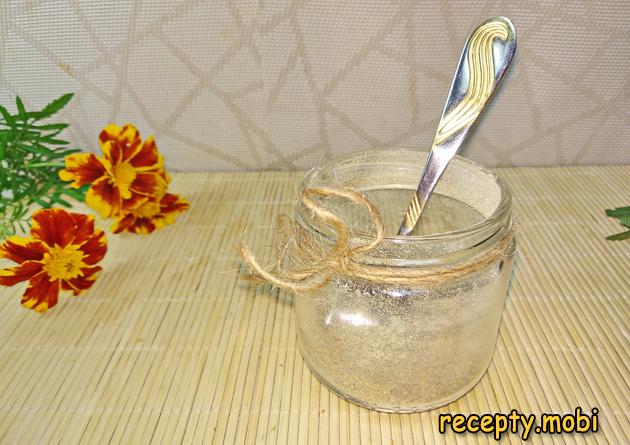
I transfer the ready mix into a clean, dry jar with a lid. The khmeli-suneli seasoning is ready. You can add other spices to this basic base for one dish or another.


Tips
- 1
Grind the spices in a mortar or coffee grinder BEFORE mixing – freshly ground ones are more aromatic than spices ground in advance. The essential oils are quickly lost when the spices are stored ground.
- 2
Store in a dry, airtight jar in a dark, cool place – sunlight and moisture destroy the aroma of the spices.
- 3
The basic seasoning can be expanded "to suit the dish": for kharcho, add 1 tsp of dried savory; for satsivi, add ground walnuts. I use a similar principle in other Georgian seasonings.
- 4
A homemade seasoning keeps for up to 6 months when stored properly. It is most aromatic in the first 3 months – plan the amount according to your needs.
Video
FAQ
What is "utscho suneli" and what can replace it? +
Utscho suneli – in Georgia this is the name for blue fenugreek (shambhala) or dried marigolds (imeretian saffron). In different regions of Georgia "utscho" means different things. Both options are suitable for the basic seasoning. As a replacement you can use: Greek fenugreek (less aroma), ground cilantro in a double amount (if there is no fenugreek or saffron), or turmeric + dried parsley (a simplified replacement). Original utscho suneli can be bought in Eastern grocery shops, at markets from sellers from the region, or ordered online from spice suppliers.
What can replace imeretian saffron? +
Imeretian saffron is dried marigold petals. Real saffron (the crocus flower) is a completely different spice, more expensive and with a different flavour. You can replace imeretian saffron with: turmeric (1/4 tsp + 1/4 tsp paprika – this gives colour and a light aroma), dried calendula petals (a close analogue of marigolds), or dried chamomile flowers with a touch of turmeric. Without this component the seasoning will be pale both in colour and in flavour.
Which dishes is khmeli-suneli used in? +
Classic Georgian dishes with khmeli-suneli: kharcho soup, chakhokhbili (stewed chicken), satsivi (sauce with walnuts), lobio (a bean dish), basturma (cured meat), homemade adjika. I also add it: to a marinade for shashlik (1 tsp per 1 kg of meat), to lamb pilaf, to stewed beef, to vegetable stews. The seasoning suits all meat dishes of Caucasian cuisine. European dishes (pasta, risotto) do not "get on" with it – its aroma is too distinctive.
How much khmeli-suneli should you add to a dish? +
Standard dosage: 1–2 tsp of seasoning per 1 kg of meat or 1 litre of soup. For kharcho soup – 2 tsp at the end of cooking. For chakhokhbili – 1.5 tsp per 1 kg of chicken. For adjika – 1 tbsp per 1 kg of tomatoes. For a shashlik marinade – 1 tsp + salt + pepper. Add it at the end of cooking (5–10 minutes before it is done) – long boiling "eats up" the aroma. Start with a smaller amount and taste – it is easy to overdo the aroma.
- Comment
or post as a guest
Be the first to comment.