Pepper Preserves: 6 Tested Recipes, from Lecho to Abkhazian Adjika
Peppers work differently in preserves: sweet ones go into lecho and marinades, hot ones into adjika. This roundup collects 6 tested recipes for pepper preserves from our site: three versions of lecho, canned and stuffed peppers, and Abkhazian adjika. Every recipe comes with step-by-step photos, exact time and yield, and at the end you will find preserves where pepper plays a supporting role.
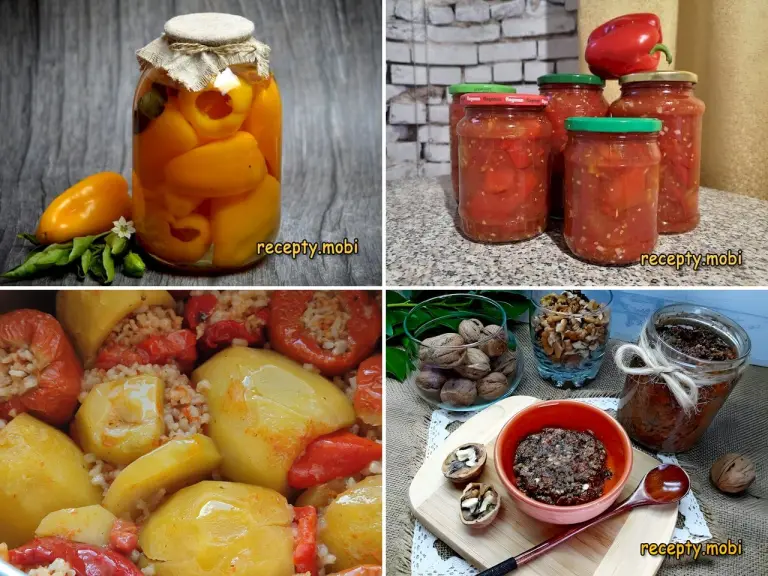
In short: peppers for winter most often go into lecho (three versions here, and they differ in the base), get canned whole, or are turned into fiery adjika. The fastest of the six: lecho without tomatoes, 30 minutes. The only one that has to be kept in the fridge: Abkhazian adjika, though it keeps there for up to a year.
All 6 recipes: the table
| Recipe | Time | Yield | Why try it |
|---|---|---|---|
| Lecho without tomatoes | 30 min | 1 jar, 800 g | the fastest of the six, no tomatoes |
| Lecho with onion and garlic | 35 min | 5 jars | five jars in 35 minutes |
| Canned bell peppers | 40 min | 1 jar, 3 L | whole peppers for stuffing, 36 kcal |
| Lecho with tomatoes | 60 min | 5 jars | our in-depth lecho guide, 42 kcal |
| Stuffed peppers for winter | about 2 hours | about 3 one-liter jars | a guide to the methods: freezing and canning |
| Abkhazian adjika | 2 days | 1 jar, 0.5 L | fiery, built on hot peppers, fridge only |
Lecho: three versions
Lecho is the main way to put up a pepper glut: sweet slices in a sauce that work in winter both as an appetizer and as a base for stews. We have three recipes, and they differ not in details but in the base itself.
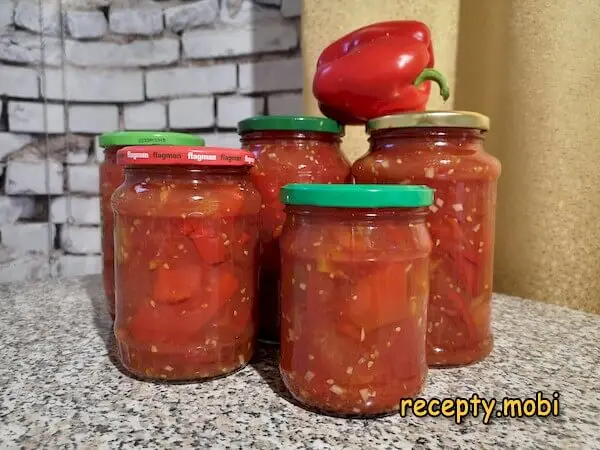
Lecho without tomatoes
Lecho with no tomato base: sweet pepper in a sauce of oil, sugar and vinegar. The fastest of the six recipes, 30 minutes of work, yields an 800 g jar, 86 kcal.
Step-by-step recipe with photos: open.
Lecho with onion and garlic
Pepper and tomatoes in equal parts, a kilo each, plus onion and garlic for a fuller flavor. Thirty-five minutes gets you five jars at once.
Step-by-step recipe with photos: open.
Lecho with tomatoes
Our in-depth lecho guide: ratios, variations and safe canning. An hour of work, five jars, 42 kcal.
Step-by-step recipe with photos: open.
Whole peppers: canned and stuffed
When you want to take a whole pepper out of the jar in winter rather than a sauce, two formats work: pickled whole peppers and stuffed peppers, which come out of the jar as practically a finished meal.
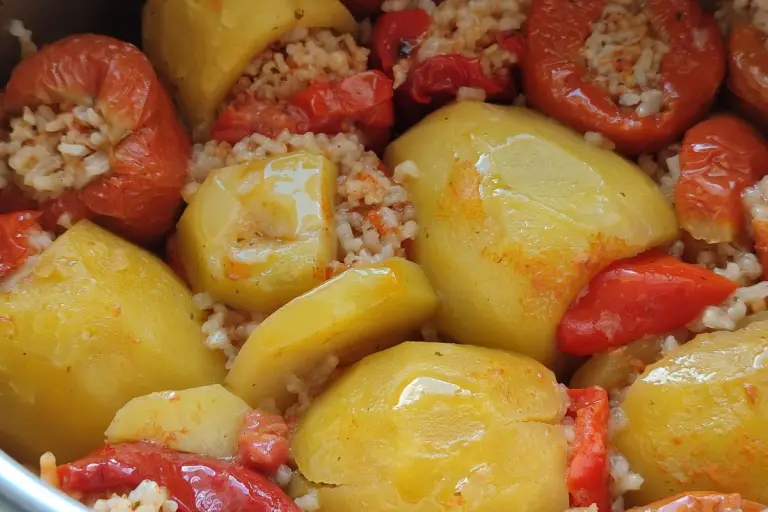
Canned bell peppers
Peppers are canned whole so you have something to stuff in winter. A marinade with bay leaf and allspice, 40 minutes of work for a three-liter jar, only 36 kcal.
Step-by-step recipe with photos: open.
Stuffed peppers for winter
Not one recipe, but a guide to preserving stuffed peppers: freezing them raw and ready to cook, canning them in tomato sauce, with a vegetable filling. Plus a comparison table, storage times and a large FAQ. About 2 hours, yields roughly three one-liter jars.
Step-by-step recipe with photos: open.
Spicy pepper preserves
Hot peppers are a story of their own: they go into adjika, which is kept not in the pantry but in the fridge.
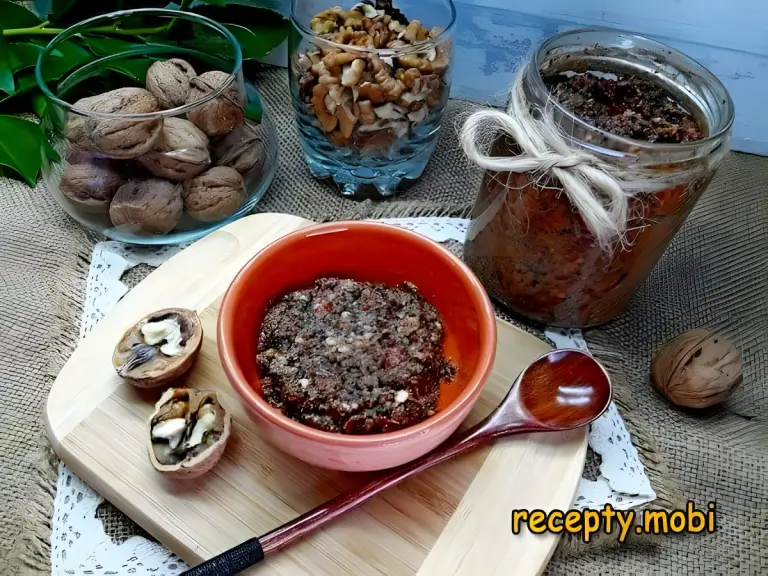
Abkhazian adjika
The Abkhazian classic: hot peppers with garlic, walnuts and herbs, with no heat treatment. Two days to mature, yields a 0.5-liter jar, 158 kcal. Keeps in the fridge for up to a year; at room temperature it ferments.
Step-by-step recipe with photos: open.
Where pepper plays a supporting role
Peppers also end up in other preserves: eggplant lecho, vegetable salads and spicy sauces. These recipes are not about pepper, but they would not work without it.
- Lecho with eggplant and pepper
- Eggplant "Firefly" with hot and sweet pepper
- Winter salad with tomatoes, cucumbers and pepper
- Relish sauce with cucumbers, zucchini and pepper
- Adjika with apples and tomatoes
One separate case: peppers marinated in olive oil. That recipe is very much about pepper, but it is not a winter preserve: the jar is not sealed and keeps in the fridge for 5-7 days.
How to choose peppers for preserving
- For canning whole or in wedges, pick fleshy, thick-walled peppers: thin-walled ones fall apart in the brine.
- Red and yellow peppers are sweeter than green ones, which is why they go into lecho and marinades.
- The pepper should be firm, with smooth glossy skin and a green stem.
- For stuffed peppers, choose medium-sized peppers of a similar shape: they are easier to pack into a jar.
- Buy fresh, fleshy hot peppers for adjika, and wear gloves when working with them.
Common mistakes
- Using thin-walled peppers for whole-pepper canning: they lose their shape in the jar.
- Leaving the seeds and white ribs in: they make the preserve bitter.
- Cutting down the vinegar by eye: acidity is what keeps the preserve safe.
- Keeping Abkhazian adjika in the pantry: with no heat treatment it ferments, so it belongs in the fridge.
- Cutting peppers larger than the recipe says: the brine will not penetrate them in the time the recipe allows.
- Skipping the heat-processing or sterilization step in a recipe: that step is exactly what makes the jar last until winter.
See also
❓ Frequently asked questions
Can I mix red and yellow peppers in one jar?
Yes, a mixed-color jar looks striking and the taste difference is small: yellow ones are a bit sweeter. What matters is that the peppers are the same size with walls of similar thickness, so they pickle evenly.
How is lecho different from adjika?
Lecho is sweet pepper slices in a sauce, a mild appetizer. Adjika is a spicy paste built on hot peppers with garlic and spices. This roundup has both.
Do peppers need to be peeled?
Not for lecho and marinades: the skin helps the slices keep their shape. Peeling is usually done with roasted peppers, for salads and pepper roll-ups.
What does "no sterilization" mean in the recipes?
The filled jars get no additional heat treatment: hot brine, acidity and properly prepared jars keep the preserve safe. Some recipes skip vinegar entirely and rely on the acidity of tomatoes plus longer heating, and in those the timing must not be changed. The empty jars and lids must still be sterilized. Detailed guide: how to sterilize jars and lids.
How long do pepper preserves keep?
Store sealed jars in a dark, cool place, roughly until the next season. Abkhazian adjika is the exception: it gets no heat treatment and lasts up to a year, but only in the fridge. Finish an opened jar within 3-4 days.
Why do peppers turn soft in the jar?
Usually it is too much time on the heat: the brine boils longer than stated, or the jar sits too long in the sterilizer. Thin-walled peppers are the rarer cause. Follow the timing of the recipe instead of adding minutes by eye.
Can I freeze peppers instead of canning?
Yes, it is the simplest route: in strips or halves in freezer bags. Stuffed peppers can be frozen raw the same way, ready to cook straight from the freezer, and that method is covered in a separate article in this roundup.
Why should Abkhazian adjika never be stored at room temperature?
It is never cooked, so it stays a raw, unpasteurized paste. Warmth starts fermentation, which is why the jar goes straight into the fridge, where the adjika keeps for up to a year.
When is pepper preserving season?
Field-grown peppers peak in August and September. That is when they are at their fleshiest and cheapest, and hot peppers reach the right heat for adjika.