Smoothies – Tips and Recipes
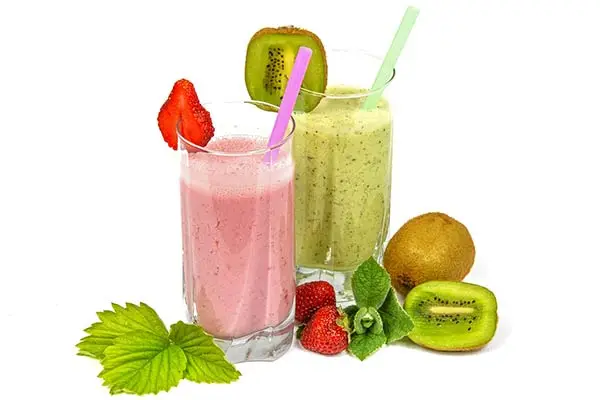
I make a smoothie every morning as a quick way to get vitamins and fibre in a single glass. From my own experience, the main secret to a smooth, thick texture is to always put the hard ingredients (carrot, beetroot, ginger) at the bottom of the blender and the soft ones (bananas, avocado) on top. This order lets the blades first break down the dense components and then “catch” the soft ones – with no unblended chunks left behind.
This step-by-step recipe is my collection of tried-and-tested smoothies for different goals: weight loss, an energy boost and a stronger immune system. For weight loss I swap sweet fruit for vegetables. As for blender power, you need at least 1000 W, otherwise the hard ingredients will not be blended to the required smoothness.
Basic principles of making a smoothie
- For weight loss, replace sweet fruit with vegetables and greens;
- Put the hard ingredients (root vegetables) at the bottom of the blender;
- Blender power for a good smoothie should be from 1000 W;
- Frozen fruit makes the smoothie colder and thicker.
Preparation step by step
- cucumber – 1;
- carrot – 1;
- celery – 2 stalks;
- spinach – 10 leaves;
- parsley – 2 sprigs;
- peeled lemon – 1;
- chia seeds – 1 tsp.
1. I rinse all the vegetables and greens under cold water and cut them into large pieces so they are easy to load into the blender. I peel the carrot and slice it into rounds – it is the hardest component and needs to sit at the bottom. I cut the cucumber into large cubes, the celery into 3–4 cm lengths, and leave the spinach leaves whole. I keep the chia seeds aside for the finish.
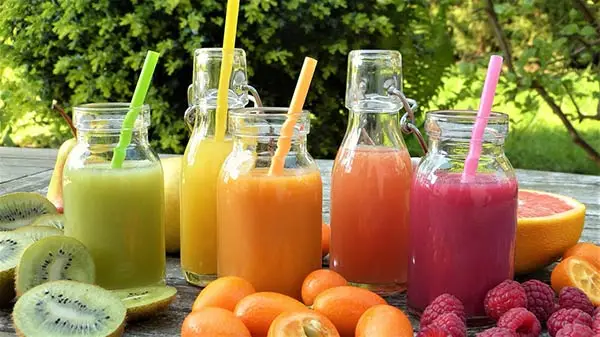
2. I load the ingredients into the blender in the right order: first the carrot and celery at the bottom (hard), then the cucumber (medium density), then the spinach and parsley, and right at the top the peeled lemon. This order is critical for a powerful blender – the blades work on the hard ingredients first and then “catch” the soft ones. The reverse order would leave unblended pieces of carrot.
3. I blend on maximum speed for 1–2 minutes until the texture is completely smooth, with no pieces or fibres. At the end I add the chia seeds and blend for another 5–10 seconds to distribute them evenly. The chia seeds do not need to be blended much – they should stay as whole grains for the characteristic “bubbly” effect.
Beetroot smoothie for energy
- beetroot – 1;
- apple – 1;
- carrot – 2;
- parsley – 1 sprig;
- lemon – 1/2;
- ginger – a small piece.
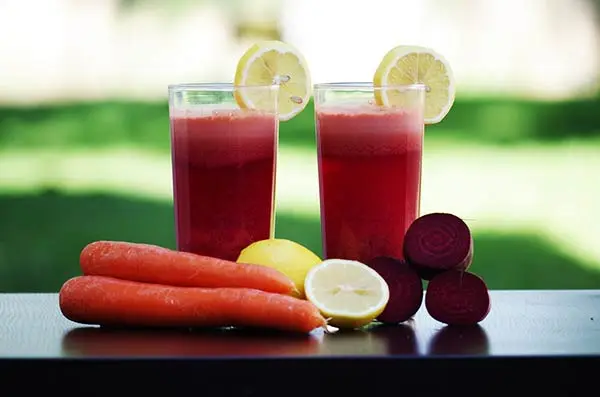
1. I peel the beetroot and cut it into large 2–3 cm cubes – it is the densest ingredient. I also peel the carrot and cut it into pieces. I grate the ginger on a fine grater or slice it thinly – otherwise it will not be blended in the blender. I cut the apple into quarters and remove the core with the seeds (they taste bitter).
2. I load the blender from hard to soft: beetroot, carrot and ginger (right at the bottom), then the apple and parsley. The peeled lemon goes on top. This order gives perfect smoothness with no pieces of the dense root vegetables.
3. I blend for 2 minutes on high speed until the texture is smooth. A beetroot smoothie is a powerful energiser: beetroot contains nitrates that improve blood flow. Drink it straight away – after 30 minutes it loses some of its beneficial properties.
Banana smoothie with coconut for breakfast
- banana – 1;
- coconut milk – 250 ml;
- almond butter – 1 tbsp;
- cinnamon – 1 tsp;
- turmeric – 1 tsp;
- chia seeds – 1 tsp;
- pitted dates – 5.
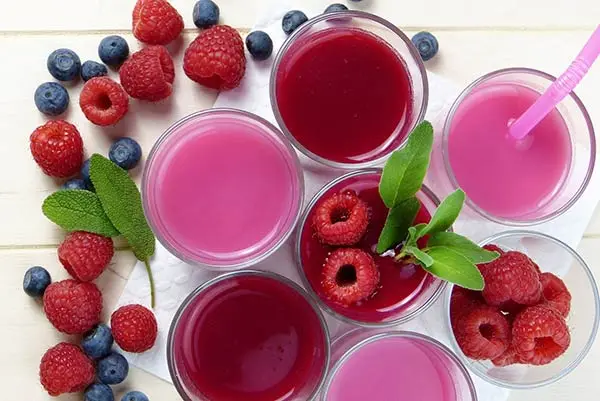
1. I check that all the dates are pitted – even one stone can break a tooth or damage the blender. I soak the dates in warm coconut milk for 5 minutes to soften them. This is a sweet tropical smoothie – a great breakfast before or after a workout.
2. I put the dates at the bottom of the blender (the densest), add the banana, almond butter, cinnamon and turmeric. I pour in the coconut milk the dates were soaking in. I blend for 1–2 minutes until completely smooth. At the end I add the chia seeds.
3. This smoothie is a tropical breakfast with an energy base. Turmeric is a powerful antioxidant, banana provides potassium for the heart, and dates are natural glucose. It is higher in calories than the others, but also the most nutritious.
Tips and Tricks
Tip 1. Rinse all the ingredients thoroughly and cut them into large pieces – there is no need for fine chopping, the blender will do the work.
Tip 2. Put the hard ingredients (root vegetables, ginger) at the bottom of the blender for better blending and a smoother texture.
Tip 3. Start blending at a low speed and gradually increase to maximum – this blends the dense components better. I use a similar principle when making fresh fruit juice.
Tip 4. Frozen fruit and berries make the smoothie thicker and colder – a great summer alternative to ice cubes.
❓ Frequently asked questions
What blender do I need for smoothies?
Ideally, a blender with a power of at least 1000 W, several speed settings and sharp blades. Less powerful models will not cope with hard vegetables (carrot, beetroot) or nuts. Good brands include Vitamix, Blendtec and the top-range Philips and Bosch models. An immersion blender works too, but it needs to be powerful (from 800 W). Cheap models overheat quickly and break on hard ingredients. Invest in a quality blender if smoothies become a regular drink in your life.
Can I make a smoothie in advance and store it?
It is best to drink a smoothie straight after making it – after 30 minutes the drink loses some of its vitamin C through oxidation. If you do need to keep it, pour it into an airtight container (glass is best) filled to the top with no air, and store it in the fridge for up to 24 hours. Before drinking, shake it or blend it again, as the smoothie separates. You can also freeze it in ice-cube trays to make “smoothie cubes” to add to drinks. Fresh is always better.
What can I use instead of coconut milk in a smoothie?
Almond milk (a lighter, nutty note), oat milk (neutral, suits everyone), ordinary 2.5% cow’s milk (a classic flavour), soya milk (for vegans) or rice milk (a hypoallergenic option). Each substitute gives the smoothie its own character. Without milk you can use water, but the smoothie will be less creamy. Kefir or yoghurt also make a great base, adding a slight tang and probiotics. For a protein smoothie, use a protein shake.
How do I choose smoothie ingredients by goal?
For weight loss: vegetables (cucumber, celery, spinach), greens, low-fat ingredients and chia seeds. For energy: beetroot, bananas, berries and dates. For immunity: citrus fruit, ginger, turmeric, spinach and blueberries. For recovery after a workout: bananas, nuts, protein powder and avocado. For glowing skin: avocado, berries, spinach and lemon. Combine them according to your goals and taste preferences – every season offers its own ideal ingredients.