What can replace baking powder
If you've run out of baking powder, you can easily replace it with several pantry ingredients you almost certainly already have. I'll walk you through 5 proven substitutes: baking soda with vinegar or lemon juice (the classic swap), baking soda with a cultured dairy product like buttermilk or sour cream, baking soda with citric acid (cream of tartar), yeast for certain bakes, and even whipped egg whites for spongy cakes where lift comes from air. For each method I'll give exact proportions per 200 g of flour, explain why it works chemically and recommend the bakes where each substitute performs best. A handy reference worth bookmarking.
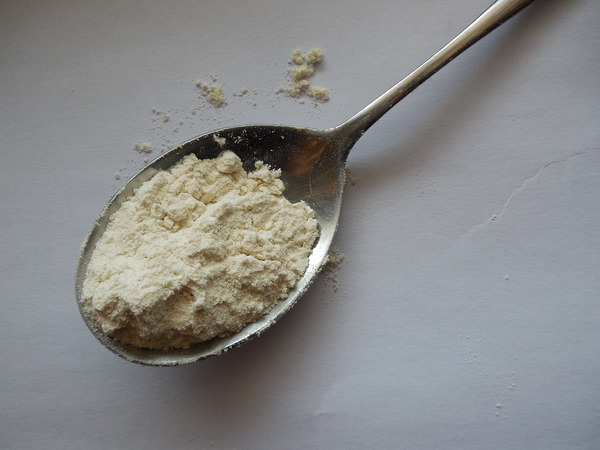
What can replace baking powder is a question I face every time the packet of baking powder runs out while the dough is already on its way. Fluffy, airy baked goods cannot be made without a mixture that leavens the dough – it is used in breads and confectionery: cakes, pastries, pies, and other baked goods.
Various ready-made baking powder packets are sold commercially, and some people view these as harmful chemical additives. In reality, the product contains no harmful substances, and every home cook will find something in their kitchen that can substitute for it. It is worth noting that leavening agents cover a broader range of products than just the familiar powder sold under that name.
What is baking powder and why is it needed
As I have already briefly said, baking powder is needed to produce a fluffy, airy sponge cake and to give the baked item a loose, porous structure. During mixing it sets off a chemical reaction that "lightens" the dough and helps it rise during baking, so the item turns out fluffy. Leavened dough bakes through well and is more easily digested.
Now for what baking powder actually is. In essence, it is a substance or mixture of components that release carbon-dioxide bubbles when they interact, saturating the dough and making it fluffier and more porous. These include yeast, baking powder, and various alkaline-acid mixtures. If the recipe specifies the correct amount, it imparts no taste to the food – it only improves the structure of the baked goods.
Composition of baking powder
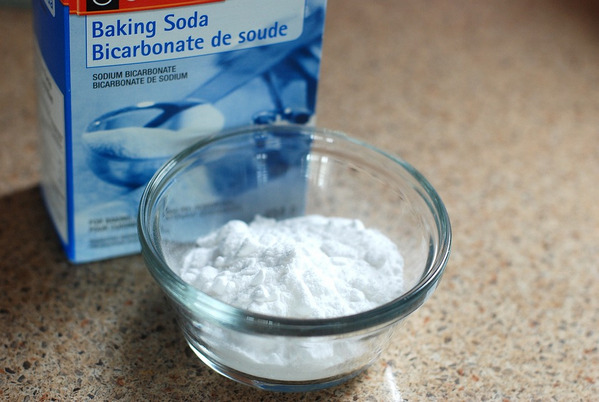
Ready-made packaged baking powders are sold as a dry, finely ground mixture of an acidity regulator (E450i), soda (E500ii), and flour or starch. This is the simplest set of ingredients, which can be supplemented or replaced with analogues. For example, ammonium carbonate (E-503) can be used instead of soda.
The composition of baking powder must be well balanced, otherwise it will impart the taste of soda or acid.
- Soda (sodium hydrogen carbonate / sodium bicarbonate) and ammonium carbonate form the basis of the composition. Manufacturers use one of these additives or mix them together. On entering a moist, acidic environment, soda releases carbon dioxide, whose bubbles penetrate the dough.
- The acidity regulator – sodium dihydrogen pyrophosphate (disodium pyrophosphate). When moisture is added, this food additive creates the very acidic environment necessary for the soda reaction.
- Starch and flour increase the shelf life of the mixture. By absorbing moisture, they prevent a premature reaction. Cornstarch is preferable, since flour clumps more readily.
What types of baking powders are there
For leavening dough, biological and chemical leavening agents are used – these are two different operating principles.
Biological leavening agents
These include:
- Lactic-acid bacteria, which take part in the fermentation of carbohydrates and help make the dough fluffy.
- Sourdough starter for bread, which also contains lactic-acid bacteria.
- Baker's yeast – it contains microorganisms of the Saccharomyces family. Warm liquid is required to wake them, and sugar to feed them. After that the yeast fungi begin to work and produce the gas that raises the dough.
Chemical leavening agents
This is a way of making the dough loose through chemical processes, when substances react and release gas. This is exactly how baking powder, or a "dough-raising agent", works. The soda or ammonium it contains reacts chemically with an acid. A clear example of such a process is extinguishing soda with vinegar.
What can be used to replace baking powder for dough
I replace ready-made packaged baking powder with food additives and products available at home. I take soda as the base, and any food acid will set off its reaction.
Another means of replacing baking powder for dough is carbonated mineral water. It should be clean, without colourings or flavourings. Carbonated water contains carbon dioxide, which gives the dough the necessary porosity. The effect is stronger if you add a pinch each of salt and citric acid to the water. This option suits choux, unleavened, and rich (sweet) doughs.
Making baking powder at home
The simplest way to make baking powder at home is to mix 5 parts soda, 3 parts citric acid, and 12 parts flour or starch in a dry container. In grams it looks like this: 5 g of soda, 3 g of citric acid, and 12 g of flour or 9 g of starch. To measure by the spoon, use the information on how many grams there are in a spoon of each substance. For a larger amount, count by the spoon: 5 spoons of soda, 3 spoons of citric acid, and 12 spoons of flour or starch.
If the baking powder is prepared in advance, the storage container must be absolutely dry, otherwise the reaction may start in the moisture.
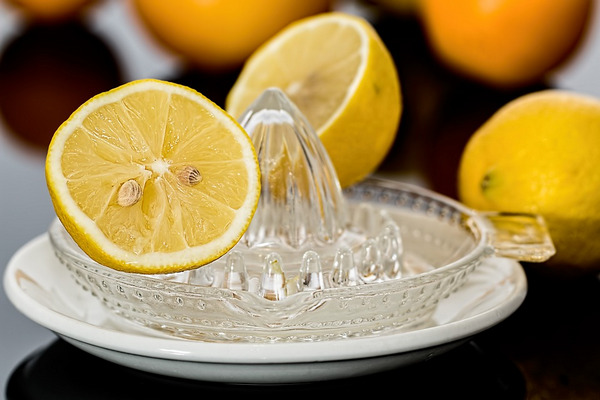
If the mixture is made just before use, the flour and starch are not needed, and the dry citric acid can be replaced with other acidic products. For example, instead of citric acid, take 3 tbsp of 9% vinegar per 1 tsp of soda, or 0.5 tbsp of 70% vinegar essence, or 7 tbsp of 6% apple or grape vinegar.
One teaspoon of citric acid can be replaced with 2 teaspoons of crushed cranberries or redcurrants.
If you prepare baking powder with a wet acid outside the dough, its effectiveness will be reduced. When soda enters a moist acidic environment, the reaction happens at once, and the released gas escapes into the air. So you should mix the soda with the flour, pour the acid in with the liquid ingredients, and only then knead the dough.
Another method is to add ½ tsp of lemon juice to the liquid ingredients, and mix ¼ tsp of soda with the dry ones.
When you can skip baking powder
There is no point in using baking powder when the dough is whipped. In that case the recipe should include ingredients capable of creating and holding a foam-like structure – egg whites, butter. Whipping saturates the dough with air and is itself a mechanical method of leavening. The egg and butter act as an emulsion that coats the air bubbles, keeping them in the dough.
The mechanical method is used in making meringue (protein), sponge, and choux doughs.
Additional mixtures are also not required if the recipe's ingredients already list soda and some acidic products. They will already act as leavening agents themselves, since their interaction produces a reaction that releases carbon dioxide.
❓ Frequently asked questions
Can you replace baking powder with only soda, without acid?
With soda alone – no. Without an acidic environment, soda will not release enough gas, and the dough will turn out dense with a taste of soda. If the recipe contains fermented-milk products (kefir, sour cream, yogurt), lemon juice, honey, or fruit purée, the soda will work with them. Without acidic ingredients, the soda needs to be "extinguished" with vinegar or citric acid directly in the dough, not beforehand in a spoon. Dosage: 1/3 tsp of soda per 200 g of flour.
How much citric acid replaces 1 tsp of baking powder?
One teaspoon of ready-made baking powder is replaced by the mixture: 1/4 tsp of soda + 1/2 tsp of citric acid + 1/4 tsp of starch or flour. Without dry citric acid, take 3 tbsp of 9% vinegar per 1 tsp of soda (mix it into the liquid ingredients!), or 0.5 tbsp of 70% vinegar essence, or 7 tbsp of 6% apple or grape vinegar. The acid must always be combined with the dough at the moment of kneading, otherwise the gas will escape into the air.
Can you use yeast instead of baking powder?
Yeast is a biological leavening agent, and it is not interchangeable with baking powder in most recipes. For sponge cakes, loaf cakes, pancakes, and syrniki, yeast is not suitable – it will change the taste and structure of the bake. Yeast works only in dough with sugar and warm liquid, and needs time to prove (1–2 hours). In recipes with quick baking (biscuits, muffins, fritters) yeast cannot be used – stay with the soda-and-acid mixture or carbonated mineral water.
What happens if you add too much baking powder?
An overdose of baking powder is one of the most common mistakes. At first the dough will rise very strongly in the oven, but then it will "collapse" – the crumb turns out with large, uneven holes, and the taste takes on an unpleasant soapy, soda-like note. Per 200 g of flour you need 1 teaspoon of packaged baking powder, or 1/3 tsp of soda with the equivalent of acid. A more precise ratio is always given in the recipe – do not deviate from the proportions, especially in sponge cakes and loaf cakes.