What to Preserve in August: A Crop-by-Crop Calendar
In August, preserving comes in waves: cucumbers and zucchini will not hold, tomatoes and peppers are just coming into their own, and by the end of the month mushrooms and melons join in. We put together a crop-by-crop calendar: what to make and when, how long each recipe takes and where to find the step-by-step instructions. The four main crops have roundups of their own, and the other 19 recipes are collected here.
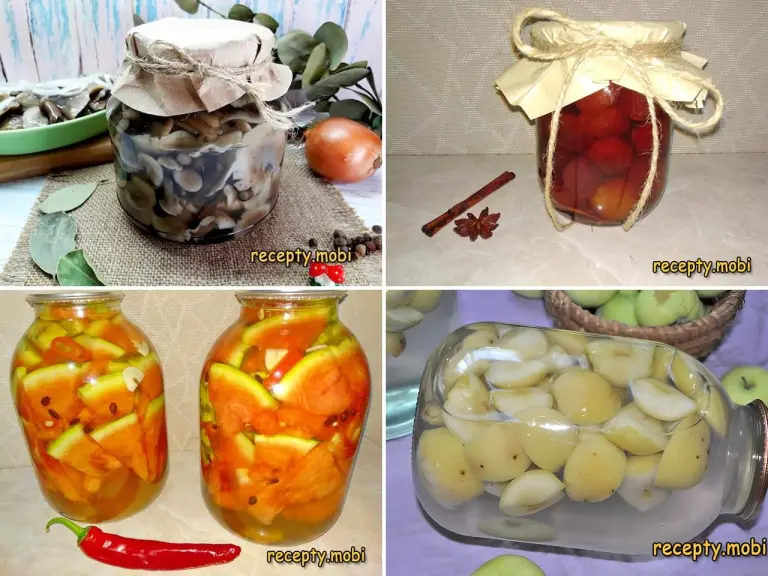
In short: August is the peak of the preserving season, when everything ripens at once. Cucumbers and zucchini go first because they will not keep; by mid-month tomatoes, peppers and eggplant catch up; the end of the month brings mushrooms and watermelons, while root vegetables carry over into September. The fastest recipe of the month: watermelon rind jam, 20 minutes.
The August calendar: what to put up and when
The dates are for central Russia. Further south the same crops ripen two or three weeks earlier, so trust your own market and garden rather than the calendar.
| Crop | When | What to make | Recipes |
|---|---|---|---|
| Zucchini and pattypan squash | all month | caviar, pickles, salads, jam | 17 recipes |
| Cucumbers | first half | pickling, salting, gherkins | start with a one-liter jar |
| Tomatoes | second half | whole, lecho, juice, paste, green tomatoes | 22 recipes |
| Eggplant | second half | salads, caviar, lecho | 15 recipes |
| Peppers | second half | lecho, whole for stuffing, adjika | 6 recipes |
| Plums and cherry plums | all month | pickling, tkemali, jam | start with tkemali |
| Apples | from mid-month | compotes, jam, juice | start with compote |
| Mushrooms | towards the end | pickling and salting | all-purpose marinade |
| Watermelons | end of the month | pickling, jam from rinds | pickled watermelon |
| Pumpkin | late August and September | pickling, jam, juice | pickled pumpkin |
| Carrots and beets | late August and September | borscht bases, Korean-style | borscht base |
The four main crops: full roundups
For zucchini, tomatoes, eggplant and peppers we have separate roundups, each with a table of times and yields for every recipe.
Zucchini: 17 recipes
Caviar, pickled rounds, mother-in-law's tongue, jam and even homemade soda.
The full roundup: open.
Tomatoes: 22 recipes
Whole in marinade and in their own juice, green tomatoes seven ways, juice, paste, khrenovina and sun-dried tomatoes.
The full roundup: open.
Eggplant: 15 recipes
Eight salads, including mother-in-law's tongue and ogonyok (a fiery tomato and garlic relish), plus two caviar recipes and two versions of lecho.
The full roundup: open.
Peppers: 6 recipes
Three versions of lecho, whole peppers for stuffing and Abkhazian adjika.
The full roundup: open.
Cucumbers: before they outgrow the jar
Cucumbers grow faster than anything else: skip two days and the gherkin on the vine turns into a club. That is why they are the first thing people put up in early August.
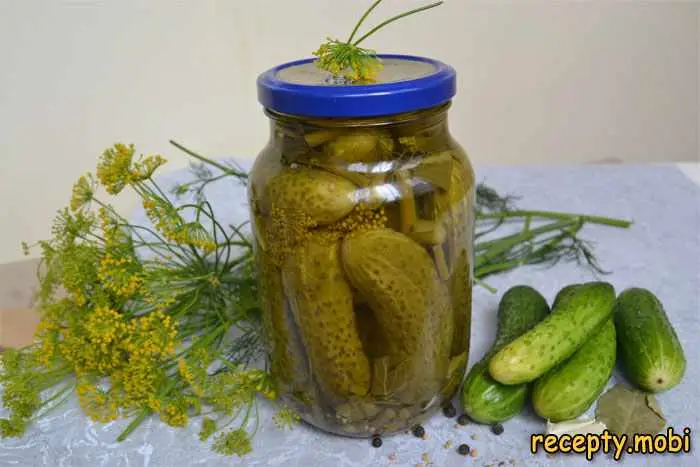
Pickled cucumbers in a one-liter jar
A single-jar classic: a one-liter jar that is easy to open and finish. 50 minutes of work plus 5 hours per the recipe.
Step-by-step recipe with photos: pickled cucumbers in a one-liter jar.
Pickled gherkins
Small gherkins pickle faster than full-size cucumbers: 40 minutes of work plus 3-4 hours. Yields 7 servings.
Step-by-step recipe with photos: pickled gherkins.
Salted cucumbers
Salting instead of pickling: no vinegar, natural fermentation. Two days, a one-liter jar, only 17 kcal.
Step-by-step recipe with photos: salted cucumbers.
Mushroom season
The mushroom wave starts towards the end of August. Rule one: pick only the mushrooms you know for certain and leave anything doubtful alone. Rule two is about the jars. Mushrooms are a low-acid food, and a hermetically sealed jar without enough acid can grow the bacterium that causes botulism, which changes neither the look, nor the smell, nor the taste of the preserve. So wash the soil off thoroughly, skip overripe and wormy mushrooms, never cut back the vinegar or salt a recipe calls for, keep mushroom preserves in the fridge or a cellar rather than at room temperature, and boil the contents of the jar for 10-15 minutes before serving.
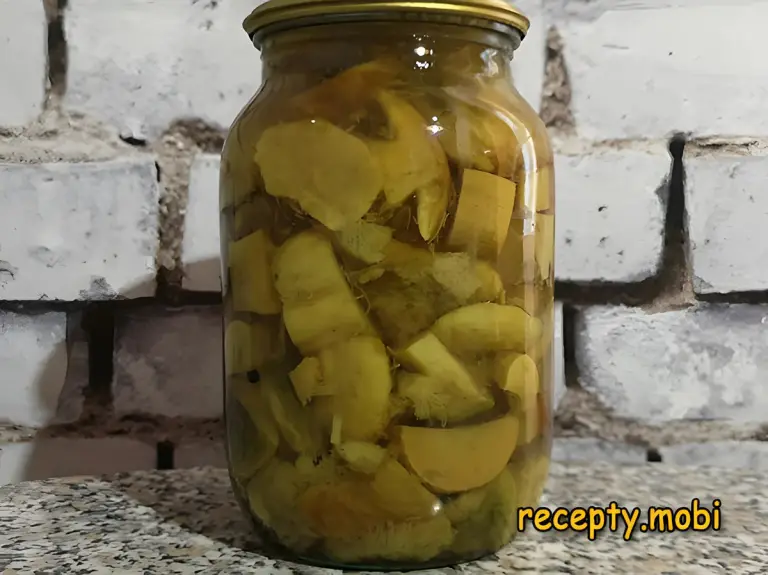
Pickled honey mushrooms
The most rewarding mushrooms for pickling: they keep their shape and do not darken. 50 minutes, an 800 g jar, 14 kcal.
Step-by-step recipe with photos: pickled honey mushrooms.
Pickled porcini
Porcini with no sterilization of the filled jars: 50 minutes of work, a one-liter jar, 37 kcal.
Step-by-step recipe with photos: pickled porcini.
Pickled milk mushrooms
Milk mushrooms need time: two days of soaking and prep, but you get a 700 ml jar of firm, crunchy caps.
Step-by-step recipe with photos: pickled milk mushrooms.
All-purpose mushroom marinade per liter of water
An all-purpose pickling marinade per liter of water: the salt, sugar and vinegar ratios that suit any mushroom. 30 minutes and the marinade is ready.
Step-by-step recipe with photos: all-purpose mushroom marinade per liter of water.
Plums, cherry plums and apples
The fruit half of August: plums and cherry plums make both desserts and a sauce for meat, while apples go into compotes and jam.
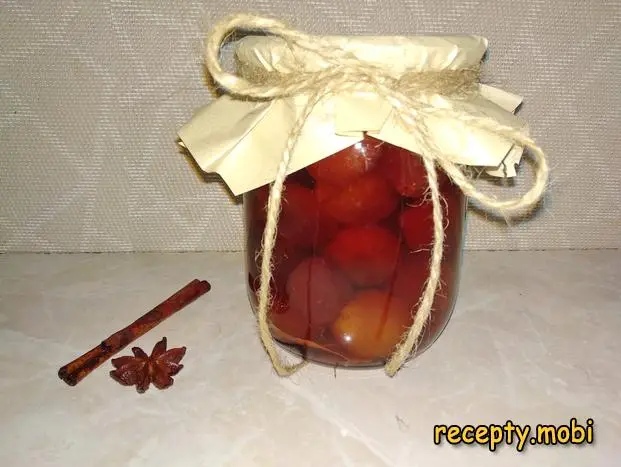
Pickled plums
Pickled plums to serve with meat: 4 unhurried hours, yields three jars. No sterilization of the filled jars.
Step-by-step recipe with photos: pickled plums.
Cherry plum tkemali
The Georgian cherry plum sauce that saves dinner all winter: 40 minutes, two jars, 42 kcal.
Step-by-step recipe with photos: cherry plum tkemali.
Pitted plum jam
Pitted plum jam: 35 minutes of active work, two half-liter jars plus a spoonful left over to taste. 220 kcal.
Step-by-step recipe with photos: pitted plum jam.
Five-minute apple jam
The name refers to the boiling, not the total time; the whole cycle takes 2.5 hours. A 750 g jar, 147 kcal.
Step-by-step recipe with photos: five-minute apple jam.
Canned apple compote
A compote that replaces store-bought juice: 35 minutes of work, two three-liter jars at once, 36 kcal.
Step-by-step recipe with photos: canned apple compote.
Watermelon, pumpkin, pattypan squash and grapes
The most underrated group: watermelon, pumpkin and grapes make the preserves that surprise guests.
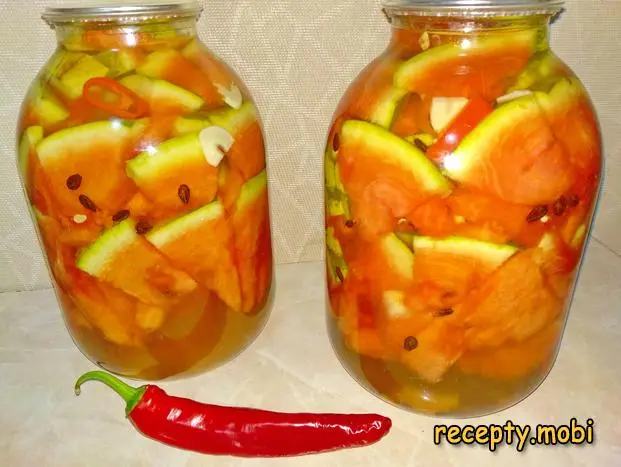
Pickled watermelon with chili and garlic
An unexpected appetizer: watermelon with chili and garlic. An hour and a half, two jars.
Step-by-step recipe with photos: pickled watermelon with chili and garlic.
Watermelon rind jam
The fastest recipe of August: 20 minutes, and the rinds people usually throw away turn into jam. A half-liter jar.
Step-by-step recipe with photos: watermelon rind jam.
Pickled pumpkin
Pickled pumpkin: 35 minutes of work, plus 8 hours cooling under a blanket (the jars are wrapped so they cool slowly). Yields two 1.5-liter jars.
Step-by-step recipe with photos: pickled pumpkin.
Crunchy pickled pattypan squash
Crunchy pattypan squash: 50 minutes, two one-liter jars, only 21 kcal.
Step-by-step recipe with photos: crunchy pickled pattypan squash.
Piquant pickled grapes
Piquant pickled grapes for cheese and meat: 30 minutes, one jar, 102 kcal.
Step-by-step recipe with photos: piquant pickled grapes.
Bases that save time in winter
A category of its own: not something you serve, but a shortcut. Open the jar and half of dinner is done.
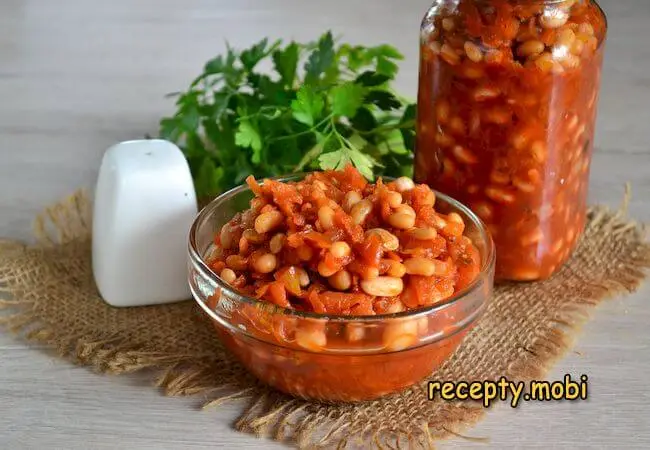
Borscht base with beets
A beet base that saves half an hour in winter: make the stock, open the jar, borscht is done. An hour of work, 57 kcal.
Step-by-step recipe with photos: borscht base with beets.
Korean-style carrots for winter
Korean-style carrots in jars: 40 minutes of work plus a night to marinate.
Step-by-step recipe with photos: korean-style carrots for winter.
How to plan August so you get it all done
- Start with what will not hold: cucumbers outgrow the jar in two or three days, zucchini turn coarse within a week.
- Plan big batches (juice, paste, caviar) for the weekend: they take two hours or more.
- Prepare jars and lids the evening before, so you can start with the vegetables in the morning.
- Label every jar with the date and the contents: six months later it saves time and nerves.
- Do not try to put up everything in one day. Four or five short sessions across the month beat a single marathon.
- Leave room for mushrooms: their wave comes at the end of the month and will not hold off.
Common August mistakes
- Using overgrown cucumbers and zucchini for whole-vegetable pickling: they turn soft in the jar.
- Cutting the vinegar or salt by eye: acidity and salt are what keep the preserve safe.
- Skipping the heat-processing or sterilization step in a recipe: that step is exactly what makes the jar last until winter.
- Putting hot jars on a cold surface or in a draft: the glass can crack.
- Storing jars near a radiator or on a sunny windowsill: they need a dark, cool place.
- Picking mushrooms you do not recognize: if in doubt, leave them.
See also
❓ Frequently asked questions
Where do I start if I have never canned before?
Take a recipe with no sterilization of the filled jars and a small yield: apple compote or lecho. That is 35 to 60 minutes of active work, so you go through the whole cycle in one evening and learn the mechanics without risking a big batch. Some recipes add waiting time on top: cucumbers in a one-liter jar, for instance, need another 5 hours.
What can I put up if I am short on time?
The fastest in this roundup: watermelon rind jam (20 minutes), pickled grapes and the all-purpose mushroom marinade (30 minutes each), apple compote and plum jam (35 minutes each), tkemali and Korean-style carrots (40 minutes of active work each).
What goes into jars early in August, and what at the end?
Cucumbers and zucchini come first, they will not hold. By mid-month tomatoes, peppers and eggplant catch up. The end of the month brings mushrooms and watermelons, while pumpkin and root vegetables carry over into September. The dates shift by region: further south the same crops ripen two or three weeks earlier.
Do jars really have to be sterilized?
Yes, jars and lids are sterilized in every case, even when a recipe says "no sterilization": that note refers to heating the already filled jar. Detailed guide: how to sterilize jars and lids.
The harvest is huge and time is short. What now?
Turn volume into concentrates: tomato juice and paste, zucchini caviar, sauces. They get through kilos at a time. The other option is freezing, which needs no jars and no sterilization.
How long do August preserves keep?
Store sealed jars in a dark, cool place, roughly until the next season. Naturally fermented pickles and preserves with no heat treatment belong in the fridge or a cellar. Finish an opened jar within 3-4 days.
How do I tell that a jar has gone bad?
The signs: a swollen lid, cloudy brine, bubbles, a sour smell when you open it. Throw such a jar out unopened and never taste it to check. The reverse matters too: the absence of visible signs is no guarantee of safety. That applies above all to mushrooms and other low-acid preserves, which is why they are kept cold and boiled before serving.
How is August different from July for preserving?
July is for early vegetables and berries, in modest amounts. August is the peak: tomatoes, peppers, eggplant, fruit and mushrooms all arrive at once, which is why the month is worth planning ahead.
What if I do not have a garden?
August is the best month for exactly that: seasonal vegetables and fruit are at their cheapest at the market, and the quality is higher than at any other time of year.