Kefir Substitute: What to Use in Baking and Smoothies
For baking, start with plain cultured buttermilk or thinned plain yogurt. The right kefir substitute depends on acidity and thickness. Compare amounts in cups and ml, then choose an option for pancakes, smoothies, cold soups or marinades.
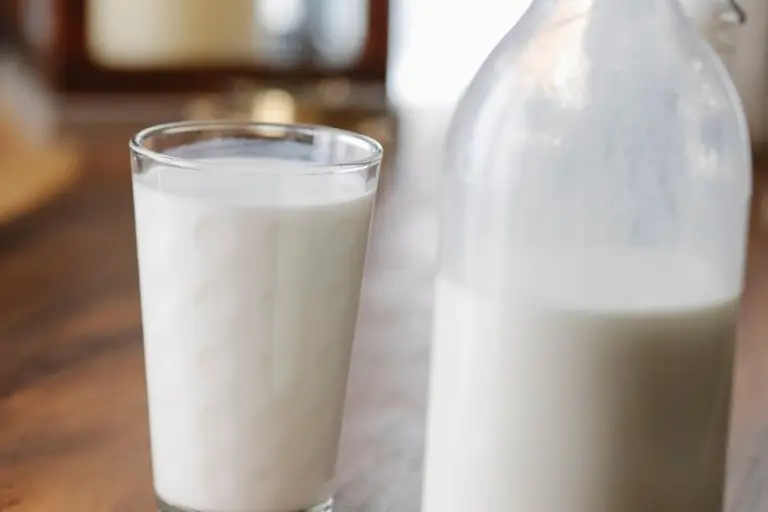
The amounts below replace plain milk kefir in cooking, not kefir grains or a fermentation starter. A cup means about 240 ml in this guide. Measure by volume, and match the consistency of the kefir your recipe expects.
Kefir substitute chart: amounts for 1 cup
| Substitute | Starting amount for 1 cup of kefir | Best use and limitation |
|---|---|---|
| Plain cultured buttermilk | 1 cup, about 240 ml | Pancakes, muffins and quick breads. Use cultured buttermilk, not a sweet butter-flavoured drink. |
| Plain regular yogurt | Use 1 cup if pourable; for thicker yogurt, start with 3/4 cup yogurt + 1/4 cup milk, about 180 ml + 60 ml | Baking, smoothies and marinades. Adjust the liquid to the yogurt's thickness. |
| Plain Greek yogurt | For a thin baking substitute, start with 1/3 cup yogurt + 2/3 cup milk, about 80 ml + 160 ml | A starting mixture for batter, not a guarantee of the same crumb. Use less milk if your kefir was thick. |
| Milk with lemon juice or vinegar | 1 tbsp acid, about 15 ml, plus enough milk to reach 1 cup total | A baking fallback. It supplies acidity but is not cultured kefir. |
| Sour cream with liquid | Start with 1/2 cup sour cream + 1/2 cup milk or water, about 120 ml + 120 ml | Richer batters and creamy sauces. The fat content will differ from kefir. |
| Unsweetened plant-based kefir | Start with 1 cup, about 240 ml, if the product is pourable | A dairy-free option. Check the product's sweetness, thickness and ingredients. |
Choose by the recipe: for baking, start with cultured buttermilk or thinned plain yogurt. For a smoothie, plain yogurt is usually the easier choice. For okroshka, consider ayran or diluted yogurt and adjust the salt. These ratios are starting points, not a promise that every brand behaves identically.
Buttermilk and cultured soured milk
Plain cultured buttermilk is a practical kefir substitute for baking. Start with the same volume: 1 cup of buttermilk for 1 cup of kefir. Both contribute moisture and acidity, but their thickness and fat content can differ.
Use it for pancakes, muffins, quick breads and similar batters. Shake or stir it before measuring. Keep the recipe's original flour and raising agents for the first attempt rather than making several adjustments at once.
Cultured soured milk may also work if it is a food product made for that purpose. Do not confuse it with milk that has spoiled in the refrigerator, and do not leave ordinary milk out to sour. Traditional clabber is not interchangeable with every supermarket cultured milk product.
Plain drinking yogurt
A plain, unsweetened drinking yogurt can replace kefir by volume when the two have a similar pouring consistency. This is useful in smoothies, dressings and marinades as well as in baking.
If the yogurt is thicker, whisk in milk a little at a time before measuring the finished substitute. For regular spoonable yogurt, 3/4 cup yogurt and 1/4 cup milk is a useful starting mixture. Avoid sweetened or fruit-flavoured yogurt in savoury recipes.
In a smoothie, thickness is largely a matter of preference. In a cake or pancake batter, it affects how the mixture spreads and cooks, so do not assume that a full cup of thick yogurt behaves like a cup of liquid kefir.
Greek yogurt: thin it before measuring
Greek yogurt is strained and can be much thicker than kefir. For a pourable baking substitute, start with 1 part plain Greek yogurt and 2 parts milk, then adjust if needed. For about 1 cup, that is 1/3 cup yogurt and 2/3 cup milk.
Whisk until smooth and compare the texture with the kefir normally used in your recipe. A very thick brand may need more liquid; a softer one may need less. Measure the final mixture, not a cup of yogurt followed by an unmeasured splash of milk.
For a dip, dressing or marinade, a thicker mixture may be desirable. There is no need to dilute it to baking-batter consistency unless the recipe requires that.
Milk with lemon juice or vinegar
This is a convenient baking fallback when no cultured dairy is available. It is acidified milk, not homemade fermented kefir, and it does not reproduce kefir's cultured flavour.
- Put 1 tablespoon of lemon juice or plain white vinegar into a measuring cup.
- Add fresh pasteurized milk until the mixture reaches the 1-cup mark, about 240 ml total. That is roughly 225 ml milk plus 15 ml acid.
- Stir and leave for about 10 minutes. Slight thickening or curdling is normal.
- Use the full measured mixture in place of 1 cup of kefir in the batter.
Do not add a tablespoon to an already full cup and call the result one cup. For half a cup of substitute, use 1/2 tablespoon of acid and enough milk to reach about 120 ml total. For two cups, use 2 tablespoons and enough milk to reach about 480 ml.
Do not use concentrated vinegar essence. This option is more useful in pancakes and quick breads than in an uncooked drink, where the lemon or vinegar flavour is easier to notice.
Ryazhenka: fermented baked milk
Ryazhenka remains an option if it is available where you shop. It has a baked-milk flavour, often milder and less tangy than kefir. Start with the same volume in a batter that can accommodate that flavour.
It is less neutral in a cold soup or savoury dressing, and it is not automatically the best choice for a recipe relying on kefir's acidity. Check that the product is plain rather than sweetened. If you cannot find it, cultured buttermilk or plain yogurt is usually a more accessible choice.
Whey: check which kind you have
Whey left after straining yogurt is thin and acidic. It can be useful in cold soups or in a recipe already designed to use whey, but it is not a texture match for kefir.
Whey from different cheese-making processes is not all equally acidic. Do not assume that every bottle or batch will provide the same balance with baking soda. Nor is adding a fixed spoonful of flour a reliable correction for every batter.
For an unfamiliar cake or muffin recipe, choose buttermilk or thinned yogurt first. If using whey in okroshka, add it gradually and adjust the thickness and seasoning to taste.
Ayran or tan for okroshka and cold soups
Ayran and tan are fermented dairy drinks that may already contain salt; some versions are carbonated. They can be useful in okroshka and other savoury cold soups.
Start with the volume of kefir in the recipe, then adjust if the drink is thinner or saltier. Taste before adding the recipe's salt. Salted ayran is not a good default replacement in a sweet cake or fruit smoothie.
For a milder cold-soup base, use plain yogurt diluted with chilled water. Keep the finished soup refrigerated, as you would with a kefir-based version.
Sour cream thinned with milk or water
Sour cream is thicker and usually richer than kefir. Start by whisking equal volumes of sour cream and milk or water, then adjust until pourable. A mixture of 1/2 cup sour cream and 1/2 cup liquid gives about 1 cup of substitute.
This can suit richer batters, sauces and marinades, but it changes the fat content and may change the finished texture. Do not use 2 tablespoons of sour cream plus 2/3 cup liquid as an exact 1-cup measure: those quantities do not add up to one cup.
Choose plain sour cream. Flavoured dips and sweetened yogurt desserts add ingredients that the original recipe may not account for.
Dairy-free kefir substitutes
Start with an unsweetened, pourable plant-based kefir if you want a dairy-free substitute with a similar format. Coconut, soy and oat products vary in fat, protein and thickness, so read the label and expect some difference in the finished dish.
Plain plant-based yogurt is another option for smoothies, sauces and some batters. Thin a thick product with a little suitable plant milk before measuring. Do not add lemon juice automatically: the product may already be acidic, and a fixed extra teaspoon is not a universal correction.
For a baking fallback, fresh unsweetened soy milk can be acidified using the method above: put 1 tablespoon of lemon juice in the cup, then add soy milk to the 1-cup mark. It will not have the same body as cultured kefir, and other plant drinks may behave differently.
Dairy-free, lactose-free and vegan are not the same label. Lactose-free cow's milk is still dairy and is not vegan. Choose ingredients appropriate to the requirement you are trying to meet; a substitution does not reproduce kefir's cultures or nutritional profile.
Sparkling water is not a direct kefir substitute
Sparkling water appears in some pancake recipes, but it does not replace kefir's acidity, protein or fat. It is not a dependable 1:1 swap in a recipe built around kefir and baking soda.
There is also no universal rule to replace all the soda with 1 teaspoon of baking powder. The correct amount depends on the flour, other ingredients and existing raising agents. If sparkling water is all you have, choose a recipe specifically written for it rather than improvising a kefir replacement.
Common mistakes when replacing kefir
- Using plain milk without considering the raising agent. If a recipe pairs kefir with baking soda, a less acidic replacement may change the rise, browning and flavour.
- Changing soda and baking powder at the same time as the dairy. They are not interchangeable spoon for spoon. Start with an appropriate acidic substitute and the original recipe amounts.
- Measuring before thinning. Prepare the mixture first, then measure the volume of kefir required.
- Adding flour automatically. A different-looking batter does not justify a fixed extra amount in every recipe.
- Missing sugar or salt on the label. Sweetened yogurt and salted ayran can alter the dish even when their texture looks right.
- Using spoiled milk as soured milk. Use fresh pasteurized milk for the acidified mixture, or a properly cultured product intended for eating.
- Confusing water kefir with milk kefir. A water-based fermented drink does not provide the same dairy solids or texture.
More ingredient guides: flour substitutes for baking, egg substitutes for baking, butter substitutes and sour cream substitutes. Browse the culinary tips section for more cooking guides.
❓ Frequently asked questions
What is the best kefir substitute for baking?
Plain cultured buttermilk is a practical first choice at the same volume. Thinned plain yogurt is another useful option. Match the pouring consistency, and keep in mind that a substitute can change the flavour and texture.
Can I substitute yogurt for kefir?
Yes, plain unsweetened yogurt is useful in many recipes. Use a pourable yogurt by volume; thin a thicker one first. For regular yogurt, start with 3 parts yogurt and 1 part milk, adjusting as needed.
Can I use Greek yogurt instead of kefir?
Yes, but do not assume that an undiluted cup is equivalent. For a thin baking mixture, start with 1 part plain Greek yogurt and 2 parts milk, then adjust the consistency before measuring.
Can I replace kefir with milk?
Plain milk is not the closest replacement in a baking-soda batter. For a baking fallback, add 1 tablespoon of lemon juice or white vinegar to a measuring cup and top up with milk to 1 cup total. Leave for about 10 minutes before using.
What can replace kefir in a smoothie?
Plain drinking yogurt or plain yogurt thinned with milk is usually convenient. For a dairy-free smoothie, use a suitable plant-based yogurt or kefir. Adjust thickness to taste rather than using baking-substitute ratios automatically.
What can replace kefir in okroshka?
Try ayran, yogurt diluted with chilled water, or a suitable acidic whey. Add gradually if the liquid is thin, and reduce added salt when using an already salted drink.
What can I use instead of kefir in a marinade?
Plain unsweetened yogurt or cultured buttermilk can replace the dairy base. Start with the same volume and adjust thickness if needed. Follow the recipe's refrigeration and marinating instructions; do not assume that every substitute needs the same time.
Is a kefir substitute the same as a kefir starter?
No. Buttermilk, yogurt and acidified milk are cooking substitutions in this guide. They do not replace kefir grains or a specified culture in instructions for making kefir.