avg —
Strawberry Jelly Candies at Home

Instructions
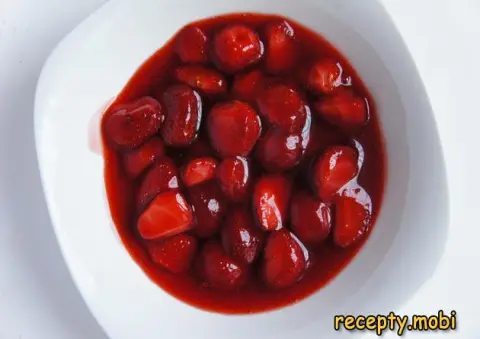
If using frozen strawberries (250 g), thaw them in advance at room temperature for 30–40 minutes; a quick defrost in the microwave gives a loose, watery mass. Frozen strawberries give a more intense colour and aroma – they are picked at peak ripeness.
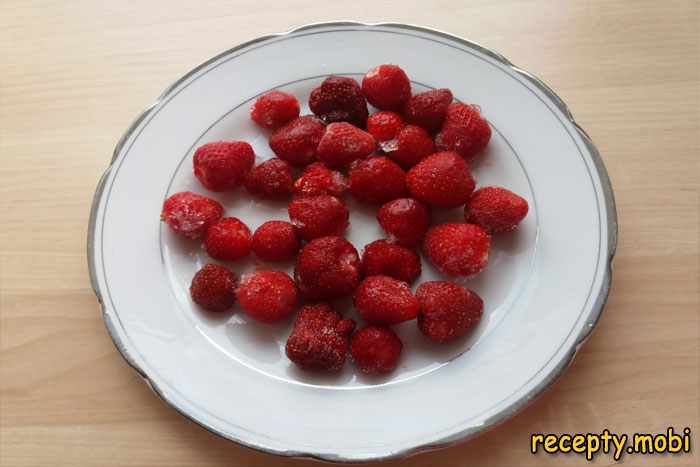
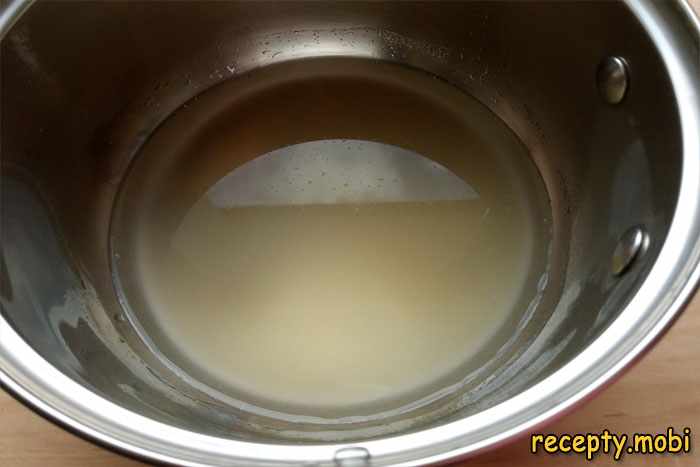
If using fresh berries, rinse them under a gentle stream of cold water, remove the stems and cut large berries in half. Pour the agar-agar (8 g) straight into the bottom of a heavy-bottomed pot, cover with 150 ml of cold water and leave to swell for 15 minutes – this is a critical stage for the gelling agent to work properly.
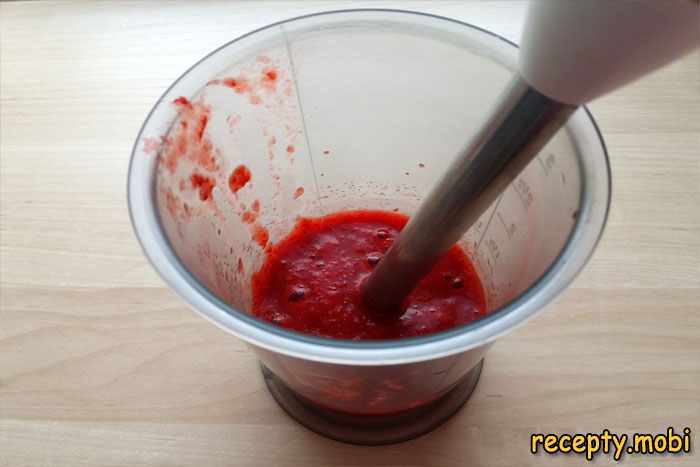
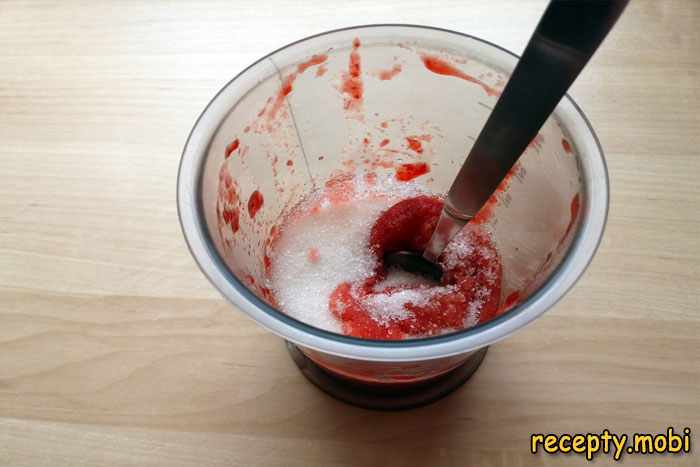
Transfer the prepared strawberries to a blender and blend into a smooth, even puree for 1–2 minutes on high speed. Large pieces of berry will give the candies an uneven texture – the blender should work the mass until completely smooth.
Add 100 g of sugar to the strawberry puree and stir thoroughly until fully dissolved – the sugar works with the agar as a stabiliser and adds sweetness. You can adjust the amount of sugar: 80 to 100 g for adults, and a little more for children for a more pleasant taste.
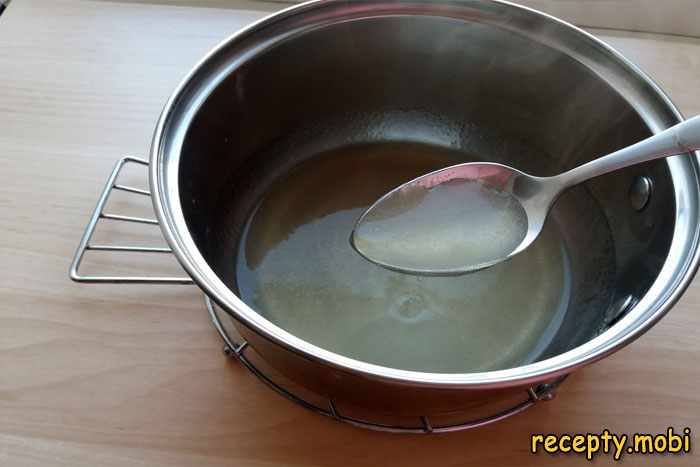
Put the pot with the swollen agar over low heat and bring to a boil, stirring constantly with a whisk – this takes 3–4 minutes. Then cook for another 2 minutes over the lowest heat: the agar should reach the consistency of liquid glue and become stringy. This is what makes the candies set.
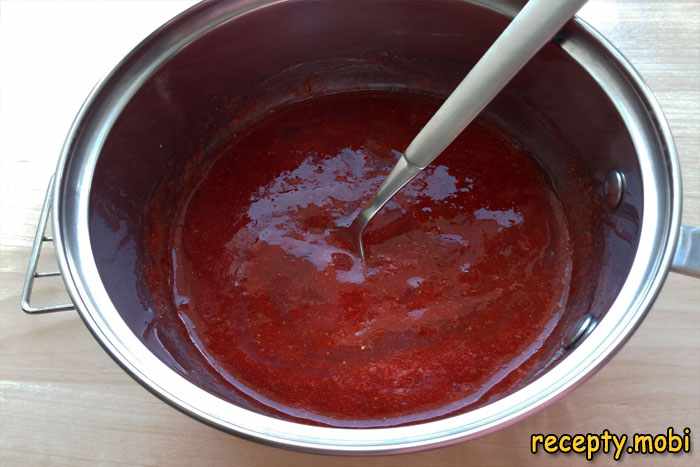
Add the strawberry puree with sugar to the hot agar and stir thoroughly with a whisk until completely smooth – the mass will turn a beautiful ruby colour with the aroma of fresh strawberries. Mix quickly, without removing it from the heat – agar cools instantly and can start to set.
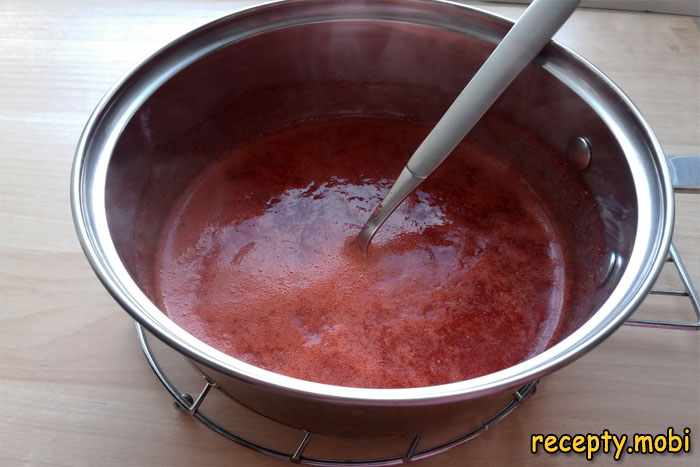
Bring the mass back to a boil over low heat, stirring constantly, then simmer for another 1–2 minutes – this second heating ensures the agar activates fully and the candies become firm as they cool.
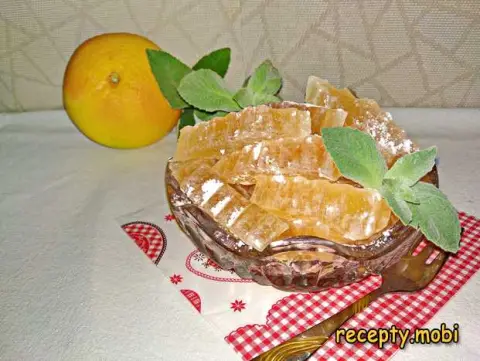
Quickly pour the hot mass into shaped moulds – you can use silicone ice moulds (bears, hearts, stars) or special marmalade moulds. Work fast: at room temperature the agar sets in 5–10 minutes. After cooling (about 30 minutes at room temperature), carefully remove the candies from the moulds – silicone lets you do this without damaging them.
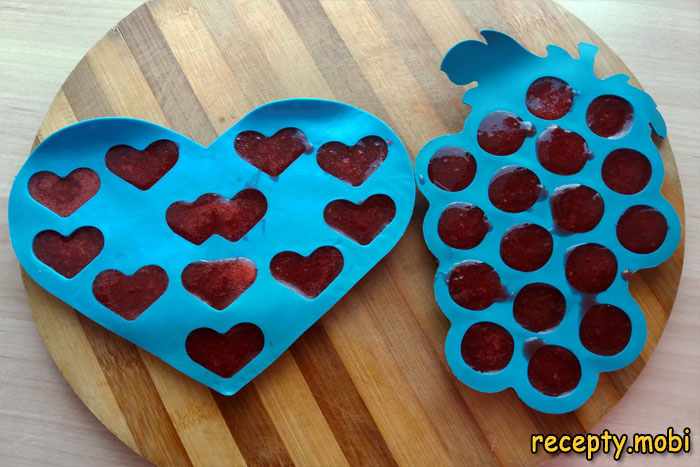
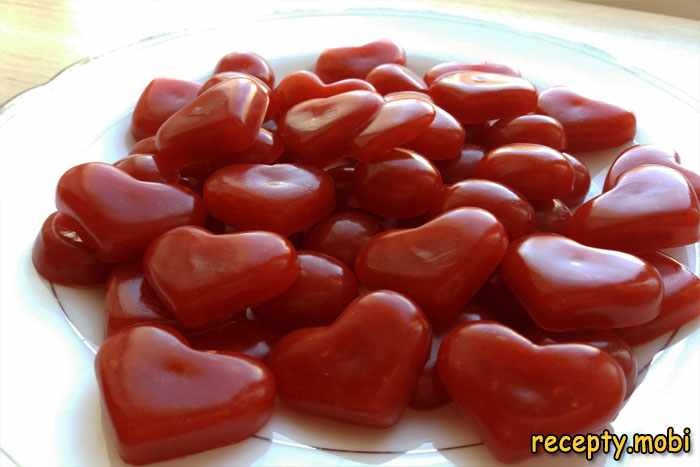
If the mass doesn't fit into all the moulds at once, you can reheat the pot with the leftover over the lowest heat to melt the set gel and pour it into the freed-up moulds. If you don't have shaped moulds, pour the entire mass into a rectangular dish 2 cm deep lined with parchment, and once set, cut it with a sharp knife dipped in water into squares or diamonds. The homemade strawberry jelly candies are ready!


Tips
- 1
Instead of strawberries you can use any juicy berries – raspberries, black and red currants, pitted cherries, blackberries, blueberries. Each berry gives the candies its own unique colour and aroma.
- 2
Agar-agar can be replaced with gelatine – 20 g for this amount, soaked in cold water for 30 minutes beforehand. But the texture will be softer, and the candies may melt at room temperature.
- 3
For a brighter, more intense colour, add 1 teaspoon of beetroot juice – it is safe for children and gives a deep ruby shade without food colourings.
- 4
The finished jelly candies can be rolled in fine sugar for a "sugared marmalade" effect like the shop-bought kind – a classic home trick for an attractive presentation.
FAQ
Can I use gelatine instead of agar-agar in the candies? +
Yes, but the technique is different. Take 20 g of gelatine and soak it in 50 ml of cold water for 20–30 minutes until fully swollen. Then dissolve it in a water bath (do not boil!) and combine with the strawberry puree and sugar. Gelatine candies will be softer, will melt at room temperature and need to be kept in the fridge. Agar-agar gives a more stable, firm texture – classic candies that can be kept at room temperature. For children's candies it is better to use agar – it is plant-based, safe and gives the right marmalade result.
Why didn't the jelly candies set? +
There are three main reasons: the agar-agar wasn't boiled enough (it should boil for at least 2 minutes after coming to a boil, otherwise activation is incomplete), the agar is past its use-by date (check it – after 1 year it loses its properties), or the proportions are wrong (use 8 g of agar per 400 g of the berry-and-water mixture). The fix: return the mass to the pot, add another 2 g of agar-agar, boil for 2 minutes and pour into the moulds again. Also check the acidity of the puree – very acidic berries (cranberries, lemon) need more agar.
How long do homemade jelly candies keep? +
In the fridge in an airtight container or a glass jar, up to 2 weeks without losing flavour. At room temperature – up to 5 days (marmalade with agar doesn't run). For longer storage you can roll the candies in sugar and place them in a jar with parchment between the layers – the sugar draws out excess moisture and extends the shelf life. I don't recommend freezing them – thawing breaks the structure and makes them watery. Homemade marmalade is best made in small batches and eaten within a week.
Which moulds are best for pouring? +
Silicone moulds for ice or candies with shaped cells (bears, hearts, flowers, stars) are ideal – they are flexible, and the candies come out easily without damage. Plastic moulds with a non-stick coating also work. Grease metal moulds with odourless vegetable oil before pouring. For cut candies, use a rectangular dish 1.5–2 cm deep lined with parchment with overhanging edges – that makes it easy to lift out the whole slab and cut it. A homemade version with a variety of moulds looks especially attractive for a festive presentation.
- Comment
or post as a guest
Be the first to comment.