avg —
Cottage Cheese Easter Cake with Candied Fruits

Instructions
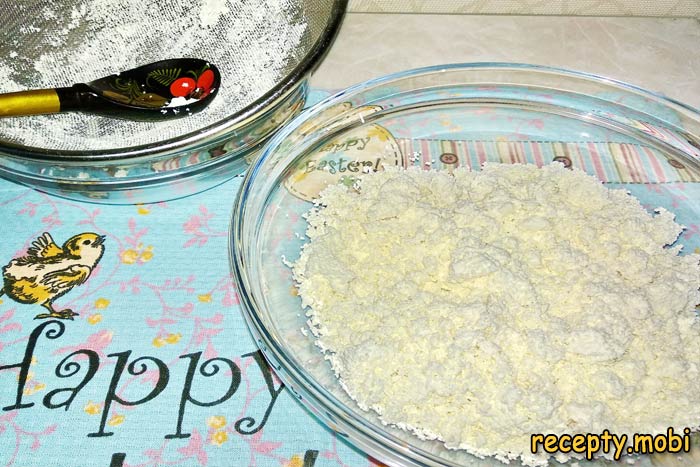
Thoroughly rub all the cottage cheese (1 kg) through a fine sieve into a large bowl – ideally twice, for perfect delicacy. You can do this stage in advance (the day before the main preparation). The cottage cheese should become smooth, without a single grain – like custard. Alternatively, blend the cottage cheese for 2–3 minutes until smooth.
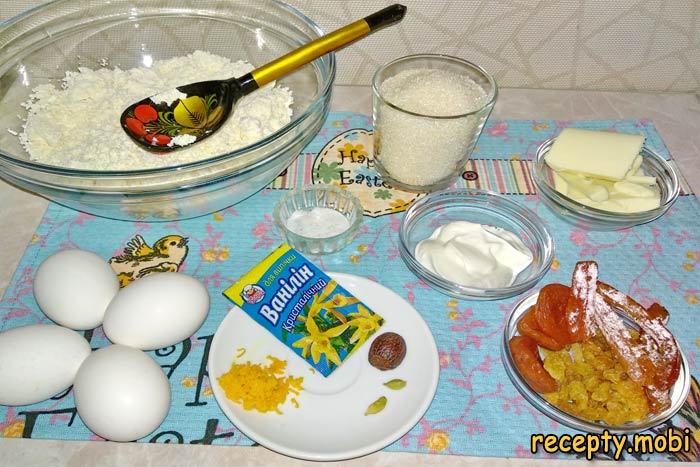
I lay out all the recipe ingredients on the work surface: eggs and butter at room temperature (take them out an hour ahead), sugar, sour cream, spices, dried fruits. All the products should be fresh and of good quality – the pasha is not heat-treated, so the quality of the starting ingredients is critical for safety.
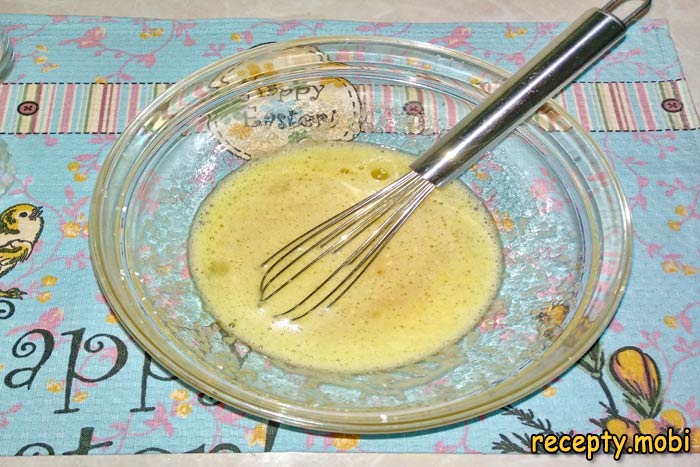
In a separate large bowl, crack in 4 eggs, add the sugar (200 g) and a pinch of salt. Mix thoroughly with a whisk (NOT a mixer!) until the sugar has fully dissolved and the mixture is smooth. A whisk does not beat air into the mass – the pasha should be dense, not airy like a mousse.
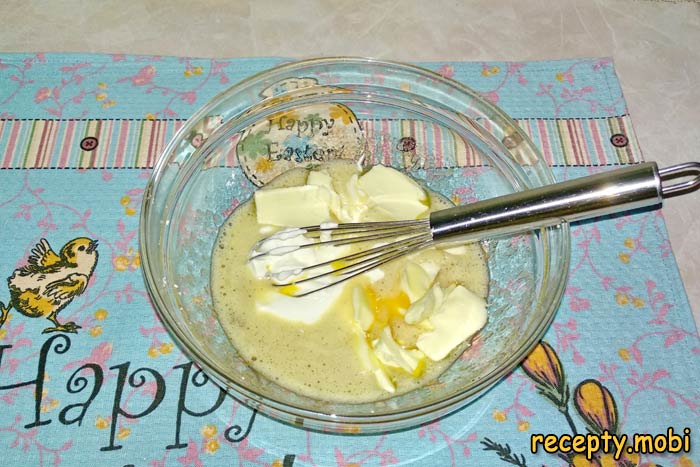
Add the 20% sour cream (100 g) and the soft, room-temperature butter (100 g) to the egg mixture. Mix thoroughly with a whisk until you have a smooth, creamy mass. The sour cream and butter give the pasha its "creamy" delicacy – without them you get a "dryish" curd mass without the characteristic creaminess.
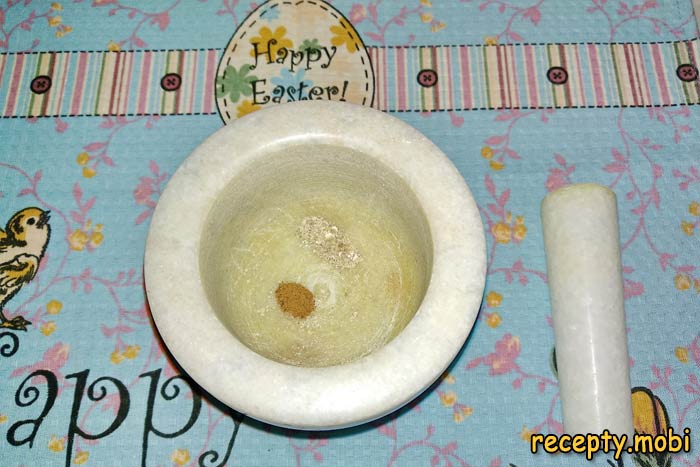
In a ceramic mortar, grind 2 cardamom seeds with a pestle to a fine powder – freshly ground spices give an aroma five times brighter than ready-ground ones from a packet. Also grind a pinch of nutmeg (you can grate it on a fine grater straight into the mixture). Fresh spices are the secret of an authentic pasha.
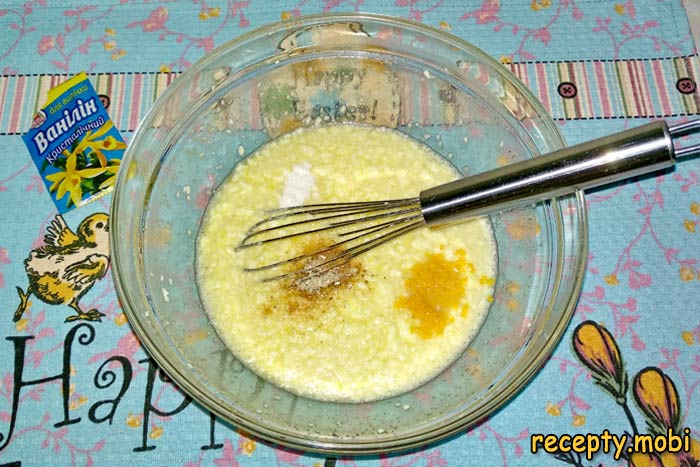
Add the freshly ground spices (cardamom, nutmeg), the sachet of vanillin and the grated orange zest (only the orange part, without the white!) to the egg-and-sour-cream mixture. Mix thoroughly so the spices are distributed throughout. The zest gives a bright, "spring-like" citrus note.
Combine the egg-sour-cream-spice mixture with the rubbed cottage cheese in a large bowl. Mix thoroughly with a whisk or spoon until you have a smooth, dense, creamy mass. Do not beat with a mixer – the pasha should be dense so it holds the shape of the mould when served.
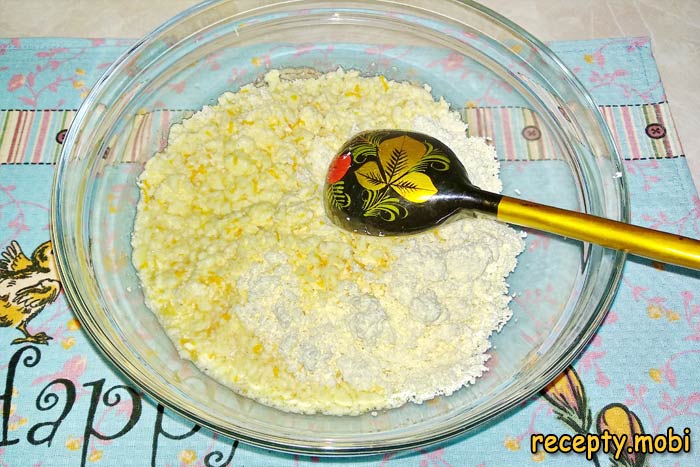
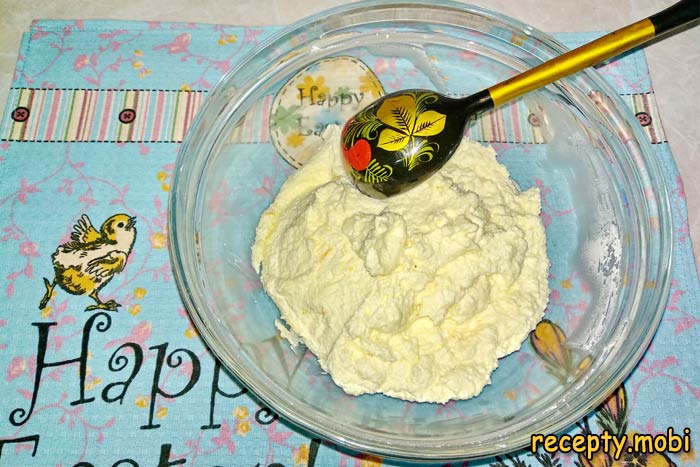
The finished mass should be smooth, fairly dense (like a very thick custard) and delicate, without a single grain of cottage cheese. If the mass is a little runny, add 1–2 tablespoons of cottage cheese; if it is too dense, add 1 tablespoon of sour cream. The ideal consistency holds together in a ball but does not crumble.
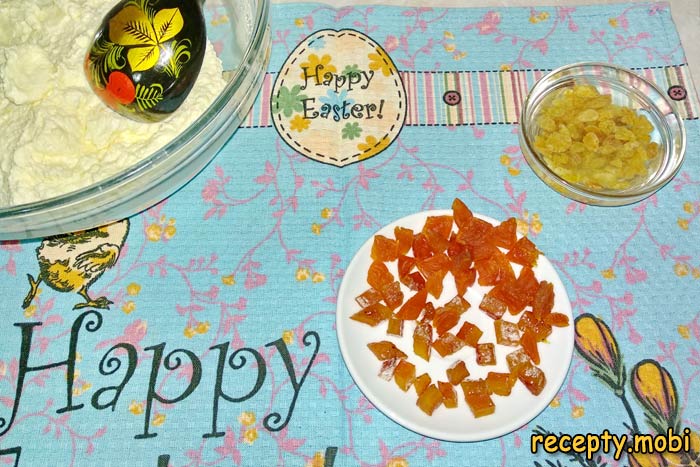
Prepare the dried fruits: wash the candied fruits (100 g) and dried apricots (80 g) thoroughly and cut into small 0.5 cm cubes. Pour warm water over the raisins (100 g) for 10 minutes to soften them, then drain off the water and pat dry with a paper towel. Dry dried fruits stick better to the curd mass.
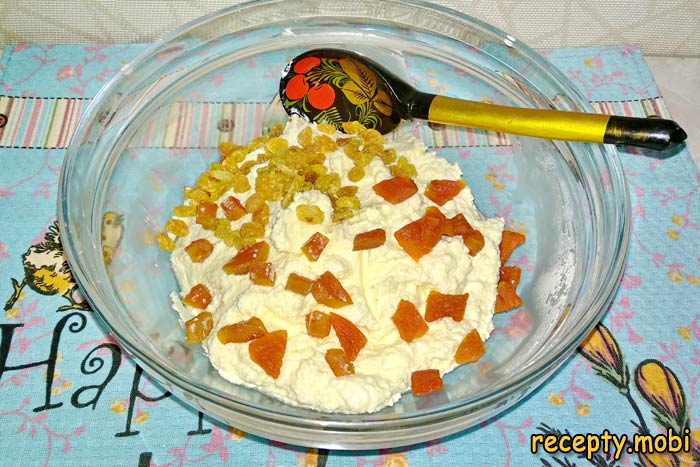
Add the prepared dried fruits (raisins, candied fruits, dried apricots) to the curd mass. Carefully fold from the bottom up for 1–2 minutes so that all the components are distributed evenly throughout. Do not "crush" the mass – the pasha should stay delicate, with no crushed dried fruits.
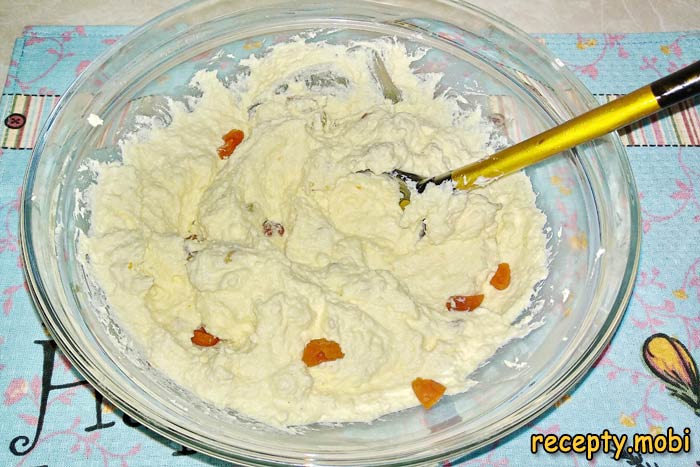
Mix the curd mass with the dried fruits thoroughly until they are completely evenly distributed – every spoonful should contain pieces of raisin, candied fruit and dried apricot. If the dried fruits "settle" at the bottom, carefully fold them through again from top to bottom.
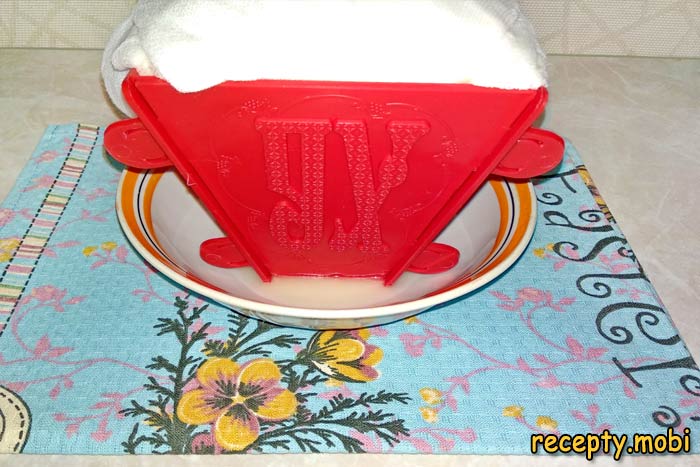
Line a traditional pasochnitsa (a wooden or plastic mould in the shape of a truncated pyramid) with 2–3 layers of clean, damp cheesecloth. The cheesecloth should overhang the edges of the mould by 5–10 cm – you will use it later to "cover" the mass on top. Set the pasochnitsa narrow end DOWN in a deep bowl – the "foot" of the pasha should stand on this end.
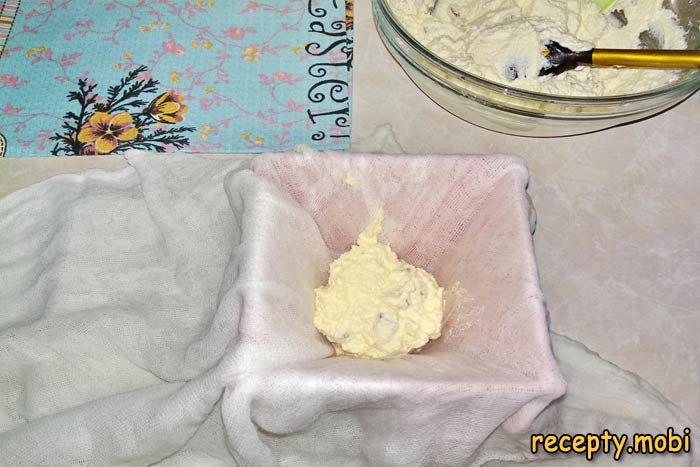
Fill the pasochnitsa with the curd mass tightly, with no gaps or air bubbles – carefully "press down" each layer with a spoon. Fill it to the top with a small mound – the mass will compress a little under the weight and settle to the level of the edges.
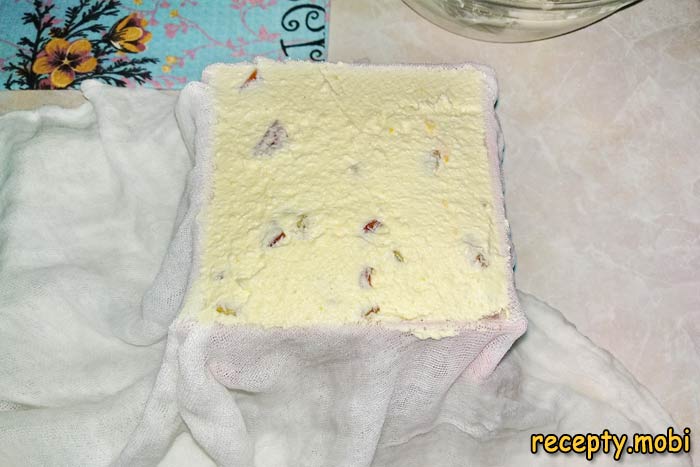
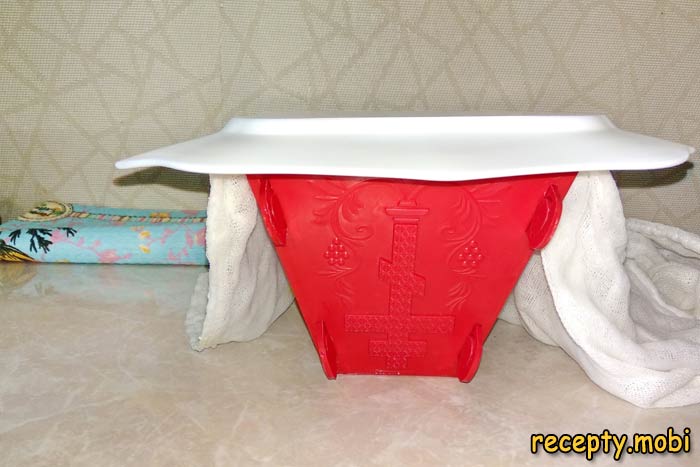
Cover the top of the pasha with the free edges of the cheesecloth, and set a weight of 0.5–1 kg on top (a 0.5-litre glass jar of water is ideal). Put the whole arrangement (the pasochnitsa in the bowl under the weight) in the refrigerator for at least 12 hours, or better for a full day. The weight presses out the excess whey – the pasha becomes dense.
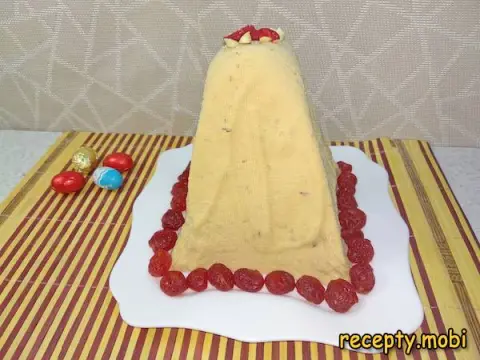
After 12–24 hours, take the pasochnitsa out of the refrigerator, remove the weight and turn it out onto a nice serving dish, narrow end UP – the pasha will be in the shape of a "pyramid". This moment is crucial – turn it out carefully so the pasha does not "fall apart".
Carefully remove the pasochnitsa and gently peel the cheesecloth away from the pasha – it should stay whole, dense in structure, with a clear imprint of the mould's pattern (often a cross and the letters "XB" – "Christ is Risen"). A clear relief on the sides is the sign of a properly made pasha.
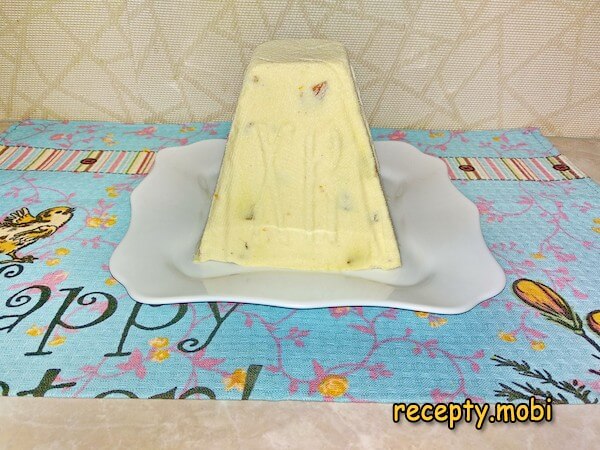
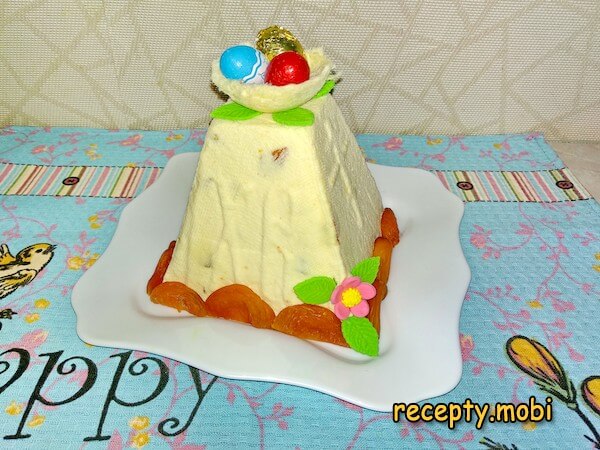
Decorate the finished pasha to taste: with sugar sprinkles, chopped candied fruits, grated chocolate, boiled condensed milk, fresh berries (strawberries, raspberries) or mint. The pasha is the "queen" of the Easter table and deserves festive decoration. The cottage cheese Easter with candied fruits is ready!


Tips
- 1
The cottage cheese must be homemade or high-quality farmer's cheese – you cannot make a "proper" pasha from shop-bought curd with preservatives.
- 2
Do NOT beat the eggs with a mixer – the mass should be dense so that the pasha holds its shape. Use only a whisk, the way "grandmother did it".
- 3
The weight helps to press out the excess whey – without it the pasha will be "runny" and will not hold its shape. I use a similar principle for my cottage cheese bake.
- 4
Decorate it with sprinkles, chocolate, candied fruits, berries, or simply with the letters "XB" made from raisins – "Christ is Risen", by Orthodox tradition.
FAQ
Do you need a special mould (pasochnitsa)? +
Yes, a traditional pasochnitsa gives the pasha its characteristic truncated-pyramid shape with a clear imprint of symbols (a cross, the letters "XB", flowers). You can buy one in a church shop, in specialist cookware shops or online. An alternative is to make one yourself from stiff cardboard or a plastic bottle (cut off the narrow neck and carve out a "pyramid"). Without a special mould you can use any conical form or even a clay pot – but the pasha will be less "classic" in shape. The pasochnitsa is the "face" of the pasha, an important part of the festive presentation.
How long does the finished cottage cheese pasha keep? +
The finished pasha keeps in the refrigerator for up to 5 days in a tightly closed container or under cling film. On the second day the flavour becomes richer – the flavours finally come together and the spices open up. Do not leave it at room temperature for more than 2 hours – cottage cheese spoils quickly in the warm. Do not freeze it – on thawing the texture will "go runny" and the pasha will lose its shape. Ideally, eat it during Bright Easter Week. Since the pasha is not heat-treated, take particular care over the freshness of the starting ingredients and the storage conditions.
Can the pasha be made without spices? +
Yes, you can leave out the cardamom and nutmeg – the pasha will be "neutral" in flavour, with vanilla-and-citrus notes. You can replace the spices with cinnamon (1 teaspoon), cloves (a pinch) or fresh lemon zest. Without any spices the pasha will be an "ordinary" curd mass with candied fruits – still tasty, but less "festive". Cardamom and nutmeg are the "grandmother's" classic for pasha, giving the characteristic aroma associated with the Easter table. The minimum set is vanilla and citrus zest. You can add saffron for an authentic "golden" colour.
What do you serve the pasha with? +
The Easter triad: pasha, kulich and dyed eggs – served together as a symbol of the bright Resurrection. For drinks – tea (black, green, fruit), coffee with milk, cocoa, homemade dried-fruit compote. For adults – Easter Cahors (a sweet red church wine), a classic of the Orthodox tradition. In addition – honey, homemade jam, fresh berries (strawberries, raspberries – already in season). For Easter breakfast after the night service – with kulichi and eggs blessed at church. Give it to loved ones as a symbolic Easter gift – a token of the bright joy of the feast.
- Comment
or post as a guest
Be the first to comment.