avg —
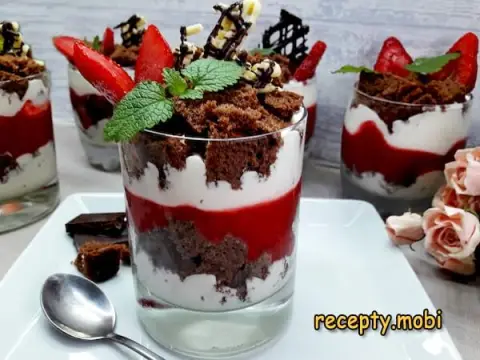
Panna Cotta with Strawberry at Home

Instructions
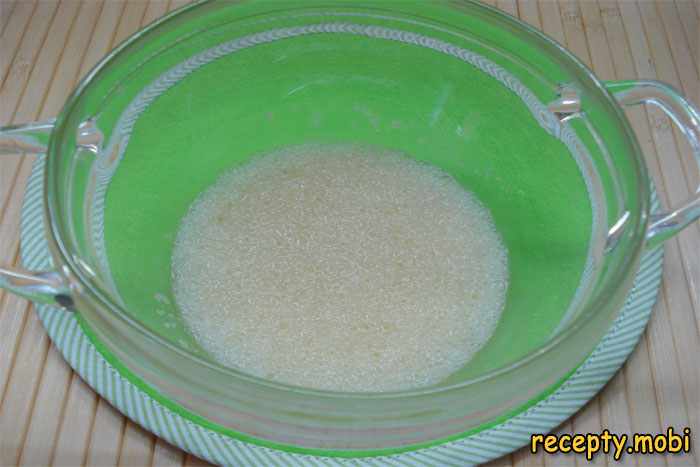
Soak 6 g of gelatin in 2 tablespoons of cold water and leave it to swell for 10–15 minutes. The gelatin should fully absorb the water and turn into a dense, jelly-like mass. It is important to use cold water specifically – in hot water the gelatin dissolves unevenly straight away and forms lumps.
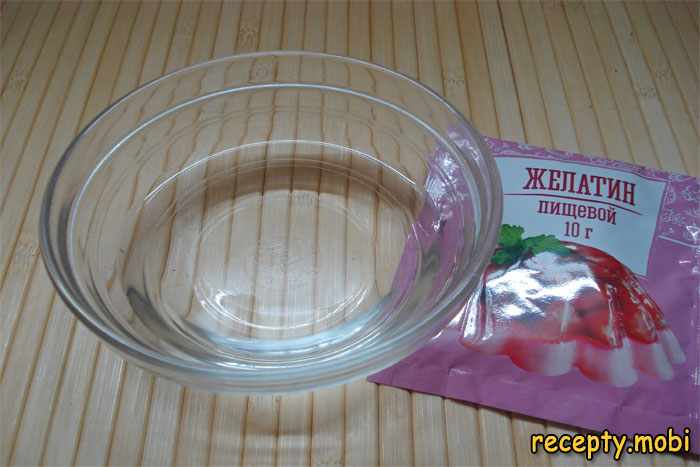
In a saucepan, combine 200 ml of milk and 200 ml of cream with 33% fat content (you can use 20%, but the panna cotta will be less tender). Add 50 g of sugar and the contents of the vanilla packet. Heat over medium heat to 80°C, stirring constantly – a light steam will rise above the surface, but do not let it come to the boil, or the milk will curdle.
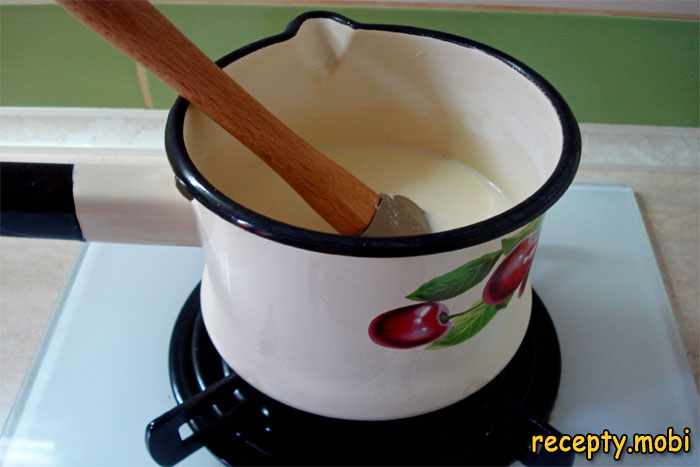
During this time, the gelatin will swell.
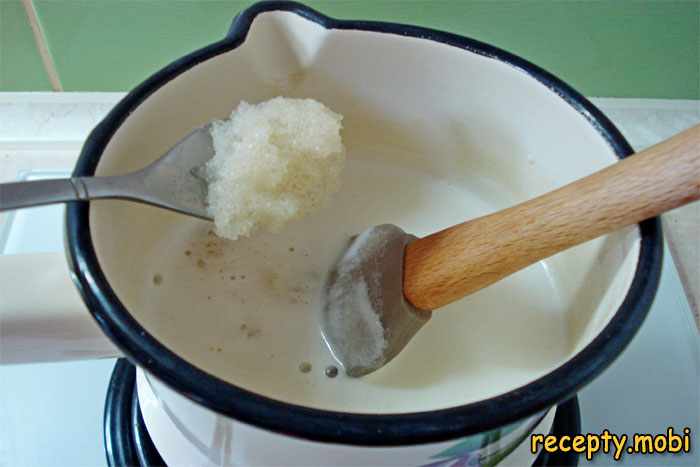
Remove the milk mixture from the heat and stir in the gelatin until it dissolves.
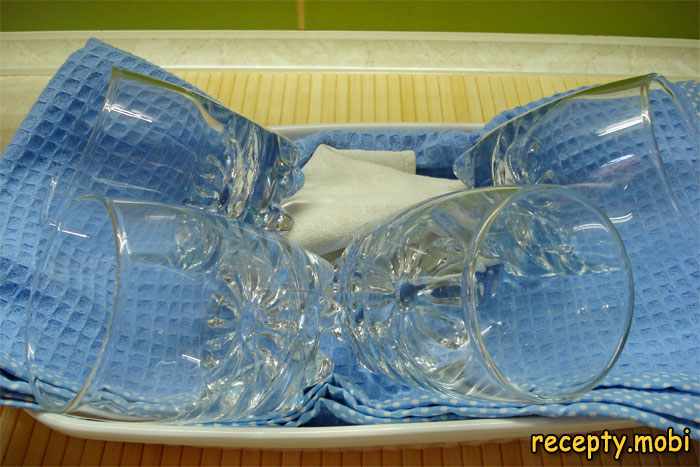
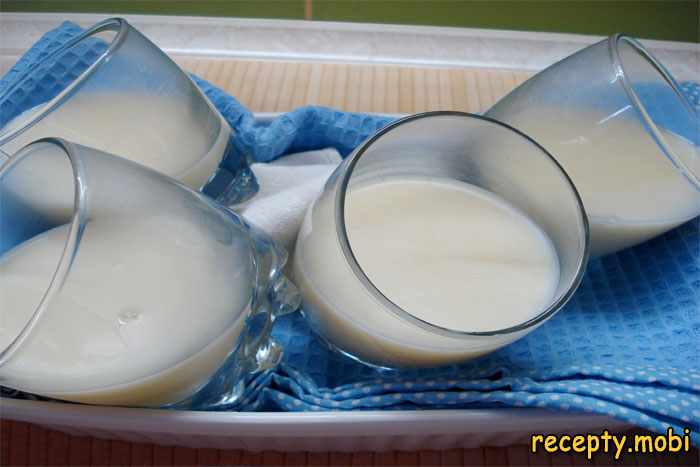
Prepare the glasses for pouring. To create a beautiful diagonal, place the glasses at an angle on a tray and secure this position with a towel.
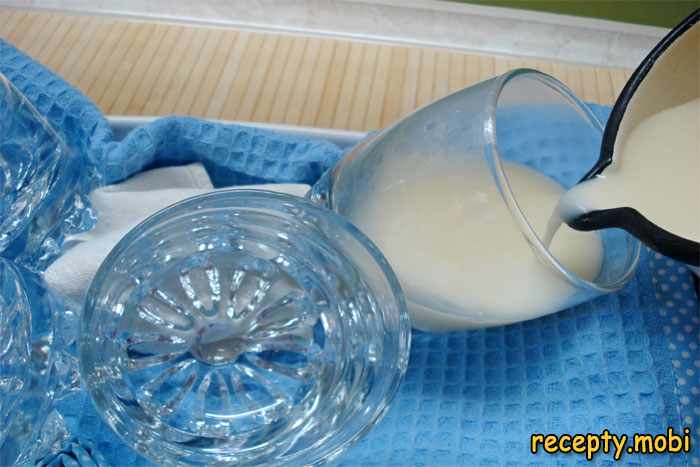
When the temperature of the milk mixture reaches room temperature, fill the tilted glasses with it.
Carefully transfer the tray in this position to a refrigerator shelf.
Cut the strawberries up roughly, leaving a few berries with their stems for decoration.
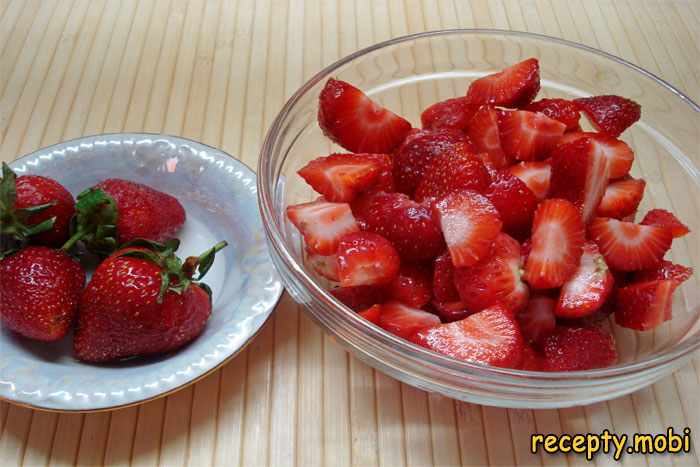
Add the remaining sugar and a couple of tablespoons of water to the pieces, and simmer everything a little.
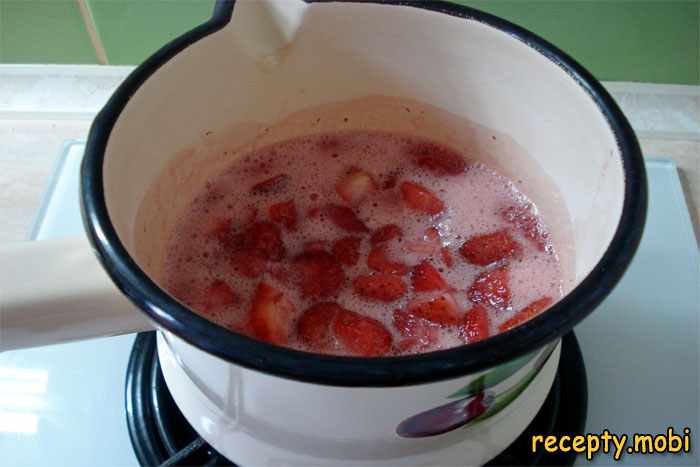
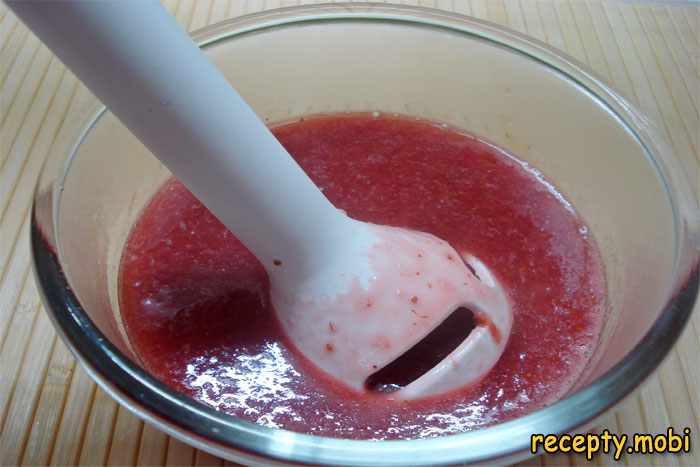
Blend the jam with a blender. In this form, the strawberry layer can fill the glasses with panna cotta. Alternatively, you can thicken the jam a little with gelatin dissolved in water beforehand.
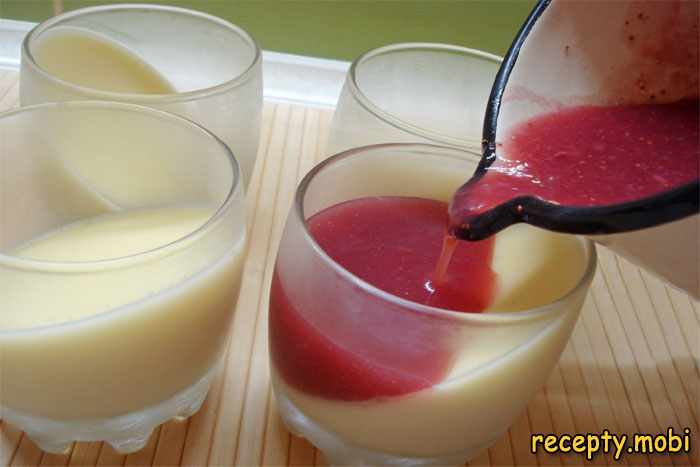
After 2 hours, take the glasses out of the refrigerator and, this time placing them upright, fill them with the strawberry jam (liquid or set).


Tips
- 1
Use cream with 33% fat content. The finished panna cotta will turn out more tender and elastic; with lower-fat cream (for example, 20%) it will be noticeably less tender.
- 2
Always soak the gelatin in cold water, not hot. In cold water it swells evenly into a dense, jelly-like mass, whereas in hot water it dissolves unevenly and forms lumps.
- 3
Do not let the milk-and-cream mixture boil – heat it only to about 80°C, until a light steam appears. Boiling can cause the milk to curdle.
- 4
Let the milk mixture cool to room temperature before filling the tilted glasses. Pouring it in while still hot would disturb the setting and the neat diagonal layer.
- Comment
or post as a guest
Be the first to comment.