avg —
Dough for Dumplings with Boiling Water and Egg

Instructions
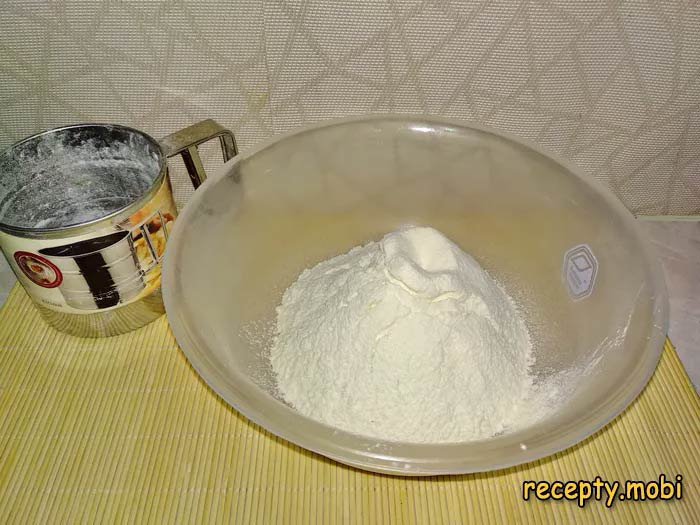
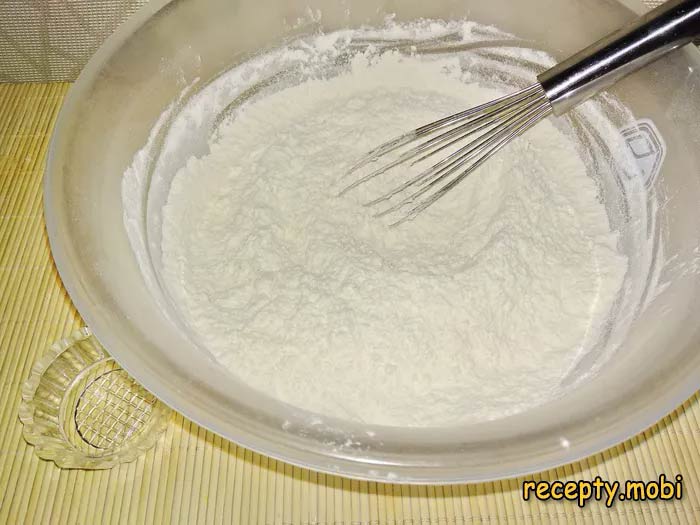
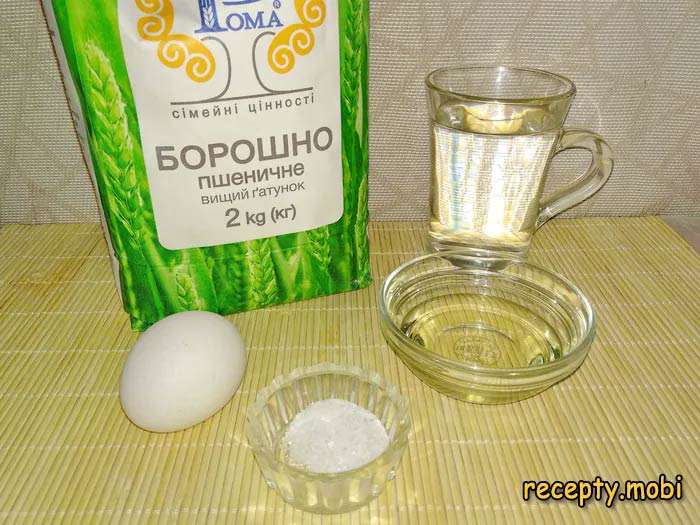
Sift 450 g of flour into a large bowl. Set the remaining 30 g aside for now: you will only need it if the dough turns out sticky. Have a sturdy spoon or spatula ready for the hot mixing.
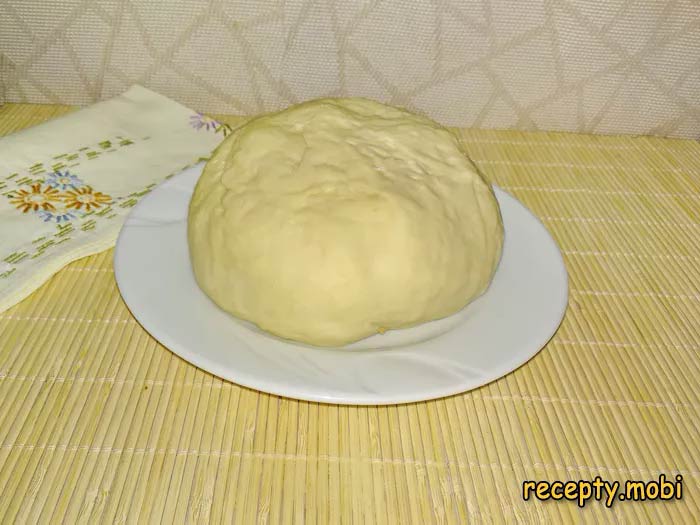
Add half a teaspoon of salt to the flour and mix.
Make a well and pour in the vegetable oil. A refined oil without a strong smell works best. The oil makes the dough more pliable, but on its own it does not stop the egg from setting.
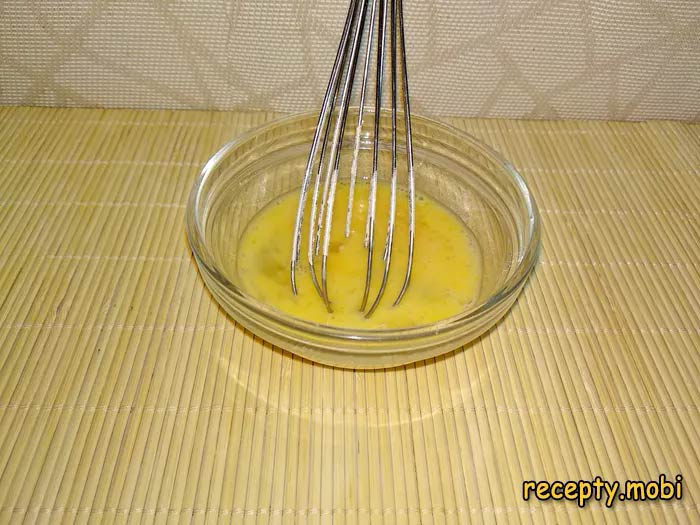
Crack the egg into a separate cup and beat it with a fork until smooth. A medium egg without its shell weighs about 50 g.
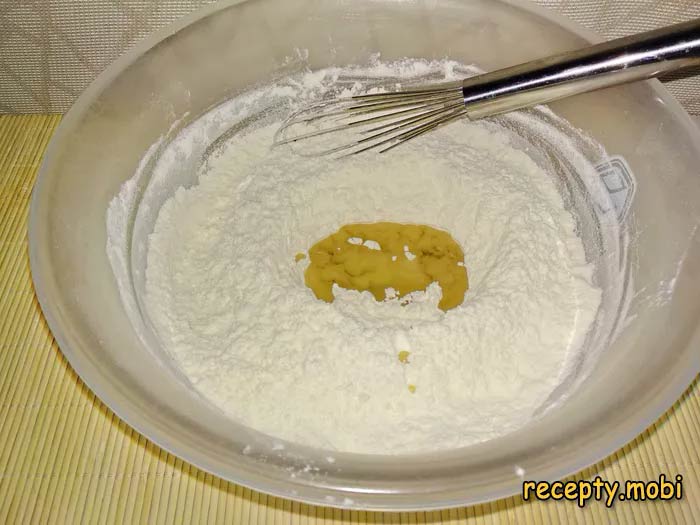
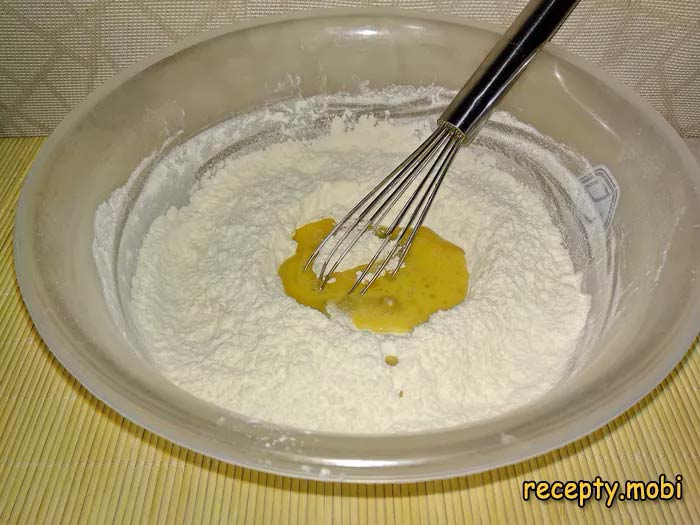
Pour the egg into the flour and oil and mix, spreading it through the flour. Do not leave the whole egg sitting in the well where the boiling water will hit it.
Bring the water to the boil. Carefully measure out 250 ml in a heatproof measuring jug. Do not use thin, cold glass for boiling water: it can crack.
Gradually pour the hot water into the flour mixture while stirring with a spoon or spatula. Keep your hands away from the stream and do not start kneading by hand while the mixture is still scalding.
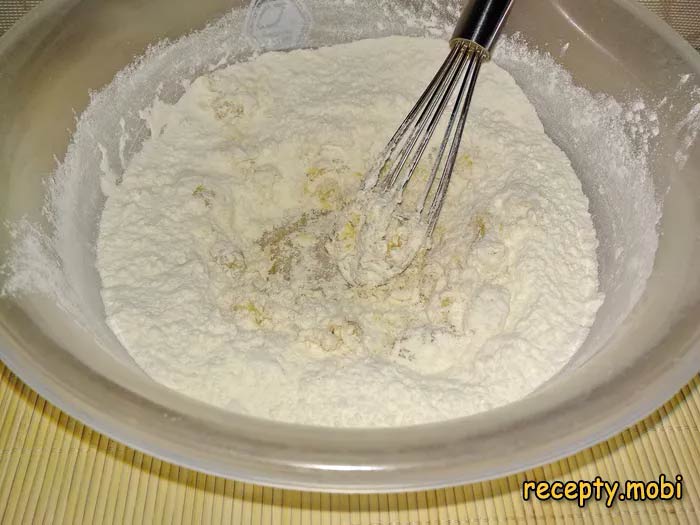
Gather the mixture into large lumps with the spatula. When it is cool enough to handle, turn it out onto the work surface.
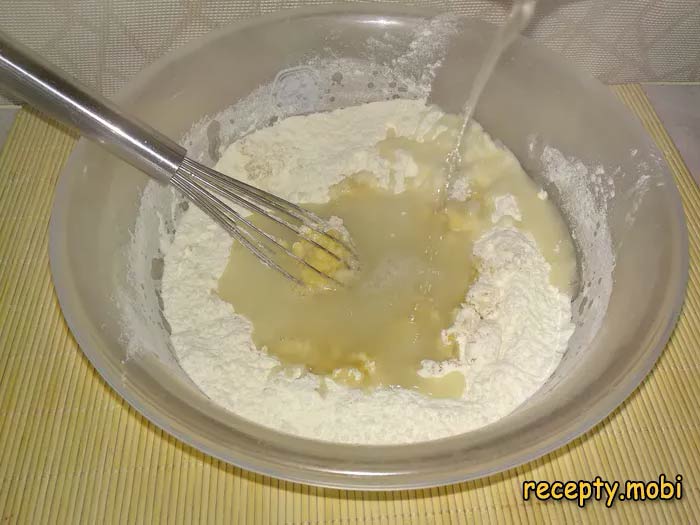
Knead by hand until even. If the dough is noticeably sticky, add the reserved flour a little at a time, not all at once.
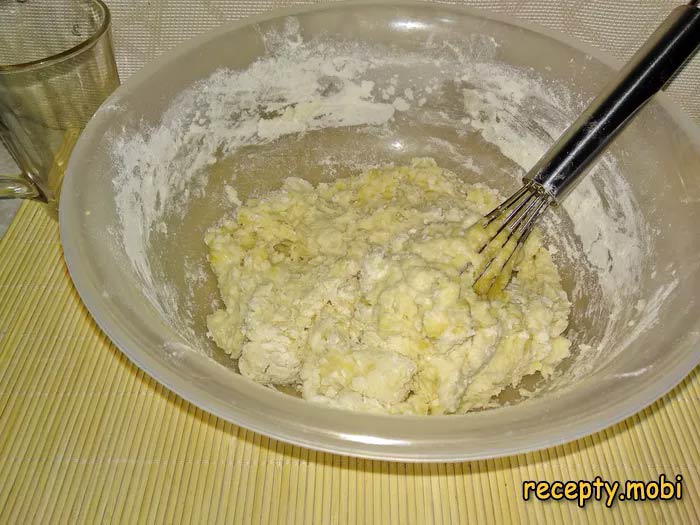
Keep kneading until you have a smooth, soft ball: this usually takes about 5 minutes. Go by the texture rather than a “no longer than two minutes” rule. Extra flour makes the dough denser and drier.
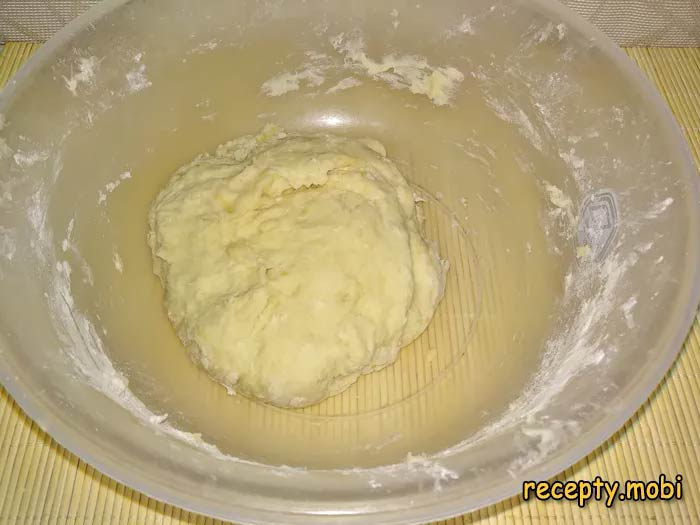
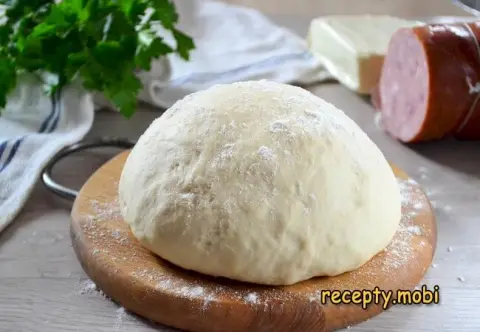
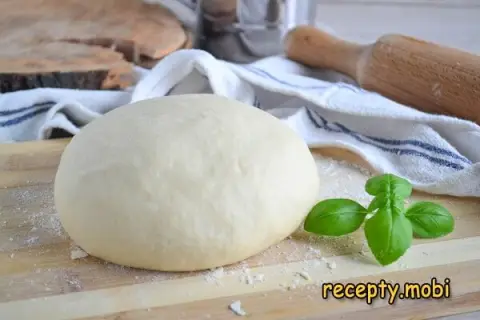
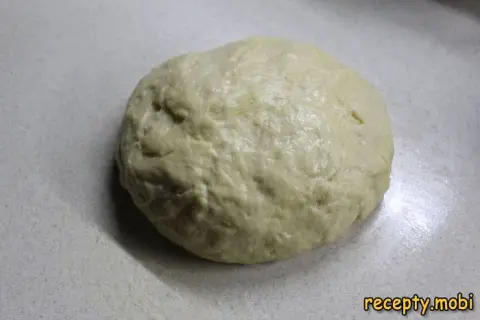
Check the dough: it should hold its shape, feel soft, have no dry cracks and yield easily to your fingers. A little stickiness before resting is fine; do not bury it under lots of flour.
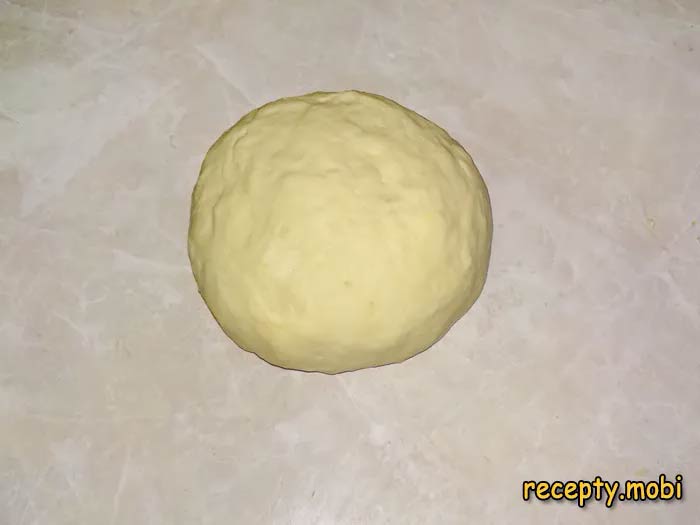
Cover with cling film or put it in a closed container and leave for 20 minutes. During this time the moisture evens out and the dough becomes easier to roll.
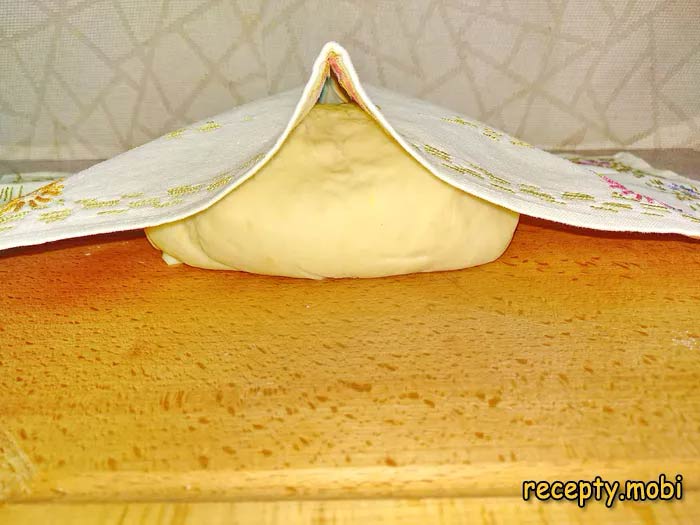
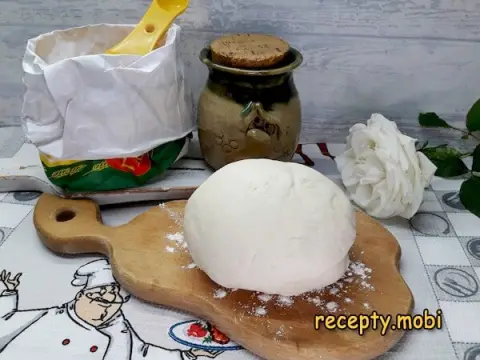
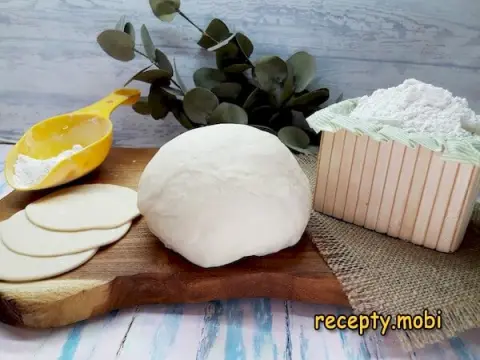
Divide the dough into portions, roll out the one you are working with to about 1.5-2 mm and keep the rest covered. Cut out circles and shape the dumplings. Dust the table lightly with flour if needed, but keep the edges of the circles clean so they seal well.


Proportions and yield
This amount makes about 800-850 g of raw dough, without filling. You may need slightly more or less flour depending on its moisture and the size of the egg. Start with 450 g and keep the remaining 30 g for adjusting the dough.
Do not confuse grams with millilitres: three 250 ml cups of flour weigh about 450-480 g, not 750 g. The “3 cups of flour to 1 cup of water” ratio is by volume. Spoon the flour into the cup without packing it down or heaping it; scales are more reliable than a cup.
How to scale the recipe
For a half batch, take 240 g of flour, 125 ml of boiling water, 25 g of beaten egg, 1.5 tablespoons of oil and 0.25 teaspoon of salt. A whole egg in a half batch noticeably changes the amount of liquid. For a double batch, multiply everything by two.
Why the dough is tough, sticky or tears
- Tough and crumbly: too much flour for the liquid. Let the dough rest under cling film. If needed, wet your hands and work in a little water at a time, then rest it again.
- Sticky after resting: knead in flour in small portions. How much depends on the moisture of the flour and the size of the egg.
- Shrinks back when rolled: cover it and leave for another 10 minutes, then try rolling again.
- Dumplings open up: check the seam, the amount of filling and any flour on the edges. Dough rolled too thin and a hard boil also make tearing more likely.
What the boiling water does, and can you make it without egg
Hot water partly gelatinises the starch in the flour and changes the structure of the dough. This helps you get a pliable dough, but it does not guarantee that no dumpling will ever tear. The claim that water at 70-80 °C cannot gelatinise starch at all is wrong; this recipe simply uses freshly boiled water so that the method is repeatable.
Without the egg you need a different balance of flour and water. Do not replace the egg with a spoonful of oil: oil does not make up for the water the egg contains. For an egg-free version, use a recipe designed without egg from the start.
Shaping, cooking and storage
Put the filling in the centre and keep the edges free. Do not make the seam too wet and do not pinch it through a thick layer of flour. Drop the dumplings into boiling water, then keep it at a moderate boil. The cooking time depends on the size, the filling and whether the dumplings are fresh or frozen; floating to the top once does not prove that raw meat is cooked through.
Keep raw dough tightly wrapped in the fridge for no longer than a day, or freeze it in portions for about a month. Thaw it in the fridge. Do not taste raw dough: untreated flour and egg can carry harmful microorganisms.
In a stand mixer or bread maker, use the hot-water method only if the manufacturer’s instructions allow it. Do not pour boiling water into any machine without checking.
Video

FAQ
How much flour do you need for 250 ml of boiling water? +
For this version with one egg, about 480 g. Start with 450 g and keep 30 g for adjusting. Flour in grams and the volume of a cup in millilitres are not the same thing.
Does the dough need to rest? +
Yes, about 20 minutes under cling film or in a closed container. It should not dry out.
How many dumplings will this dough make? +
The dough weighs about 800-850 g. The number of dumplings depends on the diameter of the circles and how thinly you roll, so an exact number cannot be promised without a chosen size.
Can I use this dough for vareniki? +
Yes, it works for vareniki with potato, tvorog (farmer’s cheese) and other fillings. With a juicy filling, an intact dough and a tightly sealed seam matter most.
- Comment
or post as a guest
Be the first to comment.