RU EN
Dough for Pies with Mayonnaise – Fluffy and Soft, Without Eggs and Oil

difficulty Hard
0 views this month
0 saved by readers
0 ratings
avg —
Dough

Dough for Pies with Mayonnaise – Fluffy and Soft, Without Eggs and Oil

This yeast dough is the answer if you want pie pastry that turns out soft, fluffy, and stays fresh into the next day without going hard. Mayonnaise replaces both eggs and added oil — its emulsified fat tenderises the gluten and gives the bake a gentle sheen, while the acidity in mayonnaise also slightly accelerates…
Time 1 h 50 min
Yield 1 large pie
Calories 347 kcal
Difficulty Hard
Jump to recipe

Instructions

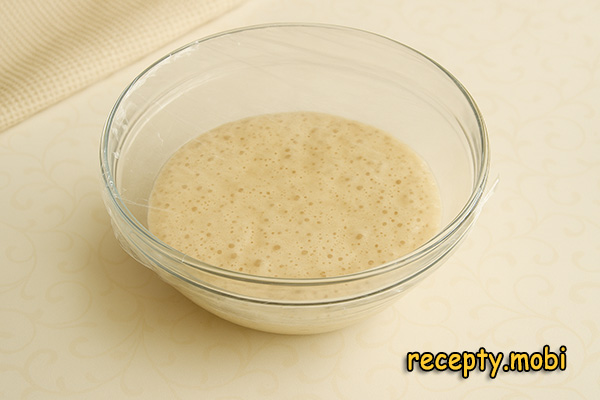
  1. In a deep bowl, I combine the half-cup of warm water with the half-cup of warm milk. Into the warm liquid I add 3 tsp of sugar, 8 g of dry yeast, and 4 tbsp of sifted flour. I whisk until smooth, cover the bowl with cling film, and leave in a warm draught-free spot for about 30 minutes. The starter is ready when a fluffy foam has risen across the surface — this is the visible sign that the yeast is fully active and ready to leaven the main dough. If after 30 minutes there's no foam, the yeast is dead or the liquid was too hot — start over with fresh yeast and cooler liquid.

    Step 1
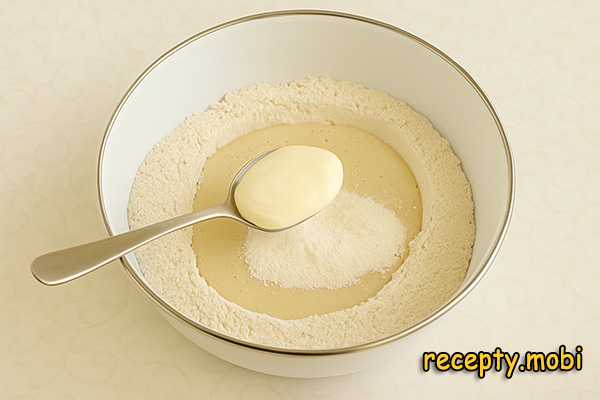
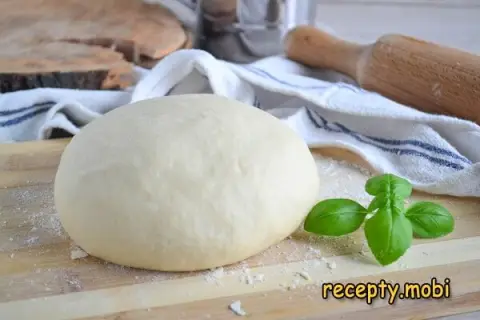
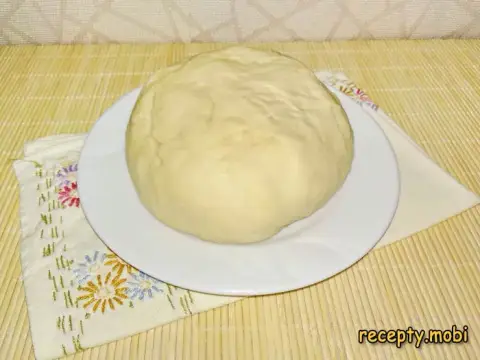
  2. To the risen starter I add 150 g of mayonnaise and the half-teaspoon of salt. Then I add the sifted flour gradually — start with 3 cups, work it in with a spoon, then switch to hands and add the remaining 0.5-1 cup as needed. The right consistency: soft, elastic, just slightly tacky against the palms — not dry, not wet enough to stick stubbornly. Adding all the flour at once almost always gives a tough dough; gradual is the rule.

    Step 2
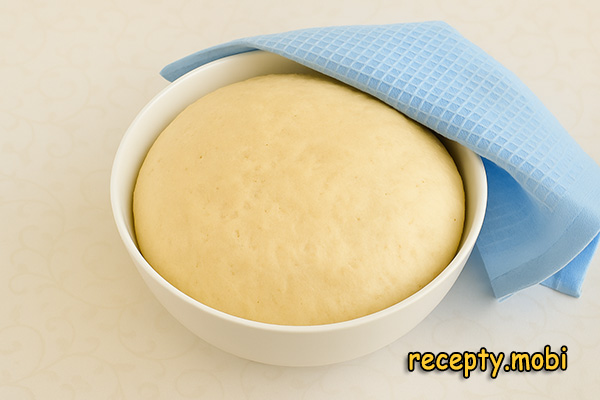
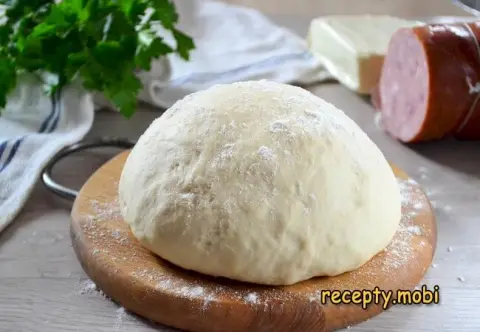
  3. I transfer the dough to a clean bowl, lightly grease the top with vegetable oil to prevent a dry skin forming, cover with cling film or a damp towel, and leave in a warm spot for 1-1.5 hours. The dough should at least double in size and feel airy and porous. The cling-film cover keeps moisture in while the dough breathes; an airtight seal would slow the rise.

    Step 3
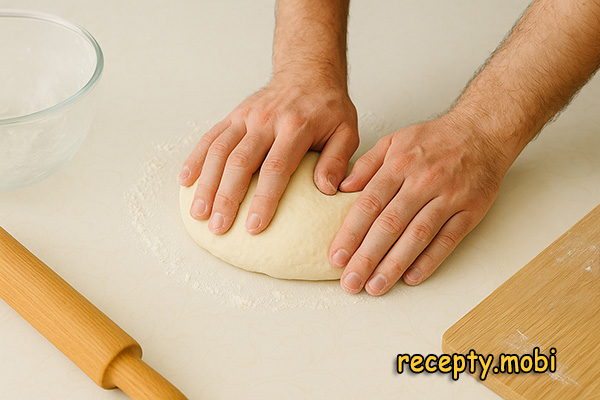
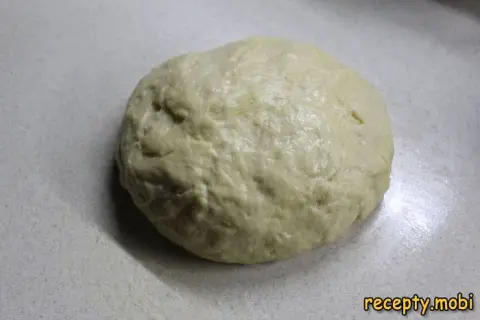
  4. I punch down the risen dough with my hands to release the trapped CO2, then start shaping pies, patties, or rolls right away. The dough holds its shape well, doesn't tear when stretched around fillings, and bakes at 180-190 °C until golden brown — usually 20-30 minutes for a large pie or 15-20 minutes for individual hand pies. For pan-fried versions, medium heat both sides until well coloured.

    Step 4

Tips

  • 1

    USE FULL-FAT MAYONNAISE. Classic mayonnaise (around 67% fat) is the right choice — it's the emulsified oil-and-egg-yolk in real mayonnaise that does the dough-tenderising work. Light or low-fat versions contain stabilisers and water that change the dough's hydration and produce a noticeably tougher result. Spend on the proper jar; the dough rewards it.

  • 2

    DON'T OVERLOAD THE FLOUR. Recipe gives a 3.5-4 cup range for a reason — flour absorbs differently depending on humidity, brand, and even the season. Start at 3 cups, knead, then add only as much extra as needed to reach the soft tacky-not-sticky texture. Adding the full 4 cups when 3.5 would do gives a dense, dry pie. For another versatile yeast base worth comparing, see Dough for Chebureks (Without Eggs) — same egg-free philosophy, different application.

  • 3

    WARM ENVIRONMENT MATTERS. The yeast wants 24-28 °C for an active first rise. Cold kitchens slow the dough dramatically — in winter, the easiest trick is to put the dough in a turned-off oven with just the interior light on (the bulb's residual warmth is usually perfect). Avoid placing the bowl directly on a radiator or in direct sunlight — too-fast rise weakens the gluten and the bake collapses.

  • 4

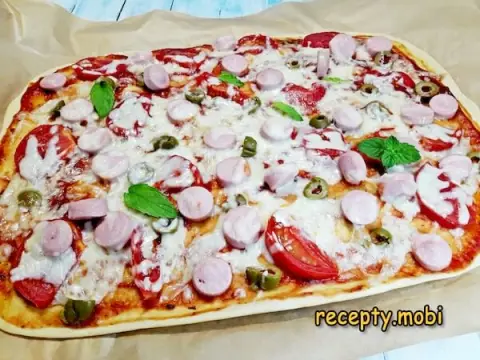
    SHAPE IDEAS BEYOND CLOSED PIES. This dough is a true blank canvas: closed pies with cabbage, potato, or meat fillings; open-top pies with cottage cheese and fresh herbs; small filled buns; even simple pizza-style flatbread. It also handles Lenten fillings like sautéed mushrooms or sweet apple-cinnamon. For a leavened dough specifically designed for handheld pies, compare with Lenten yeast dough for pies and pasties — eggless and oil-free in a different way.

FAQ

Can I use fresh yeast instead of dry? +

Yes, easily. Replace 8 g of dry instant yeast with 25 g of fresh compressed yeast — that's the standard 3:1 conversion ratio for active dry-to-fresh swaps. Crumble the fresh yeast into the warm water-and-milk mixture before adding the sugar and flour for the starter. Fresh yeast typically gives a slightly faster first rise (foam in 20-25 minutes instead of 30) and a marginally airier crumb, but the final pie is virtually indistinguishable. Active dry yeast (different from instant) needs proofing in warm water for 5-10 minutes first; same 8 g quantity.

How many small pies will this make? +

From the full quantity, you'll get either one large pie on a 30×40 cm baking sheet or about 10-12 medium handheld pies (each filled with about 2 tablespoons of filling). For smaller appetiser-size buns the count rises to 18-20. The dough also halves cleanly if you want to do half as one large pie and half as smaller portions — just divide the risen dough into two equal pieces by weight before shaping.

Can I freeze this dough? +

Yes. Freeze the dough immediately after the first rise — punch it down, shape into a flat disc (faster thawing than a ball), wrap tightly in cling film, then in a freezer bag. It keeps 2-3 months in the freezer. To use, thaw in the fridge overnight, bring to room temperature for 30 minutes, punch down again, and shape immediately. The texture after thaw is very close to fresh; you may notice the crumb is fractionally less airy.

Why is my dough not rising? +

Three usual culprits. First, dead yeast — if no foam appears at the starter stage in 30 minutes, the yeast is expired. Second, too-hot liquid — anything above 45 °C kills yeast cells. Use water and milk at 35-40 °C, comfortable to the touch, never hot. Third, cold environment — yeast needs warmth to multiply. If your kitchen is below 20 °C, move the bowl to a warmer spot or use the turned-off-oven-with-light-on trick. Salt directly on the yeast also kills it; that's why salt is added with the mayonnaise in step 2, not into the starter.

Write comments...
symbols left.
or post as a guest
Loading comment... The comment will be refreshed after 00:00.

Be the first to comment.