avg —
Soft Pizza Dough Like in the Pizzeria

Instructions
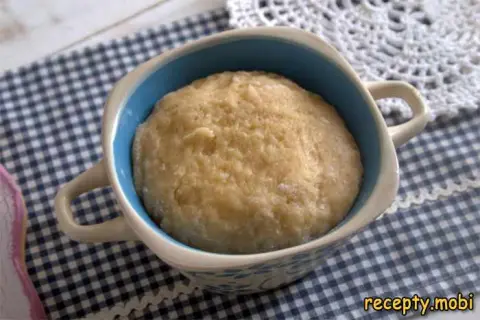
I start with a yeast starter, this is the key to a good rise. Mash the fresh yeast with the sugar into a runny paste with a fork. Add the warm water, strictly 30-37 °C: check it with a finger, it should feel pleasantly warm, as for a baby. Stir in 2-3 tablespoons of flour and mix until smooth. Put it in a warm spot (26-28 °C) for 15 minutes: the starter should froth up into a cap.
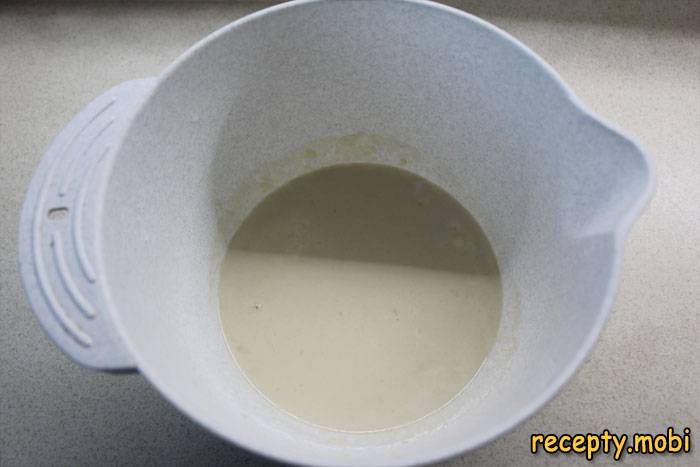
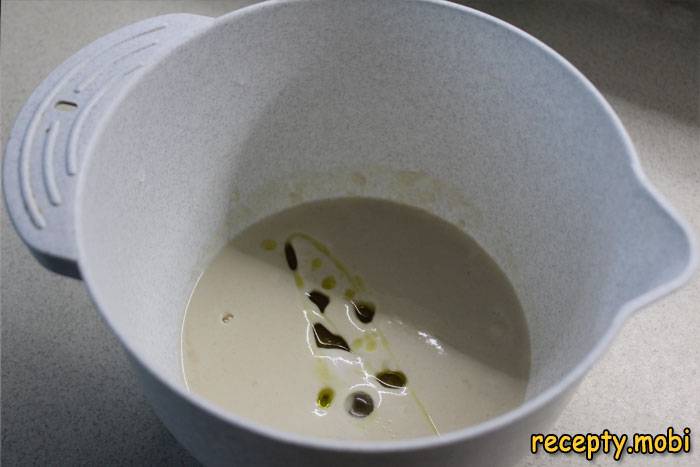
Into the active starter I pour 2 tablespoons of extra virgin olive oil and add the salt. Whisk together. The oil makes the gluten more elastic, which is exactly why the dough does not tear when rolled and stretches into a thin sheet. Sunflower oil would give a flat taste and a brittle texture.
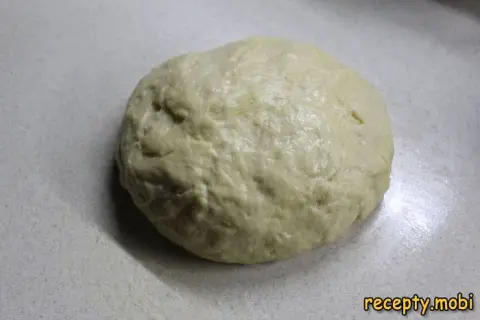
Gradually add the sifted flour, kneading the dough by hand or in a food processor with a dough hook. Do not add all the flour at once: you may need 20-30 g more or less depending on the moisture of the flour. The dough should be elastic, soft and stop sticking to your hands after 5-7 minutes of kneading. Dough that is too stiff will give a tough crust. Cover with cling film and put in a warm place for 40 minutes.
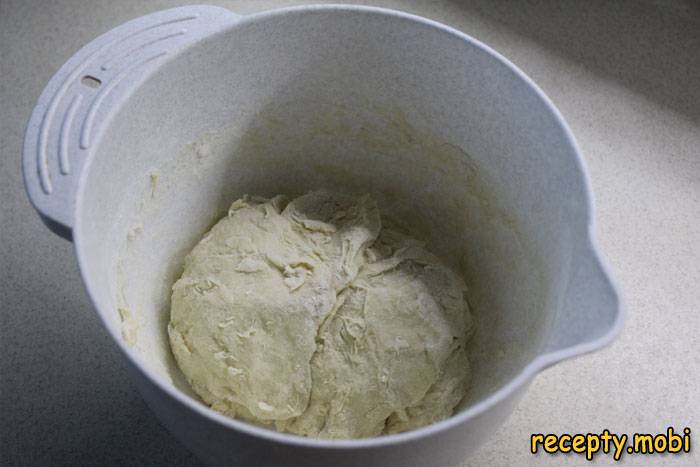
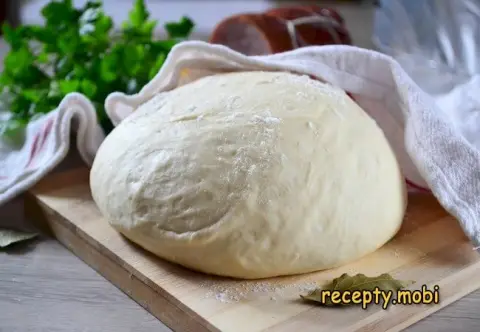
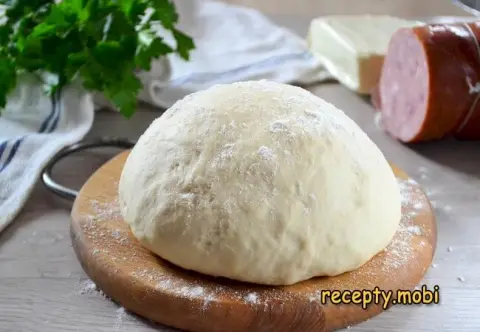
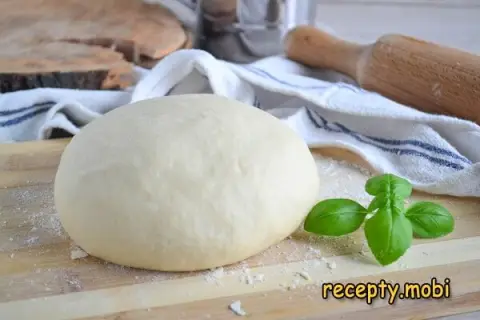
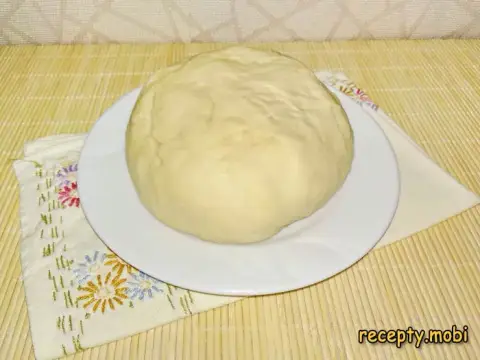
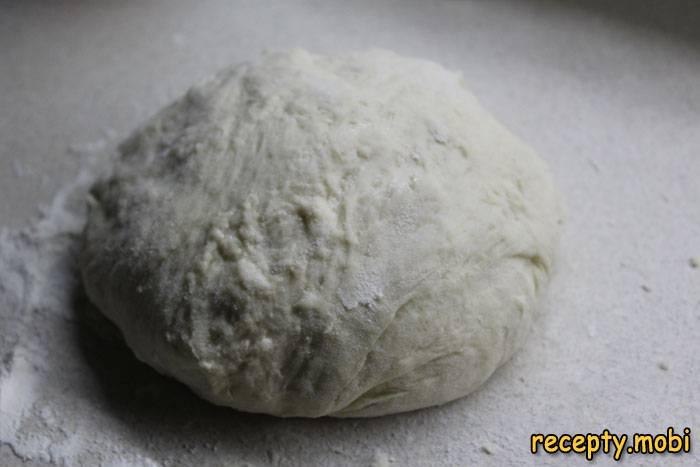
The dough has risen and doubled in size: it is soft, fragrant, airy inside and ready to be rolled out. Knock it back by hand to release the carbon dioxide and divide it into 2 equal parts for two pizzas. Before rolling, be sure to prick the shaped base all over with a fork so the dough does not blister during baking.


Tips
- 1
The water for the starter must be strictly 30-37 °C: above 40 °C the yeast dies and the dough will not rise. Use a kitchen thermometer or check with a finger.
- 2
Olive oil is the indispensable secret of that pizzeria softness and elasticity. Do not swap it for sunflower, corn or butter: the result will be completely different.
- 3
Do not add too much flour: an overworked dough will give a tough, dry crust. Dough that is slightly sticky is better than one that is overworked. I make sourdough bread on a similar principle.
- 4
For a thin pizza roll the dough to 2-3 mm, for a fluffy one to 5-7 mm. Thicker and the middle will stay raw, thinner and the pizza will break when served.
Which flour to choose for pizzeria-style dough
Pizzerias use flour with a high protein content: from 11 to 13 percent. It is the gluten that gives the dough its elasticity, lets you stretch the base thin by hand and hold the gas bubbles during baking. Finely milled Italian type 00 flour is closest to the ideal, but it can realistically be replaced with ordinary premium wheat flour, just by checking the protein content on the pack.
To bring the home result closer to the pizzeria one, add one or two tablespoons of semolina (durum wheat semolina) to the flour. It makes the base crunchier and stops it sticking to the peel. It is best to avoid weak flour with protein below 10 percent: the dough will tear and hold its shape poorly.
- Type 00 or premium grade, protein 11-13 percent, for an elastic dough.
- Semolina or durum wheat semolina, a little in the mix and for dusting, for a crunchy base.
- Wholegrain flour, up to 20 percent of the weight, for aroma and health benefits.
Cold fermentation: the main secret of pizzeria taste
A quick 40-minute proof gives a workable dough, but true pizzeria flavour is born during a long cold maturation. Halve the amount of yeast, knead the dough, cover the bowl with film and put it in the fridge for 24-72 hours. During this time a complex aroma develops, the dough becomes lighter, and the finished crust is easier to digest.
Cold fermentation slows the yeast down while at the same time triggering enzymes that break down starch and proteins. The result: a thin bubbly rim, a slightly tangy note and a golden colour when baked. Take the dough out of the fridge 1.5-2 hours before cooking so it warms to room temperature and becomes pliable.
If you are short on time and want to make a dry-yeast dough faster, take a look at the separate version of pizza dough with dry yeast with a speeded-up proof.
Pizza styles and how to handle the dough for each
The same yeast dough can be handled in different ways depending on the pizza style. Styles differ mainly in hydration (the ratio of water to flour), the thickness of the base and the baking temperature. Understanding these differences helps you get exactly the result you had in mind.
- Neapolitan: high hydration, a thin centre and a puffy rim, baked at the oven's maximum.
- Roman thin: on the dry side, rolled almost paper-thin, comes out crisp and brittle.
- American deep: plenty of water and oil, a thick airy base, often in a tin or on a tray.
For a fluffy home version, a dough based on cultured milk works well, for example pizza dough on kefir with yeast: it is soft and forgiving for beginners.
What to make from the dough and what to serve it with
One batch of yeast dough makes two thin pizzas about 30 cm across or one deep one on a tray. A classic base is spread with sauce rather than ketchup: a thick homemade tomato pizza sauce of tomatoes, garlic and oregano brings the flavour closer to the pizzeria one.
The same dough is useful for more than classic pizza. Fold the filling inside and you get a calzone with chicken and mushrooms, and a thin base with a meat topping can be turned into a hearty pizza with salami, chicken and olives.
For a family dinner a pizza with cooked sausage and pickled cucumbers works well, and for lovers of a seafood flavour, a pizza with prawns and pineapple. Serve the pizza hot, cut into wedges, with dry wine, beer or plain soda.
Calories and nutritional value of the dough
Ready yeast pizza dough contains roughly 250-270 kcal per 100 g. Most of that comes from the carbohydrates in the flour, so the final calorie count of the pizza depends heavily on the topping and the amount of cheese, not on the base itself.
- Protein: about 7-8 g per 100 g.
- Fat: about 3-4 g per 100 g, mostly from the oil.
- Carbohydrates: about 48-50 g per 100 g.
To make the base lighter, replace part of the wheat flour with wholegrain, reduce the amount of oil and roll the dough thinner. A long cold fermentation also helps: such dough is gentler on digestion and less likely to feel heavy.
Comparison of pizza dough styles
| Style | Hydration (water to flour) | Base thickness | Baking temperature | Character |
|---|---|---|---|---|
| Neapolitan | 60-65% | thin centre, puffy rim | 250-300 C, oven maximum | soft, elastic, with bubbles |
| Roman thin | 55-58% | very thin | 230-250 C | dry, crisp, brittle |
| American deep | 65-70% | thick | 200-220 C | airy, soft, made with oil |
| Sicilian (sfincione) | 70-75% | tall, rectangular | 220 C | airy and porous, baked on a tray |
FAQ
Can fresh yeast be replaced with dry? +
Yes, the ratio is simple: 20 g of fresh yeast = 7 g of instant dry or 10 g of ordinary dry. Mix instant dry yeast straight into the flour: it does not need to be activated in water, unlike fresh yeast. Dough on dry yeast rises a little longer, 50-60 minutes instead of 40. There is almost no difference in taste, but fresh yeast gives a more pronounced yeasty bread aroma. Use fresh yeast: expired yeast will never raise the dough.
Why is the dough not rising? +
Three main reasons: expired yeast (check the use-by date), water that is too hot or too cold (it must be strictly 30-37 °C), and a cold spot for proofing. The ideal temperature for the rise is 26-28 °C. Put the bowl of dough near a warm radiator, in a switched-off oven with the light on, or simply cover it with a towel and leave it on the table. Sugar is food for the yeast, so always add it, otherwise fermentation will be slow.
How long does the ready dough keep? +
In cling film in the fridge, up to 3 days. Each day the dough will keep rising a little, so knock it back once a day. In the freezer, up to 3 months in a tightly sealed bag. After thawing, be sure to let the dough come to room temperature for 1-2 hours and rise again for 20-30 minutes, then it is ready to roll. Frozen dough is almost indistinguishable from fresh in quality, very handy for making a stash.
No yeast or the wrong kind? See what to use instead of yeast and how to convert dry to fresh.
Do you need to add an egg to pizza dough? +
No, classic pizzeria dough is made without eggs: only flour, water, yeast, salt, sugar and a little oil. An egg makes the crumb denser and pushes it towards enriched pastry rather than pizza.
What hydration is needed for pizzeria-style dough? +
The optimum is 60-65 percent water to the weight of flour, that is 600-650 ml per 1 kg. A wetter dough gives an open, bubbly crumb but takes some skill to handle by hand.
Why does the dough tear when I stretch it? +
Most often the gluten has not had time to relax: let the dough rest for 15-20 minutes and stretch it by hand from the centre to the edges rather than with a rolling pin. High-protein flour also helps.
Can the dough be kneaded in a bread machine or stand mixer? +
Yes, with a dough hook on medium speed for 8-10 minutes until smooth and elastic. Machine kneading develops the gluten better than by hand, just be careful not to overheat the dough through friction.
At what temperature should you bake pizza in a home oven? +
At maximum, usually 250-300 degrees, with a stone or an upturned baking tray preheated for 30-40 minutes. The stronger the heat, the thinner and crisper the base turns out.
How much yeast should you use per 1 kg of flour? +
For a quick proof, about 10-12 g of dry or 30 g of fresh yeast. For a long cold fermentation, 2-3 g of dry is enough, otherwise the dough will over-ferment.
Why does the bottom of the pizza come out raw and pale? +
Usually the oven is not hot enough, there is too much topping, or the base is baked on a cold tray. Put the pizza on a scorching-hot stone in the lower part of the oven and do not overload it with sauce.
- Comment
or post as a guest
Be the first to comment.