avg —
Buckwheat with Soy Meat and Vegetables (in Pots)

Instructions
I start by preparing the vegetables – while they fry, I have time to get the rest of the ingredients ready. I peel the carrots and onion, and wash all the vegetables thoroughly under running water.

I cut the onion and carrots into fine strips or small cubes – this way they fry faster and spread evenly among the pots. Cutting them to the same size ensures even frying.
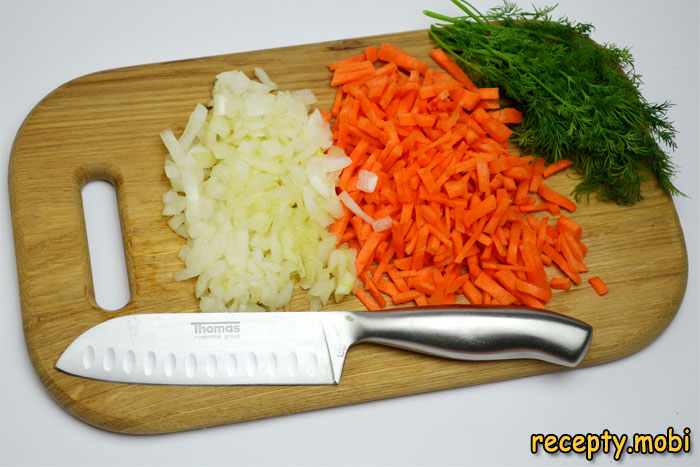
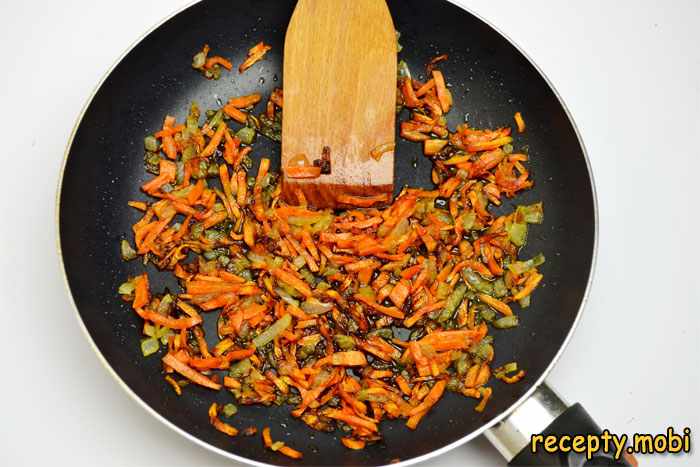
I heat a frying pan with the vegetable oil (3 tbsp) over medium heat. I fry the onion and carrots for about 5 minutes until lightly golden. I do not fry them too much – the vegetables will go on cooking in the oven, so it is important to keep their texture.
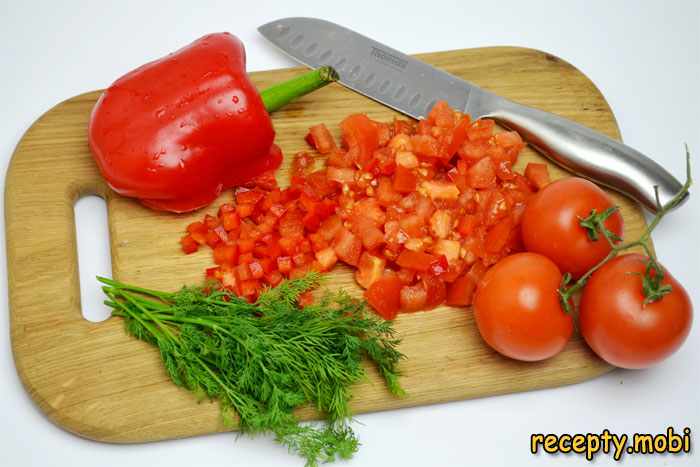
I cut the bell pepper into small cubes and the tomatoes into large pieces. I do not peel the tomatoes – the skin adds texture to the dish and softens during baking.
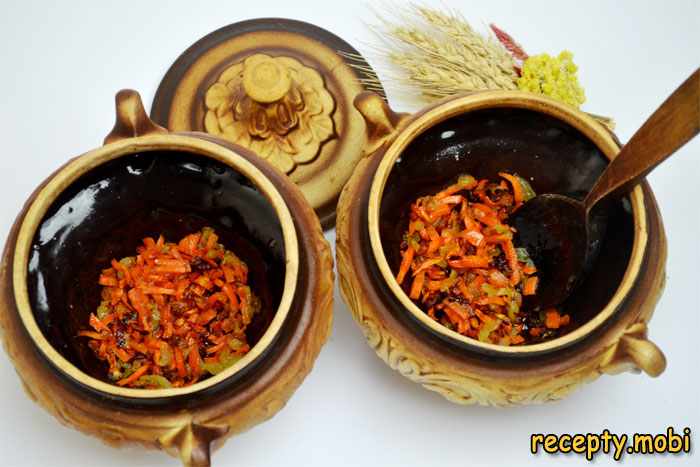
Now I move on to filling the pots. At the bottom of each pot I put 1–2 tablespoons of the fried vegetable mixture along with the oil left in the pan. This oil creates an aromatic base for the buckwheat.
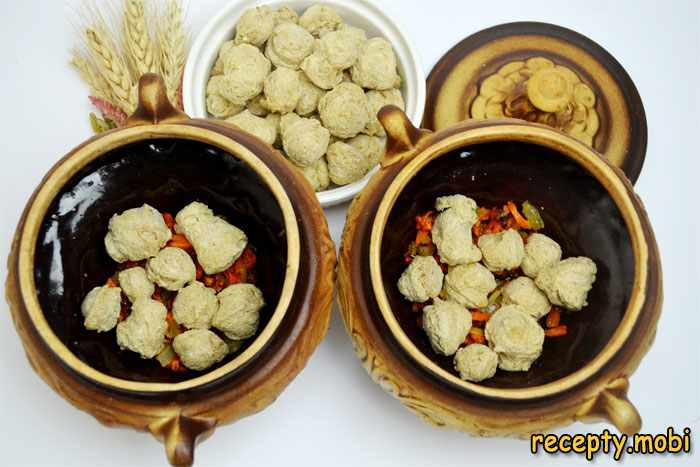
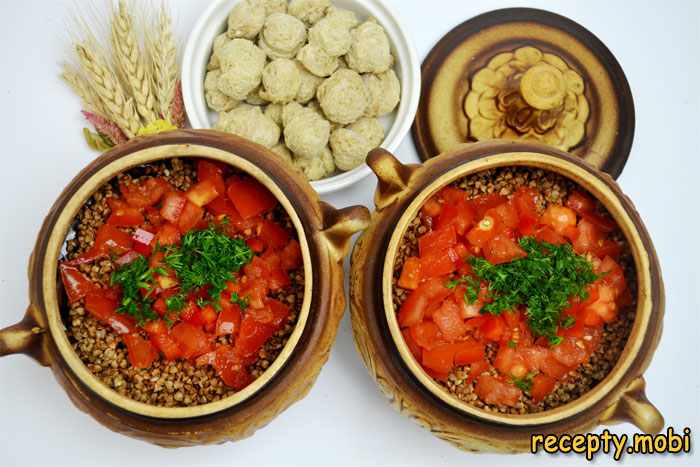
Into each pot I put 8–10 pieces of dry soy meat. It is important to use it dry, without soaking it first – it will swell during cooking, absorbing all the aromas of the vegetables and tomatoes.
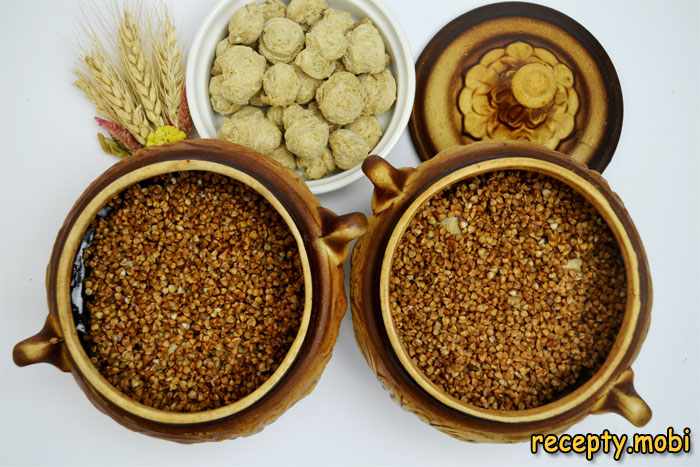
I rinse the buckwheat groats thoroughly under cold water until the water runs clear. I divide the buckwheat among the pots – the groats should take up about 1/3 of the volume, no more, otherwise the porridge will spill out of the pot during baking.
On top of the buckwheat I add the chopped tomatoes, bell pepper and fresh chopped dill. These vegetables create a juicy sauce in which the buckwheat will cook. The tomato juice soaks through all the layers.
I add salt – half a teaspoon is enough for one medium pot. If you use vegetable stock instead of water, you need less salt.

I pour boiling water into the pots so that it stops about 1.5–2 cm short of the rim. This is important – the liquid rises as it boils. I always cover the pots with lids so that the buckwheat steams rather than boils dry.
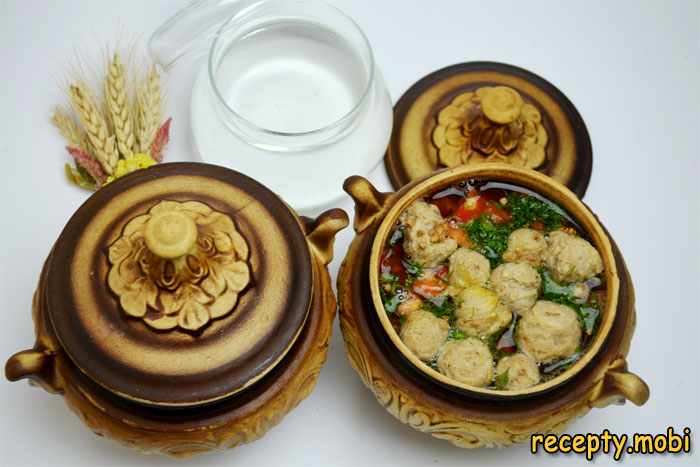
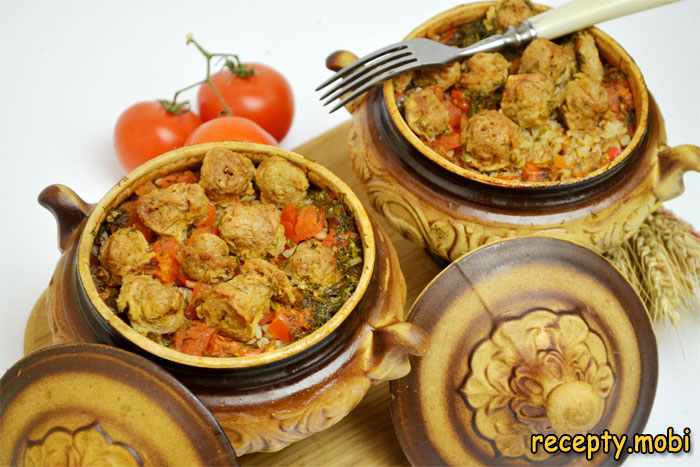
I put the pots in an oven preheated to 190–200°C. I bake for 35–40 minutes until the buckwheat is completely done. In that time the groats swell fully, while the soy meat soaks up the vegetable sauce and rises to the top – this is normal.
I serve the finished buckwheat straight from the pots – this way it stays hot longer and looks appetising. The buckwheat takes on the flavour of the fried onion, while the soy meat is infused with a tomato-and-dill aroma. Every spoonful has a piece of plant meat in it, which makes the dish hearty and satisfying.


Tips
- 1
I always cook the buckwheat in the oven rather than on the hob – this way it turns out far more aromatic and crumbly thanks to the even heating of the ceramic. The hob gives harsh heat from below, whereas the oven heats from all sides.
- 2
I do not overfill the pots – the groats should take up no more than 1/3 of the volume. If you add more, the porridge will swell during baking and spill over the edge, making a mess of the oven.
- 3
I use the soy meat dry and do not soak it beforehand – it will swell right in the pot, absorbing all the aromas of the vegetables. If you soak it in advance, it will be less tasty.
- 4
For a richer flavour I add 1–2 cloves of crushed garlic or a pinch of my favourite spices to the pots – paprika, turmeric and dried basil go wonderfully with buckwheat.
FAQ
Can I use a different grain instead of buckwheat? +
Yes, you can cook pearl barley, bulgur or spelt on the same principle. However, the cooking time will change – pearl barley, for example, takes about 60 minutes. Rice cooks faster, in about 25–30 minutes.
What if I don't have any pots? +
You can use a baking dish with a lid, or cover the dish tightly with foil, leaving no gaps. The principle is the same – the main thing is to steam rather than boil dry. The baking time will increase by 10–15 minutes.
Do I need to soak the soy meat first? +
No, I add the soy meat dry – it will swell during cooking, absorbing the vegetable juices. This makes it more aromatic than if it were soaked in plain water.
Why is buckwheat tastier in the oven than in a saucepan? +
The ceramic distributes the heat evenly and holds it for longer. The groats do not boil but steam – this gives a completely different texture: crumbly, aromatic, with the distinct flavour of every ingredient.
Can I make this dish in advance? +
Yes, you can reheat the buckwheat in the pots in the oven at 150°C for 10–15 minutes. Cold buckwheat loses some of its aroma, so it is best served hot. I keep it in the fridge for up to 2 days.
- Comment
or post as a guest
Be the first to comment.