avg —
Millet Porridge with Pumpkin in Milk

Instructions
I prepare the pumpkin: I peel off the skin, then cut it into 1×1 cm cubes. I choose a sweet pumpkin, preferably one of a bright shade.

I put the pumpkin into a saucepan and pour in cold filtered water. I set it on the heat, bring it to a boil, and cook for 7 minutes.

I rinse the millet well under running water. I add it to the pan with the boiling pumpkin.

I stir the millet so that the pumpkin is evenly distributed through the grain. I cook the millet until it absorbs all the water.
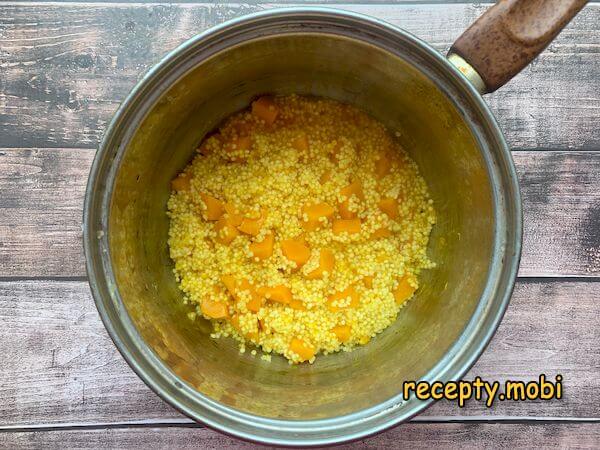
Once the water has been absorbed, I pour in 150 ml of milk, add salt, and add sugar. I add the remaining milk gradually, as it is absorbed. Keep in mind the difference in temperature of the ingredients – add the milk only while it is hot.

As soon as the millet has absorbed the last portion of milk, it is time to take the porridge off the heat. Overall, millet cooks for about 15–20 minutes. If you like, I add a little cinnamon, which balances nicely with the flavour of the pumpkin.
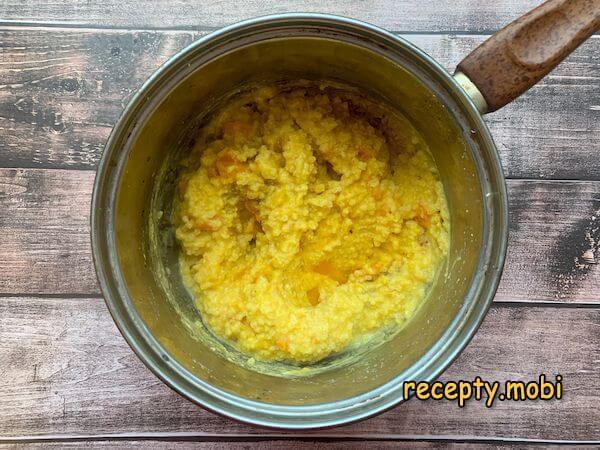
I leave the porridge under the lid for 30 minutes so that all the flavours come together. You can cover the pan with a towel and put it in a warm place – the millet will "reach" the right consistency. The millet porridge with pumpkin in milk is ready.



Tips
- 1
RINSE THE MILLET THOROUGHLY until the water runs clear – otherwise the porridge will turn out slightly bitter. This is a feature of millet: a "film" remains on the grain.
- 2
PRE-BOIL THE PUMPKIN – otherwise it will be tough by the time the grain is already done.
- 3
ADD THE MILK HOT – cold milk will stop the cooking process and the grain will not open up.
- 4
LET IT "REACH" UNDER THE LID FOR 30 MINUTES – this is the secret to a perfect consistency. The same trick works in other milk porridges.
FAQ
Which pumpkin should I choose for the porridge? +
The best choice is muscat (Butternut), Hokkaido, or Marina di Chioggia – sweet varieties with dense flesh. Bright orange pumpkin contains the most carotenoids. Avoid fodder varieties – they are watery and tasteless. The autumn harvest (September–October) is the sweetest. You can also use frozen pumpkin (thawed in advance). For a more "dietary" version, replace part of the pumpkin with sweet carrot – you will get an orange "mix".
Why is millet bitter? +
Millet often turns bitter for two reasons: it is "old" (the fats in the husk have oxidised) or poorly rinsed. Freshness check: a bright yellow colour and a pleasant smell. Dark yellow or brownish means it is old. To prevent bitterness: rinse until the water runs clear (5–6 times), scald with boiling water before cooking, and soak for 15 minutes in cold water. The shelf life of millet is up to 9 months in a dry, cool place.
How long does the porridge keep? +
In the refrigerator in a closed container – 2–3 days. The next day the porridge is thicker – the millet absorbs moisture. To "revive" it, reheat with 50 ml of warm milk added. In the microwave – 2 minutes with stirring. You can freeze it (up to 1 month), but the texture changes after thawing. As a make-ahead breakfast, cook the porridge on the weekend, divide it into containers, and eat it all through the working week.
What to serve it with? +
It is universal for breakfast. With butter (traditionally). With honey and nuts – the sweet option. With berries (fresh or frozen) – the fitness option. With dried apricots or raisins – the dried-fruit version. With boiled condensed milk – for children. For a fast day, without butter or with vegetable oil. For a more "filling" option, add a spoonful of cottage cheese to the bowl. It is perfect with herbal tea or milk.
- Comment
or post as a guest
Be the first to comment.