avg —
Beef Stroganoff Liver

Instructions
I prepare the ingredients. The tomato sauce can be any kind, even one diluted from tomato paste, with 1 tablespoon stirred into 1/4 cup of water. The mustard should not be sharp – it is better if it has a slightly sweet taste.

Liver from any young animal can be cooked straight away, but if it (especially beef liver) is dark in colour, it should be soaked in milk for an hour and only then can you start the main process.

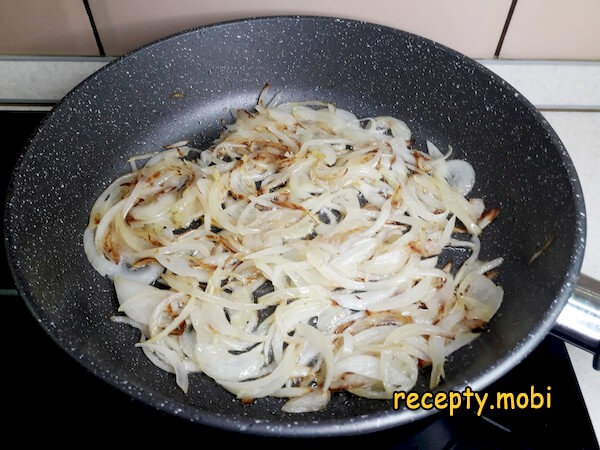
Add thinly sliced onion to a skillet with heated oil.
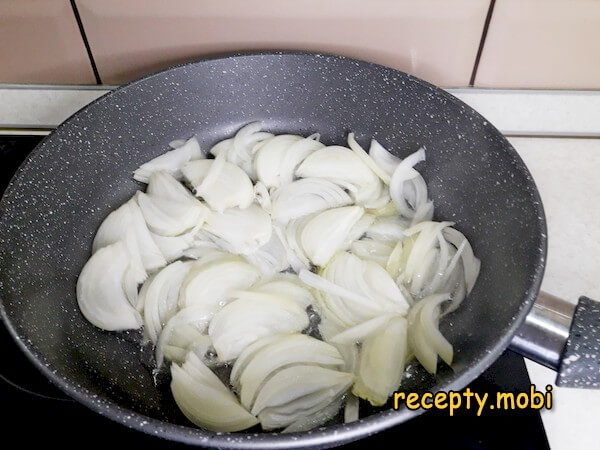
Fry it until light golden.
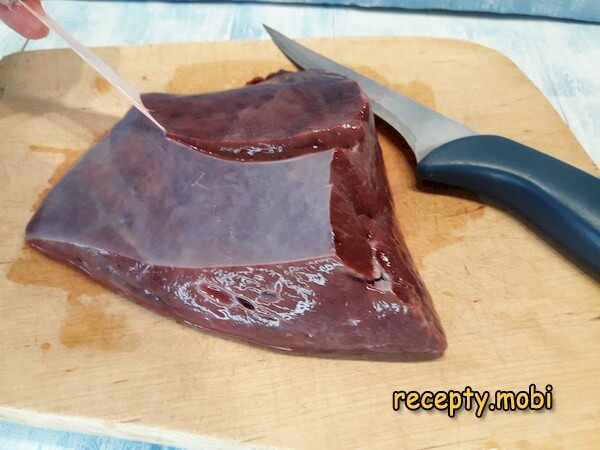
Remove the membrane from the outer surface of the liver, prising it up with a knife and pulling it aside. Cut out all the ducts.
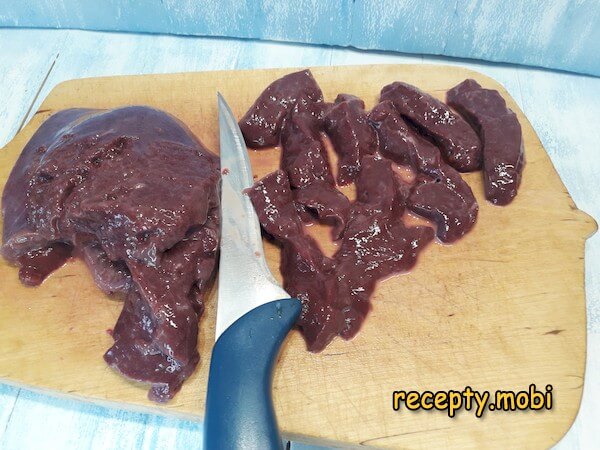
Cut the liver into elongated pieces.
Season them with salt and pepper.
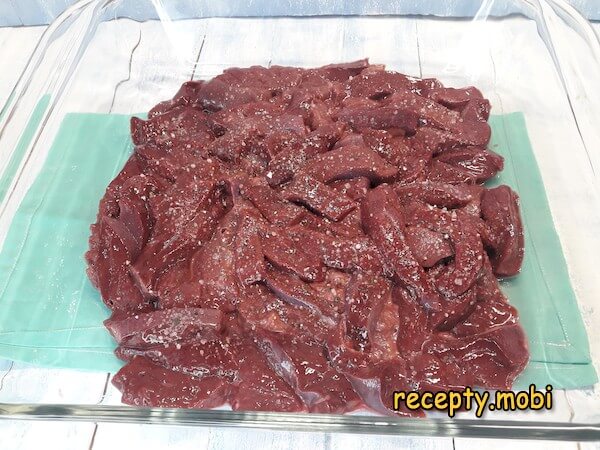
Mix well.

Next, sprinkle the liver with starch.
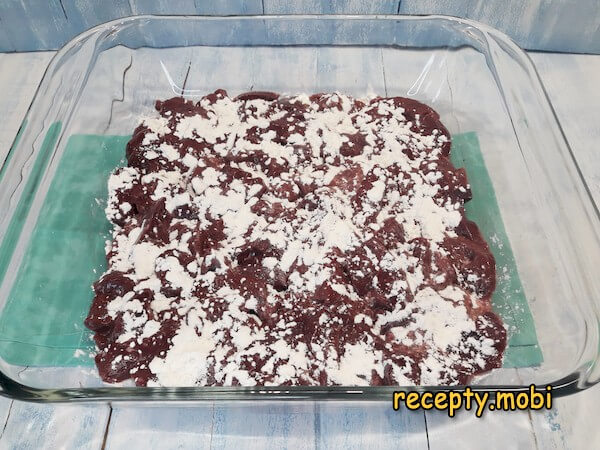
Mix everything again.

In a skillet, heat a mixture of butter and vegetable oil.

Add the liver, trying to arrange it all in a single layer. Fry it like this for 2–2.5 minutes.
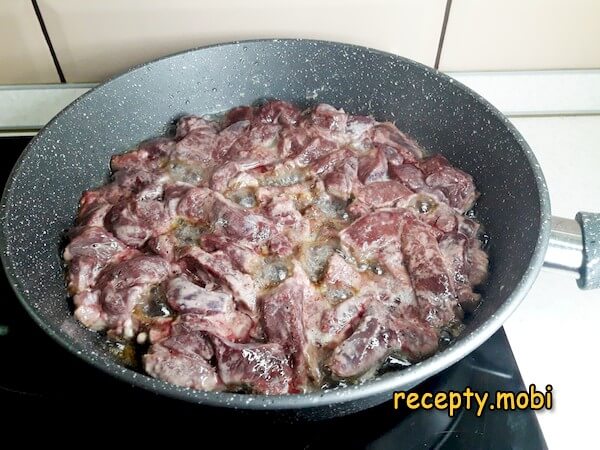
Turn the pieces over. Fry the second side for 2–2.5 minutes in the same way.
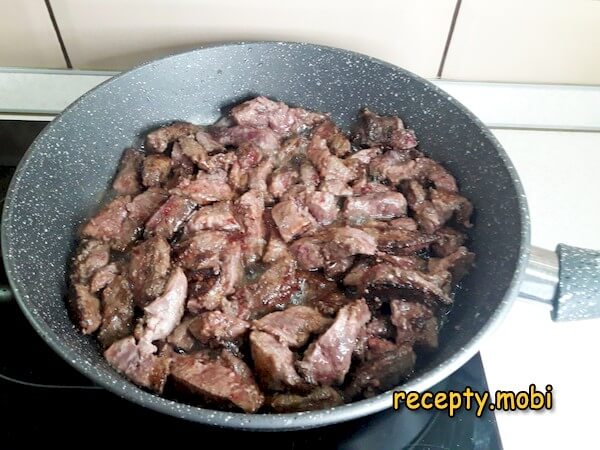
In a separate bowl, add the tomato sauce and mustard to the sour cream.

Mix all the ingredients together.

Once the liver is fried, transfer the onion to it.
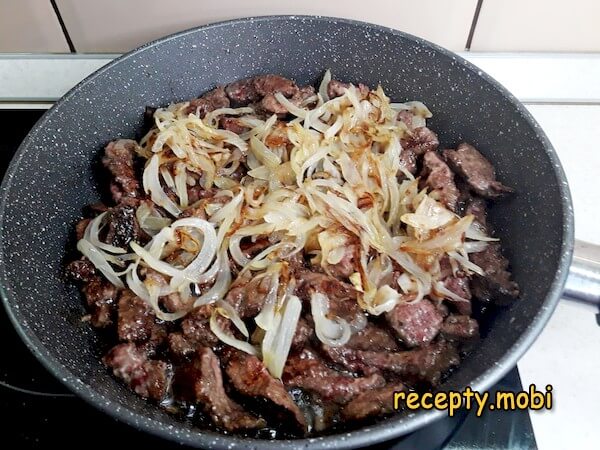
Pour the sour cream and mustard sauce in here too.

Bring the dressing to a boil and simmer everything for 2–2.5 minutes, no more. Check the dish for salt, as the sauce was not salted.
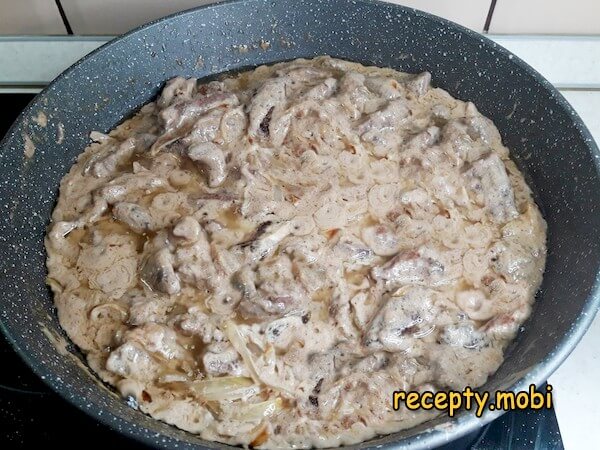
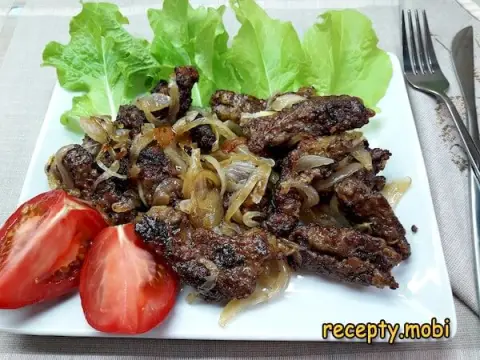
The beef liver stroganoff is ready.



Tips
- 1
MILK AGAINST BITTERNESS – the secret to tenderness. Dark beef liver can taste bitter. An hour in milk removes the bitterness and makes the flesh tender.
- 2
STARCH BEFORE FRYING – the secret to juiciness. The starch "seals" the juices inside the pieces. Without it, the liver becomes dry and rubbery during frying.
- 3
2–2.5 MINUTES PER SIDE – the secret to softness. Longer = rubbery liver. Shorter = raw. Exactly 2–2.5 minutes = perfect tenderness.
- 4
HONEY MUSTARD – the secret of Stroganoff. Sharp mustard overpowers the flavour of the liver. A slightly sweet honey mustard complements it without dominating. The same principle works in other Stroganoff-style dishes.
FAQ
Which liver should you choose? +
Ideally, fresh beef liver from a young animal (800 g – light brown, without dark spots). Alternatives: veal liver (800 g – premium, more tender), chicken liver (800 g – "budget", cooks faster), turkey liver (800 g – "premium, dietary"), pork liver (800 g – more bitter, must be soaked), rabbit liver (800 g – premium), a 50/50 mix of beef and chicken (400 g each – interesting). Fresh chilled liver from the "eco-segment" is the premium option. Do not use: frozen liver of unknown origin, or liver with a bitter smell or dark spots. For "classic Stroganoff", young beef liver is a must.
What can replace honey mustard? +
Alternatives: ordinary mustard plus 1 tsp honey (50 g + 5 g – an equivalent), sweet Dijon (50 g – premium), sweet "Bavarian" mustard (50 g – "budget"), wholegrain mustard (40 g – premium), a 50/50 mix of mustard and horseradish (25 g each – more piquant), sweet French mustard (50 g – premium). Fresh, aromatic mustard is the premium option. Do not use: sharp Russian mustard (it will overpower the flavour of the liver) or salty seasonings. For "classic Stroganoff", a slightly sweet, mild mustard is a must.
How long does beef liver stroganoff keep? +
In the fridge in a tightly sealed container – 1–2 days. Any longer and the liver will lose its tenderness, and the sauce may separate. Before serving, reheat it over low heat for 3–5 minutes, stirring constantly. In the microwave for 1–2 minutes also works. I do not recommend the freezer – the texture will be completely destroyed. Fresh liver is the "star" straight from the pan (hot, in a tender sauce). On the second day the flavour is deeper, but the texture is a little firmer. Do not leave it at room temperature for more than 4 hours – liver with dairy products spoils quickly.
What to serve with the liver? +
A classic for a family dinner: with mashed potatoes made with cream. With boiled rice or buckwheat. With pasta or spaghetti on the side. With boiled green beans or steamed broccoli. With a fresh salad of cucumbers and tomatoes. With a slice of black bread and butter. With a glass of dry red wine (Cabernet Sauvignon). With a shot of cold vodka. With a dark beer. With a cup of green tea. With sauerkraut. With horseradish sauce. With strong mustard on the side. For a "family dinner" it is a versatile serving. A hearty hot dish for weekdays with a rich gravy.
- Comment
or post as a guest
Be the first to comment.