avg —
Chicken Liver with Rice and Vegetables

Instructions
I prepare all the ingredients and kitchen utensils: you will need a heavy-bottomed pot or a deep frying pan with a lid, at least 2 litres in capacity, a wooden spatula and a cutting board. I rinse the rice in advance under cold running water until it runs clear – this removes excess starch and the rice turns out fluffy.
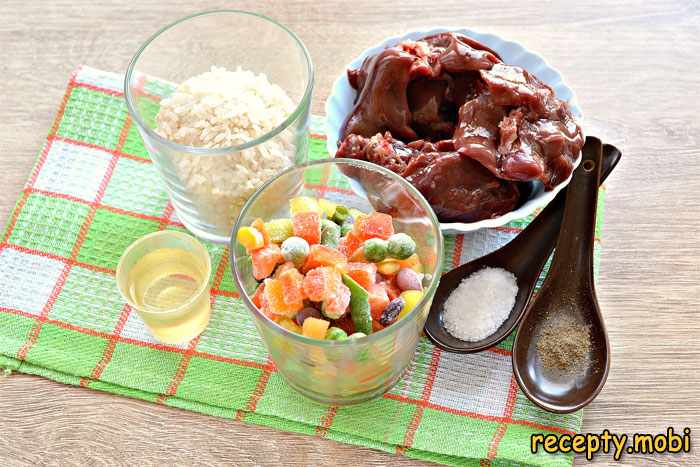
I rinse the chicken liver (350 g) under cold running water and inspect it carefully. I remove the bile ducts (they look like greenish or yellowish streaks) and any fatty membranes – if left in, they can make the dish taste bitter. Chicken liver is the most tender of all types of liver and does not need soaking in milk.
I cut the prepared liver into small pieces, about 2–3 cm. Pieces that are too small will make the liver dry, while pieces that are too large will increase the cooking time. They should be roughly the same size for even cooking. I pat the cut liver dry with paper towels to remove excess moisture.
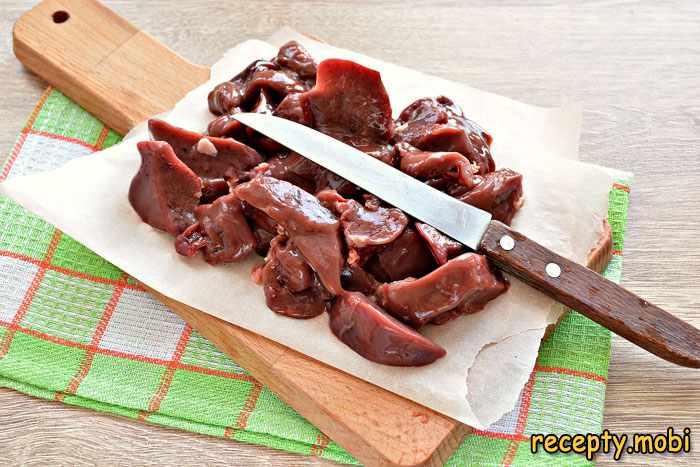
In a heavy-bottomed pot or a deep frying pan I heat 3–4 tablespoons of vegetable oil over medium heat. Once the oil is hot enough (after 1–2 minutes), I add the liver pieces in a single layer. Frying in a single layer ensures even browning – if you pile all the liver up, it will steam rather than fry.
I fry the liver over medium heat for 5–7 minutes, stirring occasionally with a wooden spatula. The liver should change colour from dark red to brownish-grey on all sides. It is important not to overcook it – chicken liver cooks very quickly and becomes dry and rubbery if fried too long. I add salt (about ½ teaspoon) and pepper to taste.
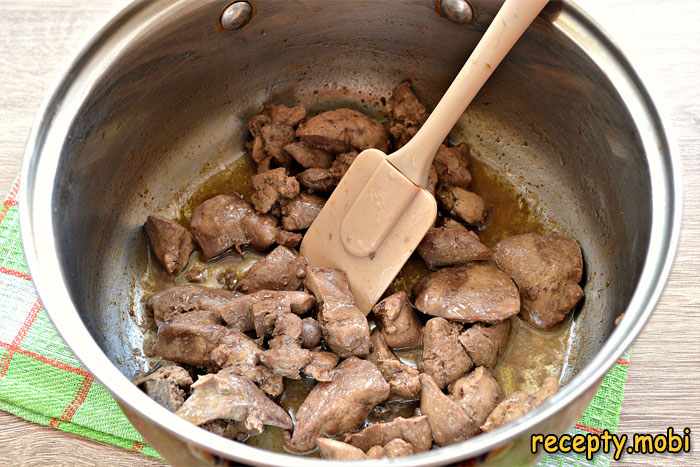
To the fried liver I add the frozen vegetable mix (200 g) without defrosting it first. A typical mix includes carrots, bell peppers, green beans, courgettes, green peas and corn. You can use any vegetable mix you like, or chop fresh seasonal vegetables. I stir and continue cooking.
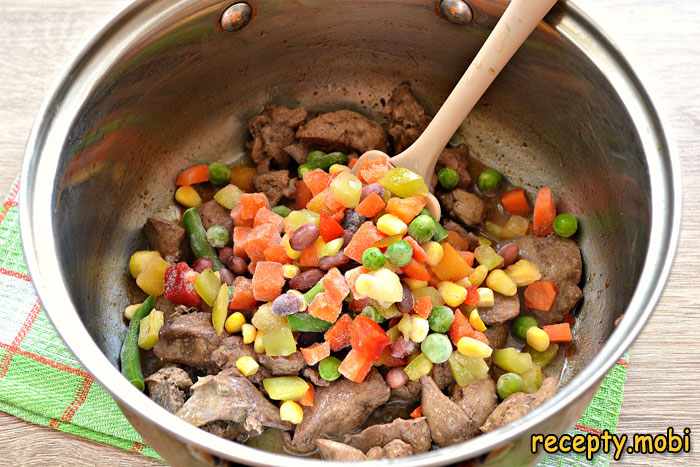
I simmer the liver with the vegetables over medium heat for 6–7 minutes, stirring occasionally. During this time the vegetables defrost and lightly fry, and the liver soaks up the vegetable juices. If you like, add a pinch of turmeric (for a golden colour) or paprika (for a slight sweetness and an attractive shade).
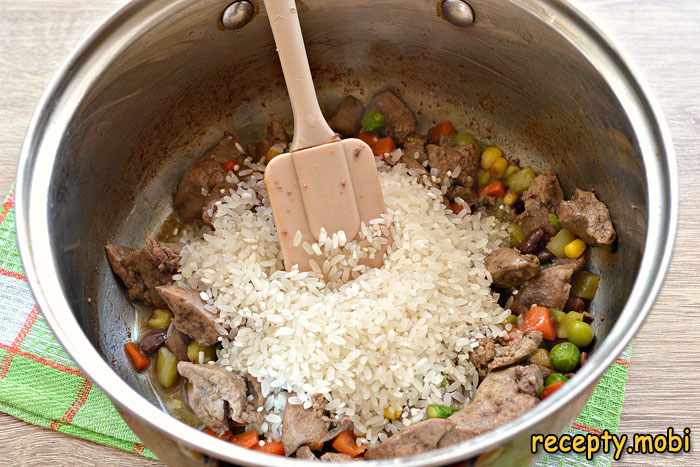
I add the rinsed rice (1 cup, about 200 g) to the liver and vegetables. I use long-grain rice – it turns out fluffy and does not stick together, unlike short-grain rice. I stir so that the rice is evenly distributed throughout the mixture and comes into contact with the hot oil – this gives it a light toasted aroma.
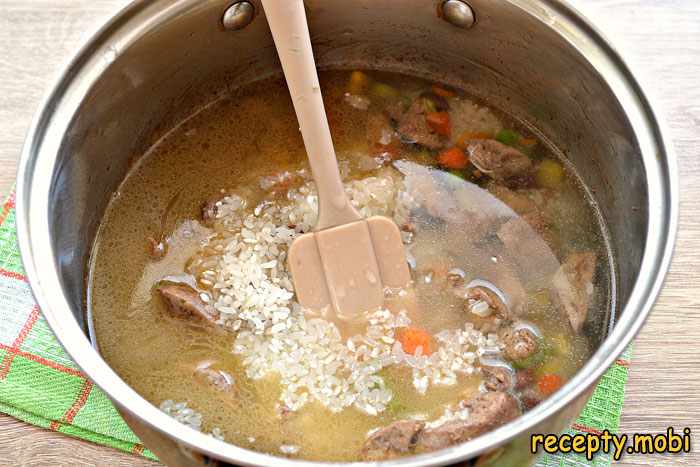
I pour hot boiled water over the contents of the pot – about 2.5 cups (500–600 ml). The water should cover the rice by roughly 1.5–2 cm. I use hot water specifically – it speeds up the process and does not interrupt the cooking. I taste the liquid for salt and add more if needed.
I cover the pot with a lid and reduce the heat to the lowest setting. I let the dish gently cook for 15–20 minutes until the rice is fully done. Do not lift the lid or stir during this time – the rice should steam. I check for doneness by tasting a few grains: they should be soft but not overcooked.
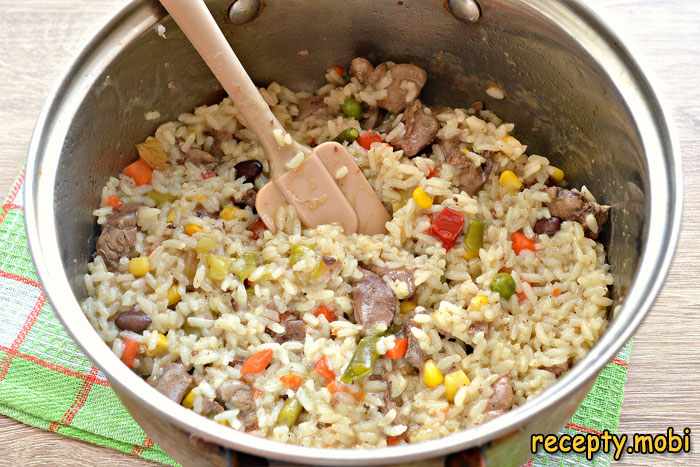
When the rice is done and all the liquid has been absorbed, I take the pot off the heat but leave the lid on for another 5 minutes – during this time the rice finishes steaming and becomes perfectly fluffy. Then I gently stir the dish with a fork, fluffing the rice and distributing the liver and vegetables evenly.
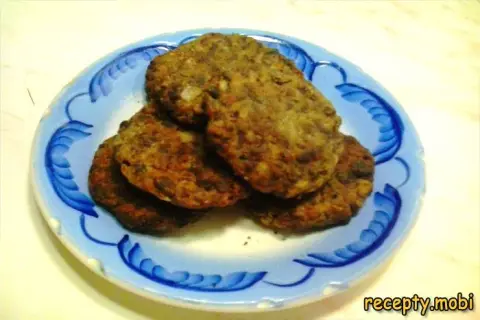
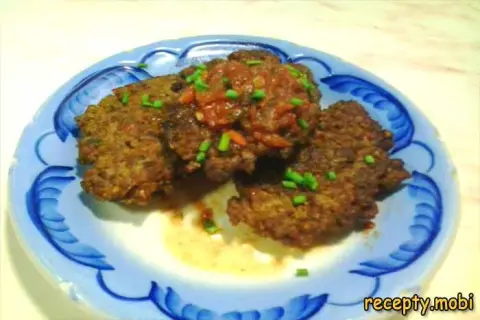
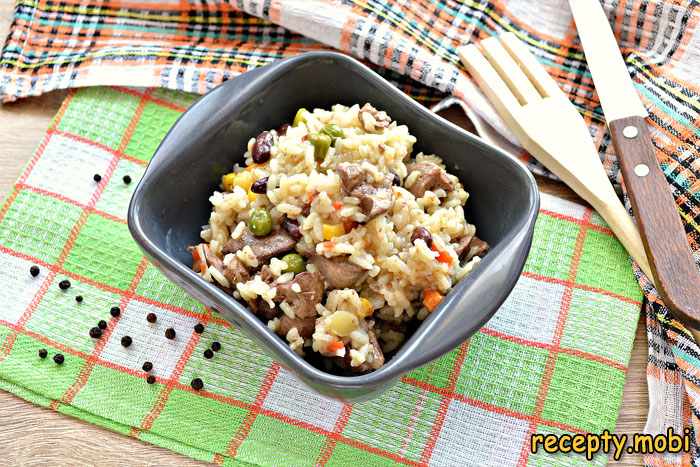
Chicken liver with rice and vegetables is ready! I spoon it onto plates and, if I like, garnish with fresh herbs (parsley, dill or spring onion). I serve it hot as a complete dish in its own right – no extra side is needed. The dish is filling yet easy to digest.


Tips
- 1
Do not overcook the liver – 5–7 minutes is enough for chicken liver. Fried longer, it becomes tough and dry and loses its tender, creamy texture. It is better to slightly undercook it at the first stage – it will finish cooking while it simmers with the rice.
- 2
Use long-grain parboiled rice – it turns out fluffy and does not clump into a mush. Short-grain rice is stickier and suits porridges and risotto, but not this dish.
- 3
The frozen vegetable mix can be replaced with fresh seasonal vegetables: bell pepper, courgette, green beans, carrot. Cut them into small cubes and add them after frying the liver.
- 4
For a brighter flavour, add a pinch of turmeric (for a golden colour), paprika (for a sweetish note) or curry powder (for an eastern accent) together with the salt while frying the liver.
FAQ
Can I use a different liver? +
Yes, beef or pork liver will work. Chicken is the most tender and cooks the fastest (5–7 minutes). Soak beef and pork liver in milk for 1–2 hours beforehand to remove bitterness, and increase the frying time to 10–12 minutes.
Why did my rice turn out sticky and gluey? +
You probably used short-grain rice or added too much water. Use only long-grain parboiled rice and keep to the ratio: 1 cup of rice to 2–2.5 cups of water. Also, do not stir the rice while it is cooking.
How long does the finished dish keep? +
In the refrigerator, in a sealed container, the dish keeps for up to 2 days. Reheat it in a frying pan or in the microwave, adding 1–2 tablespoons of water so the rice does not dry out. I do not recommend freezing it – the texture of the liver changes after thawing.
Can I make it without oil? +
For a diet-friendly version, reduce the oil to 1 tablespoon or use a non-stick pan with a minimal amount of oil. The liver and vegetables will release their own juices, in which the dish will then simmer.
- Comment
or post as a guest
Be the first to comment.