avg —
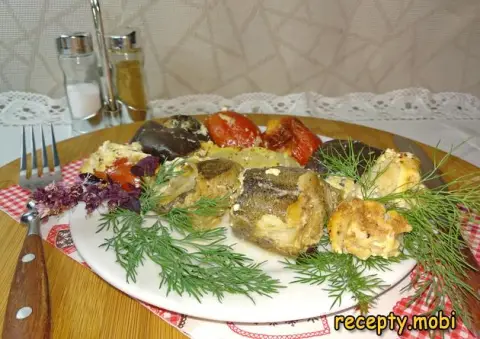
Fish Mince Roll – A Delicious Holiday Dish

Instructions
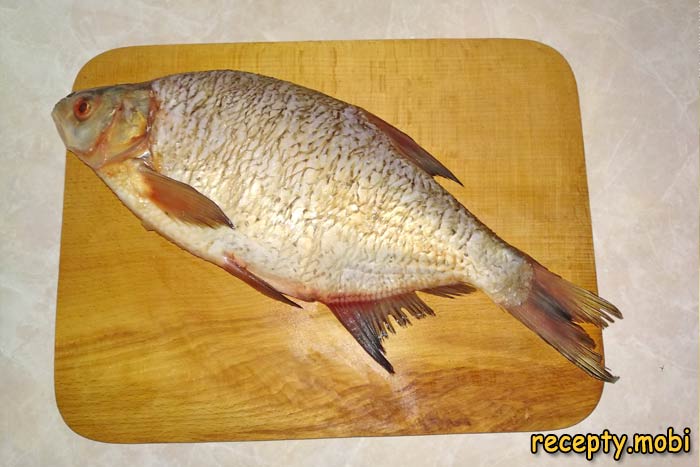
I clean the fish of scales with a special scraper knife, gut it, and remove the head, fins and tail. I carefully separate the flesh from the bones and backbone, removing the small bones with tweezers. I pass the flesh through a meat grinder with a fine plate twice – this gives a smooth mince and grinds up the small bones.
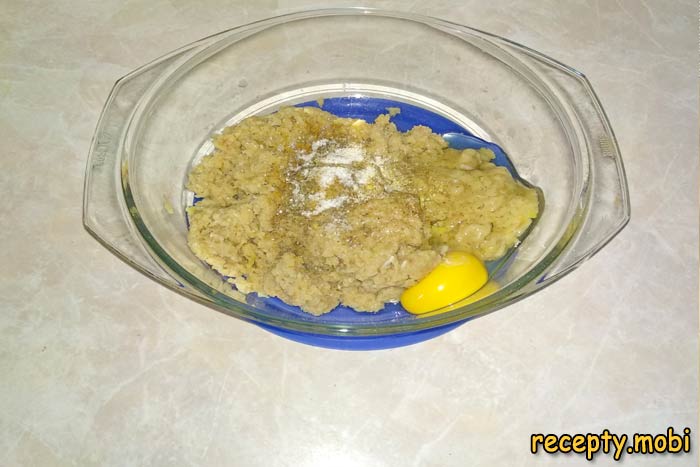
I transfer the mince to a large bowl, add salt (½ tsp), pepper (⅓ tsp) and 1 egg to bind it. I pass the mince through the grinder a third time for maximum smoothness – especially for river fish with small bones. Then I “beat” the mince with my palm or throw it down in the bowl – this makes it dense and pliable so it does not fall apart.
I clean the champignons (300 g) of soil with a brush (I do not wash them with water, or they will absorb moisture) and slice them thinly, 3–5 mm. Slices work better in the filling than cubes – they spread the mushrooms evenly. You can also use wild mushrooms (ceps, red-capped boletes), but champignons are more neutral and more readily available.

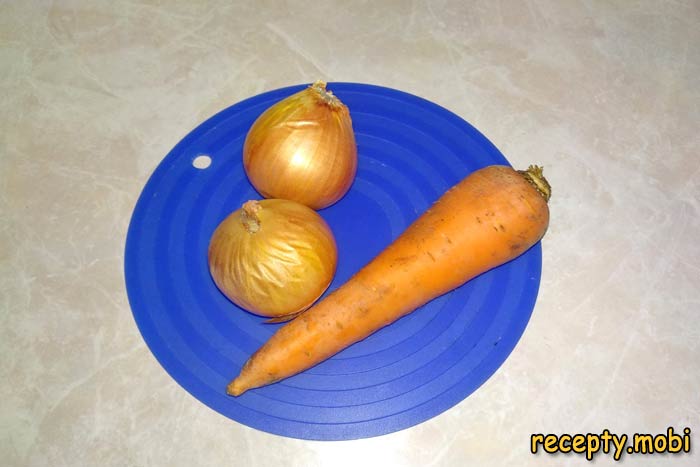
I prepare the vegetables for the filling: I peel 2 onions and 1 carrot. I wash them thoroughly and pat them dry. Working cleanly with the vegetables is essential – dirt and peel in the filling would spoil the flavour and texture. I choose medium-sized vegetables, as large ones are often fibrous and less aromatic.
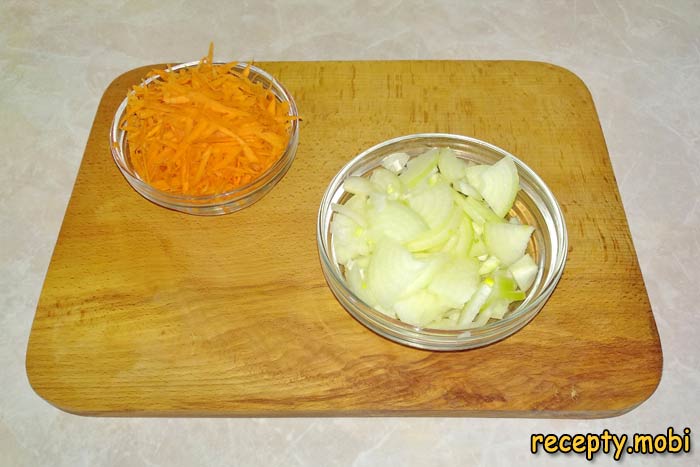
I cut the onion into quarter-rings 3–4 mm thick – this cut “works” better in the filling than a fine dice. I grate the carrot on a coarse grater for an airy texture. The different textures of onion and carrot create layers in the filling, with each vegetable felt separately by its consistency.
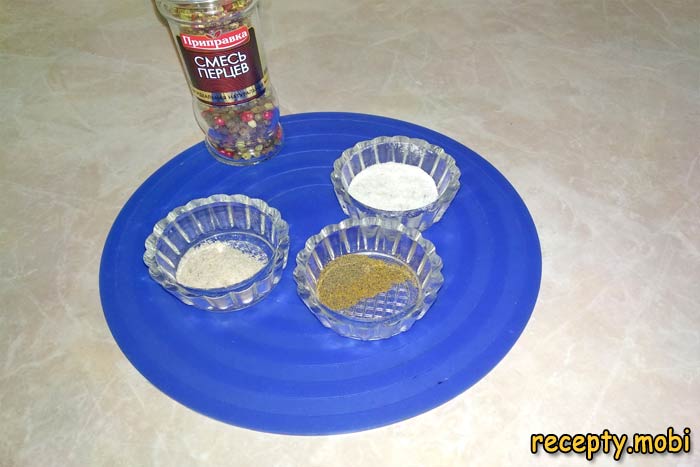
I prepare the salt and spices for the filling: mushroom seasoning (½ tsp) will boost the flavour of the champignons, with black pepper and salt to taste. You can add dried dill, parsley or oregano for variety. The spices bring out the “woodland” flavour of the mushrooms – without them the filling would taste bland.
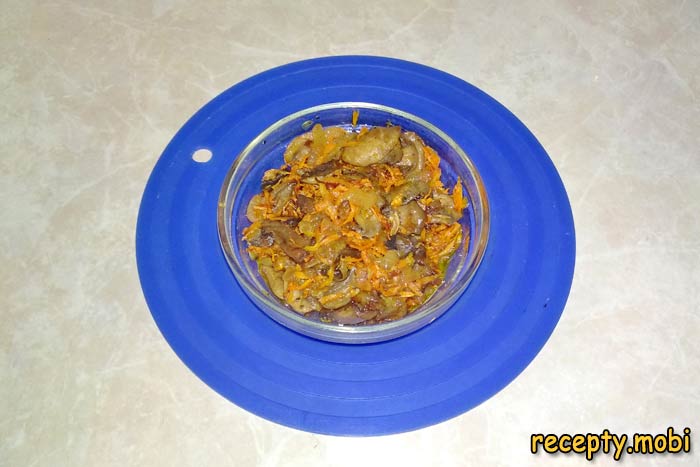
I fry the onion and carrot in heated vegetable oil for 3–5 minutes until soft and lightly golden, then add the champignons and fry for another 7–10 minutes until all the mushroom liquid has evaporated. Without evaporating the moisture, the filling would be wet and the mince would not bake evenly. I season with salt and pepper at the end of frying.
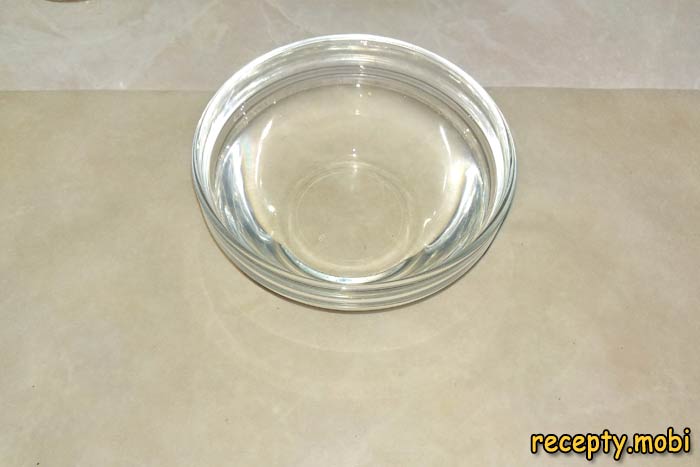
I lay out a large sheet of parchment on the table and moisten it thoroughly with water from a spray bottle or a brush – the damp paper stops the mince from sticking to it. This is an important moment: on dry paper the roll will stick and tear when you roll it up. The damp parchment acts as a non-stick surface.
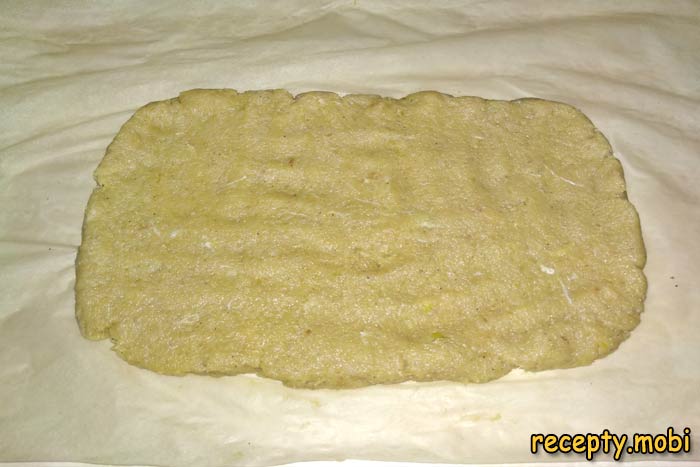
I spread the fish mince in an even rectangular layer 1.5–2 cm thick on the damp parchment. I use wet hands or a spoon to level it so the mince does not stick. A thickness of 1.5–2 cm is the optimum: any thinner and it tears when rolled, any thicker and it does not bake through inside.
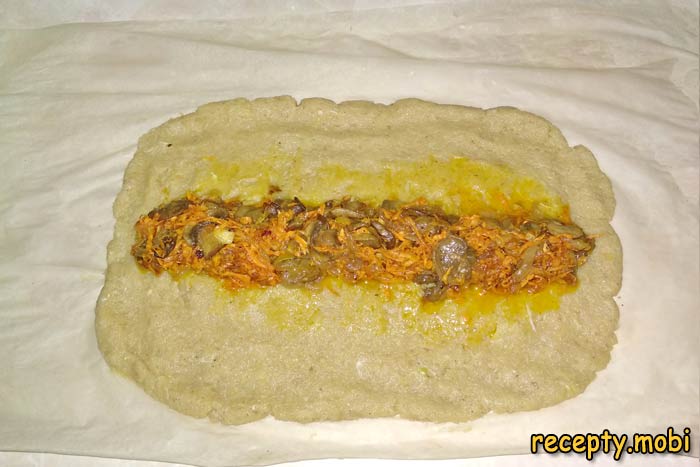
Down the centre of the mince, along the whole length, I lay all the cooled fried mushroom filling in a strip 5–7 cm wide. The filling must be completely cooled – hot filling would run and spoil the structure of the mince. I distribute it evenly, leaving no gaps in the filling.
I roll up the roll using the parchment: I lift one edge of the paper, cover the filling with the mince, then lift the other edge and firmly press it into shape. The paper helps to roll an even, tight roll without tearing the mince. Without parchment it is almost impossible to make an even roll.
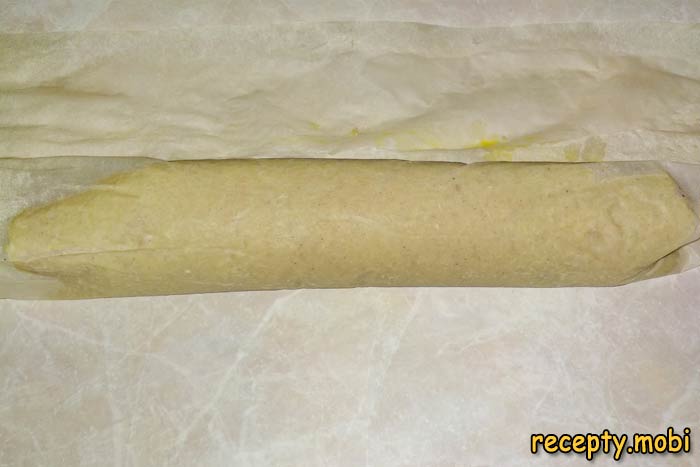
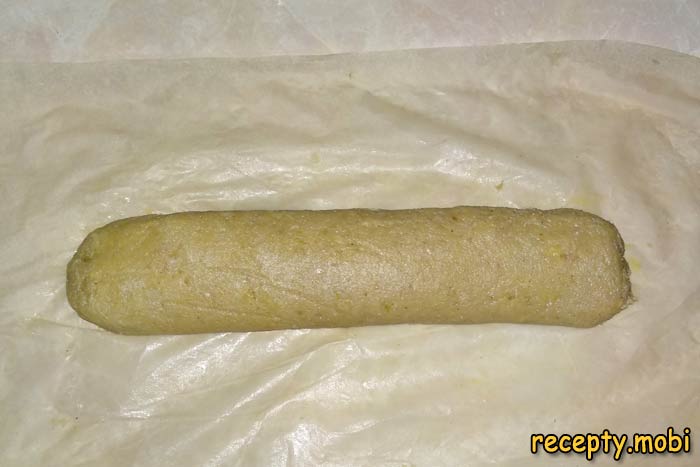
I carefully peel the parchment off the finished roll and close the ends (sides) of the roll with mince – I “pinch” the open ends so the filling does not leak out during baking. I smooth everything with wet hands for a neat shape. The finished roll should be an even “loaf”.
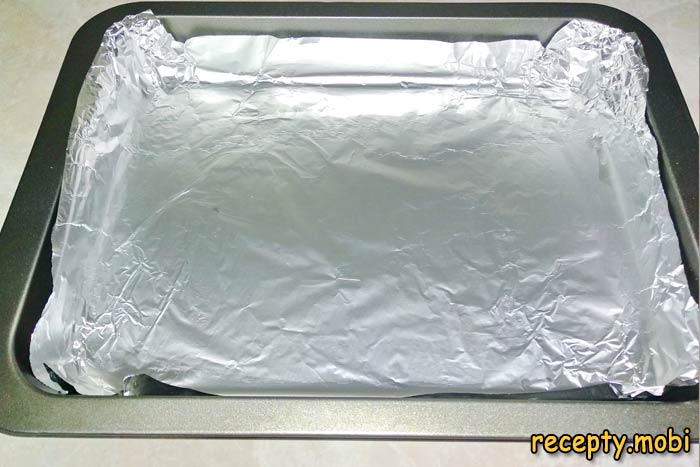
I line a baking tray with foil and grease it thoroughly with vegetable oil – this stops the roll from sticking to the bottom during baking. Without oil the underside sticks to the foil and tears when you move it. A little trick for a beautiful presentation of the finished roll.
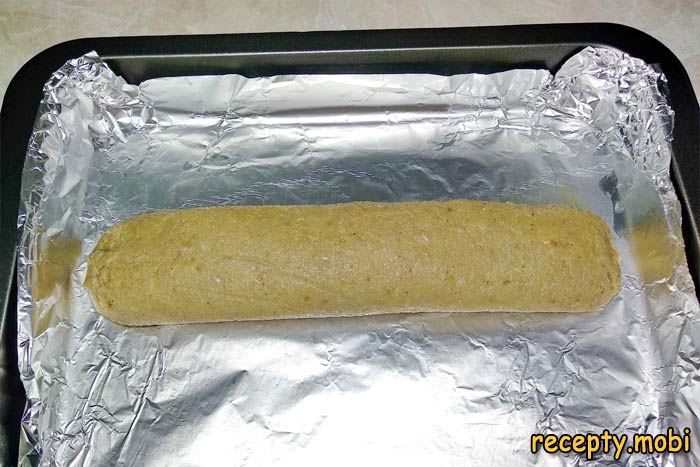
I carefully transfer the roll onto the greased tray seam-side down – this way the seam will not come apart during baking. I use two spatulas for a careful move. I reshape it with my hands if the roll has deformed slightly during the transfer – baking will “fix” the shape.
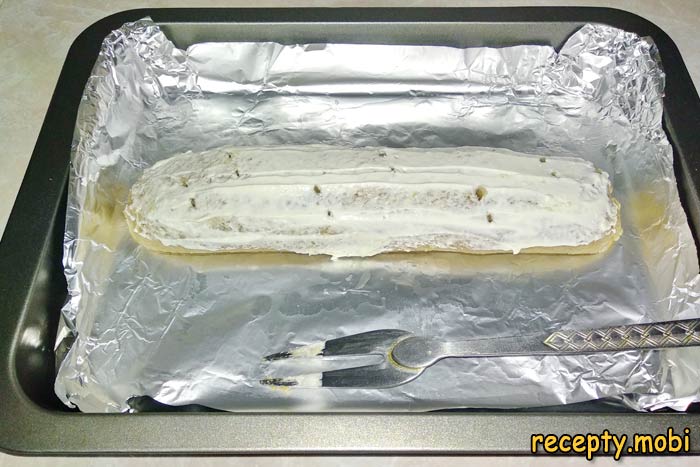
I brush the whole roll thoroughly with sour cream (2 tbsp) – it gives a lovely golden crust when baked. I prick the finished roll all the way through with a fork in 5–6 places – this is a critical step! The holes let the steam escape during baking and prevent tearing. Without them the roll will burst in the oven.
I bake the roll in a preheated oven at 250°C for 20–30 minutes until a golden-brown crust forms. The high temperature gives a fast, beautiful crust and keeps the inside juicy. I check for doneness with a skewer in the thickest part – it should come out dry and hot.
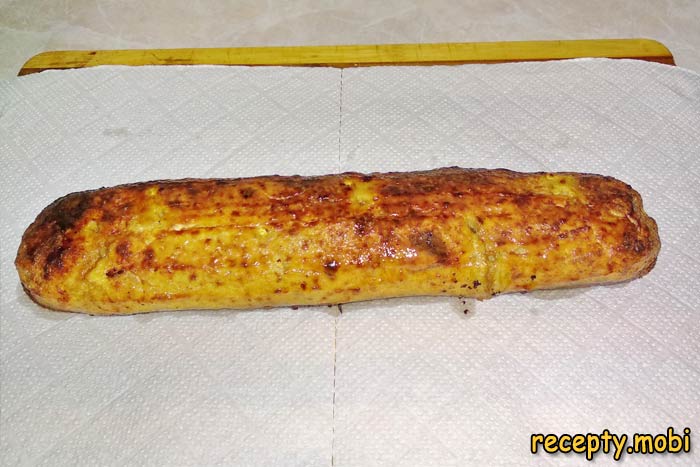
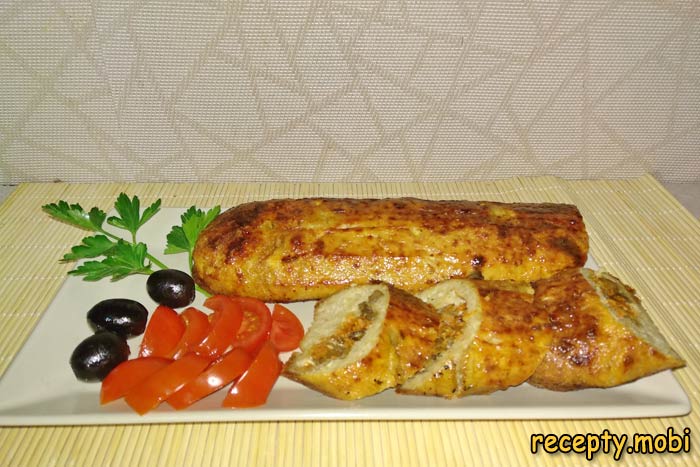
I let the roll cool completely on the tray for at least 30 minutes – a hot roll crumbles when sliced. Then I slice it with a sharp knife into portion pieces 2–3 cm thick. The fish mince roll is ready! I serve it on a serving plate with lemon and fresh herbs.


Tips
- 1
If the fish mince turns out runny (especially from river fish), add 1 tablespoon of potato starch – it binds the moisture.
- 2
For river fish (bream, pike, carp), pass the flesh through the meat grinder three times – this way the small bones are fully ground and will not be felt.
- 3
The filling can be varied: with egg and herbs, with rice and onion, with grated cheese, with fried cabbage. I make a mackerel roll on a similar principle.
- 4
The roll is equally tasty hot and cold – make it in advance, and the next day just slice it before serving.
FAQ
What fish is best for the roll? +
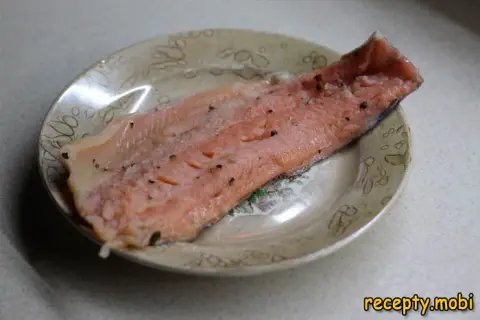
Almost any fish will do: bream, pike, pikeperch, pollock, hake, cod, silver carp, haddock. Oily sea fish (salmon, trout) gives a juicy, tender roll. River fish (bream, pike, carp) has a more “specific” flavour but needs triple grinding to break up the small bones. The most convenient option for beginners is pollock or hake fillet: already boneless, with tender white flesh and a neutral taste. The main thing is to use fresh fish that has not been thawed and refrozen many times.
Can I make it from store-bought mince? +
Yes, you can use store-bought mince – it is convenient and quick, and saves time on gutting and grinding. But home-made mince comes out far tastier and boneless: you control the quality of the fish, the spices and the degree of grinding. Store-bought mince often contains a lot of moisture and a slight “fishy” smell – it needs to be squeezed through cheesecloth and generously seasoned. For a festive dish home-made is better; for an everyday meal shop-bought will do.
How do I store the finished roll? +
The finished baked roll keeps in the fridge for up to 2 days in a tightly closed container. The next day the roll is even tastier – the flavours come together and the crust softens. You can freeze the finished or raw roll for 1 month – before baking, thaw it completely in the fridge. A raw roll is handy to prepare ahead: you shape it and freeze it, then bake it on the day of the celebration for a fresh, hot roll just as the guests arrive.
What do I serve the roll with? +
Hot – with side dishes: boiled potatoes with dill, basmati rice, steamed vegetables (broccoli, cauliflower), mashed potatoes. Cold – as a festive starter with lemon wedges, olives and pickled cucumbers. The roll goes well with dry white wine (Riesling, Chardonnay), light beer, or simply mineral water with lemon. Sauces: tartare, garlic, sour cream with dill, lemon-mustard. It is ideal for the festive table.
- Comment
or post as a guest
Be the first to comment.