avg —
Mackerel Roll with Gelatin

Instructions
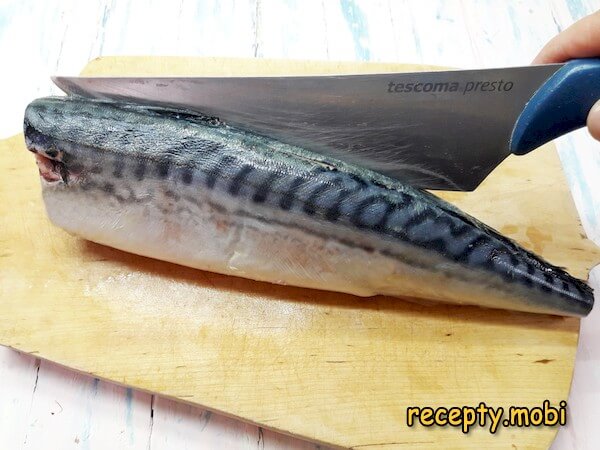
Since mackerel fillet is very tender, it is better to process the fish while it is not yet fully defrosted. First, cut off the head and tail. Remove the side and belly fins. Then cut along the spine on both sides, without reaching the belly. This way the spine and dorsal fin come away at once.
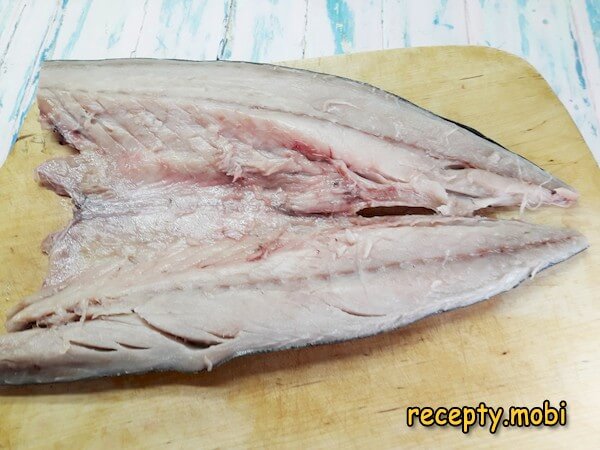
Spread the carcass open, clean off the black membranes, and remove the remaining rib bones and other small bones.
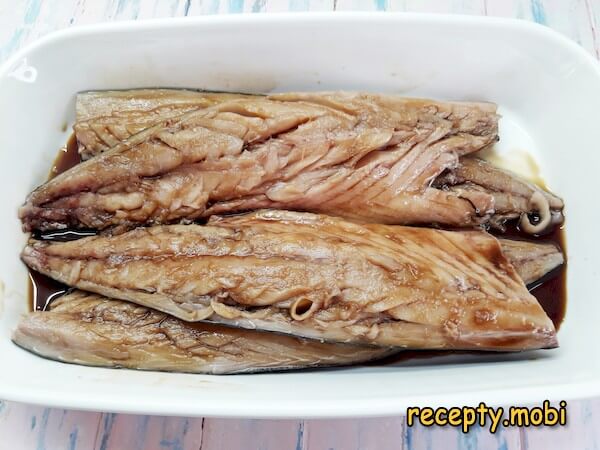
Pour the soy sauce over the fish. It will not marinate for long – only as long as it takes to prepare the filling.
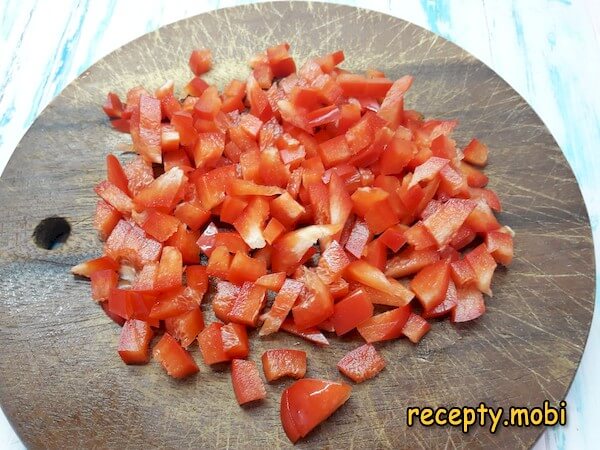
Finely chop the brightly coloured bell pepper.
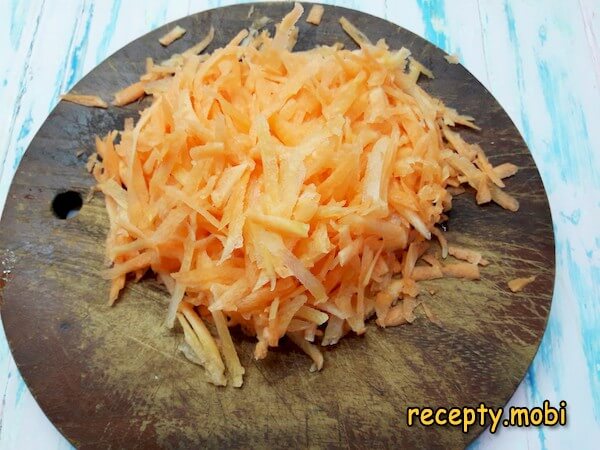
Grate the carrot.
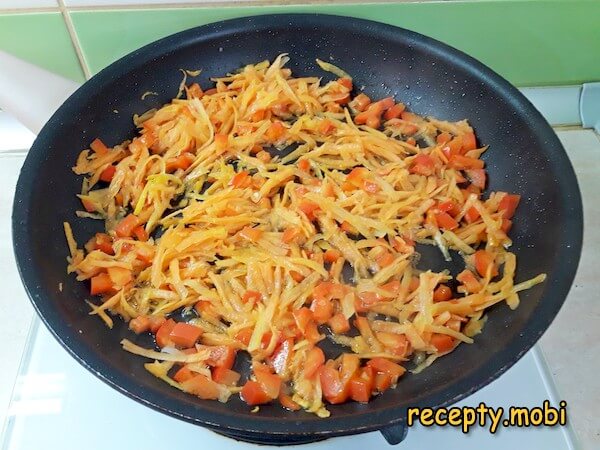
With a minimal amount of oil, lightly sauté the vegetables just until they soften.
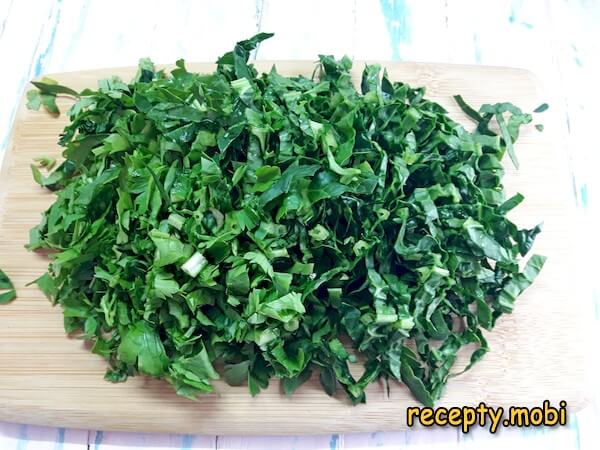
Chop the herbs.
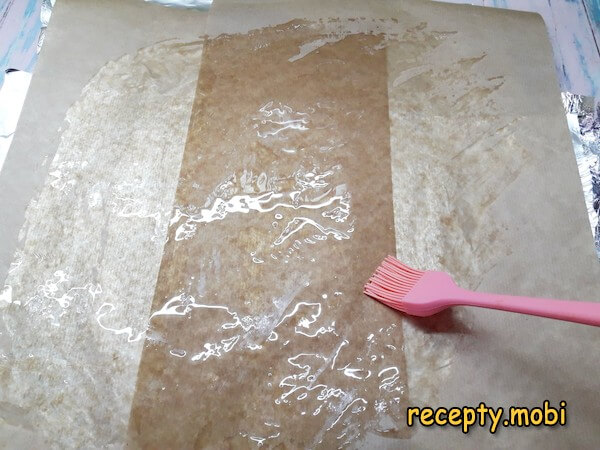
Prepare foil for wrapping the roll, lay parchment on top, and grease it with refined oil.
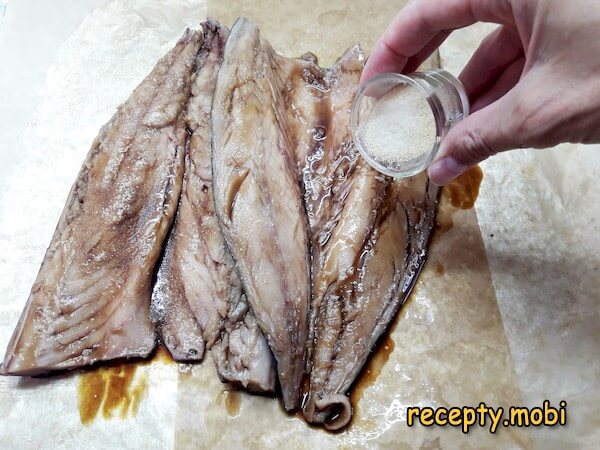
Lay down the first carcass, then place the second one head-to-tail and overlapping. Sprinkle the flesh with gelatin for better adhesion.
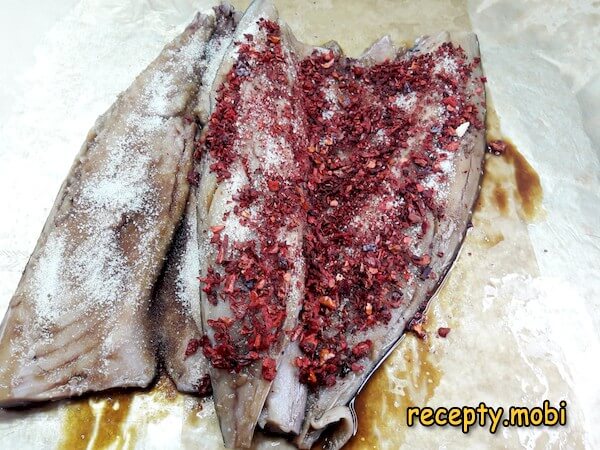
Cover one fish with the smoked paprika.
Add the sautéed vegetables on top of the same fish.
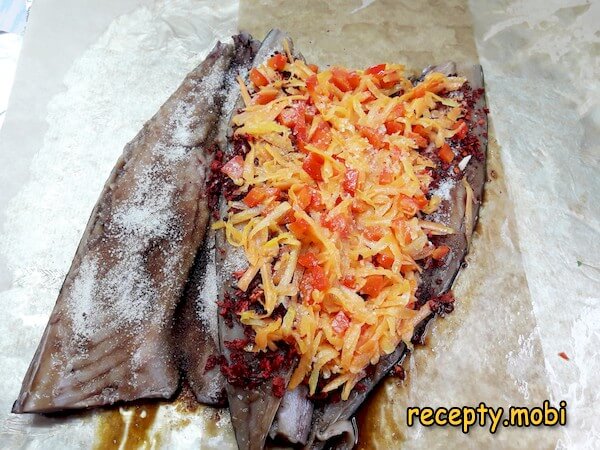
Sprinkle the second carcass with the herbs.
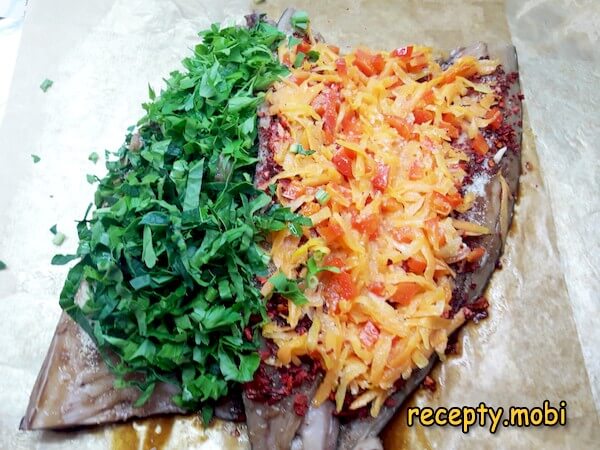
Now join the roll by wrapping the free edges over each other.
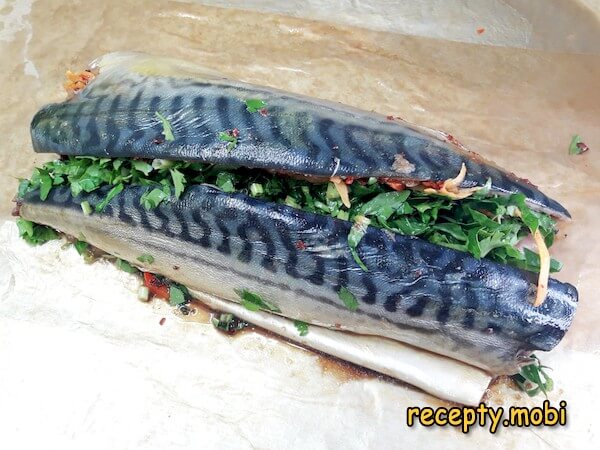
Twist the preparation tightly in the parchment, then in the foil. Put this thick "candy" into the already hot oven (t = 190°C). The roll bakes there for 40 minutes. Then cool it and, to stabilise, place it on a refrigerator shelf without unwrapping the packaging.
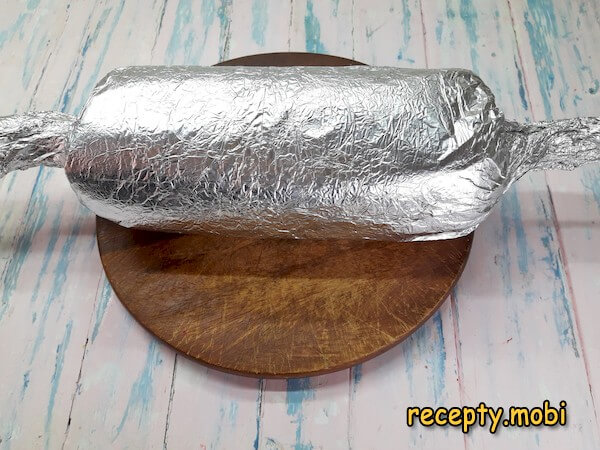
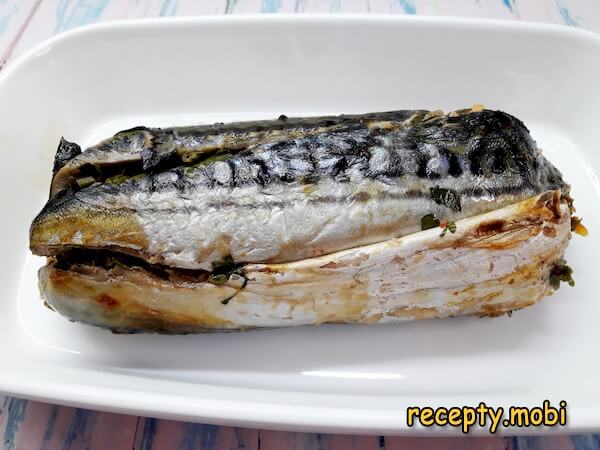
After 12 hours, remove the foil and parchment.


Tips
- 1
GELATIN BETWEEN THE FISH – the secret to cohesion. During baking the gelatin "glues" the fish into a single whole. Without it, the roll "falls apart" when sliced.
- 2
HEAD-TO-TAIL AND OVERLAPPING – the secret to the shape. The tail of one fish over the head of the other gives an even cylinder with no variation in thickness.
- 3
12 HOURS IN THE REFRIGERATOR – essential. The gelatin sets completely and the slicing will be even, without falling apart.
- 4
PARCHMENT UNDER THE FOIL – the secret against sticking. Plain foil will stick to the fish, while parchment creates a protective layer. The same principle works for other kinds of fish rolls.
FAQ
How do you fillet mackerel? +
Partly defrosted fish is easier to fillet (it is firmer). Cut off the head and tail. Remove the fins (belly, dorsal, anal). With a sharp knife, make a cut along the spine on both sides, without reaching the belly – then spread it open. Remove the spine and large bones. Be sure to scrape out the black membranes in the belly with a knife – they make it bitter. Remove the small rib bones with tweezers or a knife. Rinse and pat dry with a paper towel. For a premium roll, aim for the cleanest possible boneless fillet. It takes 5–7 minutes per fish.
What can replace the gelatin? +
Alternatives: agar-agar (1 tsp instead of 2 tsp of gelatin – it is stronger), pectin (used for jams, not very suitable), or potato or corn starch (1 tbsp plus a minimum of water). Even without gelatin the roll will still come together, but it may break apart slightly when sliced. The instant type does not need soaking. Ordinary gelatin should be soaked for 5–10 minutes in 2 tbsp of cold water before use. For a "clear" texture, use only gelatin (agar gives a jelly-like effect). For a premium version, use fish gelatin (more "natural").
How long does the roll keep? +
In the refrigerator, wrapped in foil or film, 5 days. In the freezer up to 1 month (in portions). Defrost in the refrigerator for 8–12 hours. Before slicing, chill it for 2–3 hours after the oven. Thin slices (5–7 mm) are easy to cut only once the roll is fully chilled. For a "packed lunch", keep it sliced in a sturdy container. Do not leave it at room temperature for longer than 2 hours – fish spoils. Take it out 15–20 minutes before serving – at room temperature the aroma is brighter. It is ideal to make it a day before serving – it marinates and stabilises.
What goes with the roll? +
A standalone snack – on the festive table in thin slices. With boiled or baked potatoes (as the author suggests). With fresh vegetables and salads. On open sandwiches with dark bread. With a glass of cold vodka – the "Russian" serving. With a glass of dry white (Sauvignon Blanc, Chablis) – the "European" serving. With light or unfiltered beer. With Caesar salad as extra protein. With boiled rice and lemon – Asian style. With dill and a wedge of lemon when serving. A versatile fish snack for special occasions.
- Comment
or post as a guest
Be the first to comment.