avg —
Pollock in Sour Cream Sauce

Instructions
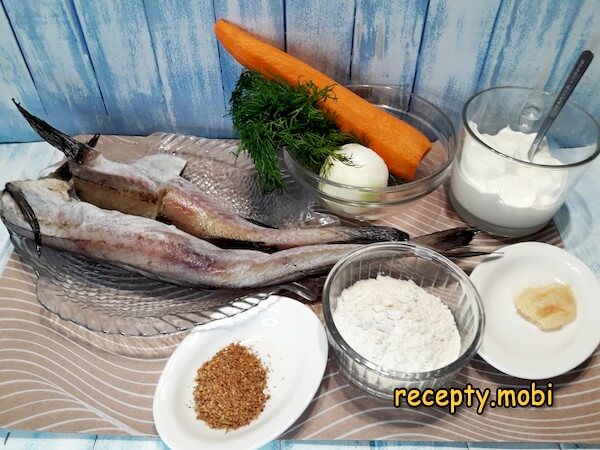
I prepare the ingredients for the pollock in sour cream sauce. It is best to take thicker sour cream of at least 15% fat – thin, low-fat sour cream will curdle during the simmer and give a grainy texture.
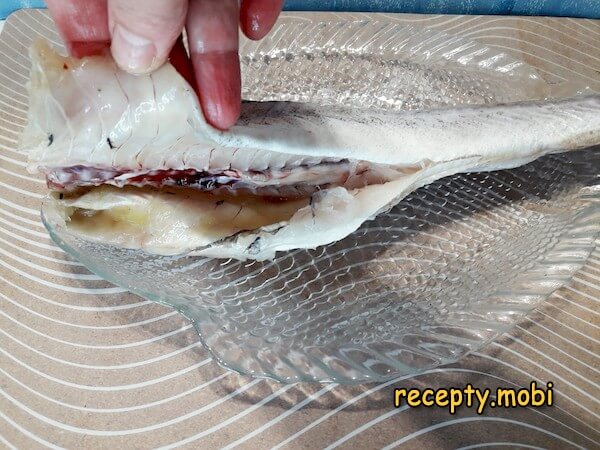
I trim all the fins off the pollock, slit the belly, and scrape away the black membrane along with any remaining entrails. The black membrane makes the finished dish bitter – removing it is essential. I rinse the fish well under running water.
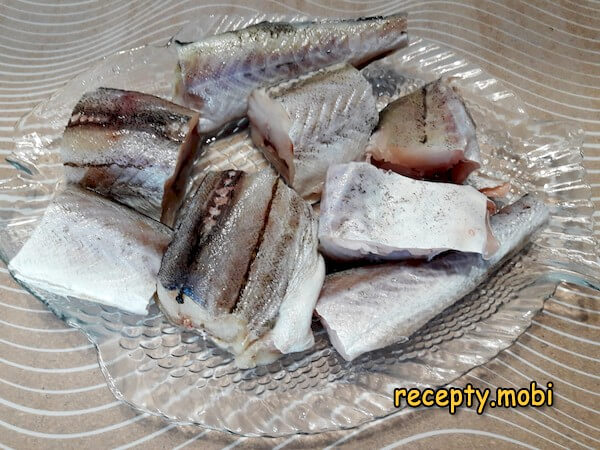
I cut the carcasses into portion-sized pieces about 3.5–4 centimetres each – this size is convenient to eat and it cooks through evenly in 4–5 minutes per side.
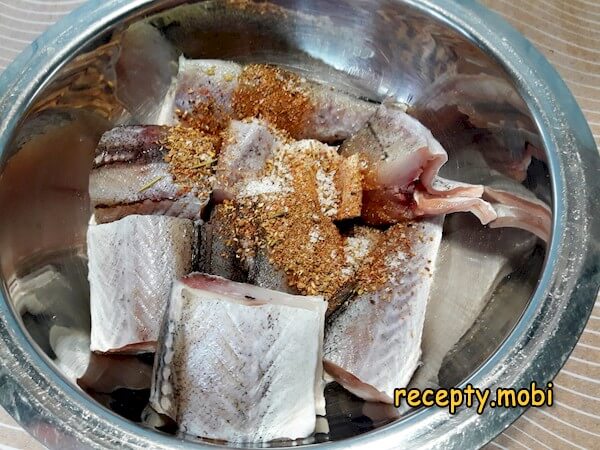
Then I salt and pepper the fish and season it with the fish seasoning. I mix it and leave it to stand – while the vegetables are being prepared, the fish soaks up the spices.
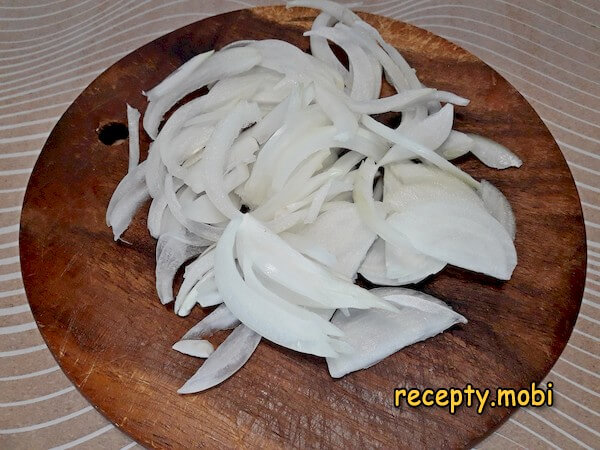
Meanwhile, I get on with the vegetable bed. I cut the onion into thin half-rings – a fine cut fries faster and gives a tender texture in the finished dish.
I grate the carrot coarsely – a fine shred would turn to mush during the simmer.

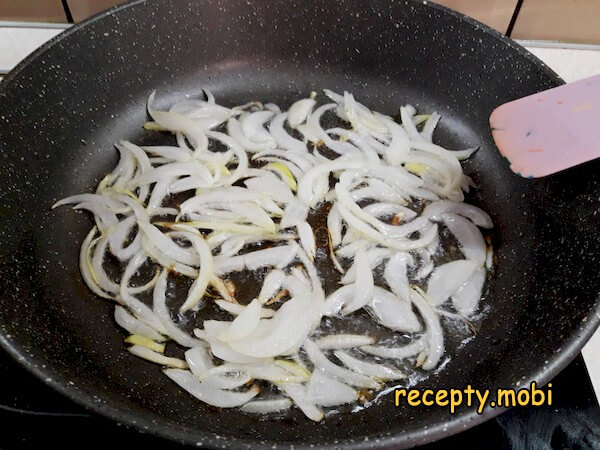
In heated oil, I first fry the onion until it takes on a light golden colour – deep frying would give bitterness, while a gentle fry gives a slightly sweet base.
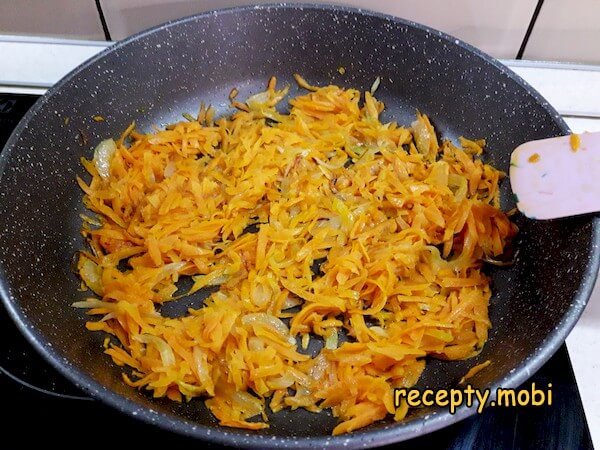
I add the carrot to it. I stew everything together for a couple of minutes so that the grated carrot softens – but not to the point of a purée.
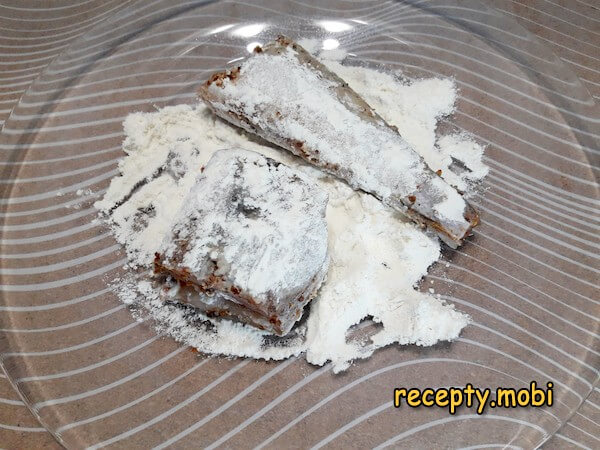
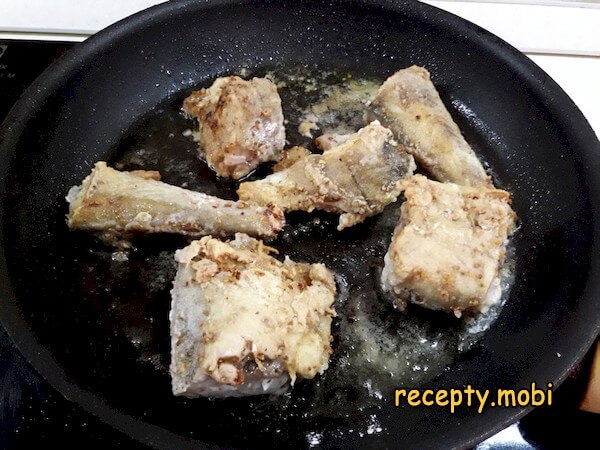
In a separate skillet, I heat oil and roll the pollock pieces in flour on all sides – the flour creates a protective crust that seals the juices inside the fish.
I fry them, turning from side to side, until golden-brown over medium heat – about 4–5 minutes per side. High heat would burn the flour but leave the fish raw inside.
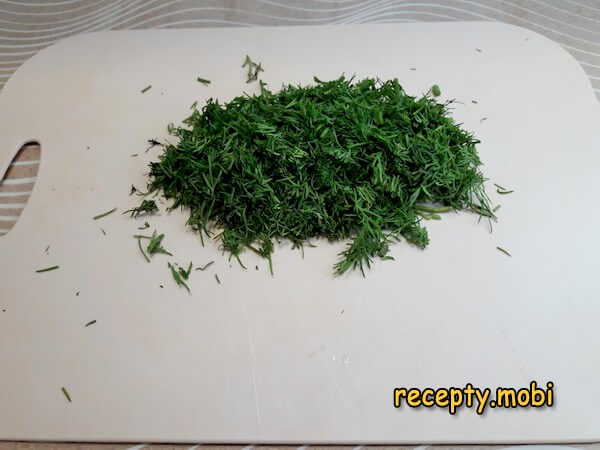
While the fish is frying, I chop the dill finely with a knife – fresh dill gives the sauce a final aromatic note.
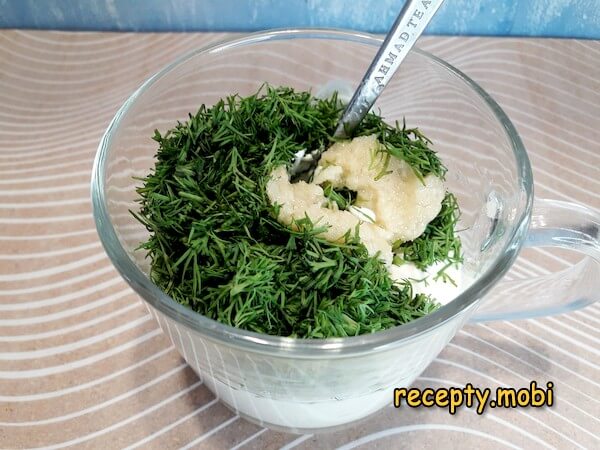
I add it together with the garlic paste to the sour cream – the sour-cream-garlic-dill base is the characteristic sauce for the fish.
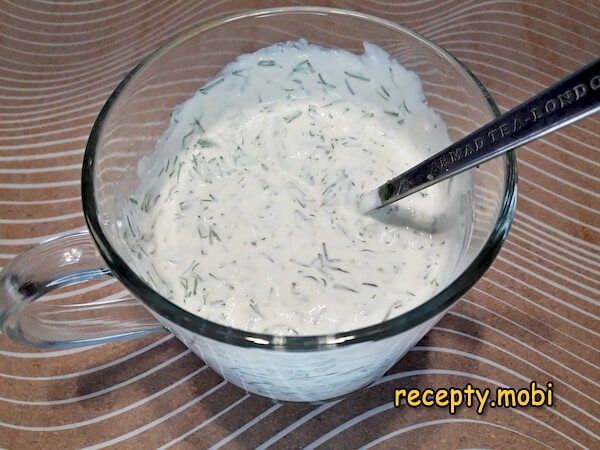
I stir the sauce with a spoon – until smooth, with no lumps of sour cream.
I lay the fish into the pan with the fried vegetables – onto the vegetables, not the other way round: the vegetable bed underneath stops the fish from burning.
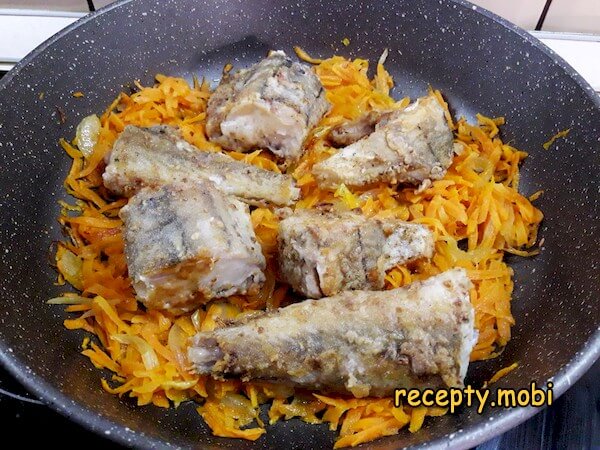
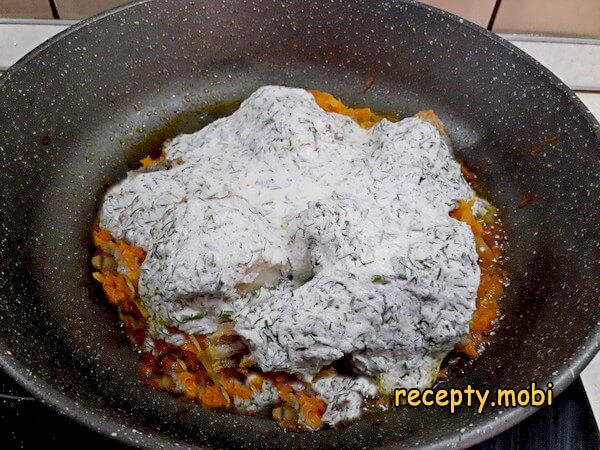
I group the vegetable bed closer to the centre and cover everything with the sour cream sauce – the sauce should fully cover the fish for an even simmer.

I cover the skillet with a lid and simmer the contents over low heat – low heat keeps the sour cream from curdling, while the steam inside the pan brings the fish to a juicy finish.
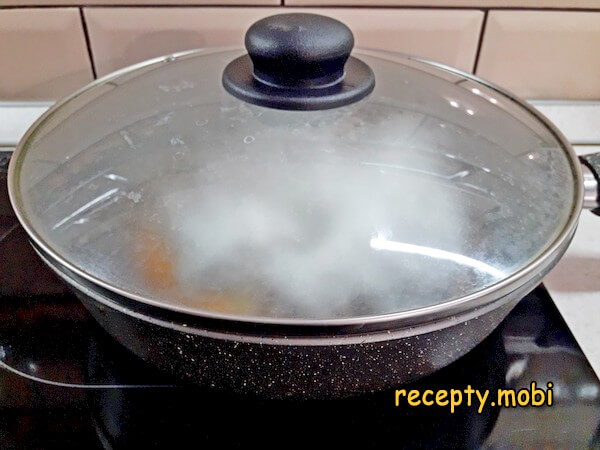
After 10 minutes the dish is ready – there is no need to simmer any longer, or the fish will be overcooked.


Tips
- 1
THE BLACK MEMBRANE IN THE BELLY – the secret against bitterness. The thin black membrane inside is the main source of bitterness in the finished dish. Scrape it away thoroughly – the flavour stays clean and pleasant.
- 2
FLOUR BEFORE FRYING – the secret to juiciness. Without a flour coating, the fish juices run out onto the pan and the flesh turns dry. A thin layer of flour – the protective crust seals the juices inside. The same technique works in pollock in milk-and-onion sauce.
- 3
SOUR CREAM 15%+ – the secret to a smooth sauce. Low-fat sour cream curdles when heated into a grainy mass. At 15–20% the sauce stays smooth and creamy, and does not separate.
- 4
LOW HEAT UNDER A LID – the secret to tenderness. A hard boil breaks the structure of the sauce and the fish falls apart. Low heat under a lid – the steam brings the fish to readiness without a vigorous boil, and everything stays tender and whole. The same principle is used in chicken hearts in sour cream sauce in a skillet.
FAQ
Which fish can I use instead of pollock? +
Substitutes: cod (600 g – premium, a little more tender), hake (600 g – similar to pollock), blue whiting (600 g – cheaper, more watery), haddock (600 g – premium, firmer texture), sea bass (600 g – premium, fattier). Do not use: oily fish such as mackerel or salmon (the sour cream sauce will be "drowned" in the fish's fat), small fish such as sprats (they fall apart when fried), very bony fish (wolffish, carp). The ideal choice is fresh or once-frozen pollock with no signs of refreezing. The main thing is to remove the black membrane from the belly.
What can replace ready-made fish seasoning? +
A homemade mix works just as well: a blend of ground black pepper (0.3 tsp) + dried dill (0.3 tsp) + dried garlic (0.2 tsp) + ground paprika (0.2 tsp) – 1 tsp in total. Alternatives: herbes de Provence (1 tsp – an Italian accent), Svan salt (1 tsp – replaces both the seasoning and part of the salt). Do not use: "barbecue" blends – they are too spicy for delicate fish. Premium option: a mix of fresh herbs – dill, parsley, basil – chopped finely straight into the sauce.
How long does the finished pollock in sour cream sauce keep? +
In the fridge in a tightly closed container – up to 2 days without loss of quality. On the second day the fish becomes richer in flavour and the sauce soaks in more deeply. It is not worth keeping it longer: a sour cream sauce with fish protein quickly loses freshness. Before serving I reheat it in a skillet under a lid over low heat for 5 minutes, or in the microwave for 2–3 minutes. It is not worth freezing: after thawing the sour cream separates and the texture is spoiled. Freshly cooked is the "star" option. It is ideal to cook it in portions to match the number of diners.
What side dish should I serve with pollock in sour cream sauce? +
A versatile main course. The classics – with mashed potatoes (the sauce fits in perfectly), boiled rice, or crumbly buckwheat. To the table: a fresh salad of cucumbers and tomatoes, fresh spring onion in rings, lemon wedges. Bread: rye with butter for mopping up the sauce, or a white baguette. Vegetables: fried courgettes, braised cabbage, boiled cauliflower. With alcohol: a dry white wine such as Chardonnay or Sauvignon Blanc, or dark beer. For a family dinner it is a versatile main course that needs no complicated additions.
- Comment
or post as a guest
Be the first to comment.