avg —
Salmon in Cream Sauce on the Skillet – Delicious Dinner in 25 Minutes

Instructions
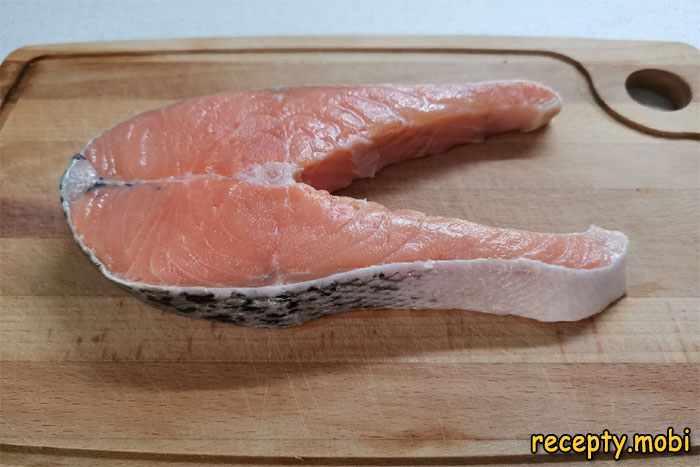
Pat the salmon steaks (3 pcs of 150–180 g) dry with a paper towel so they form an even crust when fried – wet fish steams rather than fries. Salt and pepper both sides and leave at room temperature for 5 minutes – during this time the salt penetrates deep into the fish and draws out a little excess moisture. It is best not to add other spices in advance, so as not to dry the fish out.
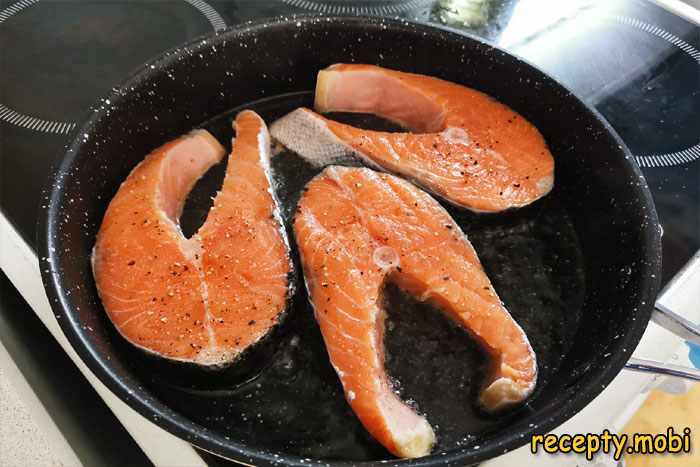
Heat a skillet with 50 ml of vegetable oil over high heat until a light wisp of smoke appears – that is the sign the temperature of 180–200 °C has been reached. Add the salmon steaks and fry for 1–2 minutes on each side until a nice golden crust forms – do not fry them for long, or the fish will dry out.
Transfer the seared steaks to a plate lined with a paper towel to absorb the excess oil – the fish is not fully cooked yet, it will finish cooking in the sauce in 5 minutes. This two-stage approach guarantees juicy flesh with a crisp crust.
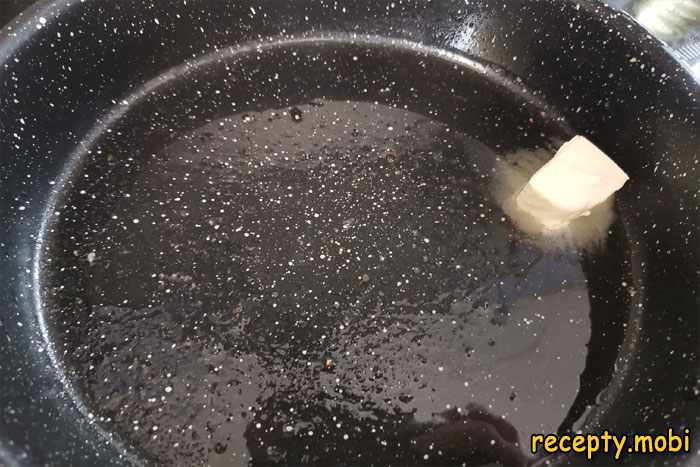
In the same skillet (do not wash it – the valuable meat juices are still there) melt 30 g of butter over medium heat for 30 seconds – the butter should be hot but not burning. Butter gives the sauce a creamy, velvety taste you cannot achieve with vegetable oil alone.
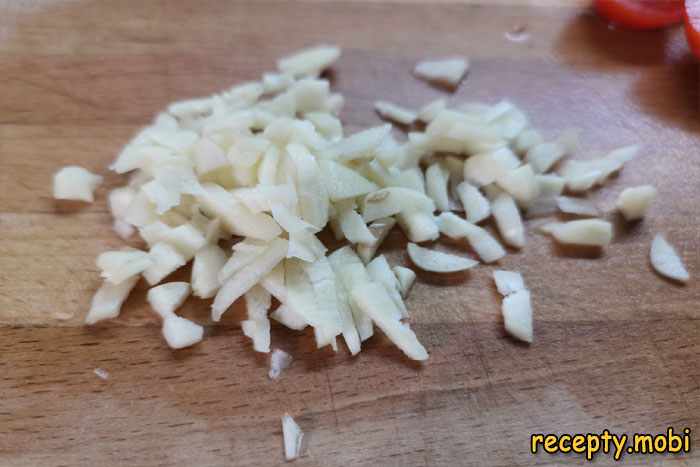
Finely chop the garlic (3 cloves) with a knife rather than crushing it in a press – chopped garlic gives a more delicate, elegant aroma without the bitterness a press can produce. Saute the garlic in the butter for literally 30–40 seconds, until a bright garlicky aroma appears but before it darkens. Burnt garlic turns bitter and will spoil the sauce.
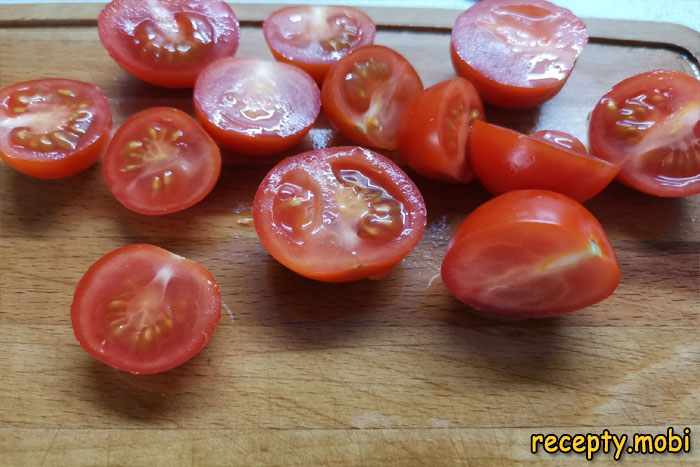
Wash the cherry tomatoes (500 g) and cut them in half with a sharp knife – this shape speeds up their cooking and lets them release their juice into the sauce evenly. Cut large cherry tomatoes into 4 pieces and leave small ones whole. The cut matters – whole tomatoes simmer slowly and can stay raw.
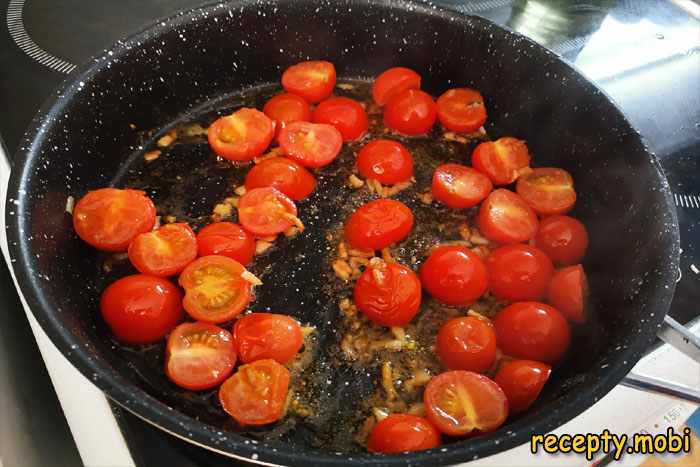
Add the cut cherry tomatoes to the sauteed garlic and fry for about 4 minutes, stirring occasionally. The tomatoes should soften and start releasing their juice – it is this juice that creates the base for the creamy sauce. If you add cream to dry tomatoes it will curdle, but on the juice it forms a perfect emulsion.
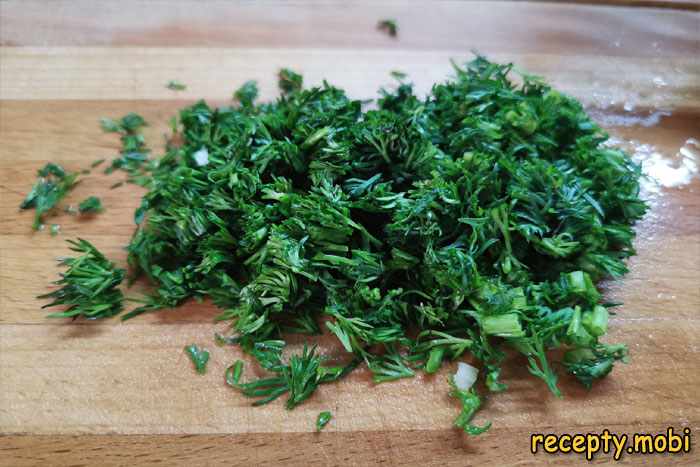
Finely chop the fresh dill (a small bunch) and the green onion (3–4 stalks) with a sharp knife – a coarse cut gives a fibrous texture, while a fine one dissolves into the sauce. The fresh herbs add a refreshing note and a bright green accent to the sauce.
Tip the chopped herbs in with the tomatoes and garlic in the skillet and stir well – the herbs release their aroma into the whole mixture within 30 seconds. Do not over-fry the herbs, or they will darken and lose their fresh taste.
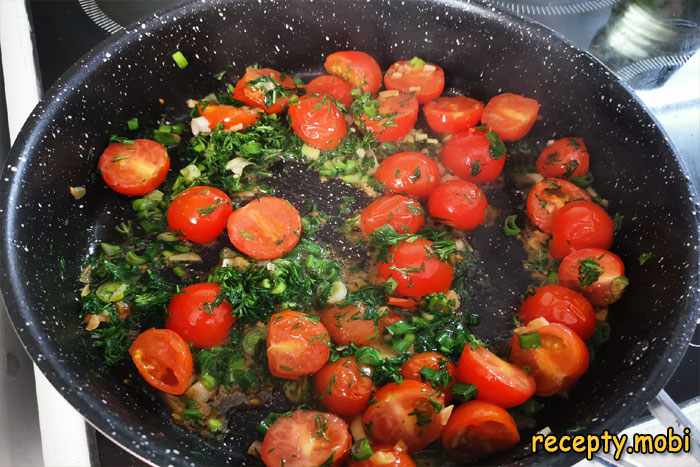
Pour in 100 ml of 30% cream in a thin stream, reduce the heat to the lowest setting and simmer the sauce for 2 minutes, stirring gently – the cream must never boil, or it will curdle and turn into flakes. This gentle temperature keeps the emulsion velvety.
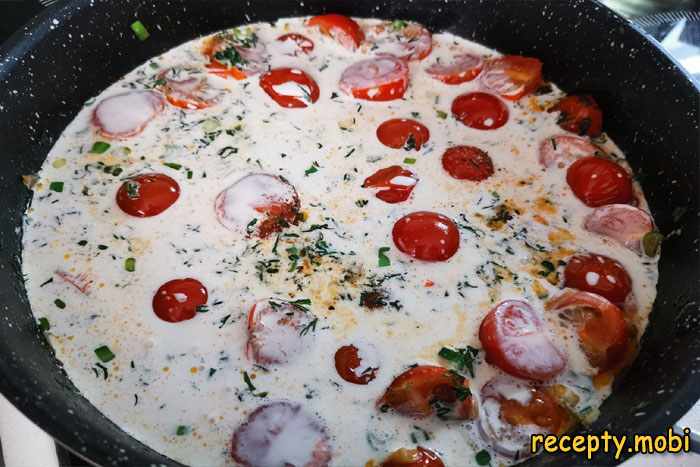
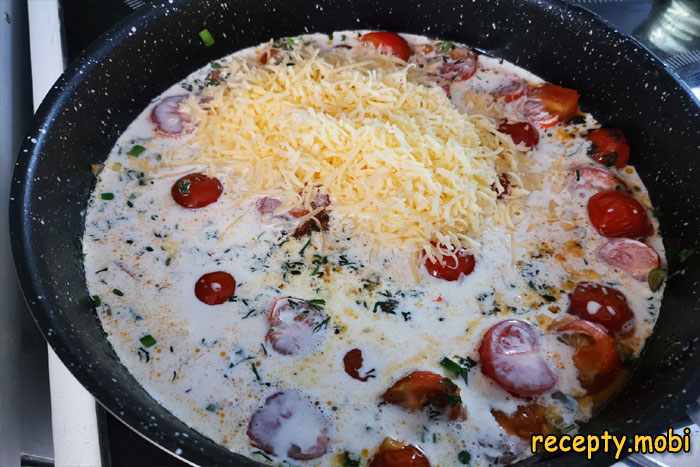
Grate the Parmesan (50 g) on a fine grater and add it to the hot sauce gradually, stirring thoroughly with a whisk until it dissolves completely. Finely grated cheese dissolves in about a minute, while a coarse grate can leave lumps. The Parmesan acts as a thickener – the sauce will become noticeably denser.
Return the seared salmon steaks to the skillet with the finished sauce, lowering them gently into the sauce. Add ½ tsp of dried basil and adjust the salt and pepper if needed. The basil opens up the classic Mediterranean direction of the flavour.
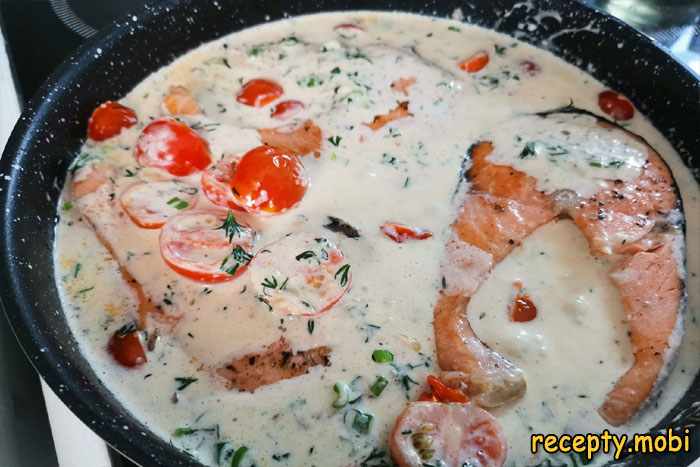
Squeeze the juice of ½ lemon over the top (about 1 tbsp) – the citrus acidity balances the richness of the cream and red fish and gives a distinctive fresh accent. Put a few thin slices of lemon into the sauce for aroma. Cover with a lid and simmer over low heat for another 5 minutes – in this time the salmon cooks through completely and soaks up the sauce.
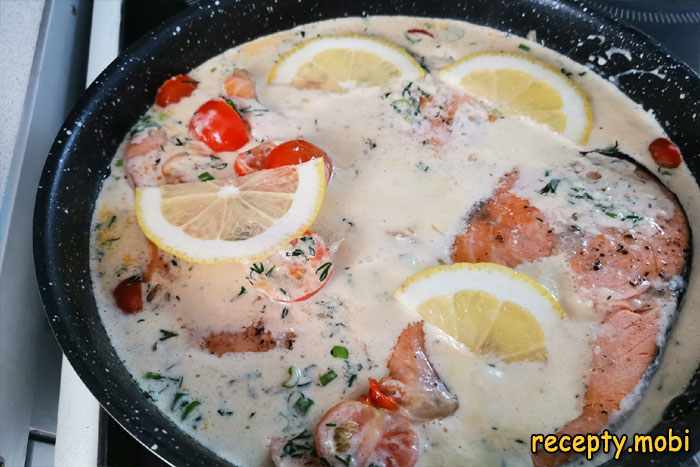
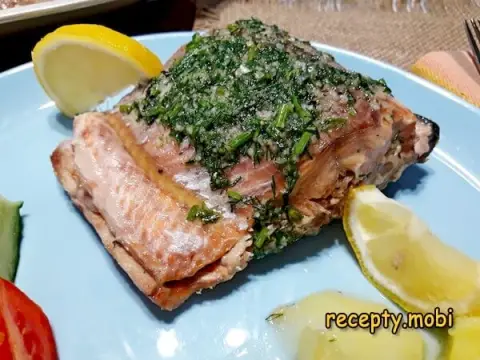
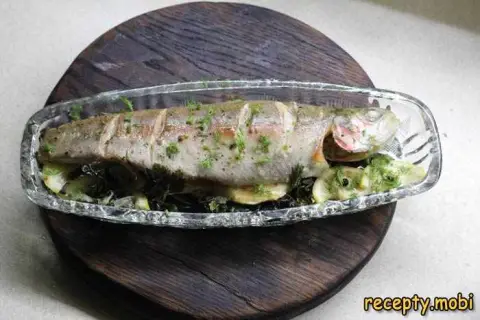
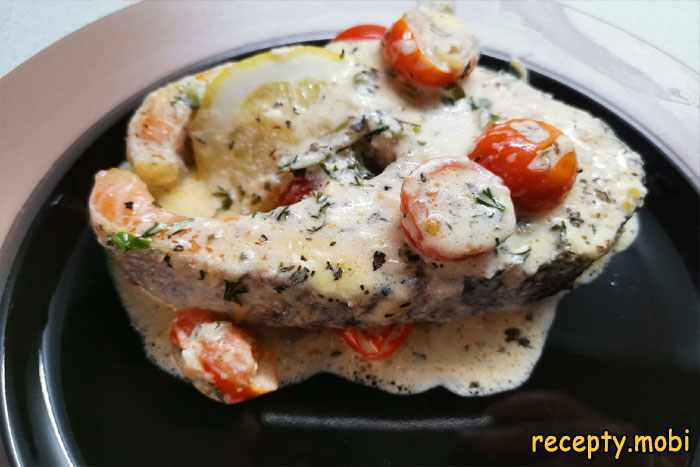
The home-made salmon in creamy sauce is ready – fragrant, tender and wonderfully tasty. Serve it straight from the skillet at the table in restaurant style, or plate it up: fluffy rice (or baked potatoes) as a bed, the steak on top, generously spooned over with the sauce. A light vegetable salad rounds the dish off.


Tips
- 1
If you have no salmon, steaks of trout, coho or other salmon work perfectly. Any red fish with firm, oily flesh will give a similar result. Avoid drier types such as cod – they are not suited to creamy sauces.
- 2
Chop the garlic with a knife rather than crushing it in a press – chopped garlic gives a more delicate aroma and does not turn bitter when fried. This is a home cook’s version of a restaurant chef’s trick.
- 3
The cream must never boil – at a vigorous boil it can curdle into flakes and ruin the look of the sauce. Simmer only over the lowest heat with a lid.
- 4
For a restaurant-style presentation, mound up some fluffy basmati rice, lay the salmon steak neatly on top and spoon over plenty of the sauce with the tomatoes. Garnish with a sprig of dill and a slice of lemon – your guests will be delighted.
FAQ
Can I replace salmon with another fish? +
Yes, rainbow trout (a more affordable option with a similar taste), coho salmon (a Pacific relative of Atlantic salmon), Atlantic salmon (the premium option), gilt-head bream or sea bass (a Mediterranean direction) all work well – any fish with firm flesh that holds its shape during frying and simmering. Avoid types that are too dry (cod, pollock, hake) – they call for different sauces. Small fish such as sprat or smelt are not suitable either, as they fall apart in the sauce. This home recipe adapts to any red fish at a ratio of 1 steak per serving.
Why did the creamy sauce turn out too thin? +
How long does the finished salmon in creamy sauce keep?
In the fridge, in an airtight container, up to 2 days without losing its taste – after that the creamy sauce may separate. Reheat only over low heat with 1–2 tbsp of fresh cream or water added to restore the texture – in the microwave the fish turns rubbery. I do not recommend freezing the finished dish – on thawing the sauce separates completely and the fish loses its structure. The best option is to cook the dish in single portions on the day of serving. This home recipe takes just 25 minutes.
What side dish is best with salmon in creamy sauce? +
The ideal choices are: fluffy basmati or jasmine rice (it soaks up the sauce and gives a light bed), linguine or tagliatelle pasta (an Italian direction), baked new potatoes with rosemary, creamy mashed potatoes, roasted broccoli or cauliflower, a mix of salad leaves with rocket and olive oil, or steamed asparagus. For drinks, a dry white wine such as Chardonnay or Sauvignon Blanc, or a dry sparkling wine. Avoid red wine – it clashes with the fish. This creamy-sauce home dinner looks best on white plates that highlight the pink colour of the salmon.
- Comment
or post as a guest
Be the first to comment.