avg —
Sprats in Tomato Sauce at Home

Instructions
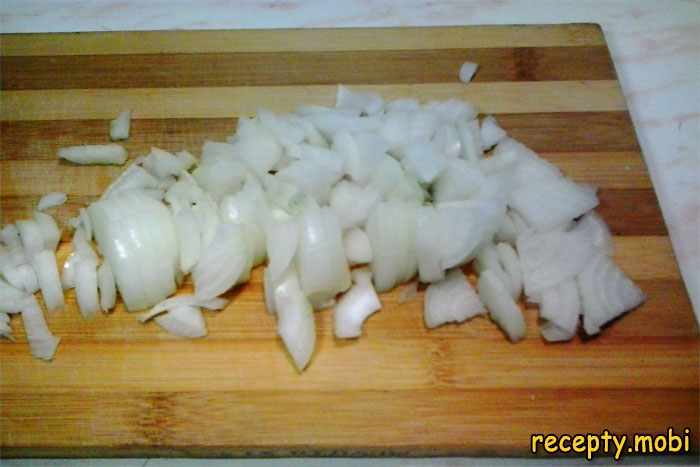
First I make the aromatic tomato sauce – this is what gives the dish its characteristic Soviet flavour. I cut the medium onion into medium slices about 3–4 mm thick – this shape looks attractive in the finished sauce.
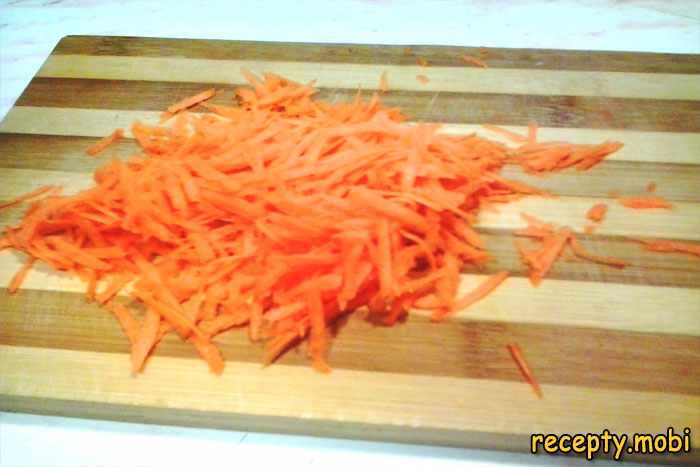
I grate the medium carrot on a grater with large holes, or cut it into thin strips if I prefer. A coarse grate gives a more pronounced texture, while thin strips give a softer one.
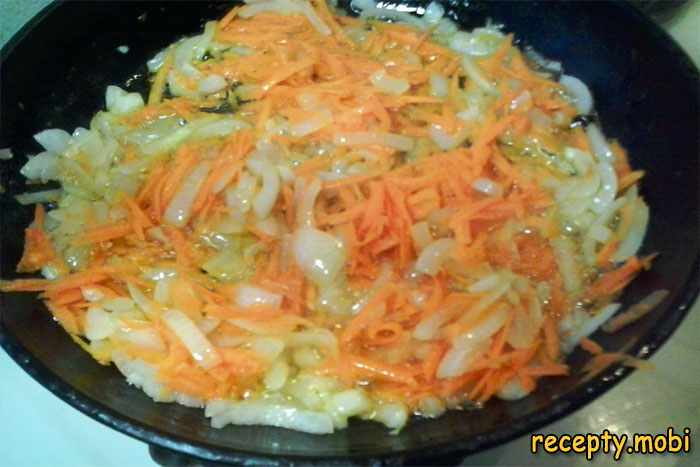
I heat 50 ml of sunflower oil in a deep, heavy-bottomed frying pan over medium heat. I sweat the chopped onion for 3 minutes until transparent, then add the carrot and let it fry for 3–4 minutes until lightly golden. The vegetables should turn soft and sweet.
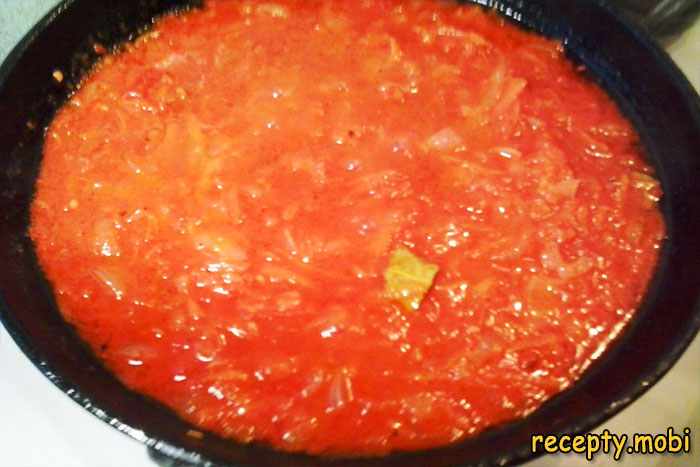
I pour 1 cup (200–250 ml) of tomato juice over the fried vegetables and bring it to a boil over medium heat. Instead of tomato juice you can use home-made tomato sauce, or 80 g of tomato paste dissolved in 200 ml of warm water. I simmer the sauce over moderate heat for 15–20 minutes, stirring occasionally – it should thicken and lose its raw, sour taste. Two minutes before it is done I taste it, add salt if needed, add ½ tsp of spices and 1 bay leaf.
I rinse the thawed sprats (500 g) thoroughly under cold running water and, if I like, remove the heads (this looks neater but increases the waste). I let all the liquid drain in a colander for 5 minutes, then pat the fish dry with a paper towel. I sprinkle the fish with 1–2 pinches of salt and 1 tsp of fish spice mix and gently mix it with my hands.
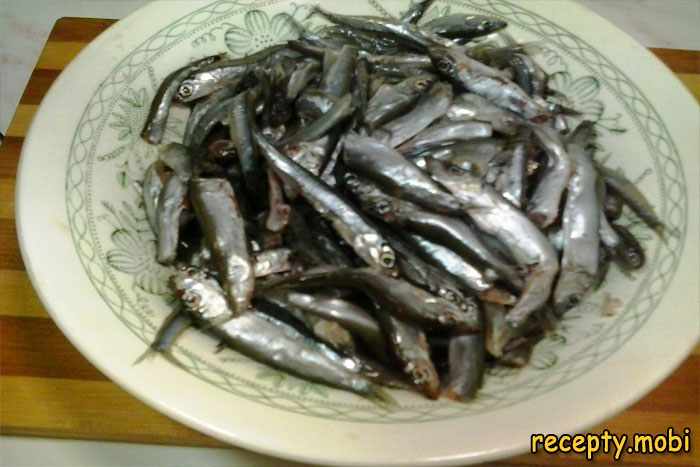
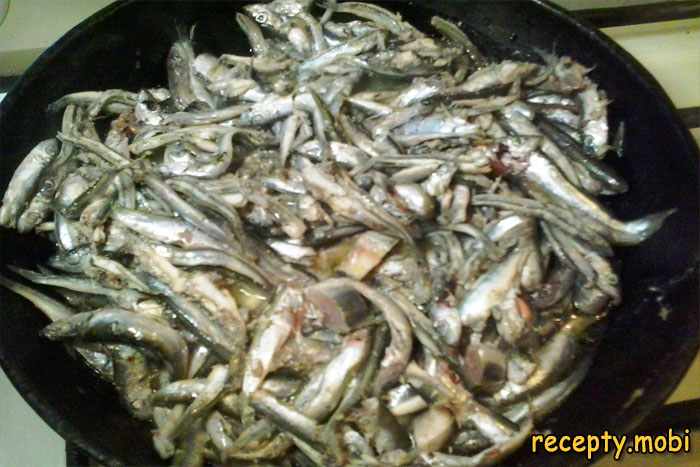
In a deep saute pan or frying pan I heat 50–70 ml of vegetable oil over medium heat. I lay the prepared sprats in a single layer, taking care not to overcrowd the pan – too much fish will steam instead of frying. I lightly fry the fish for 8–10 minutes over medium heat, gently turning it 2–3 times with a spatula – the crust should be golden but not crisp.
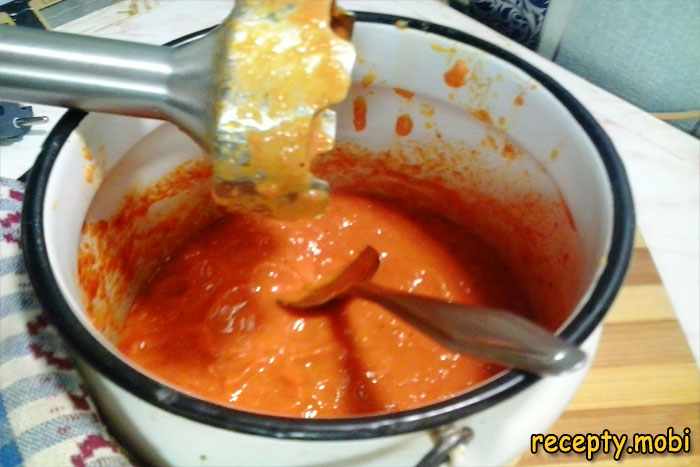
I blend the cooled tomato sauce with an immersion blender until paste-like – this gives the characteristic smooth texture of the Soviet canned fish. Without a blender you can press the sauce through a sieve for a similar result. This step is crucial for the right coating texture.
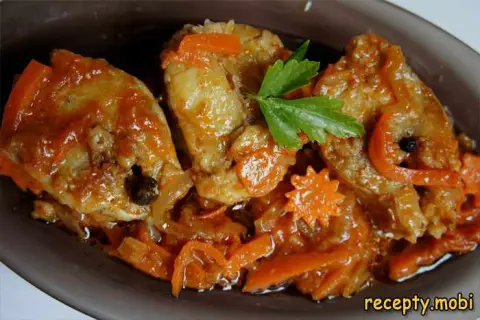
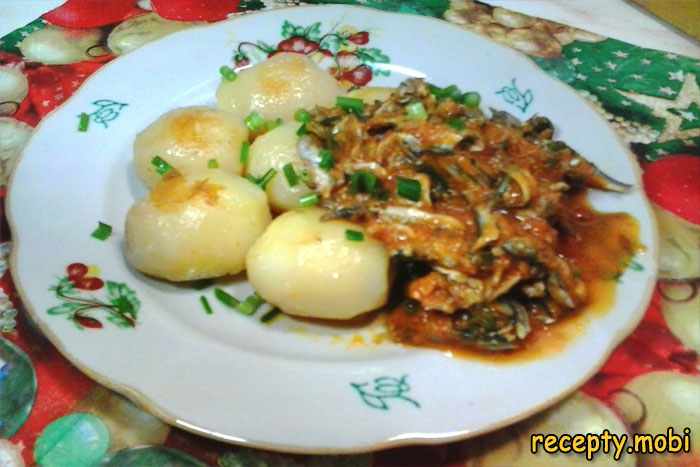
I pour the smooth sauce over the fried sprats – the fish should be completely covered. I simmer it under a lid over the lowest heat for 10 minutes until the fish is fully cooked – it should come apart easily and the sauce should soak right through every piece. Right at the end I sprinkle the dish with finely chopped fresh greens.
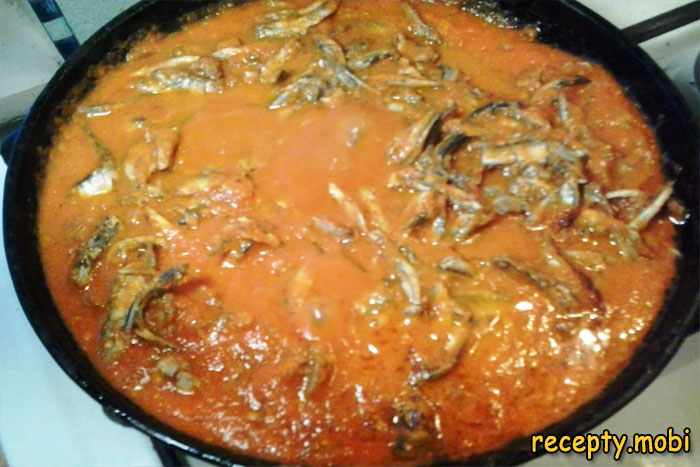
The home-made sprats in tomato sauce are ready! I serve them with a side of boiled potatoes (the classic choice for this dish), fluffy basmati rice or boiled durum-wheat pasta. They also go beautifully with home-made dark bread and fresh vegetables. The taste is best on the second day, after the dish has rested in the fridge.


Tips
- 1
Instead of tomato juice, use good-quality tomato paste – 80 g of paste in 200 ml of warm water gives a richer, more concentrated flavour, just like the classic Soviet canned fish.
- 2
For larger fish (Baltic herring, bullheads, capelin) increase the stewing time by 5–10 minutes – the firmer flesh of larger species needs longer to soak up the sauce fully.
- 3
Be sure to blend the sauce until paste-like – this is how it becomes smooth, fully coats the fish and reproduces the characteristic consistency of canned fish. A home cook's trick for an authentic result.
- 4
Serve the finished sprats with boiled potatoes, rice or pasta – these are the classic side dishes. For a heartier serving, add fresh bread, pickled cucumbers and greens.
FAQ
Can I use fresh sprats instead of frozen ones? +
Yes, fresh sprats are even better in quality – they give more tender flesh and a richer fish flavour. Simply rinse them under cold water, remove the heads and innards (if needed) and pat them dry. The cooking time stays the same as for frozen sprats – 8–10 minutes of frying plus 10 minutes of simmering in the sauce. Fresh sprats are available in season (May–June, September–October) in coastal areas. Frozen ones are more convenient – available all year round in any shop. The result is practically identical when the fish is thawed properly.
How long do the cooked sprats in tomato sauce keep? +
In the fridge, in a glass jar or a sealed container, they keep for up to 3–4 days without losing their taste. The flavour is at its fullest on the second day, when the fish has soaked up the sauce completely. Reheat before serving in a covered pan for 3–5 minutes, or in the microwave for 2 minutes at medium power. You can freeze them for up to 1 month in single-portion containers – after thawing in the fridge the fish keeps its taste but becomes a little softer. The home-made version contains no preservatives, so it does not keep as long as shop-bought canned fish (1 year).
What other fish can I cook by this recipe? +
This recipe works well with: Baltic herring (a small Baltic herring, a close relative of the sprat), bullheads (especially popular in Odessa and around the Sea of Azov), capelin (a tender northern fish), anchovy (Azov and Black Sea), sprat (the classic canning variety) and tyulka (the smallest one). For larger fish, increase the stewing time by 5–10 minutes. Small whole sardines or smelt also work. The step-by-step recipe is versatile – it adapts to any small sea fish. The home-made version keeps the proper Soviet tradition of preparation.
How do I make the sauce spicier or, on the contrary, milder? +
For a spicy version, add 1 red chilli pepper (deseeded and finely chopped), 1 tsp of adjika or ½ tsp of cayenne pepper to the sauce – you will get a piquant Caucasian variation. For a children's or mild version, leave out the black pepper and replace it with ground paprika (½ tsp) – it gives a lovely red colour without the heat. A teaspoon of sugar in the sauce adds sweetness. For an unusual accent, add 1 tbsp of soy sauce – you will get an Asian variation. There are many variations, so choose according to your family's taste.
- Comment
or post as a guest
Be the first to comment.