avg —
Whole Baked Trout in Foil in the Oven

Instructions
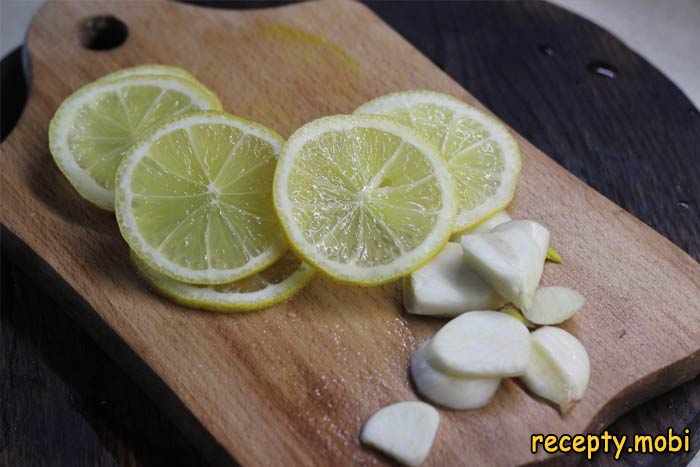
I cut half a lemon into thin, almost translucent slices about 2–3 mm thick – cut this way, they release the most juice and aroma during baking. I peel the garlic (3 cloves) and cut it into thin slices along each clove. The thin slices of garlic "melt" as the fish bakes and infuse it with aroma without any harsh sharpness – thick pieces would have stayed tough.
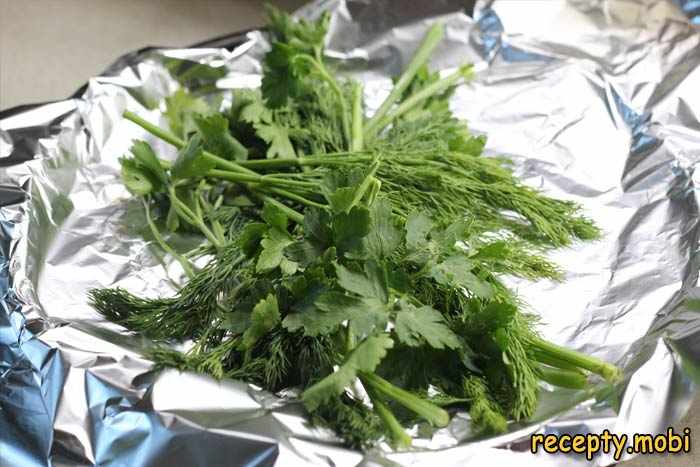
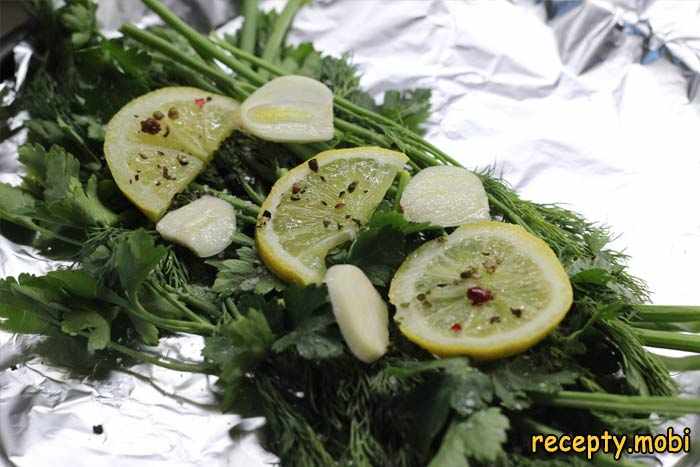
I tear off a large piece of foil (twice as long as the fish), brush it with a thin layer of olive oil, and lay down a "bed" of parsley and dill sprigs on it. The herbs do double duty: they perfume the fish from below and stop the skin from sticking to the foil. Without this bed the trout skin dries onto the foil and tears when served – spoiling the presentation.
On the greens I place some of the lemon slices and garlic slices, then sprinkle with sea salt and the pepper mix. This "bottom layer" of seasoning flavours the underside of the fish as it bakes. Coarse sea salt works better than iodised salt – it does not turn bitter and dissolves more slowly, seasoning the flesh more evenly.
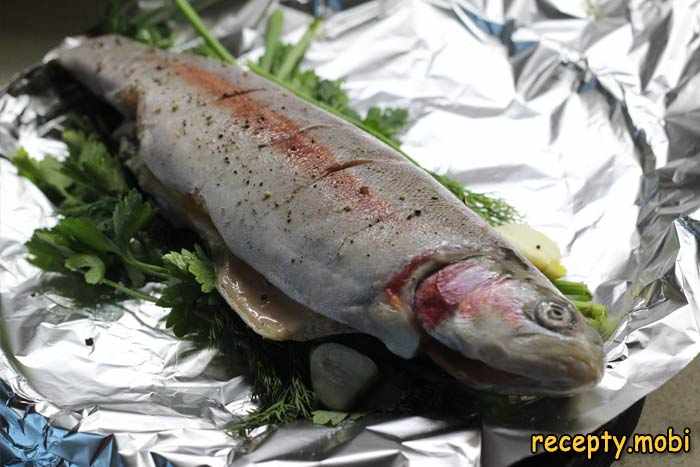
I make 3–4 vertical cuts on each side of the trout, going down to the bone – these are "pockets" for the seasoning and lemon juice. Through the cuts the fish is seasoned evenly and cooks faster. Without the cuts the middle of the trout stays under-seasoned while the edges dry out – a classic mistake when baking a whole fish.
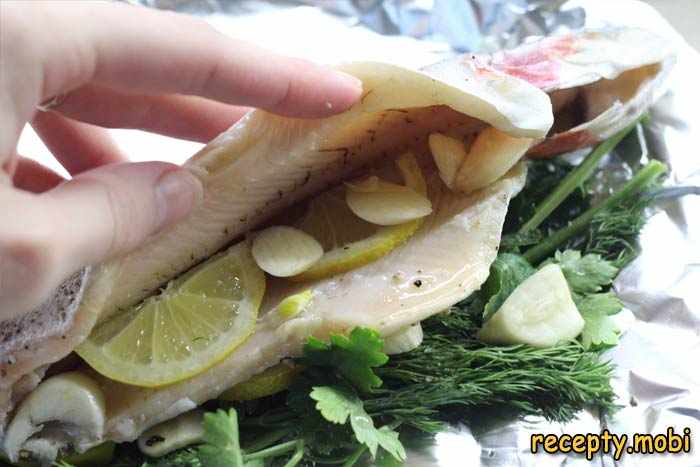
I stuff the trout's belly with the remaining lemon, garlic, and herb sprigs – packed in firmly, but without bulging. I salt and pepper the filling inside the belly so the seasoning works into the flesh from within. Stuffing from the inside is the key to a fragrant fish: seasoning on the outside only gives a crust, while seasoning from inside flavours the whole fillet.
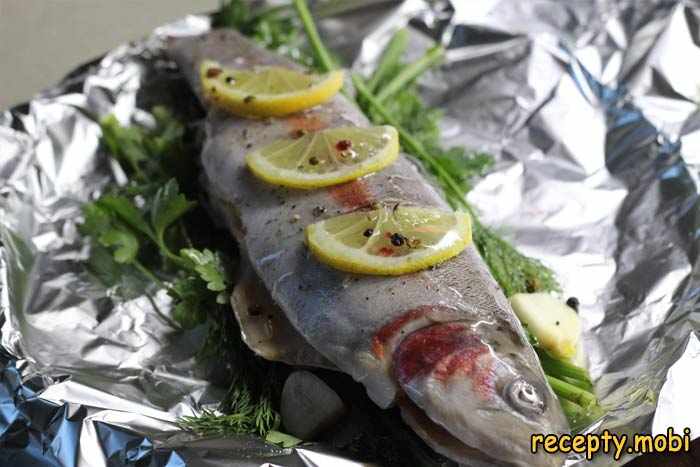
I sprinkle the fish on top with the pepper mix and salt, lay the remaining lemon slices over it, and drizzle with olive oil. I wrap it tightly in foil, twisting the edges shut like a sweet wrapper – with no gaps, so the steam cannot escape. I bake it for 25–30 minutes at 170°C in a preheated oven. A low temperature and sealed foil are the formula for perfectly juicy fish that never dries out.
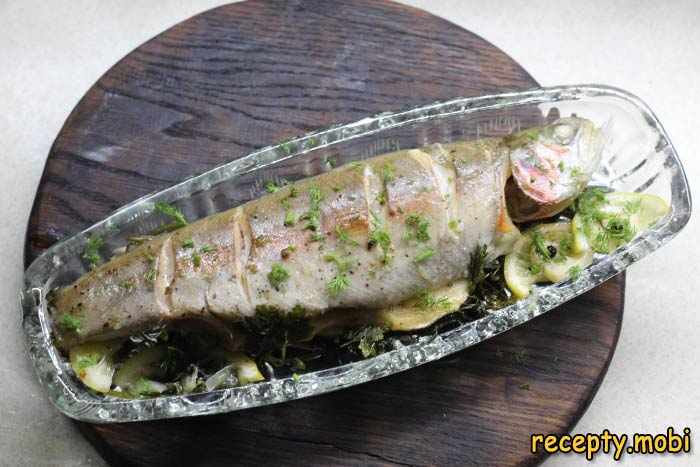
The finished trout baked in foil – the fillet separates easily from the bones with a fork, and the flesh is delicate pink and juicy. I serve it straight from the foil, carefully opening the "parcel" at the table – the fragrant steam makes an impression on guests. For a side dish, serve boiled rice, baked potatoes, or a vegetable mix.


Tips
- 1
Always make the cuts in the fish skin – without them the seasoning will not reach the flesh, and the trout will turn out "salty outside, bland inside".
- 2
The bed of herbs underneath is not decoration but a function: it perfumes the fish and stops the skin from sticking to the foil.
- 3
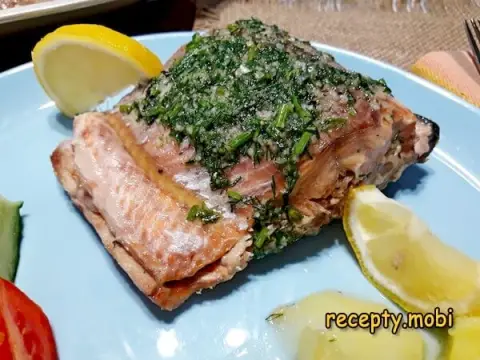
Wrap the foil tightly, twisting the edges shut like a sweet wrapper – no steam should escape, otherwise the fish will dry out. I bake salmon in foil on a similar principle.
- 4
A temperature of 170°C rather than 200°C is the key to juiciness. At a high temperature the fish proteins "contract" and squeeze out the juices.
FAQ
How do I know when the trout is done? +
Cooked trout has matte, delicate pink flesh that separates easily from the bones with a fork. If the flesh is still translucent and "glassy", the fish needs another 5–10 minutes. The internal temperature of cooked trout on a cooking thermometer is 55–58°C for a tender texture, or 60°C for a classic result. If you are baking a large fish (over 1 kg), increase the time to 35–40 minutes. Do not overcook it – overbaked fish loses its juiciness.
Can it be baked without foil? +
Yes – the alternatives to foil are a baking sleeve or parchment. The sleeve gives a similar "steaming" effect, so the fish stays juicy. Parchment lets more steam through, so the fish may turn out drier. You can also bake it in a covered dish, or uncovered on a tray with butter and a splash of wine for moisture. The open method gives a golden crust but needs watching – check every 10 minutes so it does not dry out.
What other fish can be baked by this recipe? +
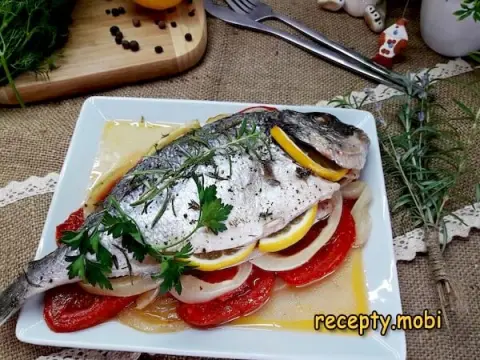
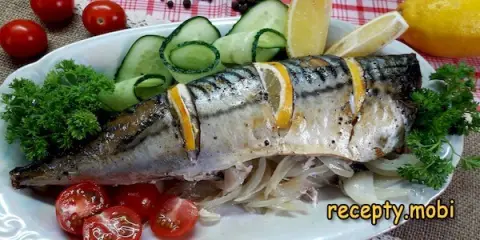
Any oily or medium-oily fish: salmon, dorade, sea bass, chum salmon, sockeye salmon, pike-perch, or cod. For oily fish (salmon) the time is the same, 25–30 minutes. For lean fish (cod, pike-perch), reduce the time to 20 minutes so it does not dry out. Bake small fish (rainbow trout, mackerel) for 20–25 minutes. For a large fish (a whole salmon of 2–3 kg), allow 40–50 minutes. The principle of stuffing and using foil is the same.
How do I store and use the leftovers? +
Store the cooked trout in the fridge for up to 2 days in a tightly sealed container. The leftovers are ideal for salads: with rocket and cherry tomatoes, with avocado and cucumber, or for tartlets with cream cheese. Use it also for open sandwiches with butter and herbs, or as a filling for pancakes with cream cheese. Do not reheat it in the microwave – that will dry the flesh out. It is better served cold as a starter, or at room temperature.
- Comment
or post as a guest
Be the first to comment.