avg —
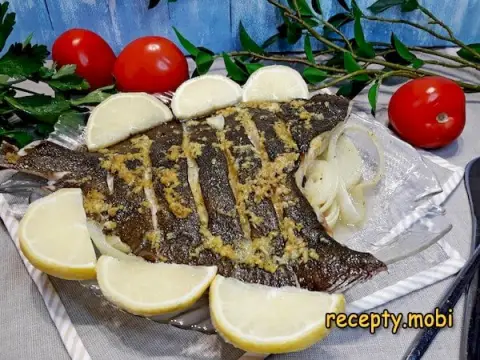
Whole Flounder in the Oven

Instructions
I prepare the ingredients. Two small flounders can be replaced with one larger fish – this will not affect the method.
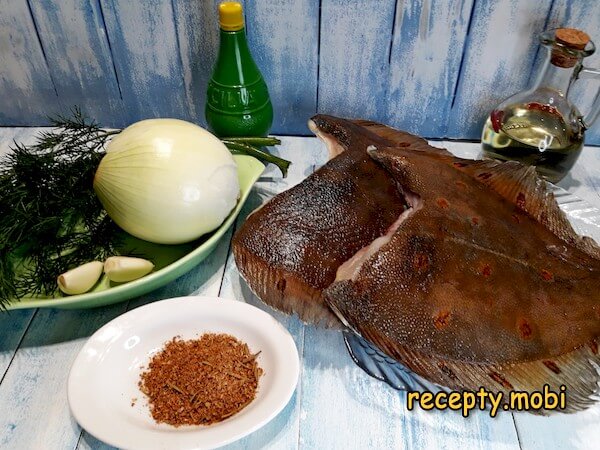
I start by preparing the fish for baking. If it still has the head, you can leave it on without cutting it off. Using kitchen scissors or a sharp knife, I remove the side fins and the tail. I clean and wash the belly to remove the black membrane. Flounder has no scales as such, so there is no need to scrape it. However, very large specimens have small spines on the dark side of the body, which need to be cut off.
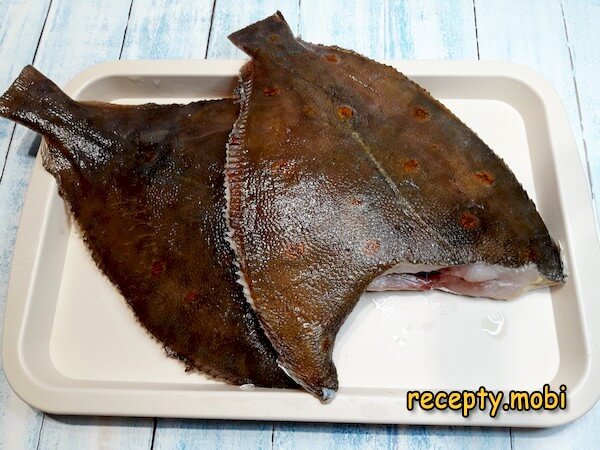
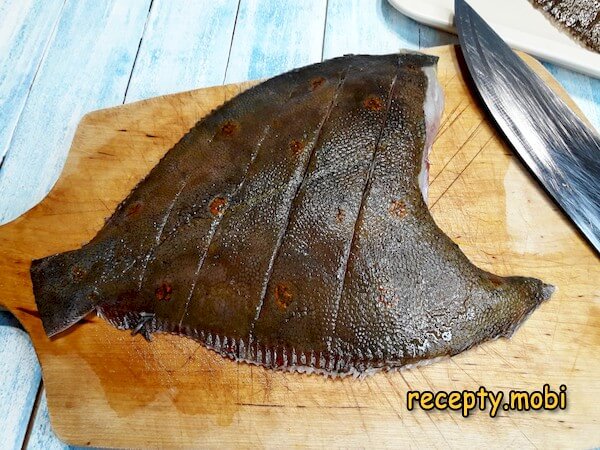
Now, along the outer (dark) side of the body, I make wide diagonal cross cuts. It is best to cut through the backbone and stop just short of the lower (light) side. The marinade will flow freely into these cuts, and when serving, the fish will be easier to divide into even pieces.
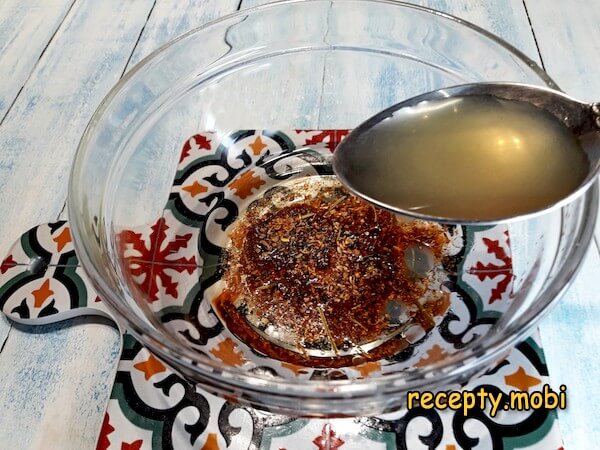
For the marinade, I combine the vegetable oil, fish seasoning and lemon juice in a deep bowl – the base of the marinade that will soak into the flesh of the flounder from the inside.
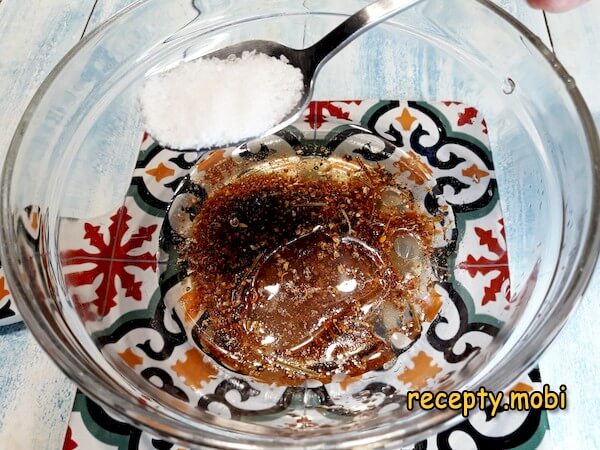
I add the salt – salt balances the flavour and helps the seasonings penetrate deeper into the flesh of the fish.
I add the freshly ground pepper and garlic – before adding it, I finely chop the garlic or press it through a garlic press for maximum aroma.

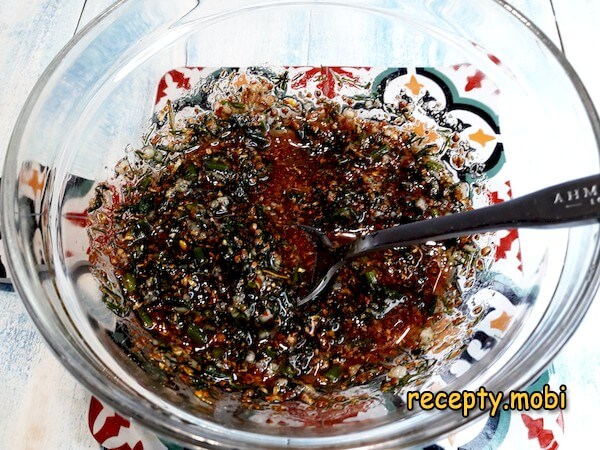
I season everything with finely chopped dill and start to mix until the salt dissolves – fresh herbs give a herbal accent to the finished marinade.
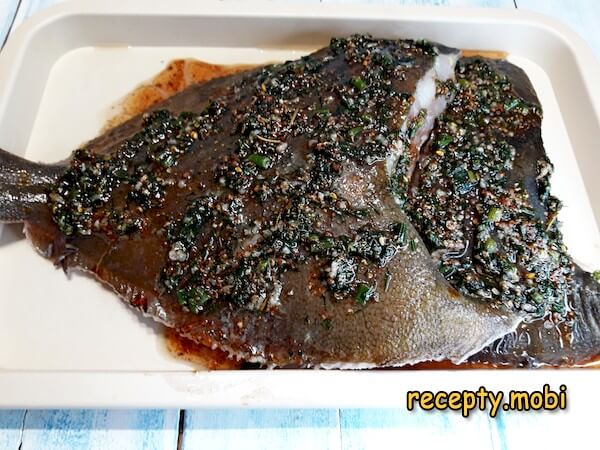
I coat the flounder with the marinade on both sides, and also fill the cuts with the mixture. Let the fish rest like this for about 10 minutes – 10 minutes is exactly enough to soak the thin flounder fillet.
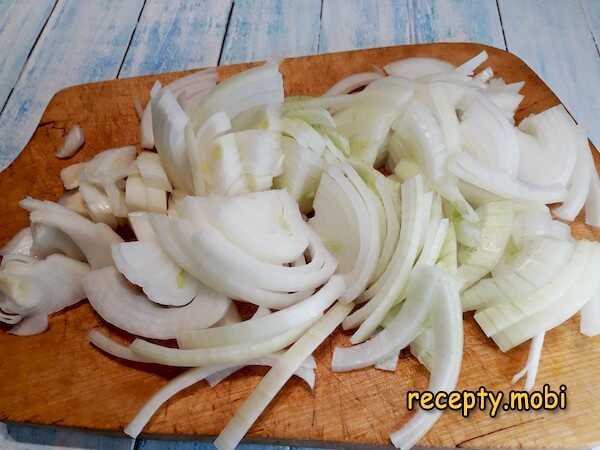
Meanwhile, I turn on the oven to preheat to 180 degrees and slice the onion into half-rings – the onion will become a "bed" for the fish and, at the same time, a tasty side dish.
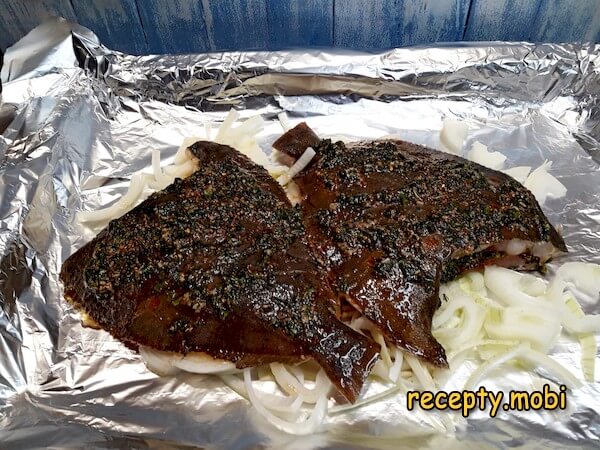
I line a baking tray with foil or parchment paper. I place the sliced onion in the centre and level it out – an even layer over the whole area under the fish.

I lay the fish dark-side up on the prepared bed – this is the secret moment: the dark side browns more attractively during baking, while the light side stays tender underneath.
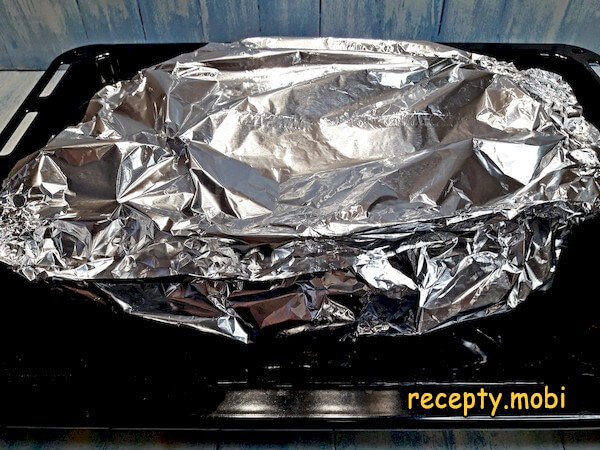
I cover everything with foil so that it creates some air space inside and does not touch the flounder. To do this, I fold the edges of the bottom foil up like sides and seal the top cover against them. In this form, I put the tray on the middle rack of the preheated oven – the air pocket creates a steam effect.
After half an hour, I remove the top foil and keep the fish in the oven for another 5 minutes to brown – without the foil the crust takes on a golden colour.
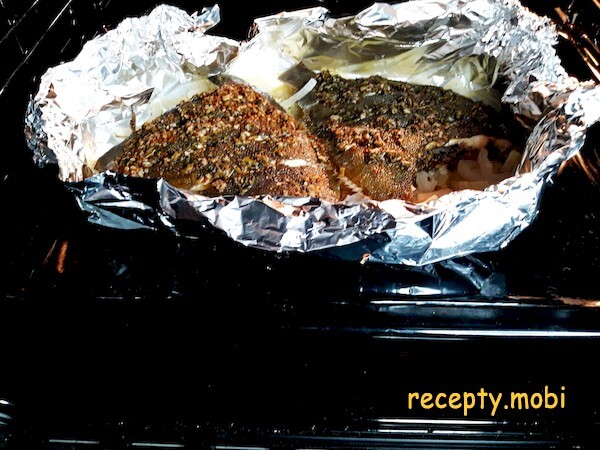
Once the stated time has passed, I take the tray out of the oven. The herbs that were in the marinade have dried out under the high temperature – when serving, you can simply brush them aside, as they have already done their job.


Tips
- 1
WIDE DIAGONAL CROSS CUTS are the secret to soaking. Without the cuts, the marinade stays on the surface of the flounder, and the flesh inside ends up "bare" in flavour. Wide diagonal cuts (slicing through the backbone) let the marinade reach the very depth of the flesh. On top of that, the cooked fish divides easily into even "portion" pieces along these cuts.
- 2
THE ONION BED is a "2-in-1" secret. The onion under the fish performs two jobs: it absorbs the dripping fish juices and at the same time serves as a ready side dish. By the time the fish is done, the onion has softened, caramelised and taken on a fish-and-garlic aroma. This is the secret of a complete dish in a single tray, with no separate sides.
- 3
AN AIR POCKET IN THE FOIL is the secret of the steam effect. If you wrap the fish tightly in foil with no air gap, the foil "sticks" to the crust and tears it off when removed. An air pocket on top creates a mini steam oven in which the flounder heats through evenly. The same trick works in flounder in the oven in foil – a related recipe.
- 4
A UNIVERSAL BASE FOR FISH is the secret of variations. The same technique works with any flat or medium-sized fish. Following the principle of spicy fish baked whole in the oven, you can make a "premium version" with a larger set of spices – cumin, coriander, fennel.
FAQ
Which side of the flounder do you bake? +
The flounder is placed dark-side up and light-side down. This is because the dark side browns nicely during baking and forms a golden crust, while the light side (which faces the onion bed) stays tender and juicy. Some recipes suggest turning the fish over to the other side halfway through baking for a crust on both sides – but this needs to be done carefully, or the flounder will fall apart because of the delicate texture of the flesh.
How long do you bake flounder? +
For two carcasses with a total weight of 700 g at 180°C, 30 minutes under the foil plus 5 minutes uncovered for browning is enough. For one large carcass of 1 kg, allow 35–40 minutes under the foil and 7–10 minutes uncovered. Doneness is checked by how the flesh separates from the bones: if the flesh comes away easily from the spine, the fish is ready. There is no point in overbaking – delicate flounder quickly turns dry if the time is exceeded.
What can replace flounder? +
The baking technique can be used for any flatfish: halibut (fattier, a premium analogue), sole (more tender, but pricier), witch flounder (a relative of flounder), pangasius (budget-friendly). Among round whole fish: sea bream, sea bass, perch, trout, crucian carp – they all suit it, but they will need a little more time because of the thicker body. Not suitable: salmon (too fatty for this technique, better cooked another way) and mackerel (too strong a flavour of its own).
What do you serve baked flounder with? +
The onion bed from the dish itself is already a ready side. Additions: boiled new potatoes with dill, basmati rice, quinoa, mashed potatoes. Fresh vegetables: leaf salad, cherry tomatoes, cucumbers, avocado. For sauces: tartare, sour-cream-and-garlic, lemon-and-dill sauce. For drinks: dry white wine (Riesling, Chardonnay, Sauvignon Blanc), and for an everyday serving – fruit drink or fresh juice. For starters beforehand: a light green salad, Korean-style carrots, pickled mushrooms.
- Comment
or post as a guest
Be the first to comment.