Write a comment
Avar khinkal

Avar Kinkal

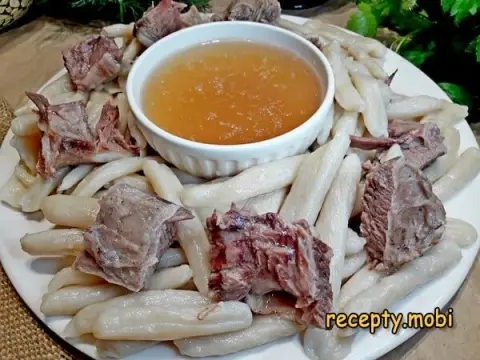
Avar khinkal is the iconic showcase dish of Dagestani highland cuisine — a multi-component meal where boiled dough diamonds (the "khinkal" pieces, NOT the same as Georgian khinkali dumplings), tender beef pieces, rich beef broth, and garlic-sour-cream sauce all arrive at the table together. The eating ritual matters: dough pieces dunk into sauce, beef gets sauced separately, broth gets sipped from a cup. Each component depends on careful technique — the broth from cold-water start, the dough leavened with kefir + soda for fluffy porous structure, the immediate toothpick-prick after boiling to release gases. Result: a hearty, communal meal that's the cultural heartbeat of every Dagestani family.

Time2 h | Yield: 4 servings | Calories: 122 kcal per 100 g | Cuisine: Dagestani

Ingredients

Show ingredients
  • beef ribs – 400 g;
  • purified water – 1.2 l;
  • bay leaf – 1 pc;
  • allspice – 2-3 peas;
  • flour – 300 g;
  • kefir of any fat content – 180 g;
  • baking soda – 0.75 tsp (level the top so there is no mound);
  • salt – a pinch (for the dough) + to taste (for the broth).

Preparation

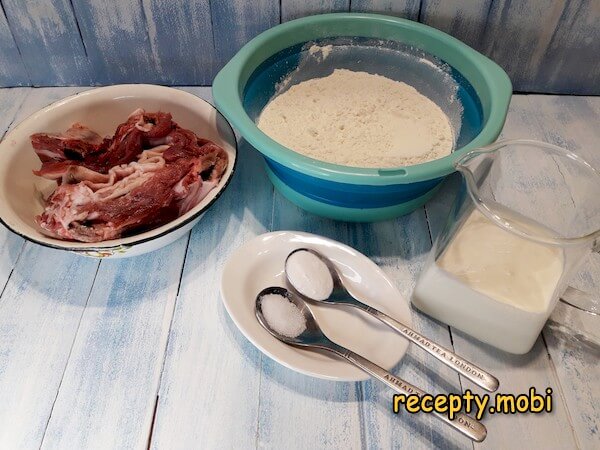
  1. I prepare the ingredients for Avar khinkal. A 3-litre pot suits this batch size. Beef selection matters — choose ribs with both bones and meat (with fatty streaks if possible). The bones release gelatin into the broth (silky texture); the fatty streaks keep the meat juicy through the long cook. Lean meat alone produces dry boiled beef. Kefir substitutes: sour milk, plain yogurt thinned with water, or buttermilk — all the acidic dairies that activate baking soda equivalently.
    ingredients for preparing Avar khinkal - photo step 1
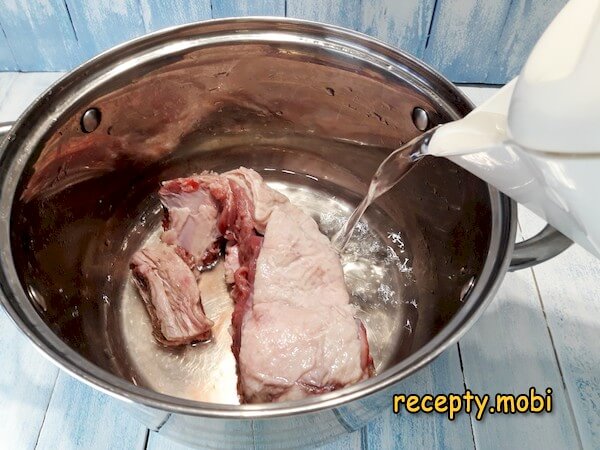
  2. Cold water pours over the meat — completely covering. The cold-start matters: cold water pulls flavour OUT of the meat into the broth (= rich broth + slightly less flavoured meat). Hot-water start does the opposite (sealed meat + thin broth). For khinkal where the broth IS a serving component, cold start is essential. Pot goes on high heat.
    preparation of beef broth - photo step 2
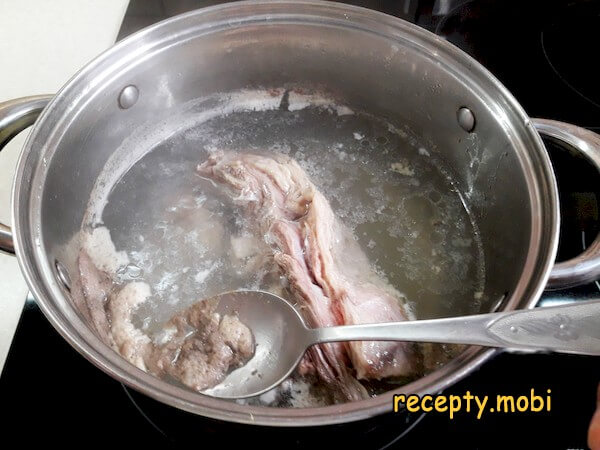
  3. The foam-skimming moment can't be missed. As the broth approaches boiling, grey-brown foam forms on the surface (denatured proteins, blood, impurities). Skim it off with a spoon, then reduce the heat. Skipping this step produces cloudy bitter broth.
    preparation of beef broth - photo step 3
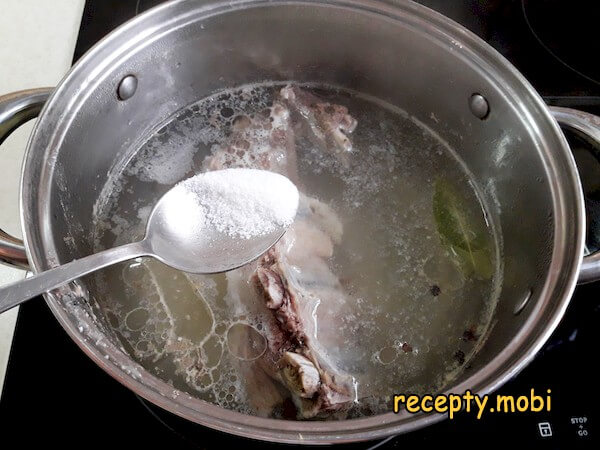
  4. Salt joins, spices add (bay leaf + allspice peas), pot covers with lid. Low-heat simmer for 1.5 hours produces tender pull-apart beef and concentrated rich broth.
    preparation of beef broth - photo step 4
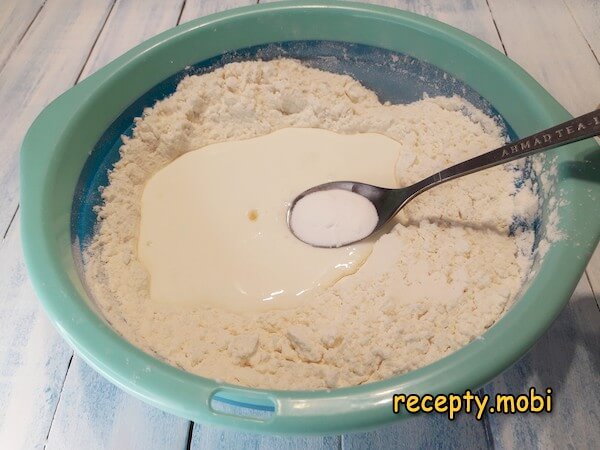
  5. Half-an-hour-before-broth-finishes is dough start time. Don't make it earlier — kneaded dough sitting on the table loses its leavening power as the soda-acid reaction progresses. In the bowl with salted flour, make a well, pour in kefir, and add baking soda DIRECTLY into the kefir (not into the flour). The kefir's acid activates the soda immediately — bubbles form before the flour incorporates.
    preparation of dough - photo step 5
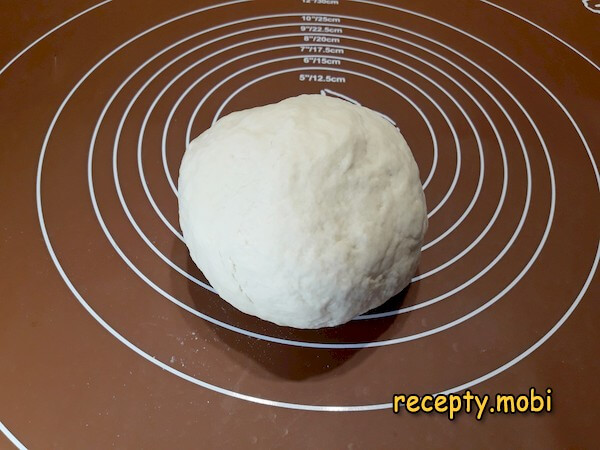
  6. Knead in the bowl first (until the loose flour incorporates), then move to a floured table. After full kneading, gather into a ball and rest under plastic wrap 5 minutes. The brief rest lets the gluten relax — easier rolling.

    dough - photo step 6
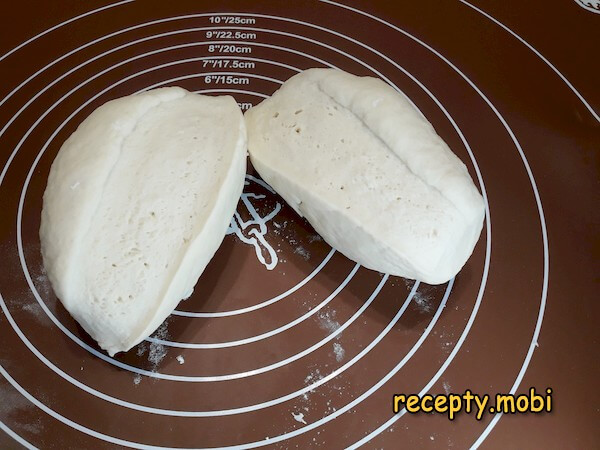
  7. Cut the rested dough in half (easier rolling). The cross-section reveals small air bubbles — the soda-kefir reaction working as intended. Bubble-rich dough will fluff up beautifully when boiled.
    dough - photo step 7
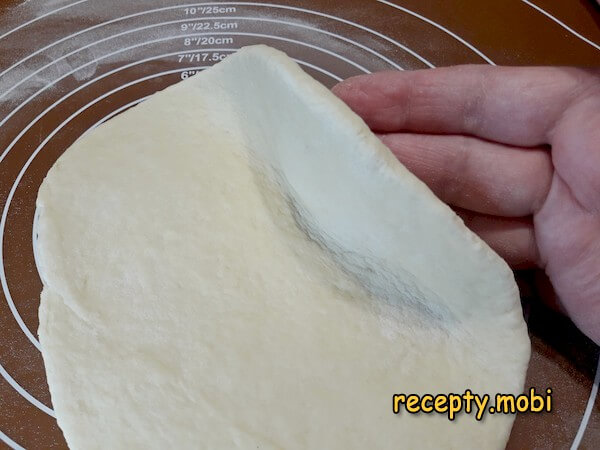
  8. Roll out into a sheet 1-1.5 cm thick. Thicker than 1.5 cm = excessive cook time + heavy heavy texture; thinner than 1 cm = collapse during boiling, no fluffing-up effect.
    preparation of Avar khinkal - photo step 8
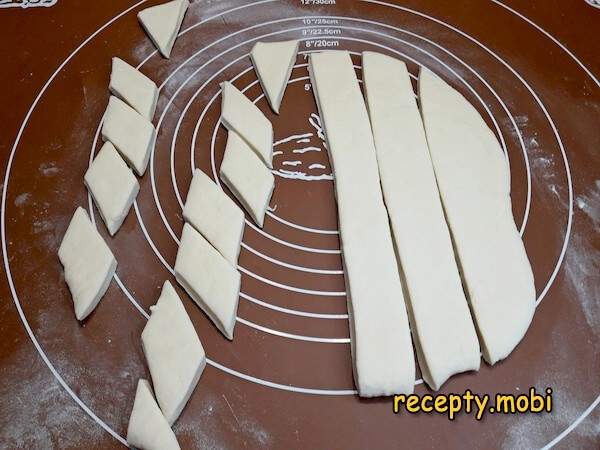
  9. Cut into 2.5-cm strips first, then diagonally into diamond + triangle shapes. The diagonal cuts create the characteristic Avar khinkal piece geometry.
    preparation of Avar khinkal - photo step 9
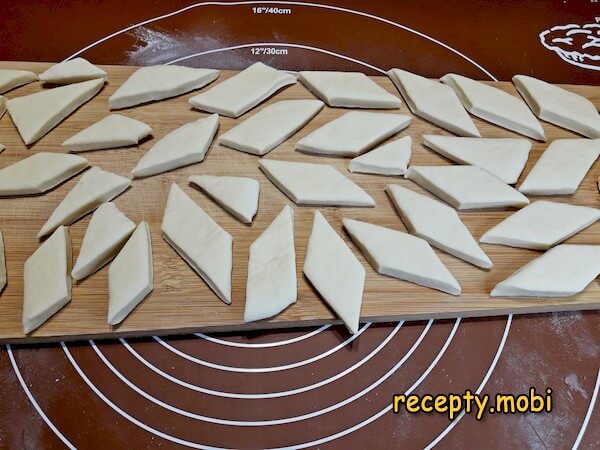
  10. Transfer the cut pieces to a board (single layer, not stacked — sticking risk).
    preparation of Avar khinkal - photo step 10
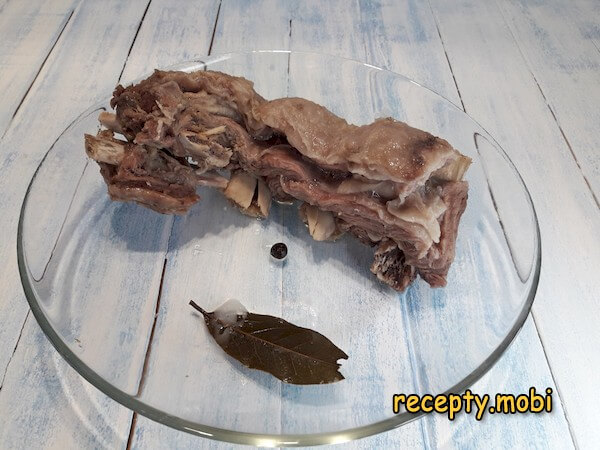
  11. By dough-cutting completion time, the meat is cooked. Remove from broth to a plate.
    boiled beef - photo step 11
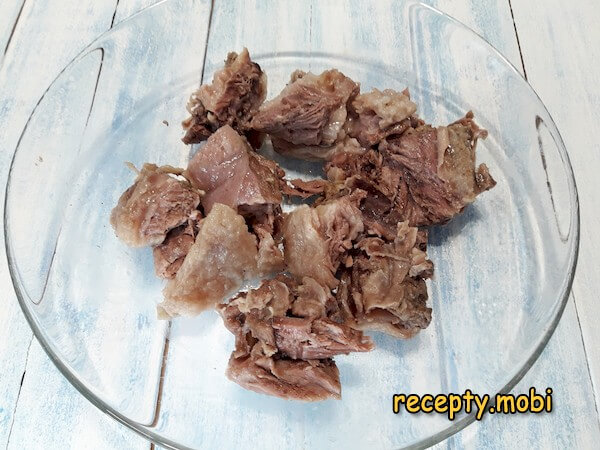
  12. Divide the cooked meat into serving pieces, removing all bones. The clean meat goes onto the serving platter.
    boiled beef - photo step 12
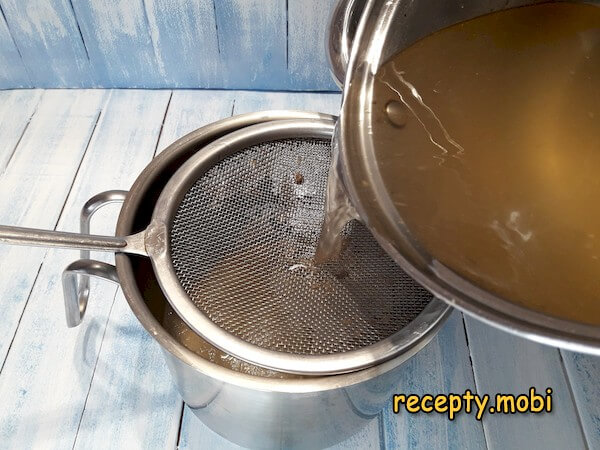
  13. Strain the broth — small bone fragments and any leftover impurities come out. Clean broth is essential for the final khinkal-cooking step.
    broth - photo step 13
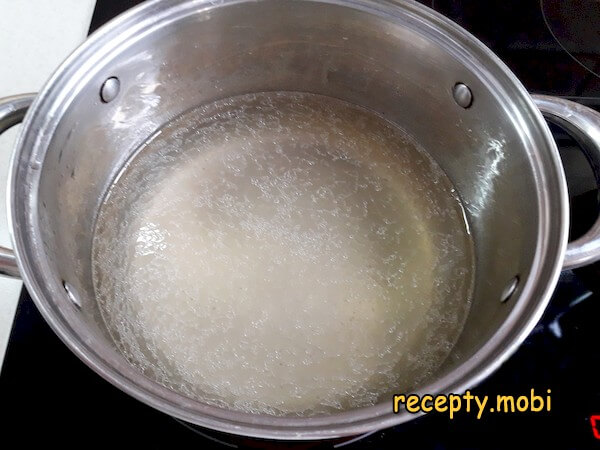
  14. Wash the pot, refill with the strained clean broth. Turn on high heat to bring to a vigorous boil.

    broth - photo step 14
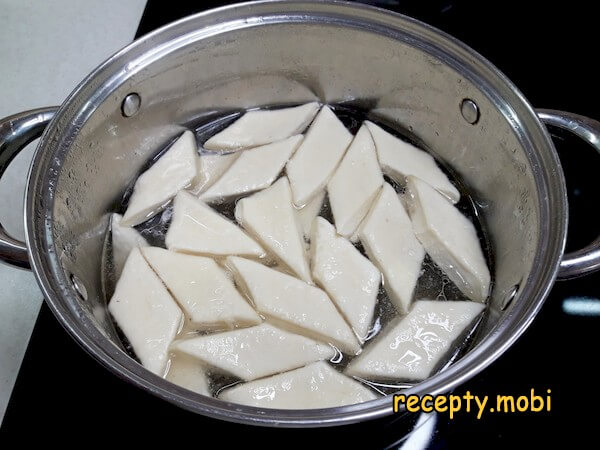
  15. When the broth boils vigorously, send the first batch of dough pieces in. SMALL batches are critical — overcrowding causes pieces to stick together and cook unevenly.
    preparation of Avar khinkal - photo step 15
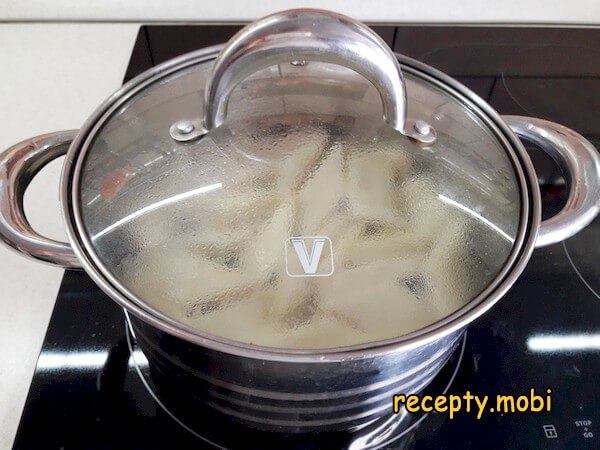
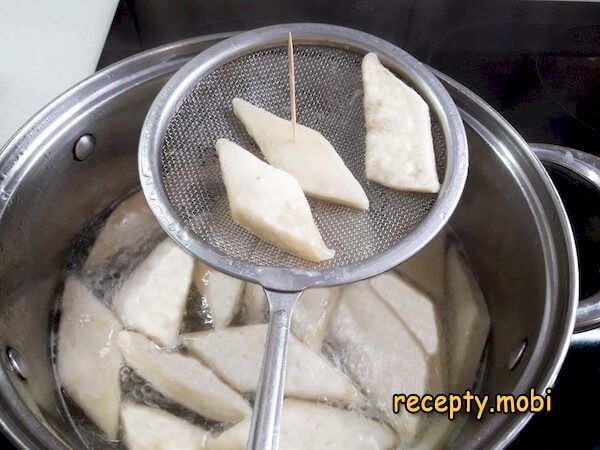
  16. Reduce heat to medium, cover with lid. From the moment dough pieces float to the surface, cook 2-3 minutes (1.5 cm thickness = 2 minutes; thicker = more time). Stir gently 1-2 times during cooking. The lid traps steam — important for full puffing.
    preparation of Avar khinkal - photo step 16
  17. Slotted spoon scoops the cooked pieces; IMMEDIATELY prick each one with a toothpick to release trapped soda gases. Skipping this step = dough darkens to grey + texture turns rubbery within minutes. The piercing is non-negotiable for proper khinkal.
    preparation of Avar khinkal - photo step 17
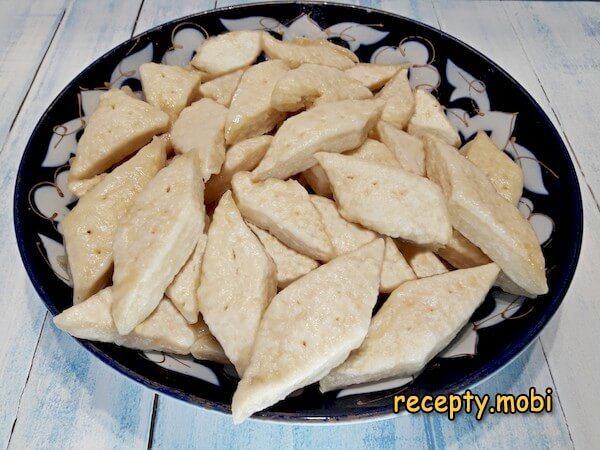
  18. Continue boiling all dough pieces in batches following the same method (boil-pierce-rest, boil-pierce-rest).
    preparation of Avar khinkal - photo step 18
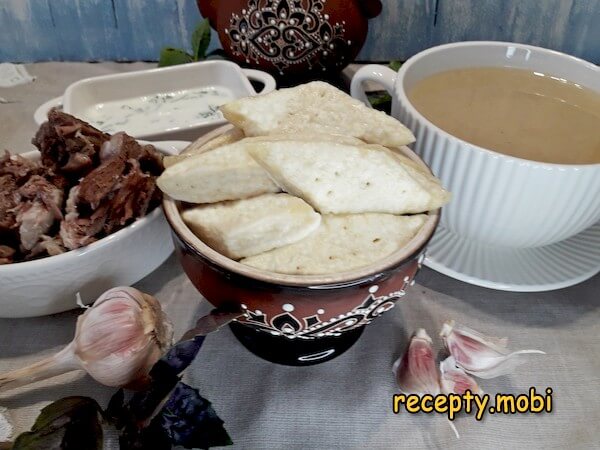
  19. The dish is ready. Serve Avar khinkal traditionally: meat + boiled dough pieces on a common platter (or separate dishes), broth in cups for sipping (it is "drunk" with the meal — not poured over), and a side bowl of sour-cream-garlic-herb sauce for dunking. Inside, the dough pads have fluffed up, become porous, and absorbed broth flavour. This hearty, soulful dish is the cultural heart of Dagestani family meals.

    Try it, enjoy your meal!

    Avar khinkal
    Avar khinkal

Tips and Tricks

Tip 1. THE COLD-WATER BROTH START IS DIRECTIONAL. Step 2's cold-water-over-cold-meat instruction follows a culinary principle: cold water draws soluble proteins, fats, and flavour OUT of meat into the broth as it heats. This produces RICH BROTH (highly desirable for Avar khinkal where broth IS a serving component) at the cost of slightly less flavoured meat. Hot-water start does the opposite — meat surface seals fast, locking in juices but leaving the broth thin. Khinkal demands cold-start; soup demands cold-start; pure boiled-meat dishes can use hot-start.

Tip 2. THE SODA-INTO-KEFIR (NOT INTO FLOUR) IS PRECISION CHEMISTRY. Step 5's instruction is deliberate: when soda meets acidic kefir directly, the CO2 reaction starts within seconds (visible bubbling). When soda is mixed into flour first, the reaction is delayed and reduced (less leavening when needed during boiling). The fluffiness of finished khinkal directly depends on this trick. For a parallel braised-meat companion dish worth pairing, see Beef Stroganoff with Mushrooms.

Tip 3. THE TOOTHPICK PRICK IS NON-NEGOTIABLE. Step 17's immediate piercing of each cooked dough piece serves a critical purpose: trapped soda gases inside the porous dough continue to react with residual moisture, causing oxidation that turns the dough grey-brown and rubbery within 5-10 minutes. The pinprick releases gases, halting the reaction. Without piercing: visually unappealing grey khinkal that's tough to chew. With piercing: snow-white airy pillows that stay tender. This is THE classic Avar khinkal mistake to avoid.

Tip 4. THE SAUCE COMPLETES THE DISH. The sour-cream-garlic-herb sauce mentioned at step 19 is essential — Avar khinkal without sauce is incomplete. Standard recipe: 200 g sour cream + 3 garlic cloves crushed + 2 tbsp finely chopped fresh dill + 2 tbsp finely chopped fresh cilantro + salt to taste. Mix well, let sit 15 minutes for flavours to meld. Variations: add 1 tsp lemon juice for brightness, or substitute Greek yogurt for sour cream (lighter version), or add 1 tsp adjika (Caucasian spice paste) for heat. For a Central-Asian one-pot meat-and-vegetable companion dish worth comparing, try Dumlyama in Uzbek Style.

Frequently Asked Questions

What's the difference from Georgian khinkali?

The names are similar but the dishes are completely different. Georgian khinkali are filled dumplings — meat or other filling sealed inside dough pouches, eaten by hand grasping the top knot. Dagestani khinkal (this recipe) are unfilled boiled dough pieces, served alongside (not containing) the meat and broth. The Avar version uses kefir+soda dough (fluffy texture); the Dargin version uses thinner unleavened dough. Both Dagestani styles share the multi-component plating philosophy: dough + meat + broth + sauce as separate components consumed together. Don't confuse the two cuisines — same root word, vastly different dishes and eating styles.

Can I use other meats?

Beef is the traditional choice for Avar khinkal — the long simmer extracts rich flavour and gelatin from the bones. Lamb works as a substitute (highland Caucasian preference, slightly stronger flavour). Mutton is even more authentic to Dagestani highland cooking but requires longer cooking (2.5-3 hours) for tenderness. Avoid: pork (not used in Caucasian Muslim cuisine, wrong flavour profile), chicken (broth too thin, meat texture wrong), turkey (similar problems to chicken). Whatever meat is chosen: bones and fatty streaks both essential for proper broth and tender meat. Don't use lean cuts alone.

Why does the dough turn grey if I don't pierce it?

Two chemical processes are responsible. First: trapped CO2 from the soda reaction continues to combine with moisture inside the porous dough, creating sodium carbonate residues that have a grey-greenish tinge. Second: the alkaline soda environment promotes Maillard-type reactions during the steaming-while-cooling phase, browning the dough's interior unattractively. The toothpick prick releases the trapped gases instantly, stopping both reactions. Pierced dough stays snow-white and tender; unpierced dough becomes grey-brown and rubbery within 5-10 minutes. The piercing is the single most important technique to remember.

Can I prepare components in advance?

The broth and meat freeze and reheat well — make 1-2 days ahead, refrigerate separately, reheat at serving time. The cooked dough pieces, however, are best fresh — they lose their fluffiness and become dense within hours. Best meal-prep approach: cook broth + meat 1-2 days ahead, make sauce 30 minutes ahead, but cook the dough pieces only at serving time (15 minutes total work). Freezing the cut raw dough pieces also works — freeze on a tray, transfer to a bag, boil from frozen (add 1 minute to cooking time). This streamlines weekday preparation considerably.

Write comments...
symbols left.
or post as a guest
Loading comment... The comment will be refreshed after 00:00.

Be the first to comment.