avg —
Burgundy-Style Beef

Instructions
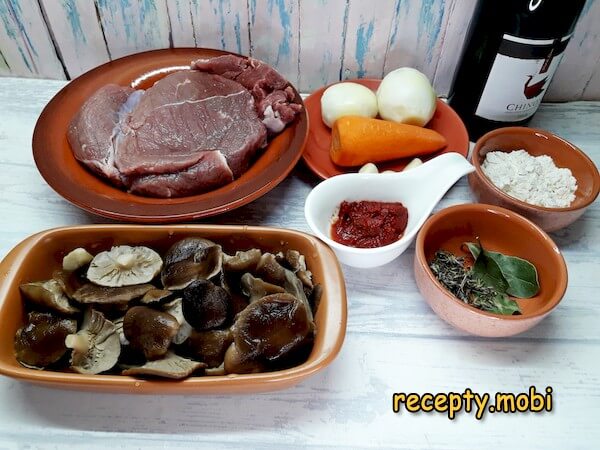
I prepare the ingredients for Beef Bourguignon. You can use any beef, including cuts with sinews and membranes. During cooking everything softens thoroughly and is no longer noticeable. If you use young veal instead of beef, the stewing time is halved. It is better to choose small mushrooms so they remain distinct in the finished dish.
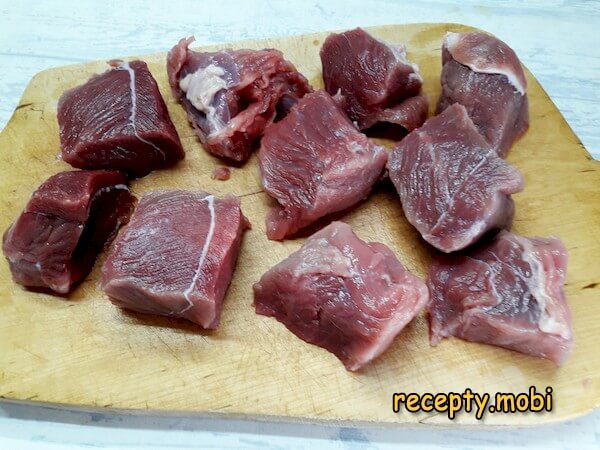
I cut the meat into fairly large pieces, about 5 by 5 cm.
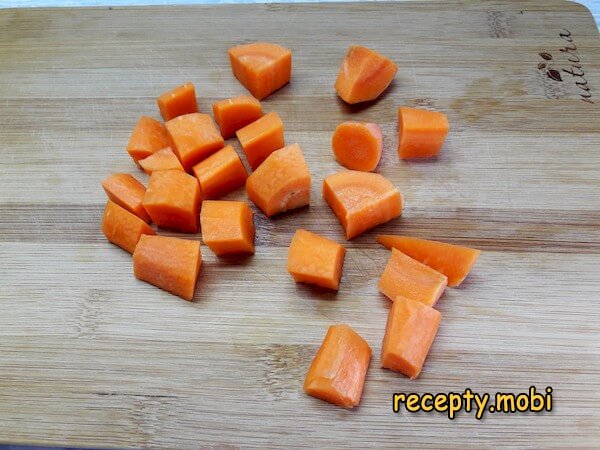
I prepare the carrot in cubes, 2 by 2 cm.
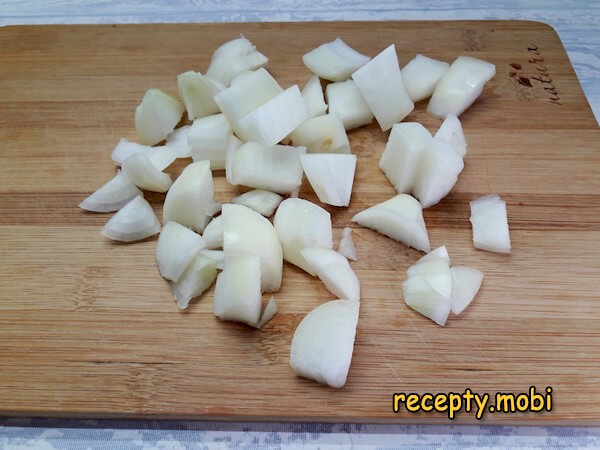
I cut the onion to the same size.
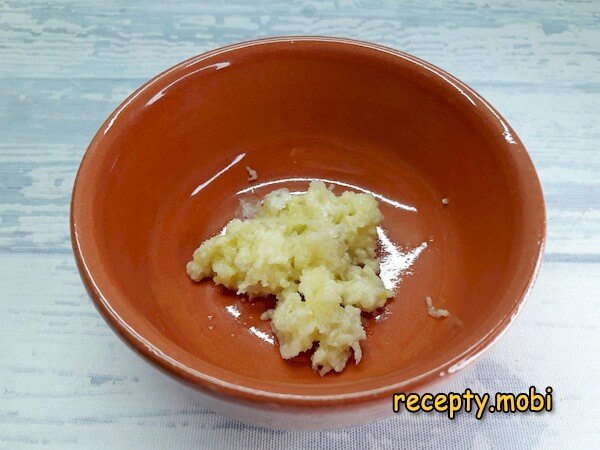
I crush the garlic into a paste by any method.
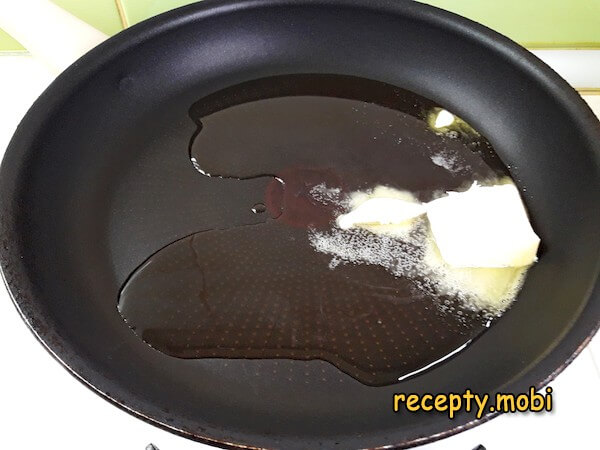
I heat 30 ml of vegetable oil and 25 g of butter in a skillet.
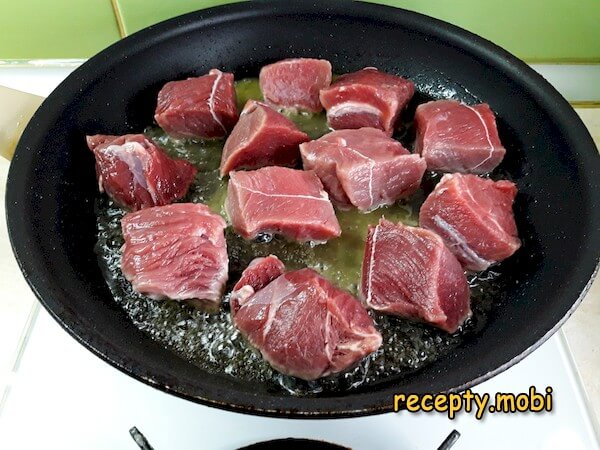
I lay the meat across the whole pan, leaving space between the pieces, so that it fries over high heat rather than stews. There is no need to cook the beef through; you only need to seal in the juices by frying the meat on all sides until a nice crust forms.
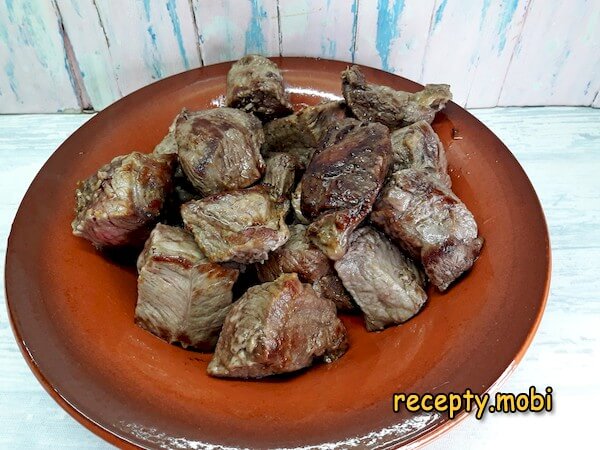
I transfer the ready pieces to a plate and put the next batch into the same skillet.
Next, without changing the skillet, I add the onion and carrot. I fry them over high heat for 2 minutes.
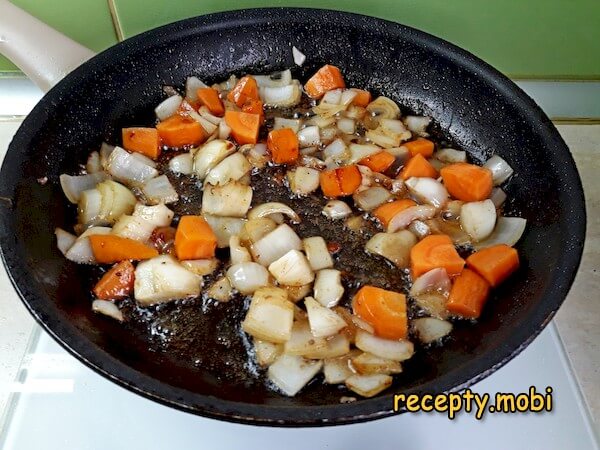
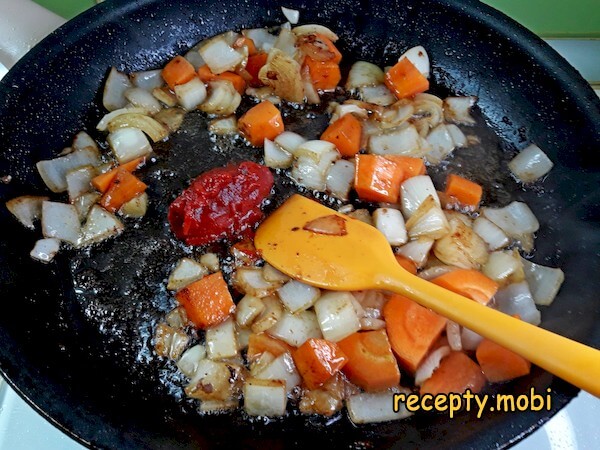
Then I reduce the heat to medium. I add the tomato paste and warm it slightly.
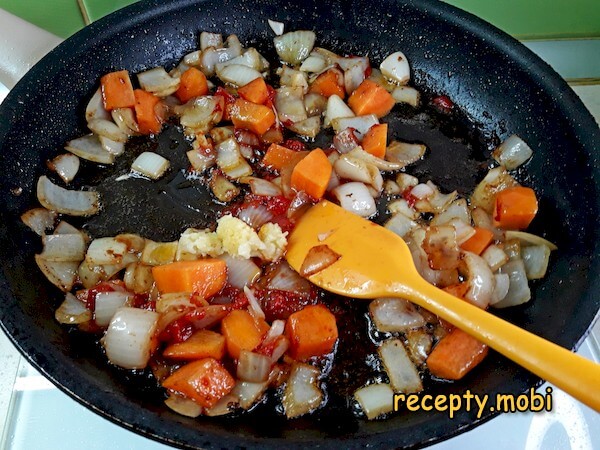
I flavour the vegetables with half of the prepared garlic.
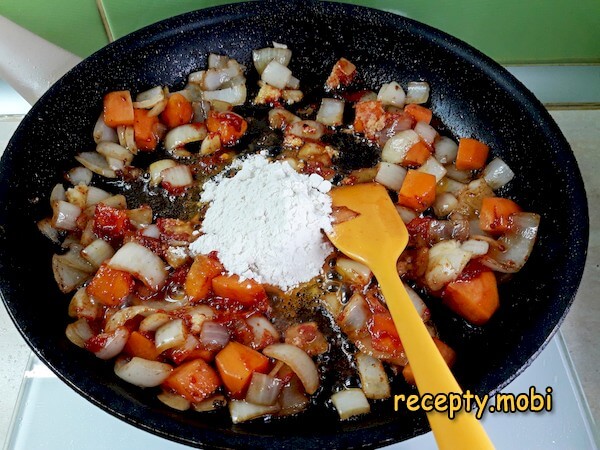
And straight away I sprinkle in the flour – this is the thickener for the future sauce. I quickly rub it across the whole skillet.
Right away I pour in the wine.
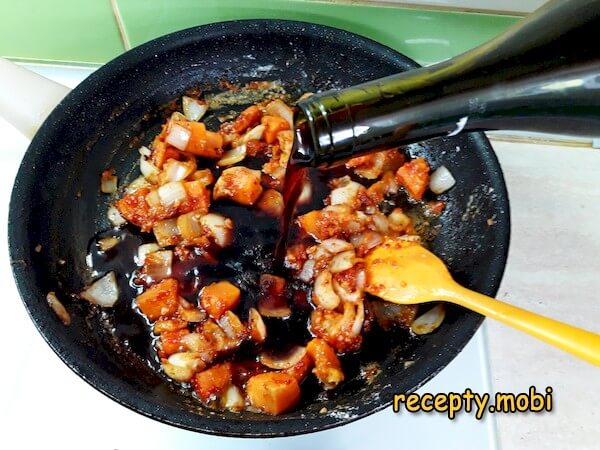
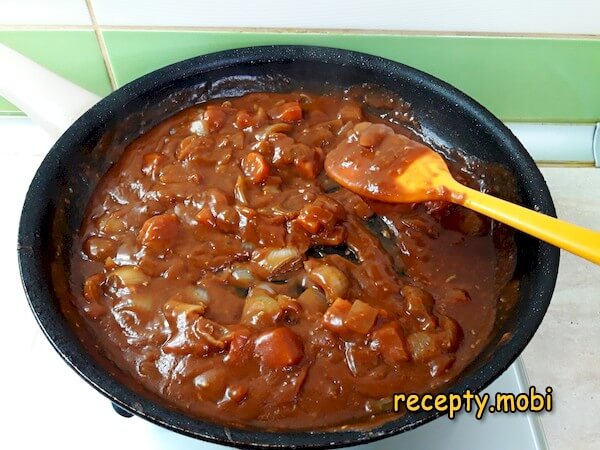
I bring the mixture to a boil, stirring constantly, so that a thick sauce forms.
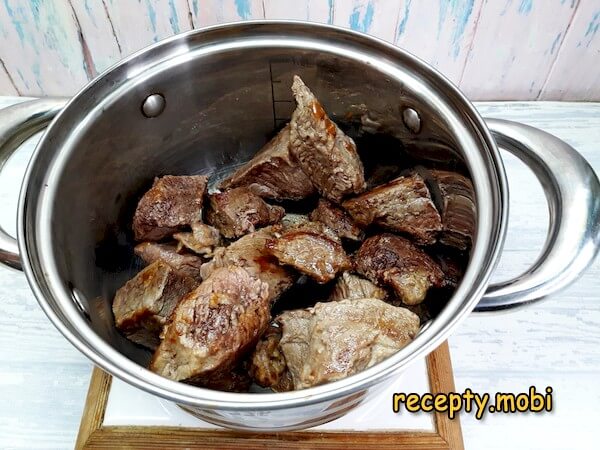
I take a pot (it must have a thick bottom, otherwise during the long simmer the flour sauce will start to scorch) and transfer the meat into it.
I pour the sauce over it.
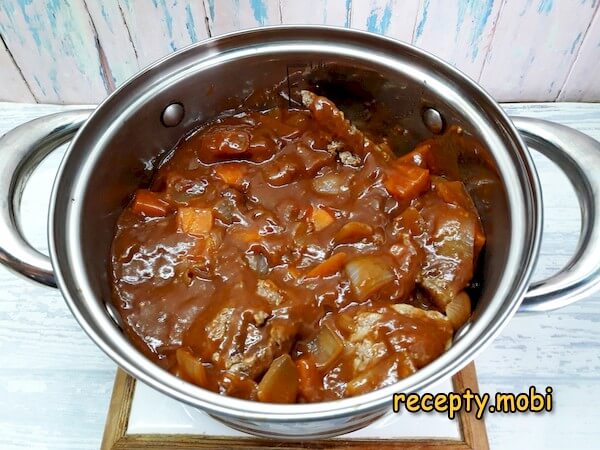
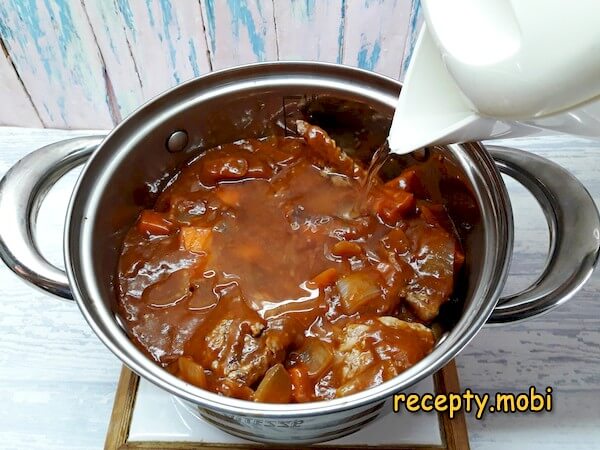
I add hot water so that the meat is covered with liquid, but not above its level.
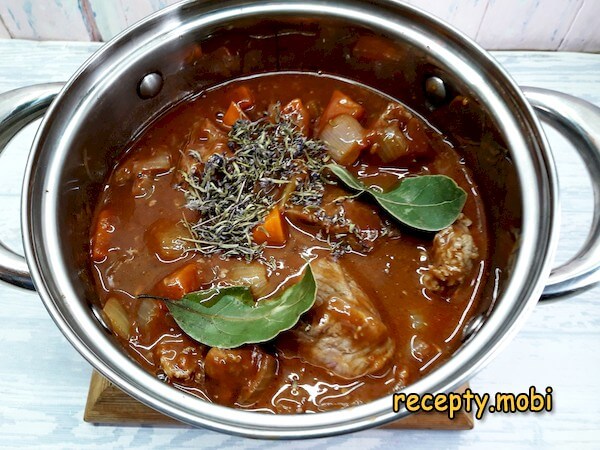
I add the bay leaves and thyme (I do not salt yet). I stir everything. I put the pot on low heat and simmer the meat for 3 hours. If the cookware is of good quality, you will not even need to stir the meat – nothing will scorch.
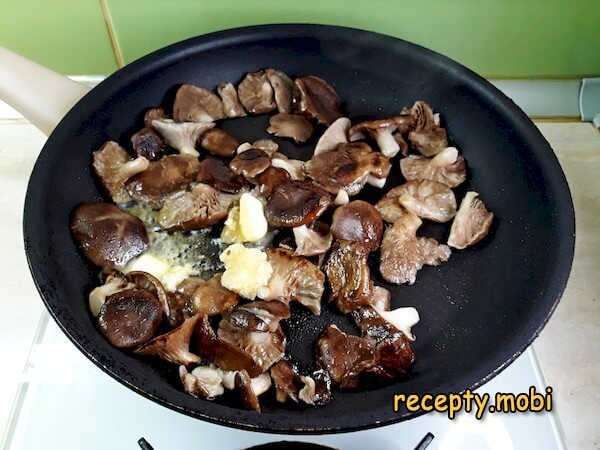
About 15-20 minutes before the dish is done, I fry the mushrooms over high heat in the remaining small amount of vegetable oil, so that they do not stew but acquire a nice crust. At the end I reduce the heat and add the butter and garlic.
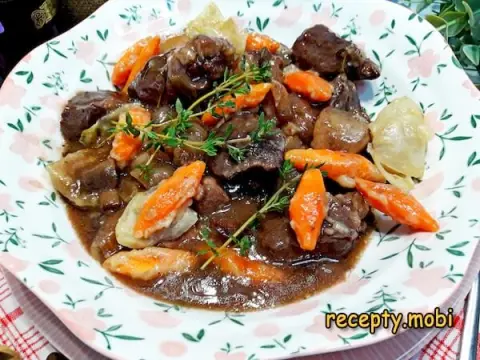
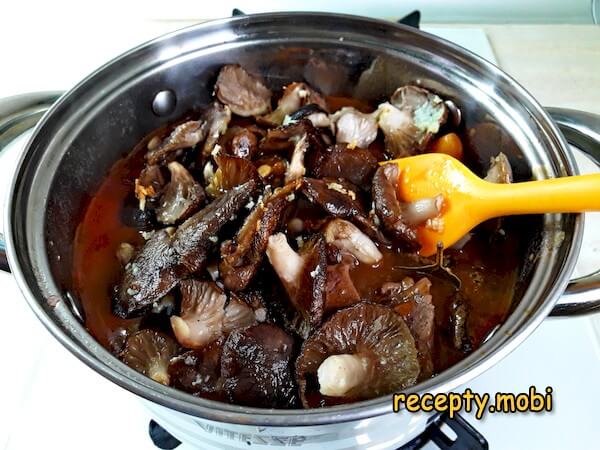
I transfer the mushrooms to the meat. I add salt and sugar. I stir. I check the taste and adjust it if needed. The sauce has no taste of alcohol – it has all evaporated, leaving only the indescribable taste and aroma of the reduced wine. After a couple of minutes I turn off the heat. The Beef Bourguignon is ready.


Tips
- 1
Sear the meat over high heat – the secret to juiciness. Without searing, the juices "run" into the sauce. A crust on all sides keeps the meat juicy after 3 hours of simmering.
- 2
Flour into the vegetables with wine – the secret to the sauce. Without flour you get a "soup"; with flour, a thick, velvety sauce. Rub it in quickly so there are no lumps.
- 3
A thick bottom – the secret against scorching. Three hours on a thin bottom and the flour will burn, giving bitterness. Cast iron or thick stainless steel lets the meat simmer unattended.
- 4
Mushrooms at the end – the secret to texture. If you add them with the meat, they will fall apart over 3 hours. The fried mushrooms are added 20 minutes before the dish is done. The same principle works in other kinds of meat slow-braised in wine.
FAQ
Which beef should I choose? +
The flesh of the shoulder or the cheeks is ideal (700 g, with sinews, perfect for long simmering). Alternatives are boneless beef shank (700 g, even more tender), beef neck (700 g, a classic for Burgundy), young veal flesh (700 g, with the time cut in half to 1.5 hours), beef brisket (700 g, with a little fat for a brighter flavour), or a 50/50 mix of beef and veal (350 g each). Do not use beef tenderloin (that is for steaks, not for slow cooking) or frozen meat without thawing. For the French classic, you must use a cut with sinews or a little fat.
What can replace dry red wine? +
Alternatives are a Burgundy Pinot Noir (300 ml, the classic), Cabernet Sauvignon (300 ml, brighter), Merlot (300 ml, softer), Syrah/Shiraz (300 ml, more piquant), any dry red from 12% (300 ml, the budget option), a 50/50 mix of red wine and beef stock (150 ml each), alcohol-free red wine (300 ml), or grape juice plus 2 tbsp of wine vinegar (300 ml, the alcohol-free option). Do not use sweet dessert wines (too cloying) or port (a different flavour profile). For the Burgundy classic, you must use a dry red.
How long does Beef Bourguignon keep? +
In the refrigerator, in the pot under a lid, for 3-4 days. Any longer and the meat loses its tenderness. Before serving, reheat it over low heat for 10-15 minutes, stirring constantly so the sauce does not scorch. In the freezer, in portions, for up to 2 months; thaw it in the refrigerator for 8-10 hours. The dish is at its best the day after cooking (once it has "rested" in the cold and the aromas have woven together); on the third day the flavour is deeper still. Do not leave it at room temperature for longer than 4 hours, as the meat sauce spoils quickly. It is ideal to cook a batch for 2-3 servings of meals.
What to serve with Beef Bourguignon? +
The French classic is mashed potatoes made with milk and butter. It also goes with small boiled "baby" potatoes, boiled or steamed green beans, and a baguette or ciabatta for the sauce. Wide boiled pasta (pappardelle, tagliatelle) is excellent, as is a glass of the same red wine used in the sauce, a sprinkle of grated parmesan on top, or a fresh green salad with herbs. It also suits boiled spelt or bulgur, risotto with parmesan, and freshly home-baked white bread. It is a universal hot dish for guests and the festive table.
- Comment
or post as a guest
Be the first to comment.