avg —
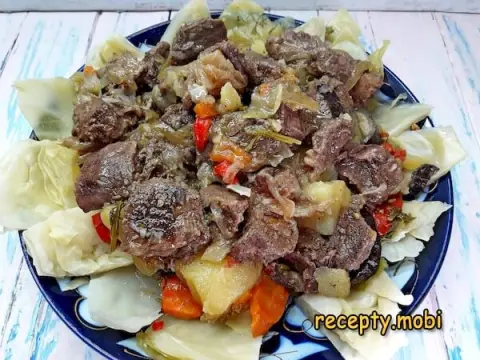
Stewed Beef with Vegetables

Instructions
I prepare the ingredients for stewing beef with vegetables in a pan. If young veal is used instead of beef, the stewing time is cut in half. The set of vegetables can be varied to your own taste, replacing any unwanted or unavailable items with others.
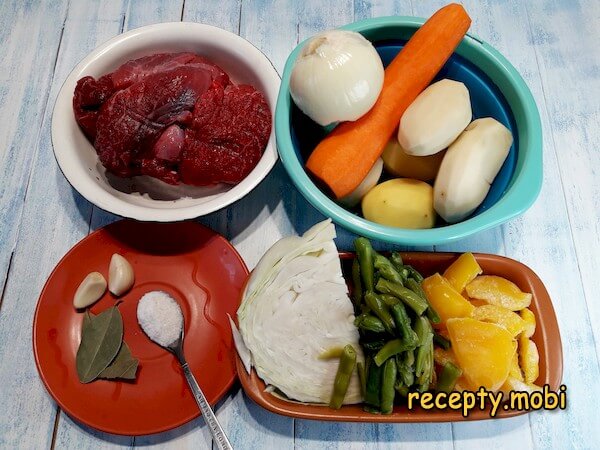
Since the meat takes longer to cook than the vegetables, I start with it. I cut the beef into pieces of about 2.5 centimetres – I do not trim away any sinews or membranes, as they will soften and dissolve during stewing.
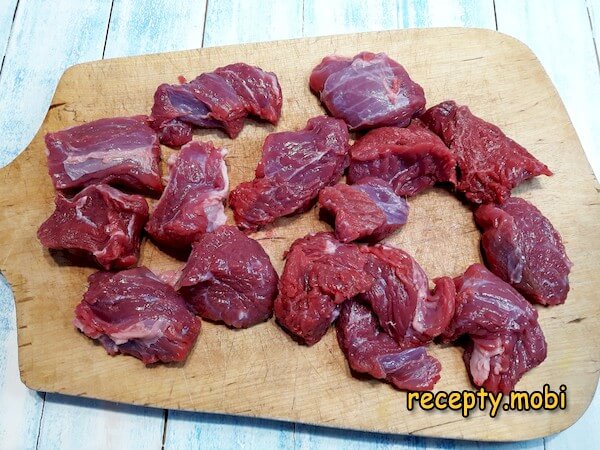
In a deep frying pan or a heavy-bottomed sauté pan I melt a mix of butter and vegetable oil – the butter gives aroma, while the oil protects it from burning over high heat.
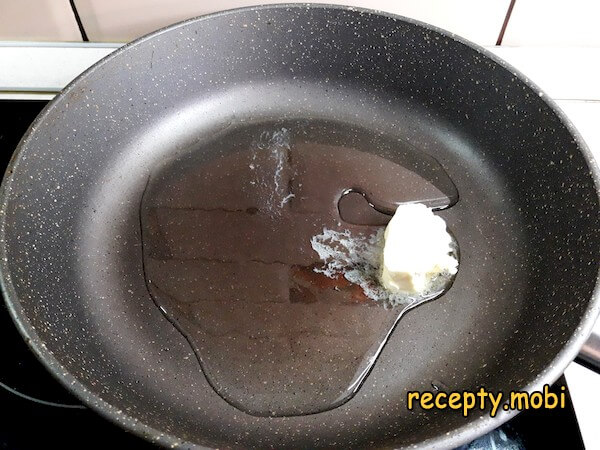
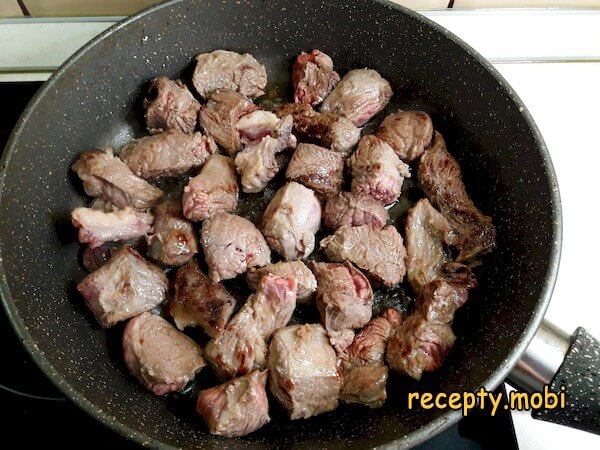
I add all the meat and start frying it over high heat (without salting) – salt at this stage would draw out the juices and the meat would "boil" instead of frying.
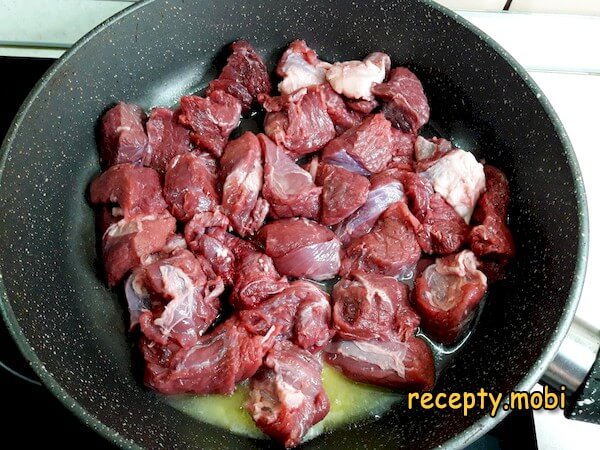
Every 2-3 minutes I turn the pieces over until they take on a light golden crust – the "crust" seals the juices inside the meat.
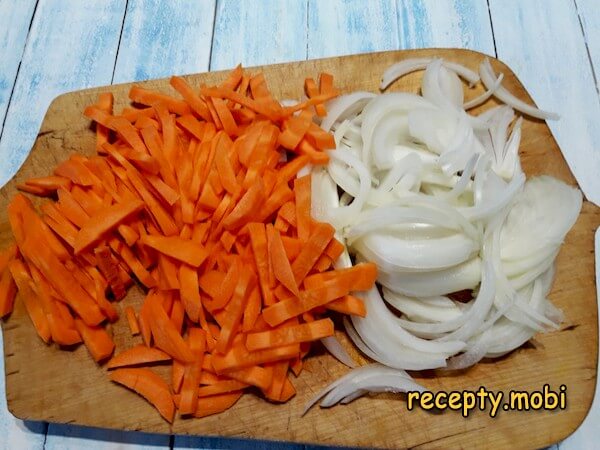
Meanwhile I shred the onion into thin half-rings and cut the carrots into matchsticks – matchsticks keep their recognisable shape during stewing.
I add the chopped vegetables to the pan – to the already browned meat.
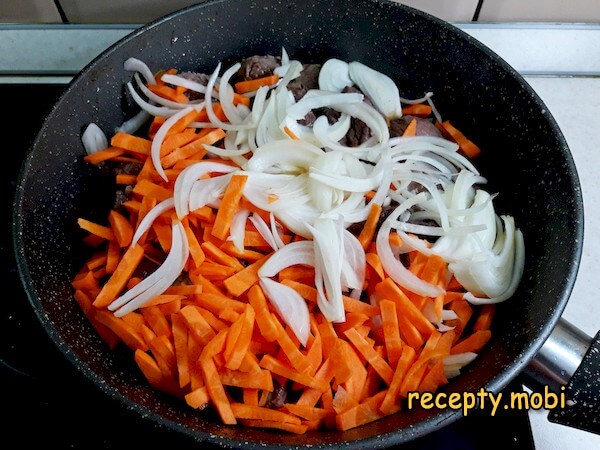
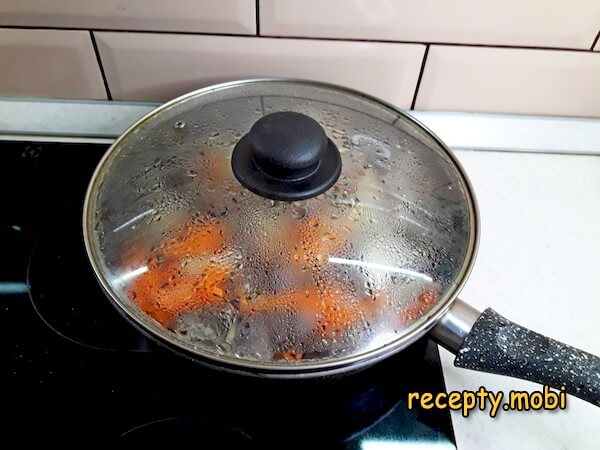
I stir everything, reduce the heat to medium and stew the mixture under a lid for 10 minutes – so that the onion and carrot soften and give their aroma to the meat.
Then I pour in hot water so that it reaches almost to the top of the meat pieces – hot specifically, so as not to halt the cooking process.
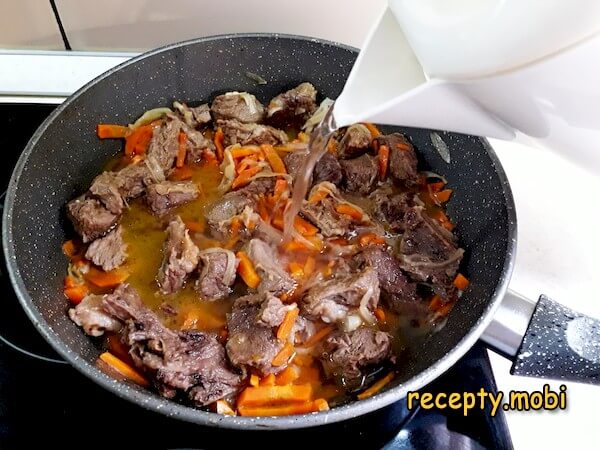
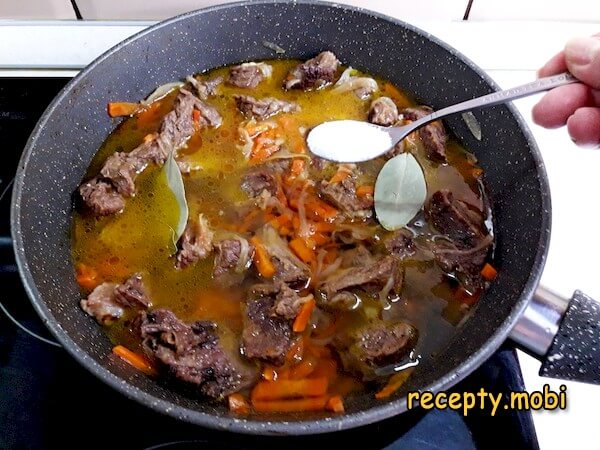
I add the bay leaves and salt. I cover the pan again and, over medium heat (so there is a clear simmer), continue stewing for another 1 hour – an hour is exactly what is needed to soften the beef to a "fibrous" texture.
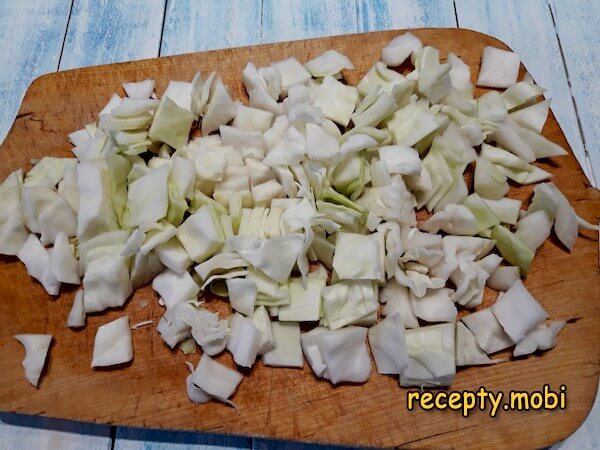
I cut the cabbage into medium cubes – about 2 cm in size for a harmonious composition.
I prepare the potatoes in roughly the same shape – an equal size of the vegetables gives even stewing.
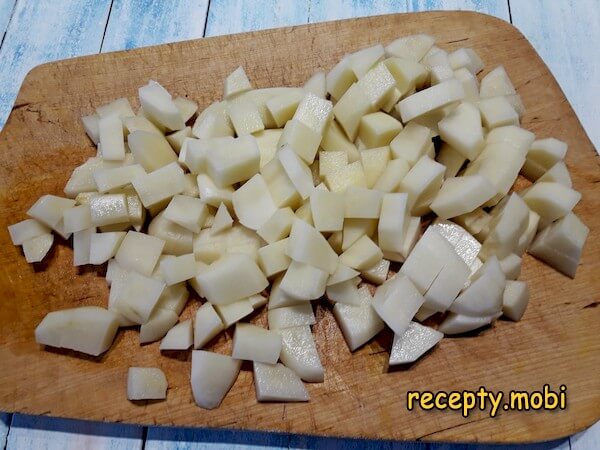
Once the allotted time is up, I transfer it to the meat – the potatoes are added first, because they take the longest to cook of all the vegetables.
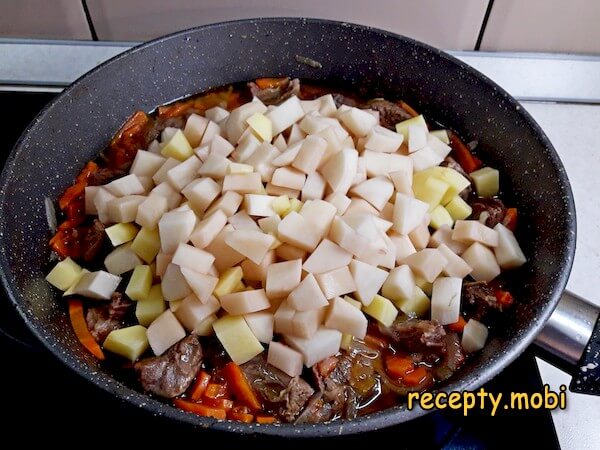
There is very little liquid left in the pan, so you should once again top up with hot water to the top of the added ingredients – so that the dish stews evenly.
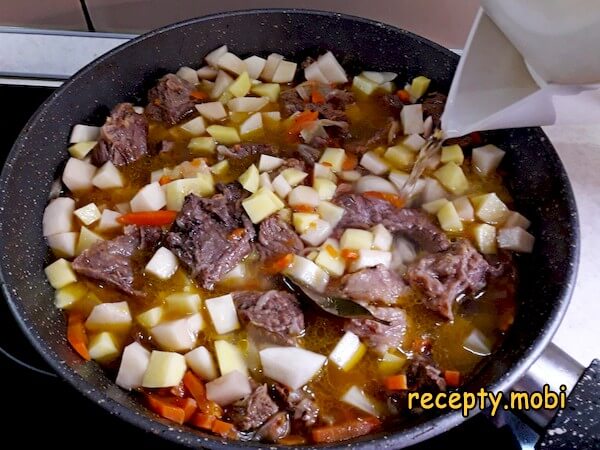
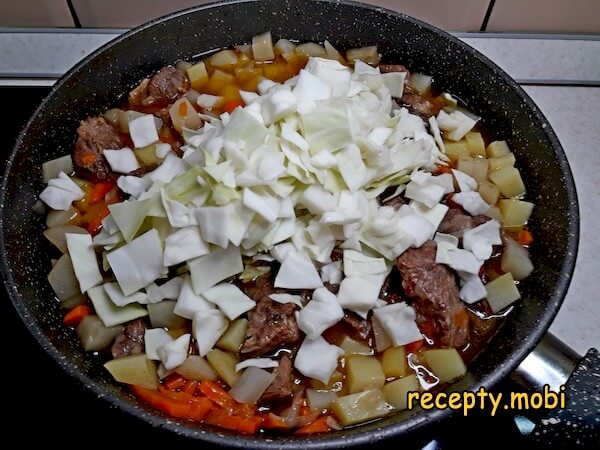
Straight away I add the chopped cabbage – together with the potatoes for even doneness.
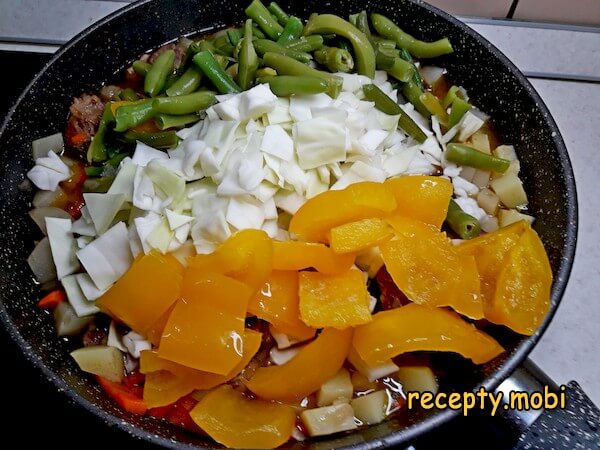
And along with it – the bell pepper and the green beans. I stir everything – the bright vegetables will add colour variety to the finished dish.
I finely chop the garlic – with a knife, not through a press, to preserve a textural accent.
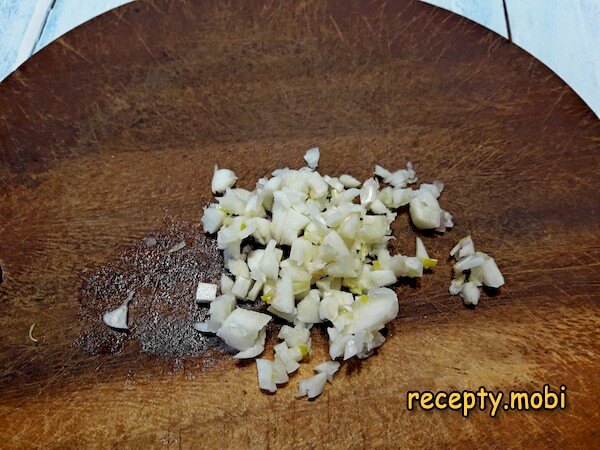
I send it into the pan, distributing it evenly throughout the mixture – the garlic will add a final spicy note.
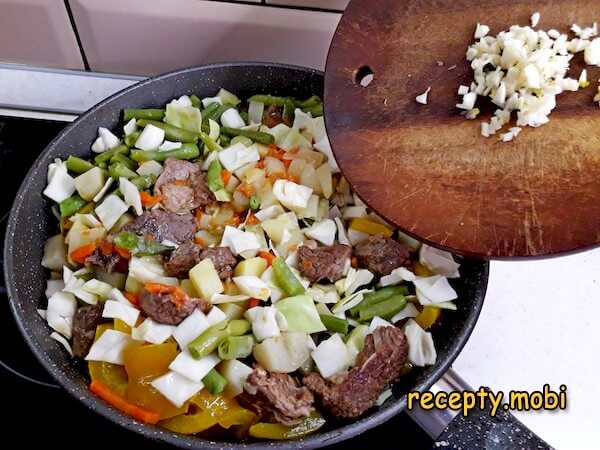
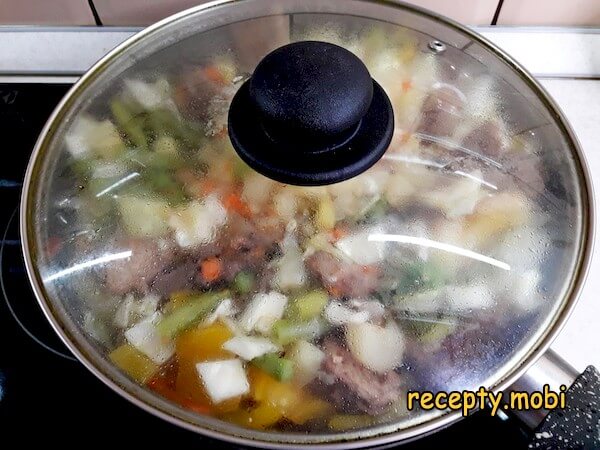
Next I let the beef with vegetables simmer under the lid for half an hour. At this stage I check the mixture for salt – it needs to be added to your own taste.
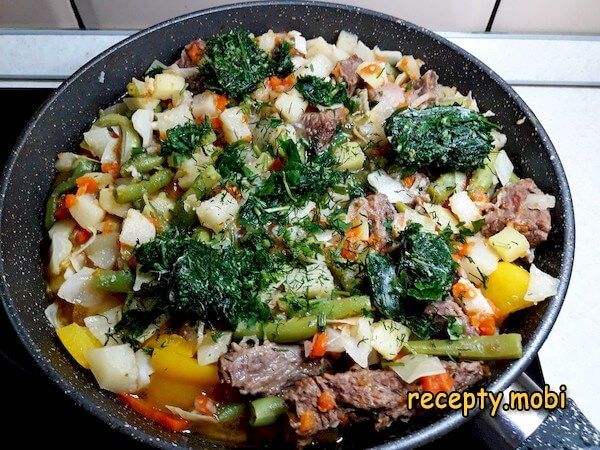
Right at the end (about 2 minutes before finishing) I season everything with fresh or frozen herbs – fresh herbs in a hot dish give a bright, herbaceous bouquet.


Tips
- 1
MEAT WITHOUT SALT – the secret of juiciness. Salt at the searing stage draws the juices out of the meat – it "boils" in its own juice instead of frying to a golden crust. Salt is added only after searing, once the meat is already "sealed" by a fried crust – so all the juices and aroma stay inside.
- 2
VEGETABLES IN TWO STAGES – the secret of even doneness. Potatoes and cabbage need 30 minutes of stewing, pepper and beans 15-20 minutes. If you add everything at once, the pepper and beans will turn to mush by the time the potatoes are ready. The two-stage loading gives the perfect result: the vegetables keep a recognisable texture and do not turn into a single mass. A similar principle is used in veal stewed in yogurt.
- 3
BUTTER + VEGETABLE OIL – the secret of aroma without burning. Pure butter over the high heat of searing will burn and turn bitter. Pure vegetable oil has no aroma. Combining the two gives the aroma of butter while the vegetable oil protects it from burning. It is a secret of the European culinary school for all kinds of frying and stewing of meat.
- 4
VARIATIONS WITH RED WINE – the secret of a gourmet version. Using the same technique, you can make a premium version with dry red wine instead of part of the water. On the principle of beef bourguignon, a bottle of red wine turns simple stewed beef into a restaurant dish of French cuisine.
FAQ
Which cut of beef is best for stewing? +
Cuts with connective tissue and sinews are ideal: shoulder, brisket, neck, shank, hock. With long stewing the connective tissue turns into gelatine – the meat becomes tender, "melting" in the mouth, and the broth thick and rich. Purely lean tenderloin is not suitable for stewing – it will turn out dry and stringy. Among modern cuts: deep brisket, onglet, flank steak – all are good for long stewing. The cooking time depends on the cut: young veal 30-45 min, ordinary beef 1-1.5 hours, an old cow up to 2-3 hours.
Can beef be replaced with pork? +
Yes, the recipe is versatile. Pork (shoulder, neck) stews for less time – 45 minutes instead of an hour. From poultry: chicken 25-30 minutes, duck 1 hour, turkey 40 minutes. Alternative options: young mutton (45-50 min), rabbit (40 min), lamb (40-45 min). Not suitable: chicken fillet (cooks too quickly, falls apart), beef fillet (dry after long stewing). The main rule – meat with sinews or a good layer of fat for long stewing.
How long does stewed beef with vegetables keep? +
In the fridge in an airtight container – up to 4 days. On the second day the flavour becomes richer – all the components "steep" in one another. Before serving I reheat it in a pan or in the microwave for 3-5 minutes. It can be frozen for 3 months, thawed in the fridge for 12 hours before reheating. After freezing the potatoes may turn watery – it is better to take them out before freezing and add fresh ones when reheating. An ideal "meal prep" dish for a busy week: one pan = 2-3 lunches.
What to serve stewed beef with? +
The dish is self-sufficient on its own – meat and vegetables in a single plate. If you want to add to it: boiled rice, buckwheat, mashed potatoes, pasta, quinoa. A fresh salad of leafy greens with a mustard dressing. Black bread or "Borodinsky" bread for a "saucy" serving (dipping into the gravy). For sauces: home-made ketchup, adjika, sour cream with herbs, tkemali for spicy notes. For drinks: dry red wine (cabernet, merlot, montepulciano), fruit drinks, home-made compotes, dark beer. For a family dinner – with a glass of red wine.
- Comment
or post as a guest
Be the first to comment.