avg —
Turkish Kofte

Instructions
I prepare the ingredients for the Turkish kofte. For those who like it spicy, you can also add a little (a pinch of) hot cayenne pepper.
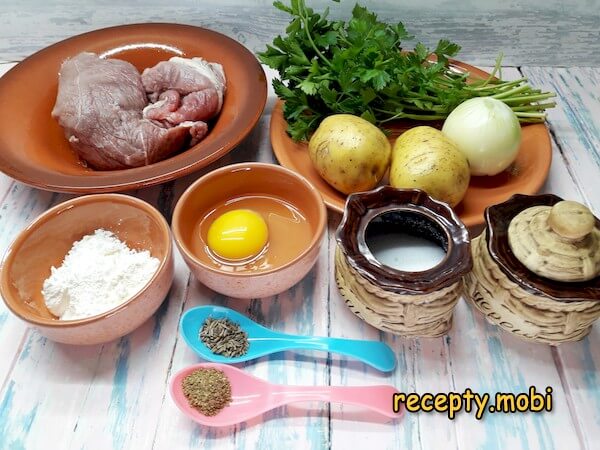
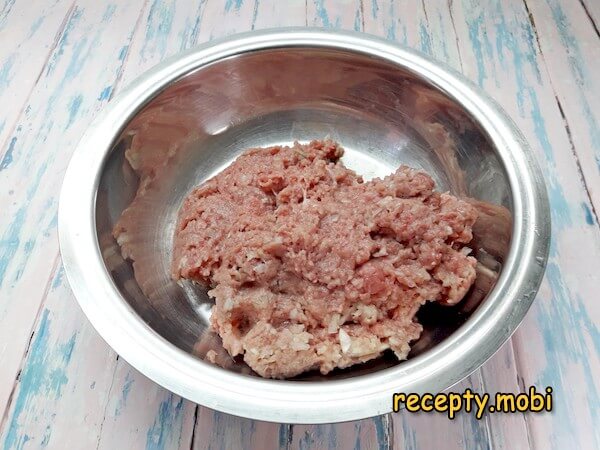
Clean the beef of any membranes and grind it together with the onion in a meat grinder or food processor.
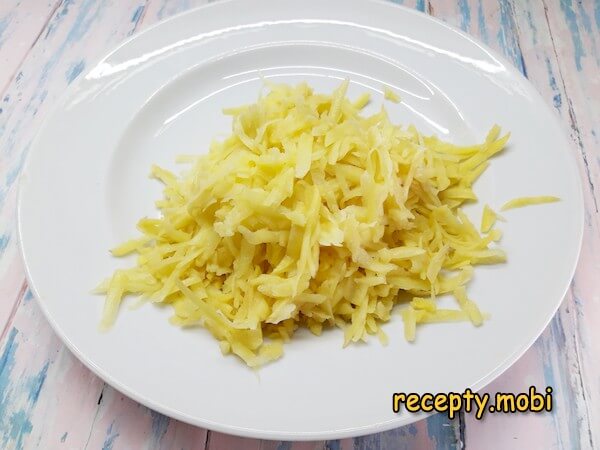
Peel the potatoes and grate them on a coarse grater.
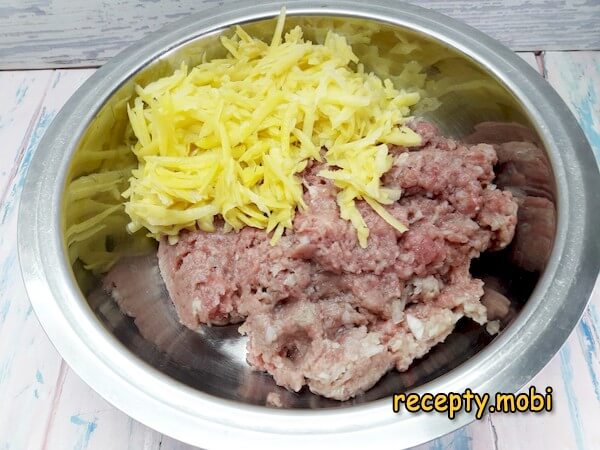
Add the grated potato to the beef.
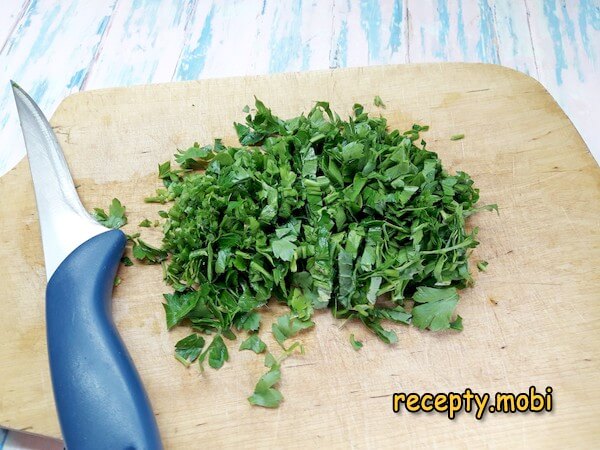
It is better to chop the parsley by hand rather than grinding it with the meat. That way distinct pieces of leaf are visible in the mixture, instead of a crushed green paste.
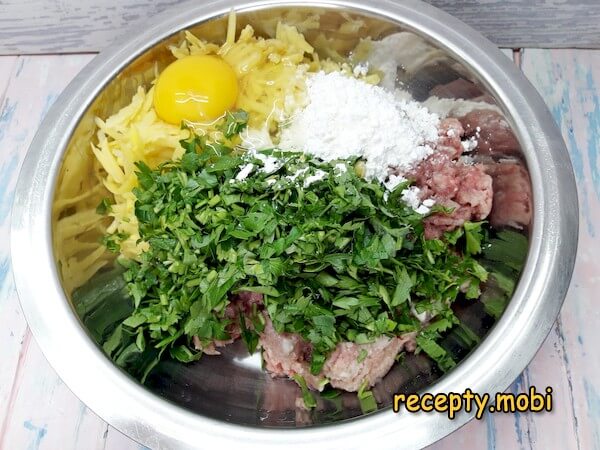
To the shared bowl I add the egg, the chopped herbs and, to bind everything together better, the starch. It also takes up the moisture that has been released.
I season the mixture with salt and spices.
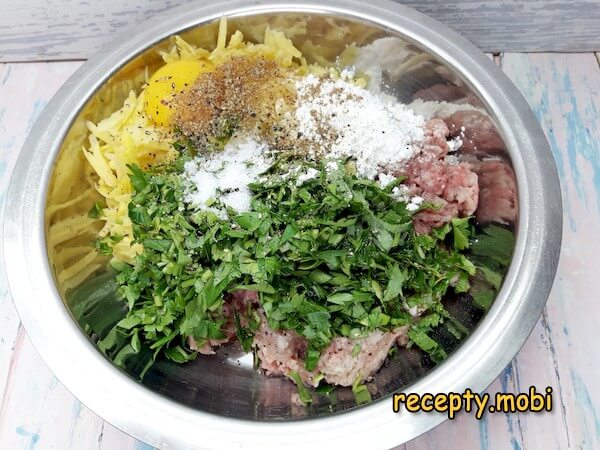
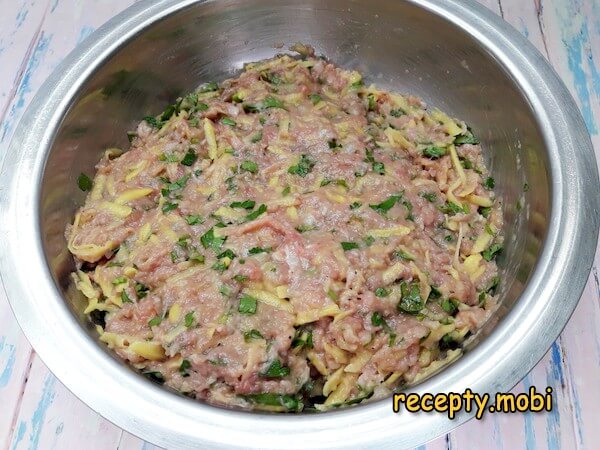
I mix the filling, trying to distribute all the ingredients evenly.
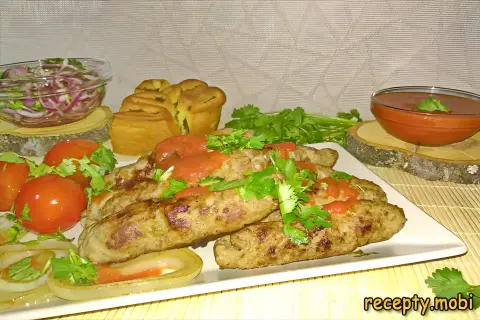
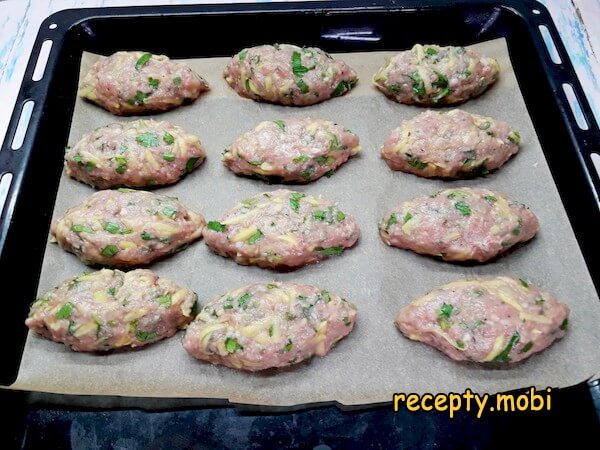
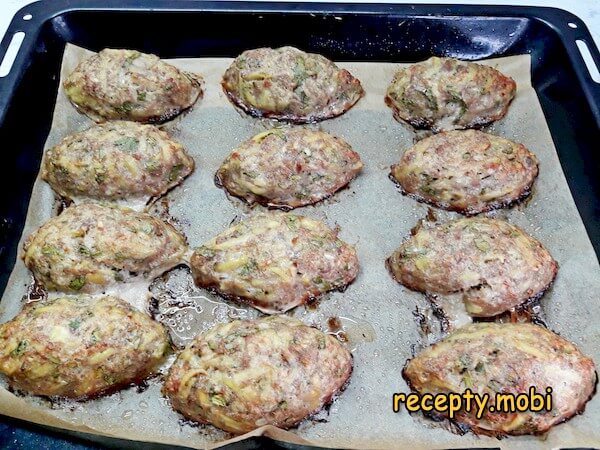
I set the oven to 220 degrees. I line a baking sheet with parchment. I roll a small amount of the meat mixture between my palms into an elongated ball, shaped like a little lemon. I place each shaped piece on the prepared sheet, leaving a small gap between them.
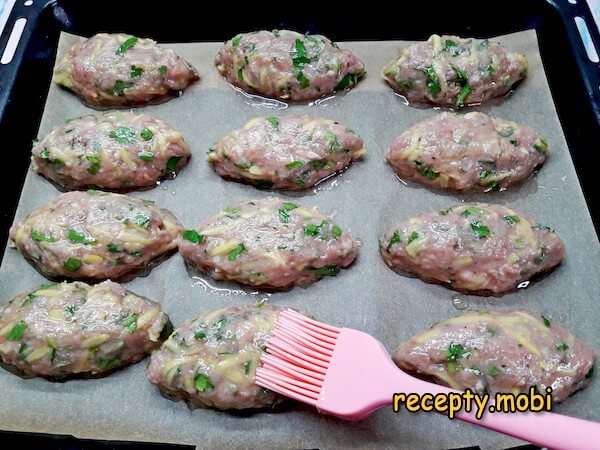
I brush the tops with refined oil and, once the oven has reached the required temperature, I put the baking sheet in.
After half an hour the kofte will be ready.


Tips
- 1
Grated potato – the secret to juiciness. Raw potato gives the kofte extra juiciness and tenderness.
- 2
Parsley by knife – the secret to good looks. Herbs ground in a meat grinder turn to mush. Chopped by knife, they stay visible in the kofte.
- 3
Starch instead of bread – the secret to structure. 20 g of starch binds the mixture and absorbs the excess moisture from the potato.
- 4
The "little lemon" shape – the secret to authenticity. Turkish kofte is specifically elongated. Round meatballs are not authentic. The same principle works in other Turkish meat dishes.
FAQ
Which meat should I choose? +
Ideal is young beef (tenderloin or shoulder) – 400 g, which has a brighter flavour. Alternatives: lamb (400 g – the classic Turkish choice, authentic), a 50/50 mix of beef and lamb (400 g), turkey (400 g – a leaner option) or chicken thighs (400 g – softer). Fresh, chilled meat is best. Avoid pre-packaged shop mince of poor quality and sinewy meat. For the classic Turkish version, beef or lamb is essential.
What can replace the coriander and oregano? +
Alternatives: a mix of dried Italian herbs (2 tsp), khmeli-suneli (2 tsp, for a Georgian note), curry (2 tsp, for an Indian touch), a mix of dried paprika and cumin (1 tsp each) or a mix of turmeric and coriander (1 tsp each, for a spicier note). Fresh spices are best. Avoid salted seasonings and sweet blends. For the classic Turkish version, coriander and oregano are essential; for a spicier result, add a pinch of cayenne.
How long does the kofte keep? +
In the fridge, in a container, for 2–3 days. Longer than that and the meat goes stale and loses its juiciness. Before serving, reheat in the microwave for 1–2 minutes or in the oven for 5 minutes at 170 °C. In the freezer, cooked kofte keeps up to 1 month and raw shaped pieces up to 2 months. Bake raw pieces straight from frozen. Kofte is at its best in the first 30 minutes after cooking; on the second day the flavour firms up but it is still tasty. Do not leave it at room temperature for longer than 2 hours, as the meat will spoil.
What to serve the kofte with? +
The Turkish classics: with bulgur or rice; with baked vegetables; with a çoban salad (tomatoes, cucumbers, onion); with ayran or yogurt; with a garlic sauce or tzatziki; with adjika or tkemali for a spicier serving; with lavash or pita; with fresh herbs (parsley, mint, coriander); or with tomato juice. It is a versatile hot dish for a family lunch with a side and a salad, or to go with a cup of Turkish tea.
- Comment
or post as a guest
Be the first to comment.