avg —
Uyghur Lagman

Instructions
I prepare the ingredients for the noodles. The water should be cold and the oil refined and odourless – it is the cold water that gives the dough the right texture for pulled noodles.
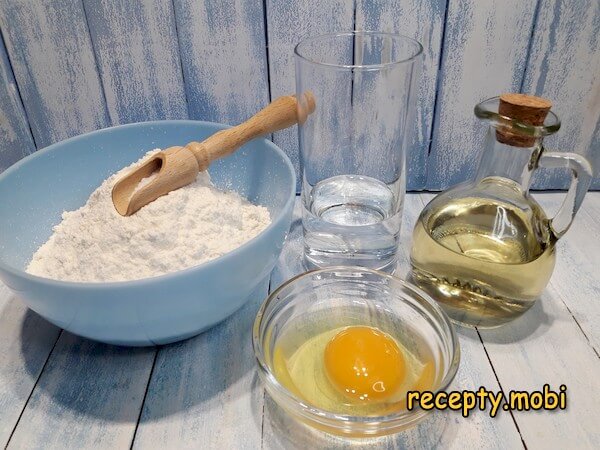
I take out the products for the sauce. You can use any vegetables (in season), but carrots are usually not added to Uyghur lagman. Napa cabbage is a must. Both veal (beef) and lamb work as the meat.
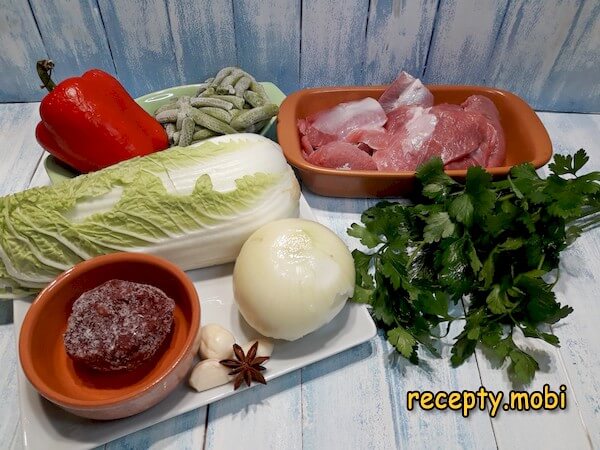
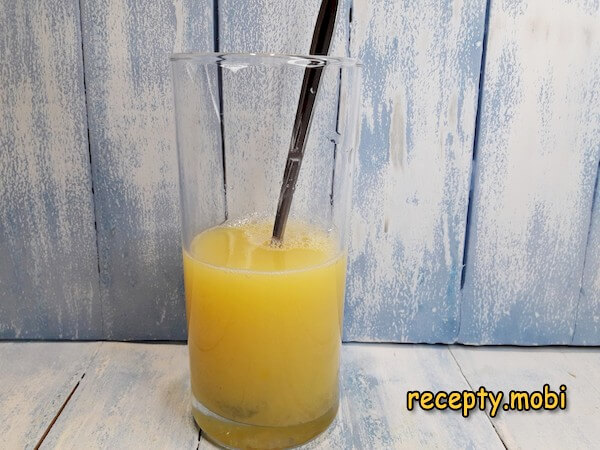
I start with the noodles. I mix together the water, egg, and salt – this is the basic liquid base for the dough.
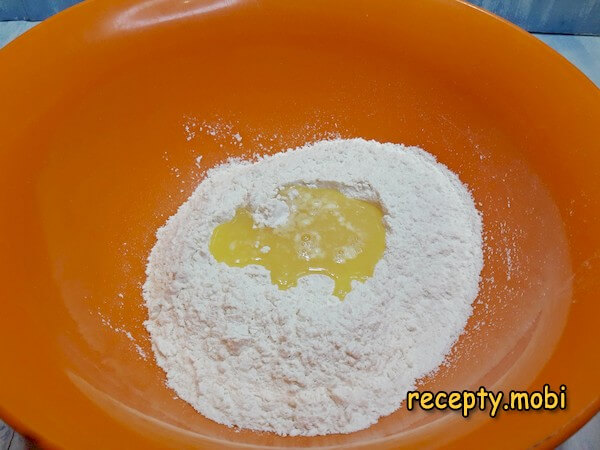
I sift the flour into a wide bowl and begin pouring in the prepared liquid in parts, mixing it with the flour after each addition – adding it gradually gives control over the consistency of the dough.
All the flour should come together in flakes. I keep kneading – at this stage the dough looks like coarse crumbs.
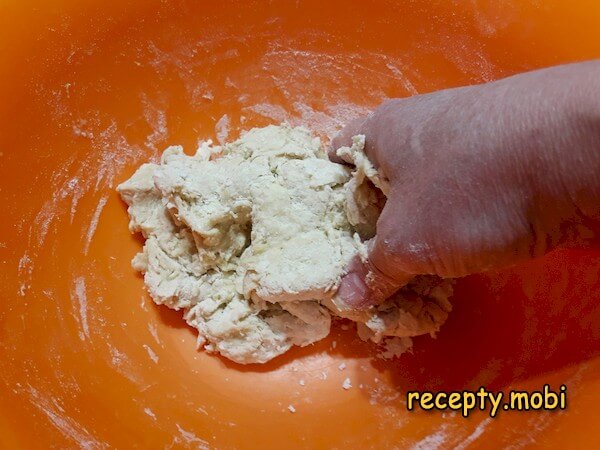
Once the dough takes on a uniform, dense structure, I finish the process – it should be "as springy as modelling clay".
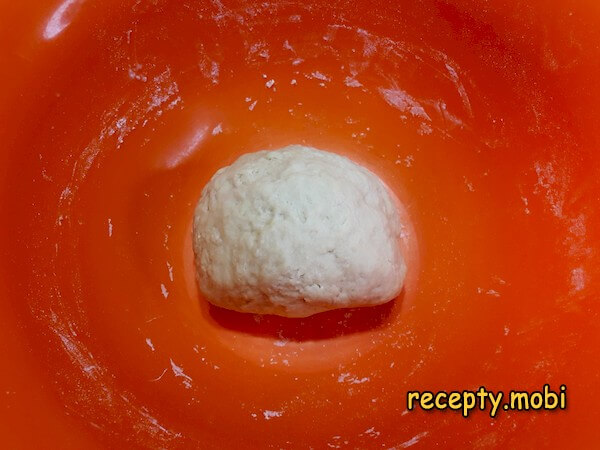
I transfer the dough into a bag and leave it to rest for about 20 minutes – the gluten relaxes and the dough becomes more elastic.
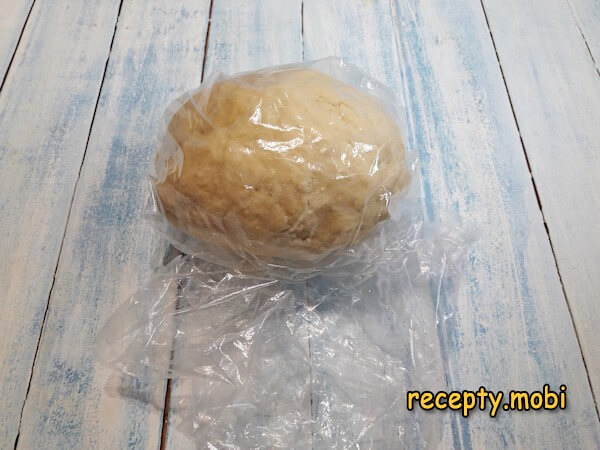
Then I knead the dough once more – it becomes more obedient and smooth, ready for shaping into strips.
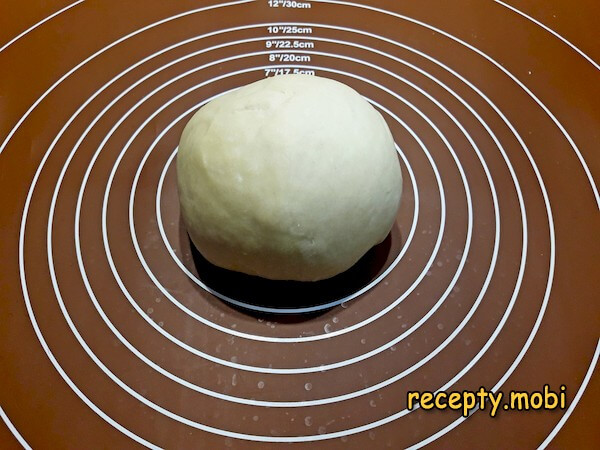
I roll the ball of dough into a thick disc 20 cm in diameter – thick, not thin, because the long threads will be pulled from it.
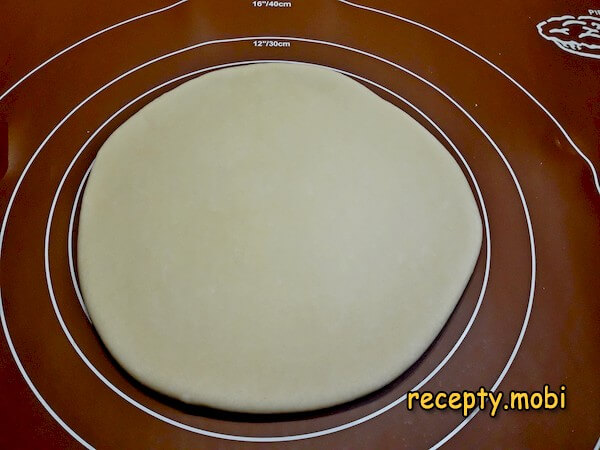
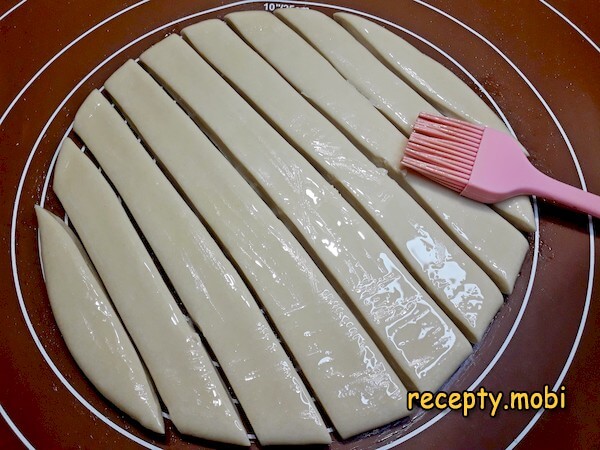
I cut it into strips 2–2.5 cm wide – each strip will make one long noodle thread.
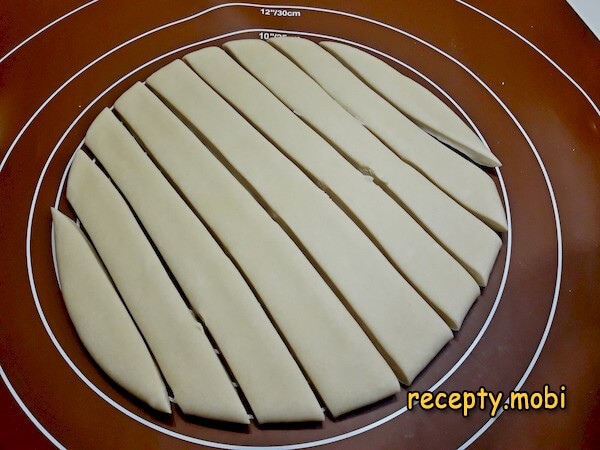
I brush them generously with oil on all sides, then transfer them to a bag and leave them on the table for about 40 minutes – the oil acts as a "lubricant" for the dough fibres, making them pliable for stretching.
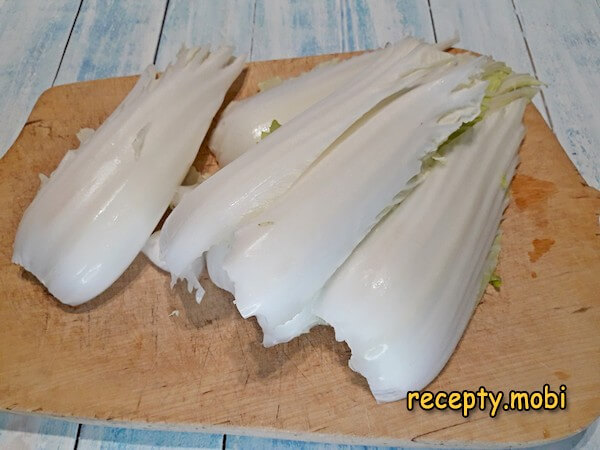
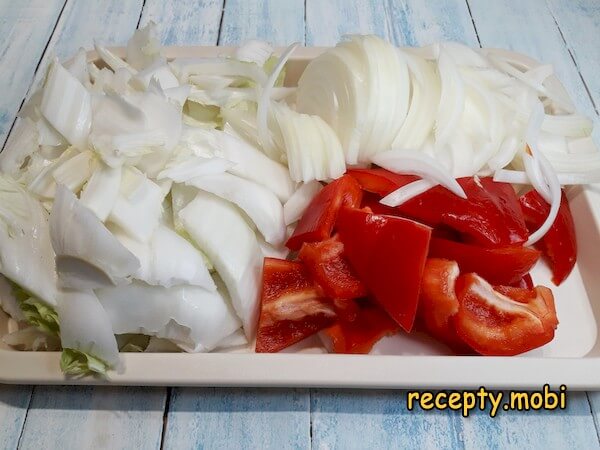
Meanwhile, I get on with making the sauce. I pull the leaves off the napa cabbage and trim away the thin outer parts – I only need the thickened middle for a firm texture.
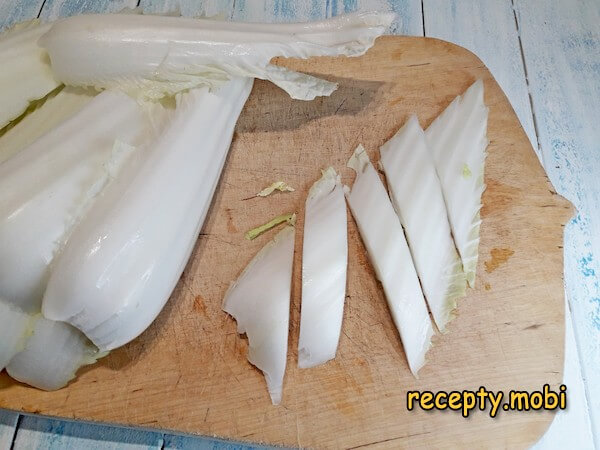
I cut it into pieces 3–4 cm long – this size goes well with the long noodles when served.
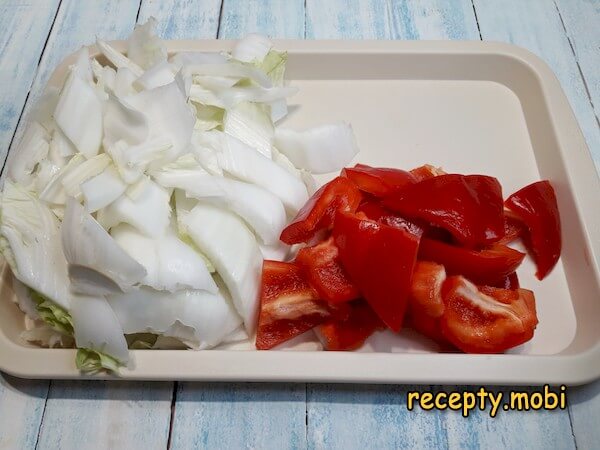
I remove the seed pod from the bell pepper and cut it into fairly large pieces – cutting it large keeps the texture of the pepper in the finished sauce.
I slice the onion into half-rings – the classic "Uyghur" way of cutting it for lagman sauce.
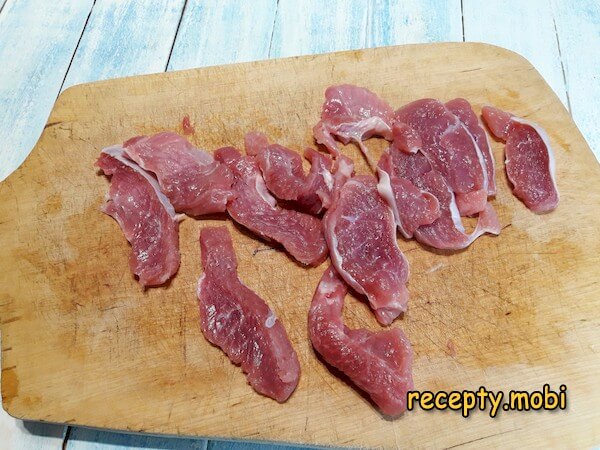
I cut the meat into thin slices – thin slicing gives a quick sear and a tender texture in the finished sauce.
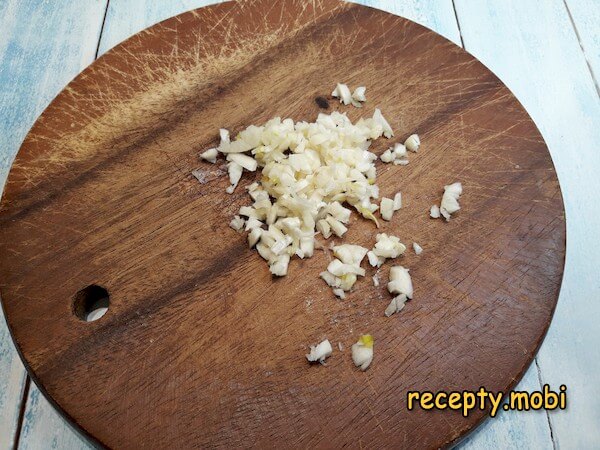
I chop the garlic cloves with a knife – with a knife, not a press, to keep a bit of textural bite.
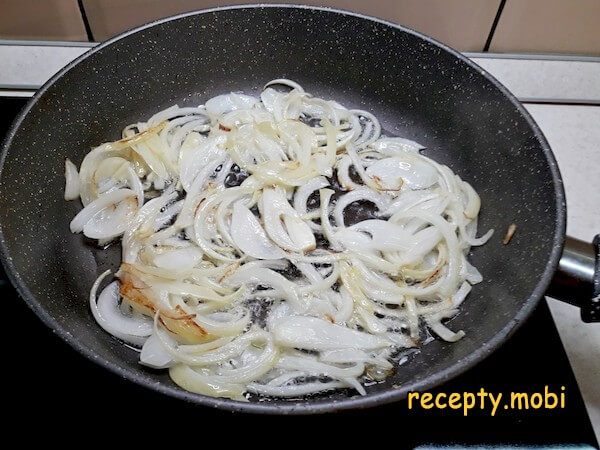
In hot oil I fry the onion until translucent – until translucent, not golden.
I add the meat to it and keep frying over high heat for a couple more minutes – high heat is needed to "seal" the meat.
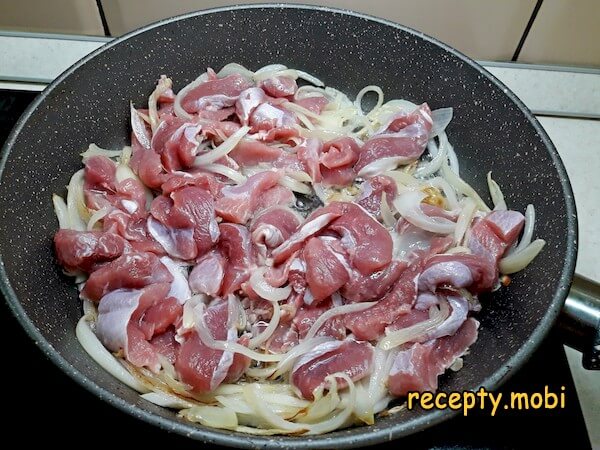
I add the bell pepper to the pan – it adds sweetness and brightness to the sauce.
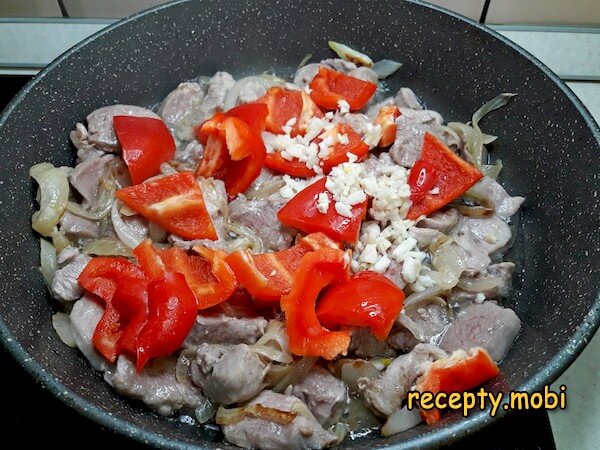
Next go the green beans. The heat should stay at maximum the whole time. I warm everything together for 3–4 minutes.
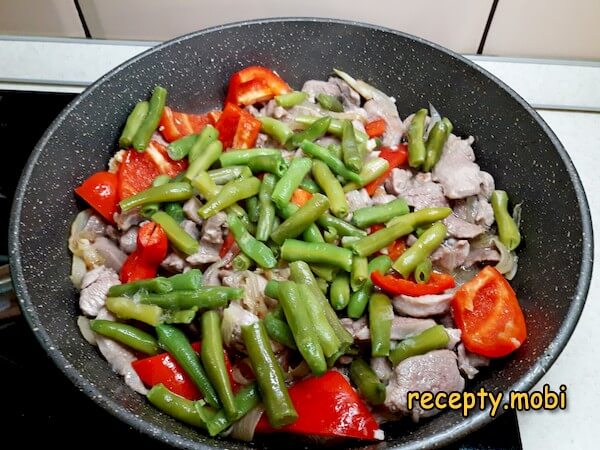
Then I add the napa cabbage – it cooks down quickly in the sauce and adds juiciness.
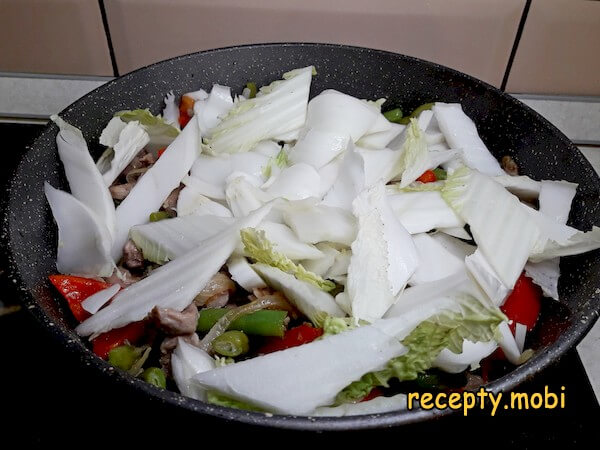
I stir the vegetables and add the tomato paste – it gives the sauce its characteristic reddish colour and a rich flavour.
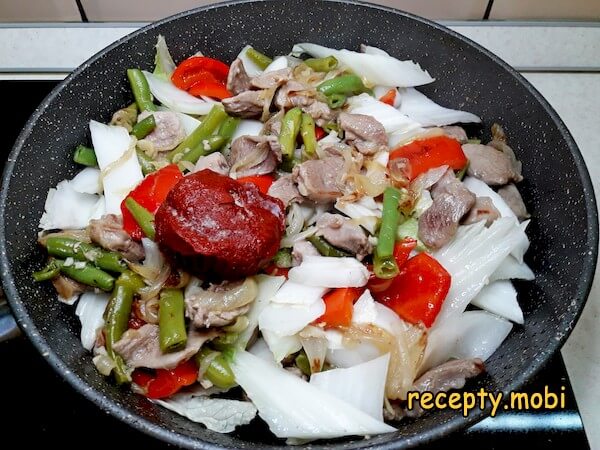
I pour in hot water – hot, so as not to stop the cooking process.
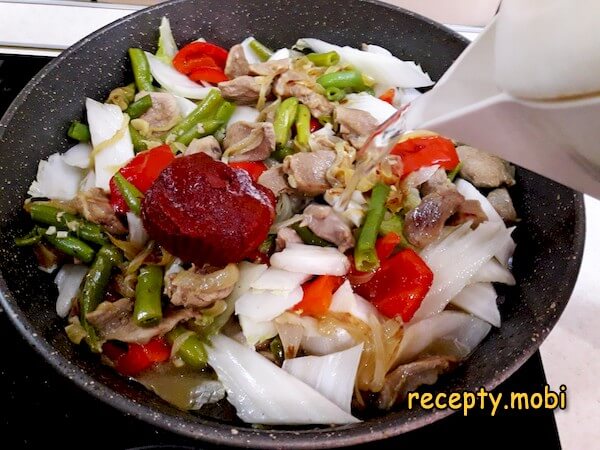
I add the star anise and salt – the star anise gives the characteristic "star" aroma that sets lagman apart from other Asian dishes.
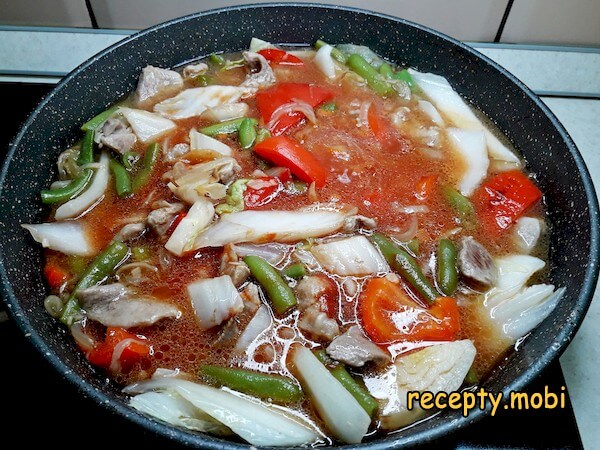
I cover the pan, reduce the heat, and let everything simmer for 10 minutes – so that all the flavours combine into one multi-layered sauce.
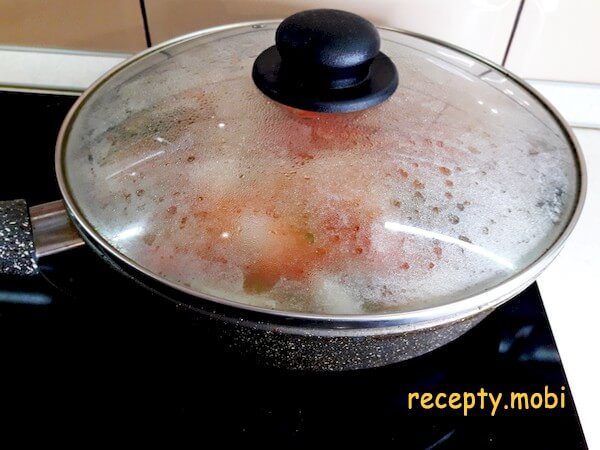
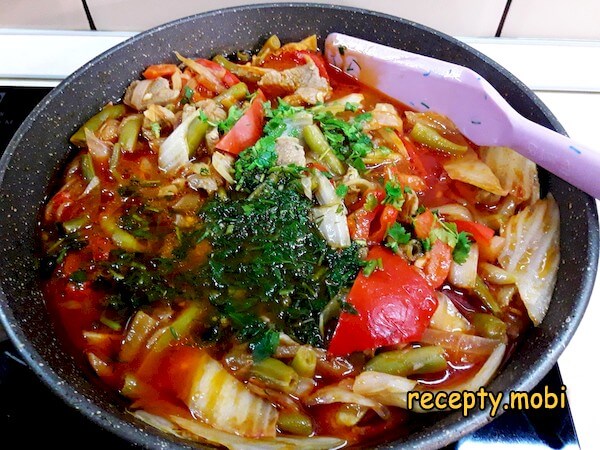
Two minutes before this time is up, I add the chopped herbs. At the end I take the pan off the heat and leave it covered until the noodles are ready – the herbs stay fresh and bright.
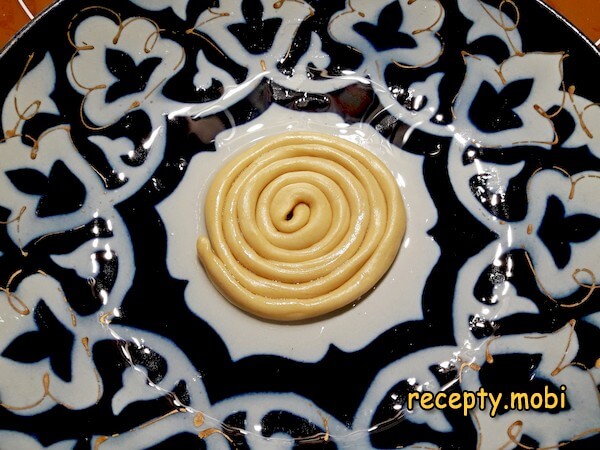
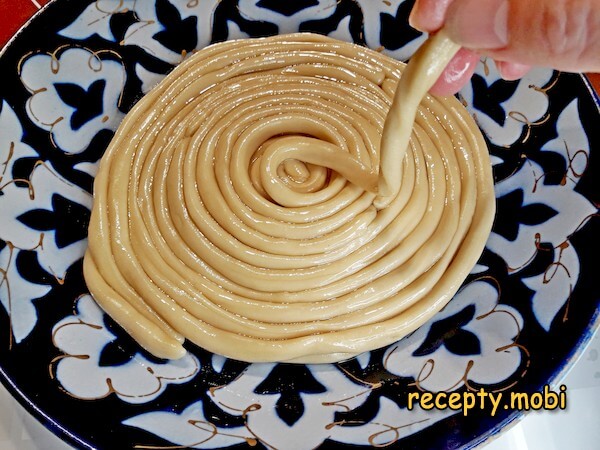
I take the first dough strip out of the bag and form it into a rope (I do not roll it too thin). I grease a large dish with oil and lay the rope on it in a spiral, starting from the centre.
I lay the next ropes alongside in a circle and oil them generously – the oil between the ropes keeps them from sticking together.
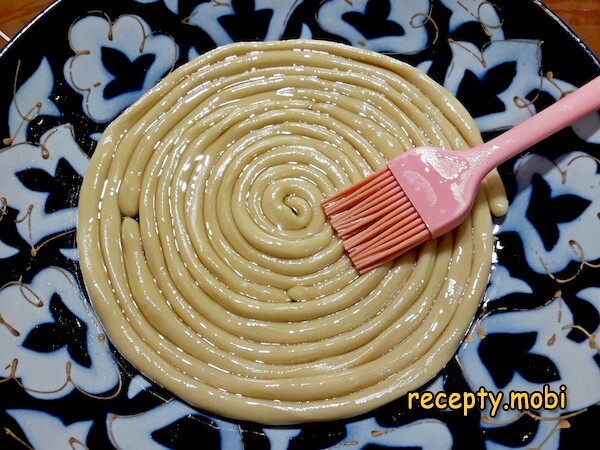
The pieces can be arranged in a second and third layer – the main thing is that everything must be thoroughly soaked in oil.
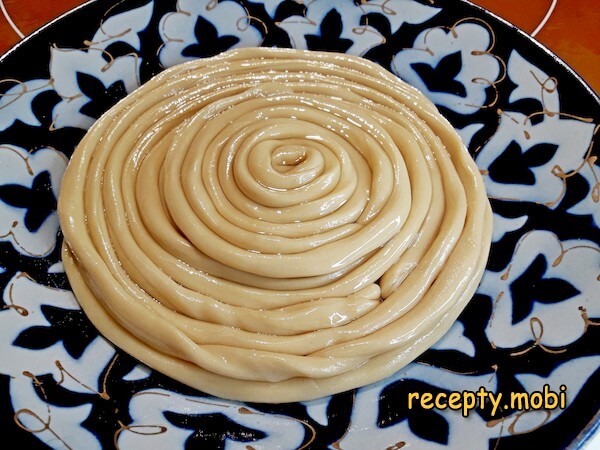
Next I flip this three-tier stack so the first layer ends up on top, and I start unwinding the ropes, beginning from the very centre.
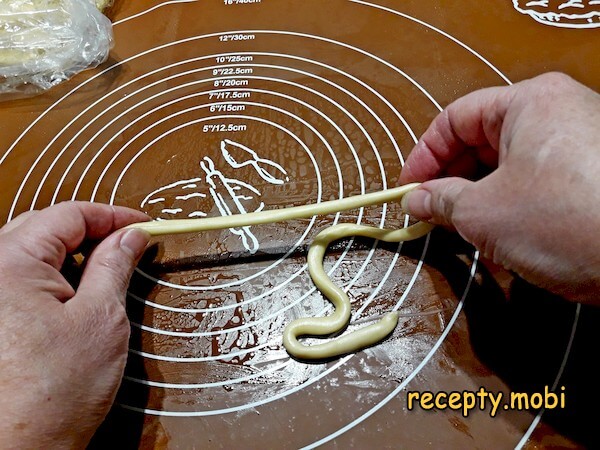
Now it is time to pull the noodles. To do this, with one hand I roll and twist the rope, while with the other I stretch it out – this is the secret of Uyghur hand-pulled noodles.
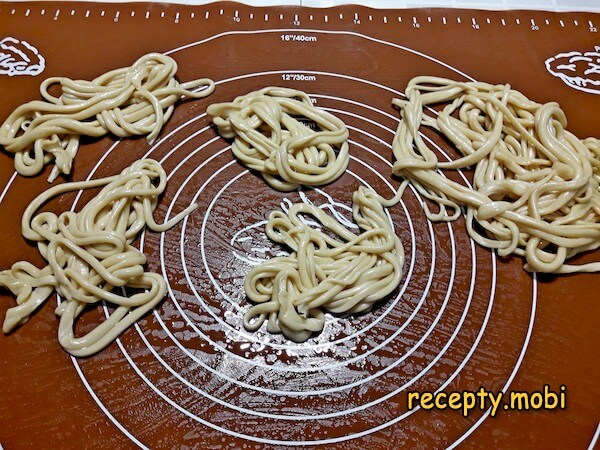
I gather the resulting strands into piles and brush them with oil once more – oiling them again keeps the threads elastic.
Then I find the ends in each pile and wind the noodles around both hands, like threads of yarn.
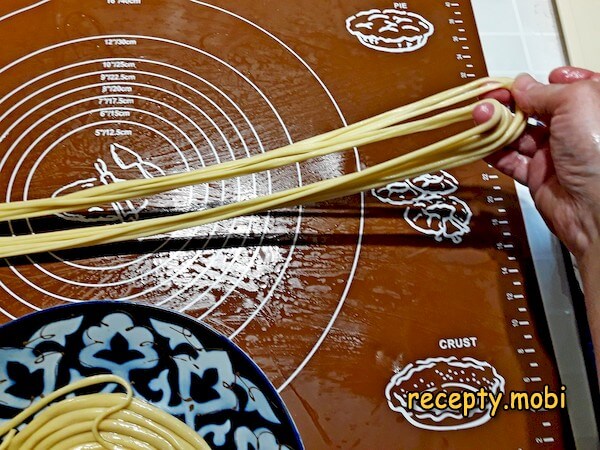
Then I begin slapping the wound noodles against the table while stretching them in different directions at the same time. You should end up with a thin thread of even thickness. This is how I prepare all the noodles – it is the same striking move you see in Uyghur noodle shops.
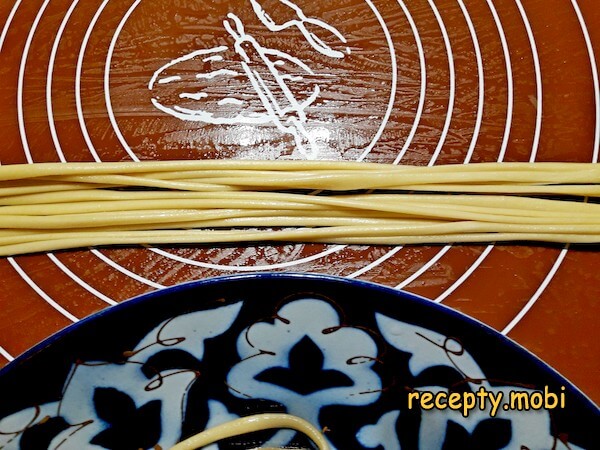
I bring a large pot of water to a boil and salt it. I drop the first small batch of pieces into the boiling water and, so the threads do not stick together, I loosen them with a fork.
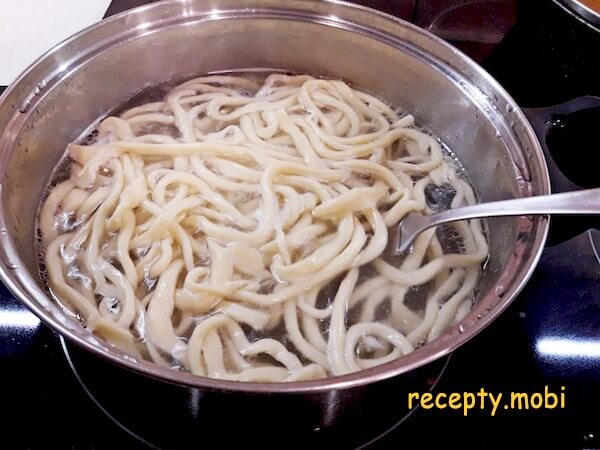
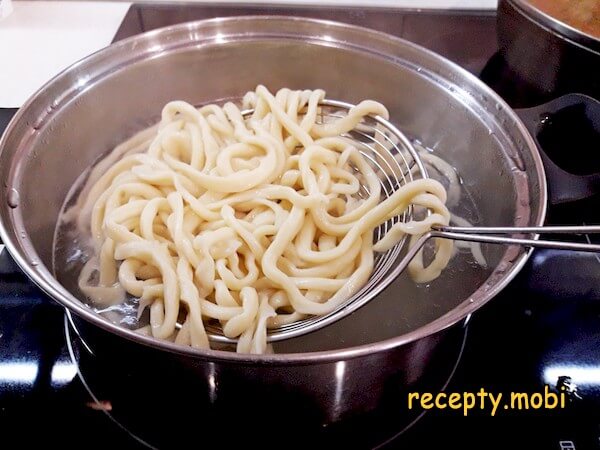
Once the noodles have boiled for 4–5 minutes, I scoop them out with a colander – exactly 4–5 minutes, no more, or the noodles will overcook.
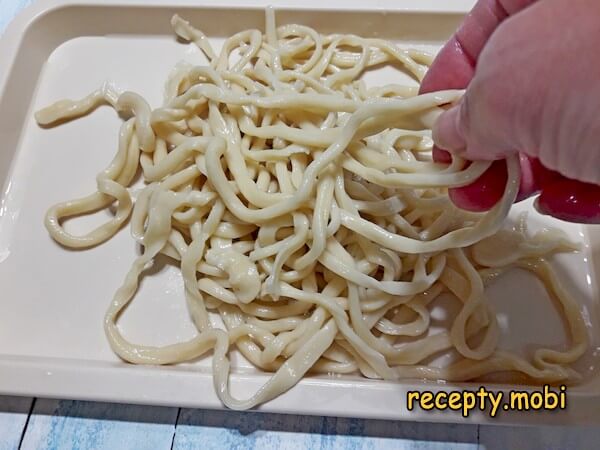
And I lay them out on a tray greased with vegetable oil. I drizzle more oil over the top and loosen them with my hands – so the cooked noodles do not stick together into a lump.
When all the noodles are ready, I transfer them to a large serving platter.
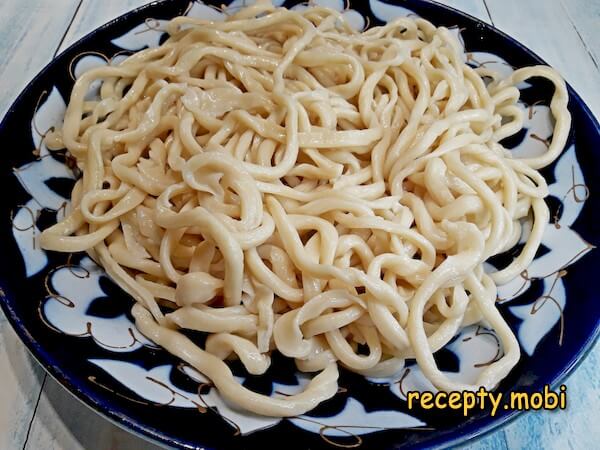
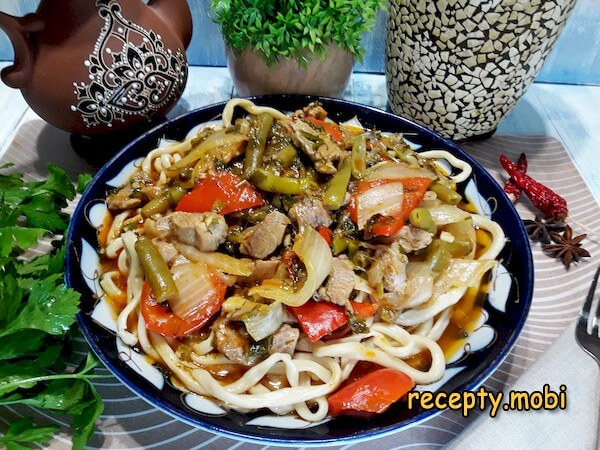
I place the meat sauce on top – a large, clear "dome" of meat and vegetables on a white bed of noodles.


Tips
- 1
GENEROUS OIL is the secret of elasticity. The main thing in Uyghur noodles is a thick layer of vegetable oil on every strip and at every stage of stretching. Without oil the dough sticks together at once, tears when stretched, and will not give long threads. Do not be sparing – soak each layer so generously that the oil "runs" off the noodles before boiling. This is the secret of the Uyghur craftsman's technique.
- 2
RESTING + RE-KNEADING is the secret of elastic dough. A single kneading is not enough – the gluten does not have time to develop fully, and the dough will tear when stretched. Knead → rest for 20 minutes → knead again → 40 minutes under oil: this is the sequence that gives the perfect elasticity for long threads.
- 3
SLAPPING AGAINST THE TABLE is the secret of even thickness. After winding the noodles around your hands, the final move is slapping them against the table while stretching them out at the same time. This rhythmic slap evens out the thickness of each thread and lengthens it at once. Without this move the noodles come out uneven – thicker in some places, thinner in others – which spoils the look of the dish.
FAQ
What is lagman and where does it come from? +
Lagman is a national dish of Uyghur and Central Asian cuisine, consisting of long hand-pulled noodles with a meat-and-vegetable sauce. It comes from East Turkestan (modern Xinjiang, China), home to the Uyghurs. It is found throughout Central Asia: in Uzbekistan, Kazakhstan, Kyrgyzstan, Tajikistan, and among the Dungans and Crimean Tatars. It exists in two main forms: a "soup" version (more liquid, with plenty of broth) and a "fried" version (thicker, as in this recipe). Uyghur lagman is distinguished by the mandatory presence of napa cabbage and star anise in the sauce.
Can I buy ready-made noodles? +
You can, but this loses the "soul" of authentic Uyghur lagman. Store-bought alternatives: Chinese "lagman noodles" from specialty shops (the right structure and thickness), egg noodles (a slightly different texture but similar in principle), even thick spaghetti for a "Europeanised" version. Ready-made noodles save about an hour and a half, but they do not give that famous "Uyghur" feeling of catching a super-long thread with your fork. For everyday cooking, ready-made will do; for guests, only hand-pulled.
How long does cooked lagman keep? +
In the fridge in an airtight container – up to 3 days. The noodles and sauce are better stored separately: the noodles stick together into one lump if left in the sauce. Before serving I reheat them separately: the sauce in a pan over the heat for 5–7 minutes, the noodles in boiling water for 1–2 minutes, or in the microwave with a teaspoon of water. I do not recommend freezing cooked noodles – after thawing the texture becomes rubbery. The sauce freezes excellently – up to 2 months in an airtight container.
What to serve with Uyghur lagman? +
The authentic Uyghur way of serving is with a spicy red "laza" sauce (chili in oil), pickled daikon radish, green onion, and cilantro around the edges of the dish. For drinks: green tea (a must at the Uyghur table) and ayran. For bread: Uyghur "nan" flatbreads (usually served at the table the way we serve bread). No other side dishes are needed – lagman is self-sufficient. For a large gathering: one shared dish is placed in the middle, and people eat with forks or chopsticks.
- Comment
or post as a guest
Be the first to comment.