avg —
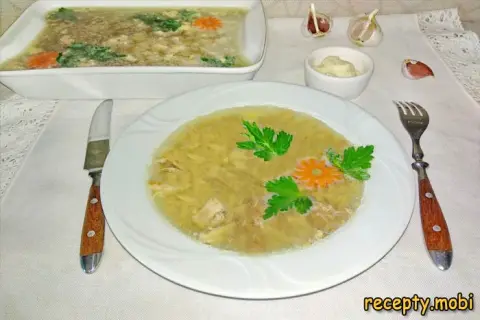
Aspic from Pork Legs and Chicken (without Gelatin)

Instructions
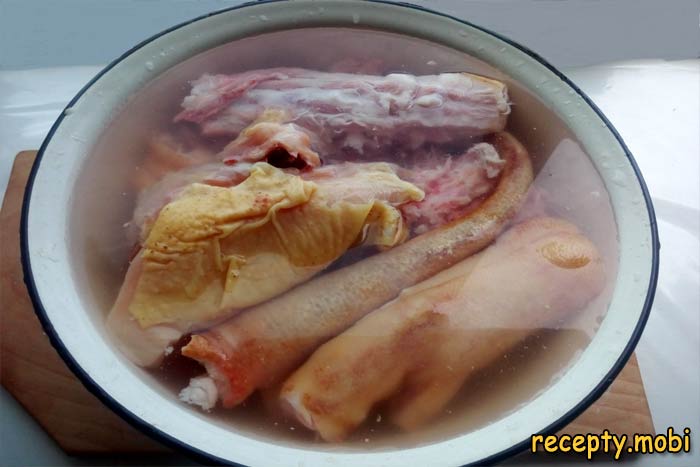
I singe the pork legs directly over the flame of the gas stove to remove any remaining bristles and charred skin. Then I scrape them thoroughly with a knife and wash them in cold water. I cut each leg in half with a cleaver or a large heavy knife so they fit neatly into the pot. I soak the legs, tail and chicken fillet in cold water for 3 hours, changing the water 2–3 times – this draws out the blood and improves the clarity of the broth.
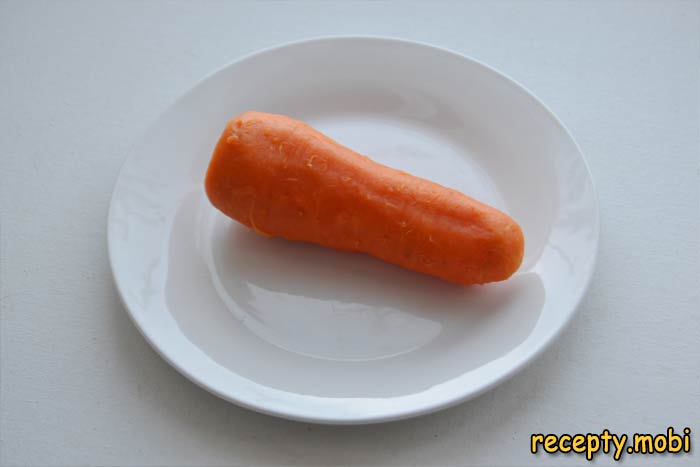
I prepare the carrot – I scrub it with a brush and leave it whole, with the peel on. The carrot peel gives the broth a pleasant golden tint; without it the colour comes out paler. I will add the carrot later, halfway through cooking.
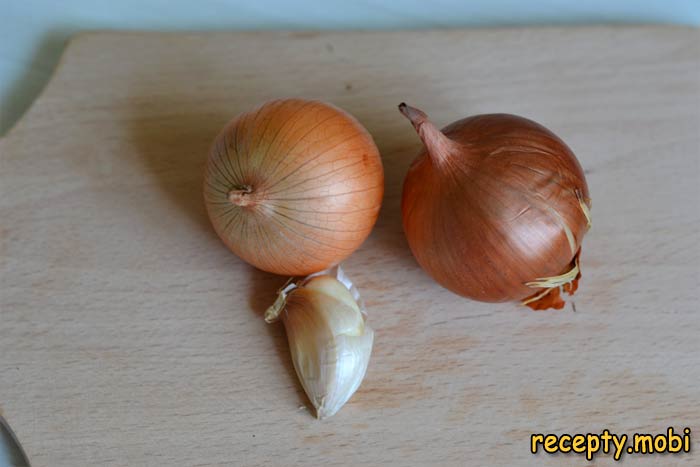
I prepare the onion (I leave it in its skin for a golden broth colour) and the garlic (peeled in advance). The onion skin is a folk trick for a beautiful “golden” broth, used in aspics, pilaf and rich soups. I will add the garlic right at the end.
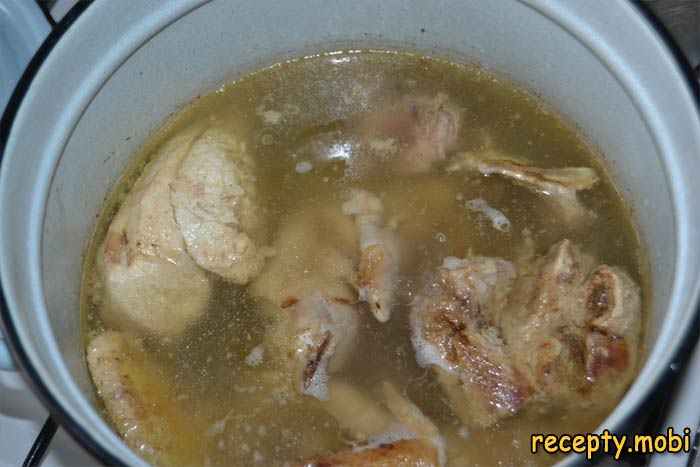
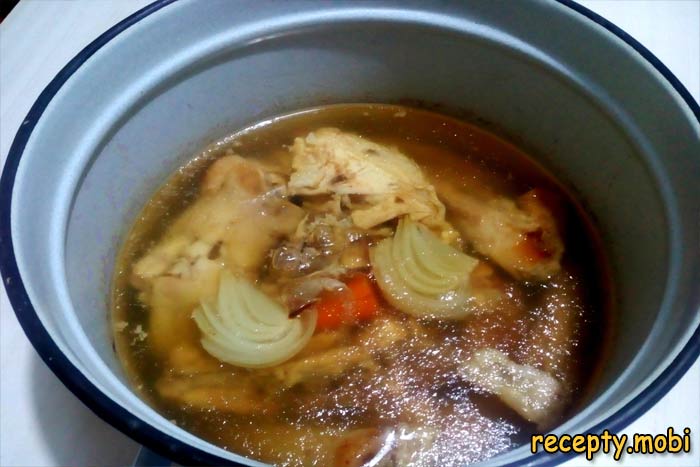
I layer the meat in a large pot: the bones go on the bottom – pork legs and tail (the source of collagen) – with the chicken fillet on top. I pour in cold water so that it covers the meat by 3–4 cm. I bring it to a boil over high heat, carefully skimming off all the foam with a slotted spoon – without this the broth will be cloudy. I cook on the lowest heat under a lid for 4 hours – long cooking extracts the maximum amount of collagen.
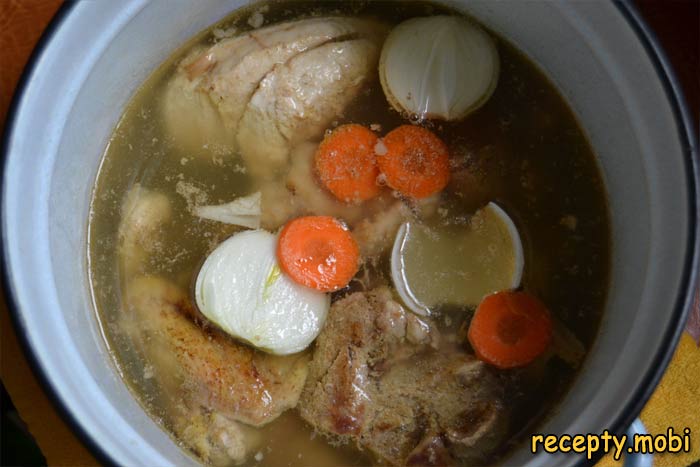
After 4 hours I add the onion in its skin and the carrot to the meat. I cook for another 2–3 hours on the very lowest heat until the meat is completely done – it should fall away from the bones by itself. I add the vegetables later so they give up their aroma without boiling down to mush. I do not add salt until the end – it slows down the extraction of collagen.
I take the pot off the heat and let it cool to lukewarm. I carefully skim the fat off the surface with a slotted spoon – it would set into an unattractive white layer on top of the aspic. Fatty aspic is less appealing to look at and less wholesome. There is no need to remove the fat completely – a thin layer gives a characteristic flavour.
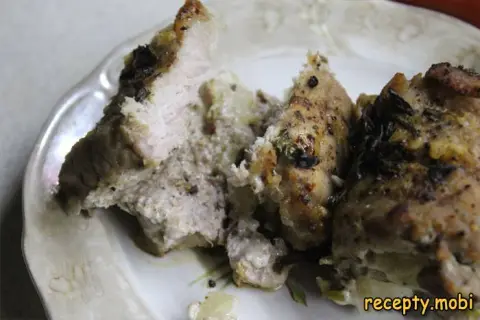
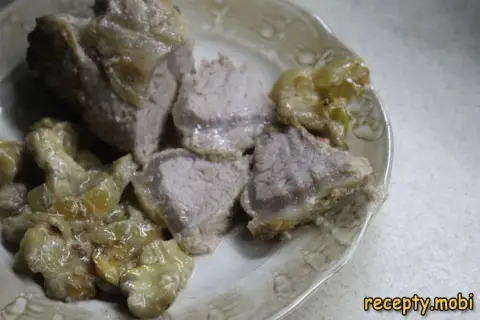
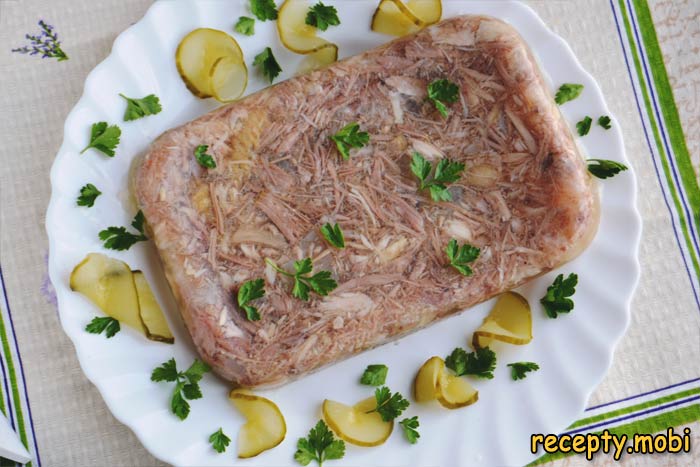
I take the meat apart by hand: I remove all the bones, cartilage and skin from the pork legs, and cut the flesh into small 1 cm pieces. I arrange the meat in attractive moulds or deep plates. I strain the broth through cheesecloth or a fine sieve, salt it to taste and add the finely chopped garlic. I pour the strained broth over the meat right up to the edges. I put it in the refrigerator overnight (8–12 hours) to set. The aspic from pork legs and chicken is ready!


Tips
- 1
Cook strictly on the lowest heat without a vigorous boil – only then will the broth turn out clear rather than cloudy like a “soup”.
- 2
Soaking the meat in cold water for 3 hours draws out the blood and significantly improves the clarity and colour of the finished aspic.
- 3
Serve it the classic way with Dijon mustard, grated horseradish or horseradish relish – sharp sauces set off the delicate flavour. I cook jellied tongue on a similar principle.
- 4
Before it sets, decorate it with rounds of boiled carrot, a sprig of parsley or half a boiled egg – it gives a restaurant look when served. Times for kholodets from different meats, in a pressure cooker and a multicooker, are in how long to boil kholodets.
FAQ
Why did the aspic not set and stay liquid? +
The main reason is too little collagen in the mix. The ratio should be at least 1 kg of pork legs/tails per 2 kg of total meat weight. The cause may also be insufficient cooking time (you need at least 6–7 hours on the very lowest heat) or too much water during cooking (the broth turned out weak). You can rescue liquid aspic by adding gelatin: 20 g of gelatin per 1 litre of broth – soak it, warm it until dissolved, stir it into the aspic and put it back in the refrigerator.
Can the aspic be frozen? +
I do not recommend it – after thawing the texture noticeably worsens, the jelly becomes “grainy” and watery and partly loses its firmness. If you need to keep it longer than 5 days, it is better to freeze the broth and the boiled meat separately, then before serving reheat the broth, add the meat and set it again. Fresh aspic is always better than frozen in terms of texture. Make it in portions for exactly 3–5 days of eating.
How long does the finished aspic keep? +
Keep the kholodets covered in the fridge and eat it within 1-2 days. Russian catering rules are stricter: no more than 12 hours at 2-6 °C. Signs of spoilage are a sour smell and a cloudy, melting jelly. Do not leave it on the table for more than 2 hours. More in how long to boil kholodets.
What spices can be added for a different flavour? +
The basic recipe can be supplemented with bay leaf (2–3 leaves at the end of cooking), black and allspice peppercorns (5–7 of each), cloves (2–3 buds), and dried dill or parsley. For a spicier version add more garlic (3–5 cloves) or a pinch of nutmeg. For an unusual one – a teaspoon of coriander or khmeli-suneli. Do not over-salt or over-spice it: classic aspic is prized for its clean meaty flavour, and spices should only underline it.
- Comment
or post as a guest
Be the first to comment.