avg —
Homemade Pork Sausage in Casings

Instructions
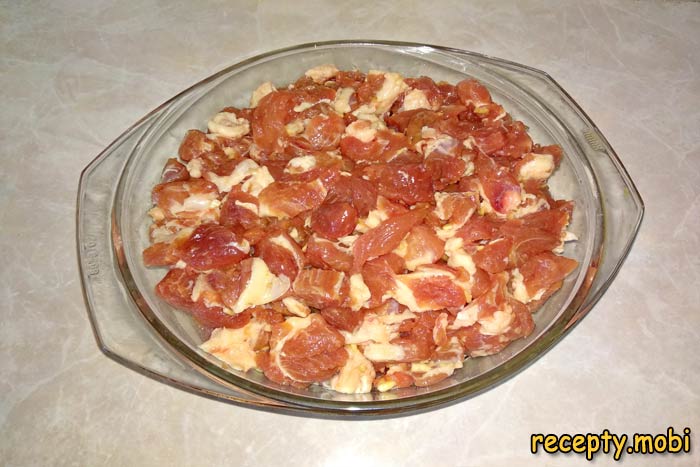
I prepare the natural pork casings (2 m) in advance – I clean them thoroughly on the inside and rinse them under running water on both sides. If the casings are salted, I soak them for 30 minutes in water with vinegar to remove the salt. Pork shoulder/neck (1.7 kg) is the ideal meat for sausage thanks to its thin streaks of fat, which give the finished product its juiciness. With a sharp knife I cut the meat into small 2×2 cm cubes. THIS IS CRITICAL – do NOT put it through a meat grinder, or you will get a "shop-bought" consistency.
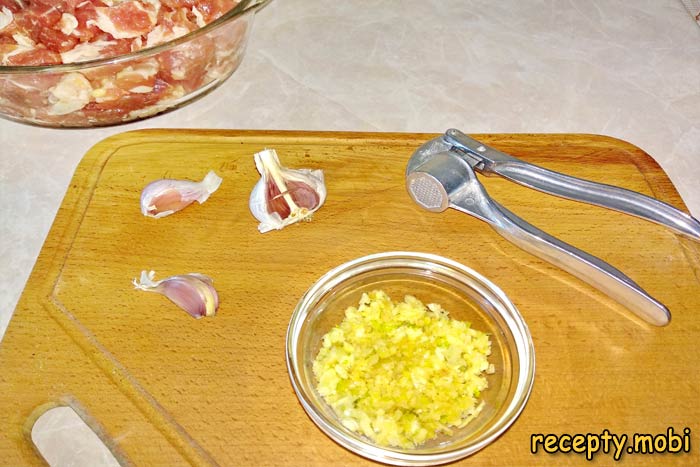
I peel the garlic (2 whole heads – about 12–14 cloves) and pass it through a press or chop it finely with a knife. A generous amount of garlic is the hallmark of authentic homemade sausage, giving it its characteristic aroma. Do not reduce the amount of garlic, or the flavour will be "bland".
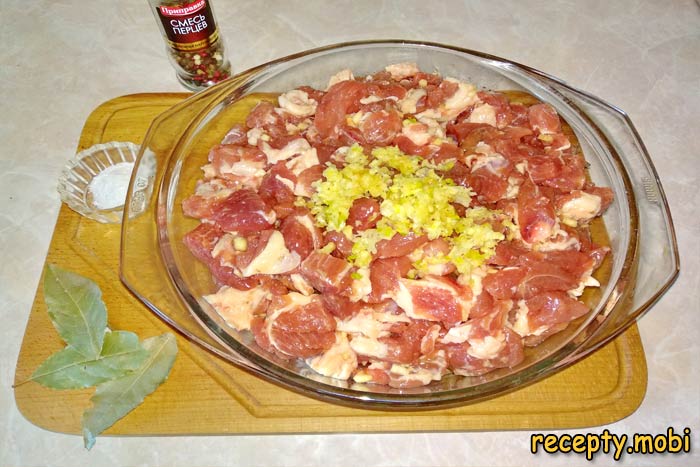
In a large bowl I thoroughly mix the cubed meat, garlic (2 heads), salt (2 tbsp), bay leaf crushed in a mortar (3 pieces), pepper mix (1 tbsp) and vegetable oil (2 tbsp). I mix by hand for 3–5 minutes until the spices are evenly distributed. I cover with cling film and put it in the fridge for at least 4–5 hours, or better overnight, to marinate.
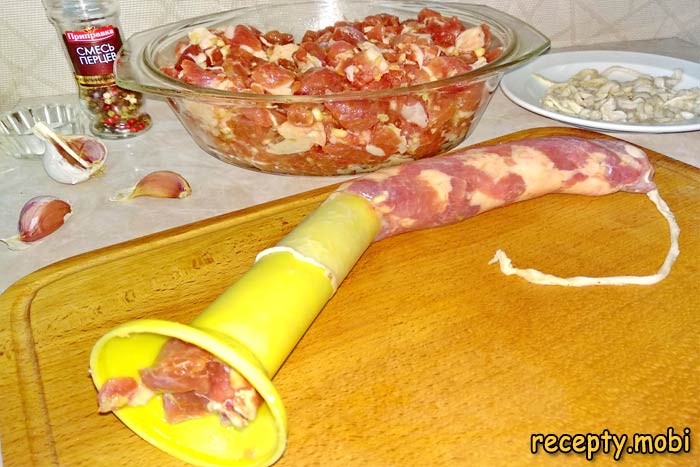
After 4–5 hours, or in the morning, I take the marinated meat out of the fridge. I fit a special sausage attachment onto the meat grinder (or use a sausage stuffing syringe). I pull one end of the rinsed casing onto the attachment and tie the free end in a knot or with string. I carefully fill the casing with the meat mixture, distributing it evenly along its length with no gaps. I leave the free ends unfilled by 1–2 cm on each side for tying afterwards.
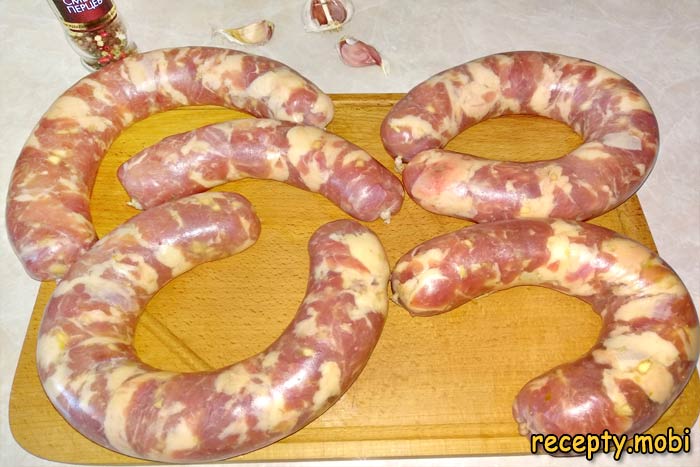
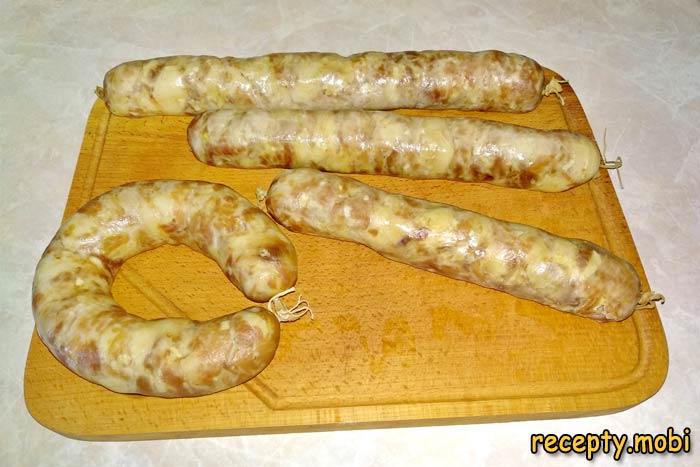
I tie the free ends of the casing with strong kitchen string and shape the sausages to the size I want: I can make one long "spiral" coil, divide it into separate sausages (tying with string every 15–20 cm) or make a "horseshoe". With a long needle I make 5–7 pricks along the whole length of each sausage – this lets the steam escape during cooking without the casing "bursting".
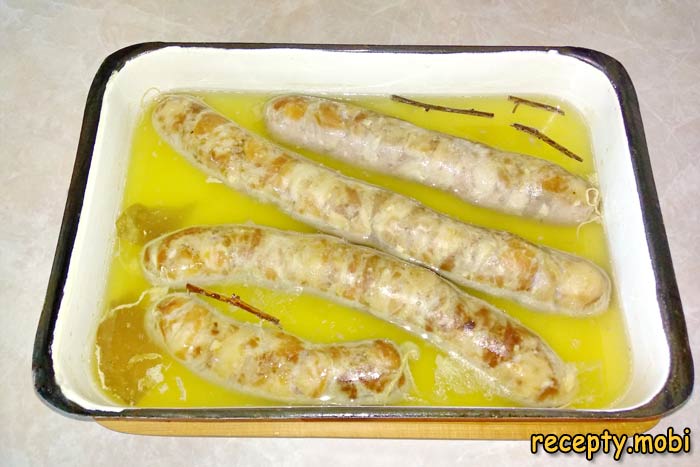
I carefully place the sausages in a wide saucepan or a deep-sided frying pan and pour in clean water so that it covers them. I add 1 tsp of salt and bay leaf (1–2 pieces) for aroma. I bring it to the boil, reduce the heat to the lowest setting and cook for 40–45 minutes over medium heat after it comes to the boil. When the sausages float up slightly, that is a sign they are ready.
With a slotted spoon I lift the cooked sausages out of the broth, transfer them to a plate and let them dry off and cool completely for 30–40 minutes. If you like, for a nice golden crust, fry them in a pan with oil for 5–7 minutes until golden on all sides, or brown them in the oven at 200 °C for 10–15 minutes. The homemade pork sausage in casings is ready! I serve it hot or cold as a snack, sliced for sandwiches, or as a main course with a side dish.


Tips
- 1
Pork shoulder/neck is the ideal meat for sausage thanks to its thin streaks of fat, which give the finished product its juiciness. Lean meat will turn out "a bit dry".
- 2
Be sure to CUT the meat into cubes rather than putting it through a meat grinder – this gives a "real" homemade texture with distinct pieces of meat.
- 3
Marinate the meat with the spices for at least 4 hours, better overnight – the longer it sits, the deeper it soaks up the aromas. I use a similar principle for homemade kupaty.
- 4
For a nice golden crust, fry the boiled sausages in a pan or brown them in the oven after cooking – a "restaurant" presentation.
FAQ
Can I make the sausage from beef? +
Yes, you can use beef, but be sure to add pork fat (200 g, cut into small cubes) for juiciness – pure beef is "a bit dry" in sausage. The ideal proportion is 1.5 kg of beef + 200 g of pork fat + 200 g of pork belly. A 50/50 mix of beef and pork also works well (the classic "delicatessen" option). For poultry, use boneless chicken thighs (more tender) or turkey (a leaner option). The main thing is a sufficient fat content (at least 15–20%); without it the sausage will be tough and bland.
How long does homemade sausage keep? +
Cooked boiled sausage keeps in the fridge for up to 7 days in a tightly closed container or in vacuum packaging. In the freezer it keeps for up to 3 months in airtight bags (an ideal make-ahead supply). Before serving, thaw it in the fridge for 8–10 hours and, if you wish, warm it through for 5 minutes in a pan or in the oven. Do not reheat it in the microwave – the sausage will turn "rubbery". Raw sausage (not boiled) can also be frozen for 1 month – thaw it completely before cooking and then boil it as usual. A handy home-made convenience food.
Why leave the ends of the casing unfilled? +
The free ends of 1–2 cm on each side serve two purposes: 1) it is convenient to tie the casing with strong string (if you tie it directly over the meat, the knot will be weak and come undone during cooking), 2) it lets you release excess air from the casing – air "pockets" inside the sausage create gaps, spoiling its appearance and the texture of the cut. Before tying, gently "drive" the air towards the ends, fill with meat without air pockets, then tie. Neat knots are a sign of a home sausage-maker's skill.
What should I serve homemade sausage with? +
It is ideal as a snack with strong drinks: vodka, whisky, brandy, light beer – a "manly" appetiser for gatherings. On sandwiches with butter, cheese, rye bread, mustard or horseradish – a premium breakfast. With side dishes – mashed potatoes, boiled potatoes with dill, buckwheat porridge, braised cabbage. For a picnic – it keeps well and is easy to slice and eat. As part of a meat platter for the festive table with basturma, prosciutto, olives and pickled gherkins. A versatile product for lovers of meat delicacies.
- Comment
or post as a guest
Be the first to comment.