avg —
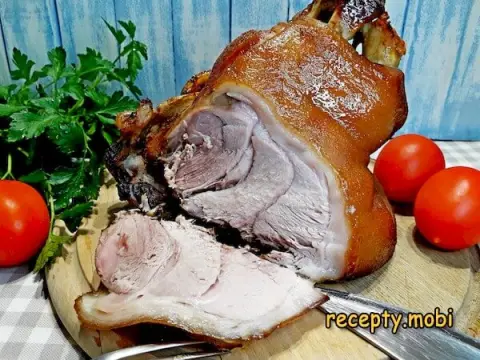
Pork Knuckle in Soy Sauce (Without Oven)

Instructions
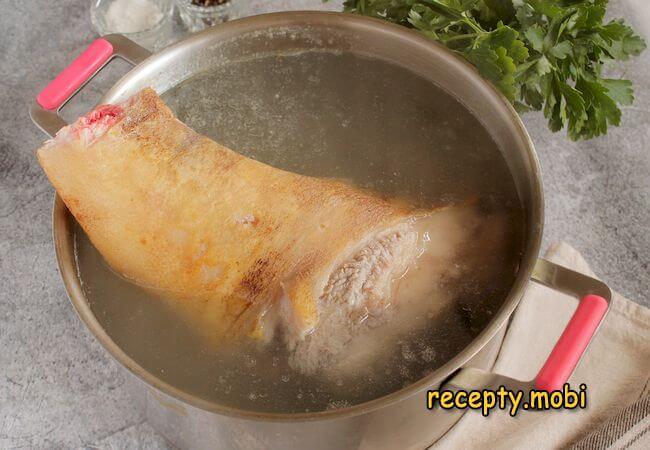
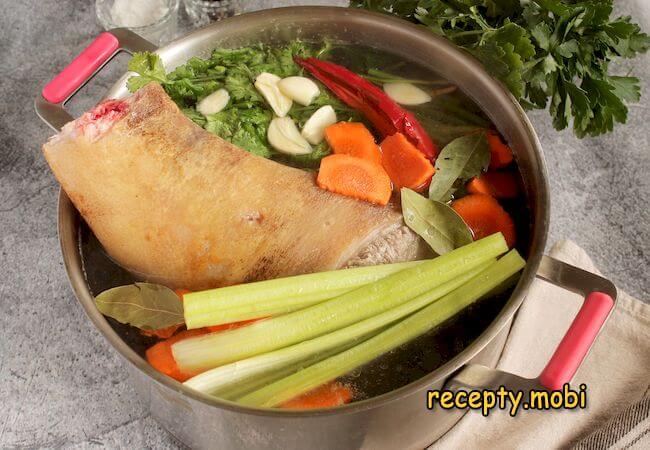
I bring about 5 litres of water to the boil and lower in the cleaned cut of meat. If needed, I skim off the foam that forms. The foam is coagulated protein, and skimming it makes for a clearer broth.
I add all the vegetables, roots and spices, and season with salt. The broth should be concentrated, aromatic and slightly over-salted. The knuckle will "take up" salt from the broth, so go ahead and salt more generously than usual.
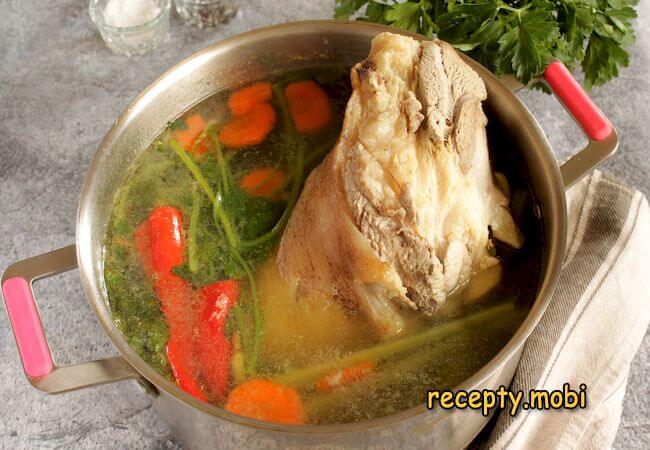
If the pork leg does not fit fully, I turn it every half hour so that the liquid covers all the parts in turn. Gradually the meat shrinks and the whole knuckle ends up in the broth.
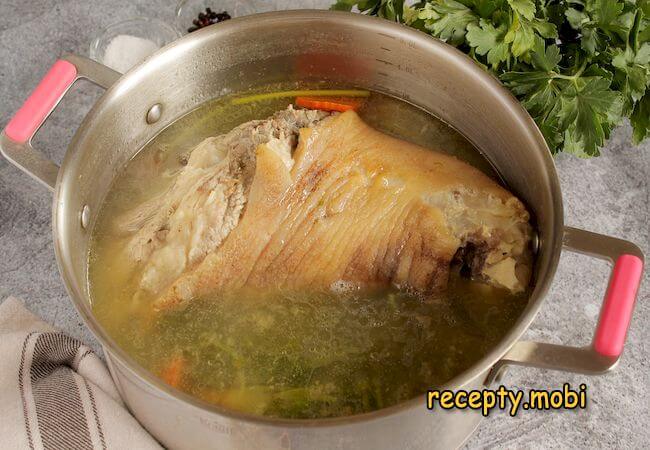
I cook the kilogram knuckle for about 3 hours. I pierce it, taste it for flavour and tenderness, and keep an eye on how much liquid is evaporating. After cooking, I strain the broth and use it for other dishes or freeze it for later.
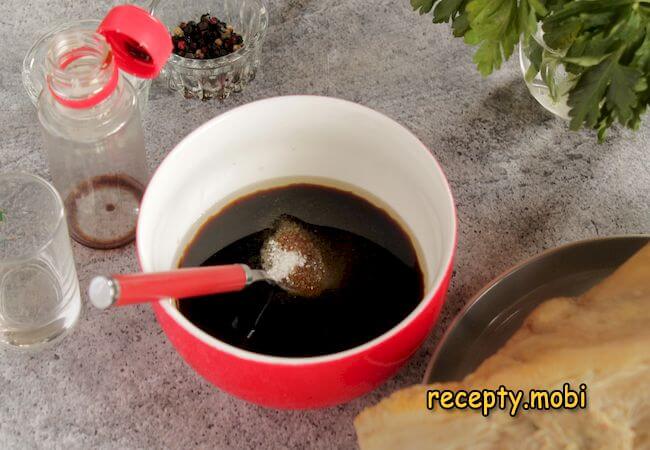
I mix the soy sauce, sugar (or honey) and vegetable oil for frying.
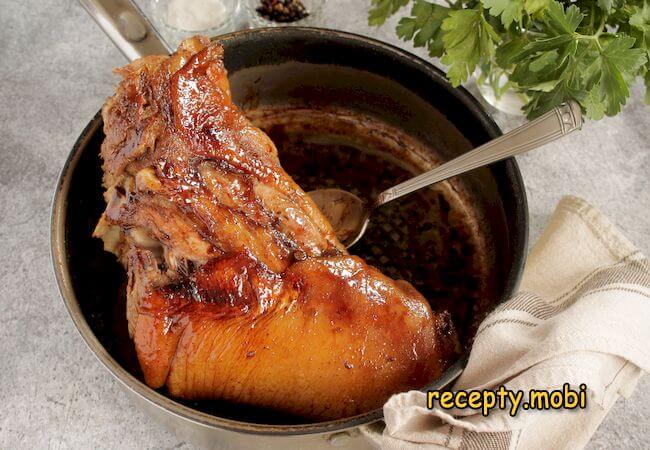
I move the boiled knuckle onto a large, well-heated frying pan and pour the soy-sauce-based mixture over it. I keep a constant eye on the caramelisation of the surface – the sugar/honey "sets" quickly and can burn.
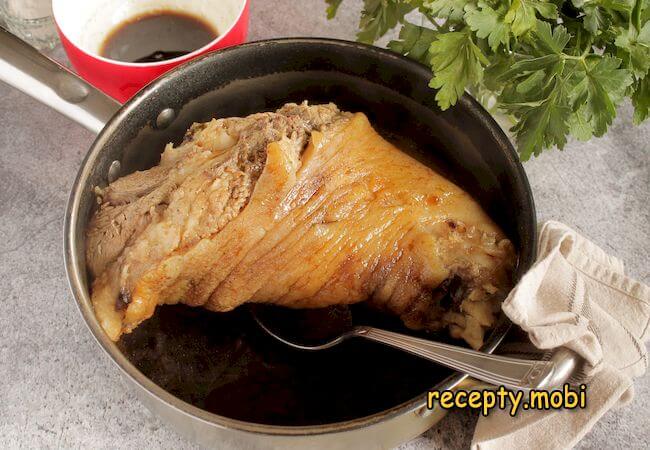
I turn it so it browns evenly on all faces and sides – this gives a "glossy" crust all over.


Tips
- 1
CHOOSE a knuckle with thick skin – it is what gives that "jelly-like" effect and a lovely glaze at the end.
- 2
OVER-SALT THE BROTH – the knuckle takes up salt from it gradually, and if under-salted it will taste "bland". Aim for something like sea water.
- 3
WATCH CAREFULLY ON THE PAN – the sugar in the marinade can burn within a minute. Stir, turn and lower the heat if needed.
- 4
DO NOT THROW OUT THE BROTH FROM THE KNUCKLE – it is rich and aromatic, perfect for soups or aspic. I use the same principle for other kinds of meat knuckles.
FAQ
How do I choose a good-quality knuckle? +
Signs of a good pork knuckle: light-pink meat, white fat (not yellow), pale skin with no dark spots, a weight of 800–1200 g (ideal), no off smell, and a whole bone with no cracks. A front knuckle (from the foreleg) is more compact and cooks faster. A hind one is larger and meatier, suited to a big gathering. Chilled is always better than frozen. To the touch it should be firm, not sticky. Avoid a dark knuckle with a bluish tinge – that is a sign of poor freshness or a sick animal.
Is pre-boiling essential? +
For this recipe – yes. The knuckle is very dense in structure, and without boiling it is impossible to cook in a reasonable time. Three hours of boiling softens the meat, after which only the caramelisation remains. Alternatives: roasting whole in the oven (6–8 hours at 120 °C), sous-vide (24 hours at 80 °C – a restaurant method), or a slow cooker on the "Simmer" setting (4–5 hours). Boiling is the quickest and most versatile method for the home kitchen.
Which soy sauce is best? +
Choose a natural one, without artificial flavour enhancers. Check the ingredients: soya, wheat, salt, water – and nothing else. Avoid sauces with E621 (glutamate), E635 (sodium 5'-inosinate) and artificial colourings. Japanese ones (Kikkoman, Yamasa) are the classics. Chinese Lee Kum Kee is good too. The Russian-made "Kikkoman" is produced at a Japanese factory in Russia and is of good quality. For this recipe both an ordinary dark soy sauce and a "light" one (for dipping) will do. What matters more is a natural composition.
How long does the finished knuckle keep? +
In the refrigerator in a closed container – 3–4 days. Before serving, reheat it in the oven at 150 °C for 15 minutes (a microwave can "dry out" the crust). Cold sliced knuckle makes an ideal starter on day 2 or 3. For longer storage, freeze it whole (up to 2 months), thaw it in the refrigerator for 12 hours, then reheat. A frozen and thawed knuckle is a touch drier – when serving, sprinkle it with soy sauce to "revive" it. Cold knuckle can be used for sandwiches or in salads.
- Comment
or post as a guest
Be the first to comment.