avg —
Pork Stew in a Multicooker at Home

Instructions
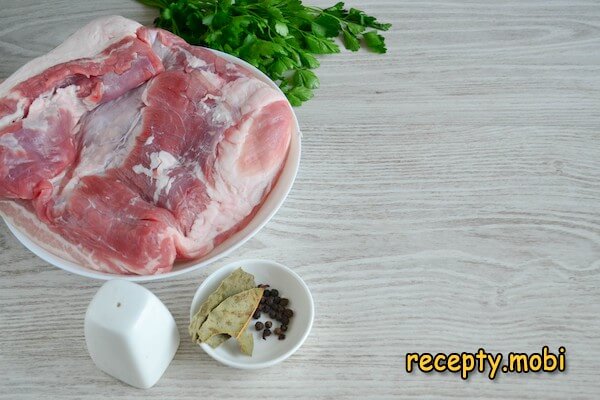
Prepare all the ingredients. I prefer to use fatty pork – mine is brisket. Over the 6-hour cook in the slow cooker the fat renders out, the meat doesn't scorch and stays juicy and tender.
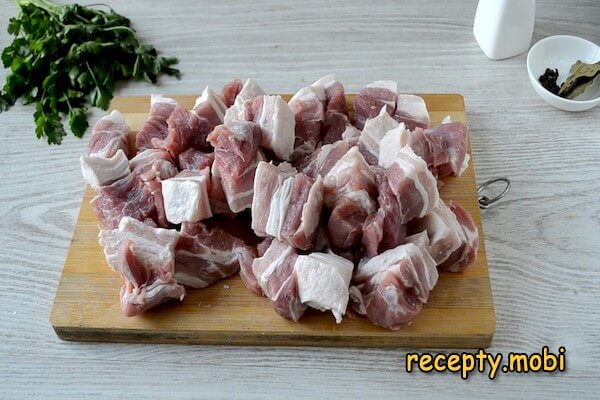
Cut the meat into medium pieces. If the meat is fatty, like mine, cut it into larger chunks so that the pieces don't turn out too small once the fat has rendered out. If the meat is lean, you can cut it smaller.
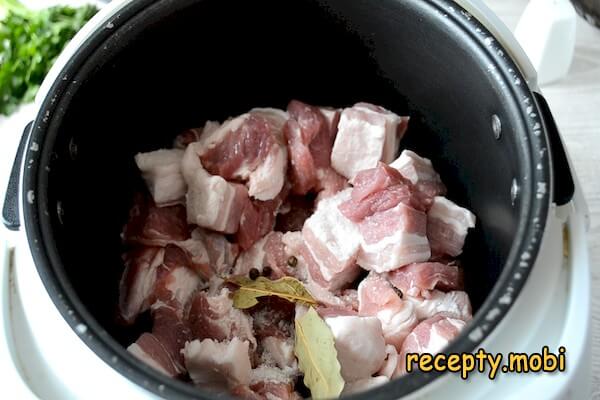
Put the meat in the slow-cooker bowl and add the salt, a few bay leaves and black peppercorns.
Set the "Stew" program for 6 hours, close the lid, and let the slow cooker do its work.
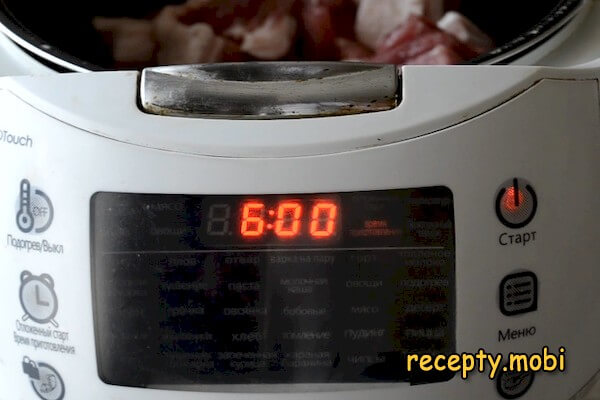
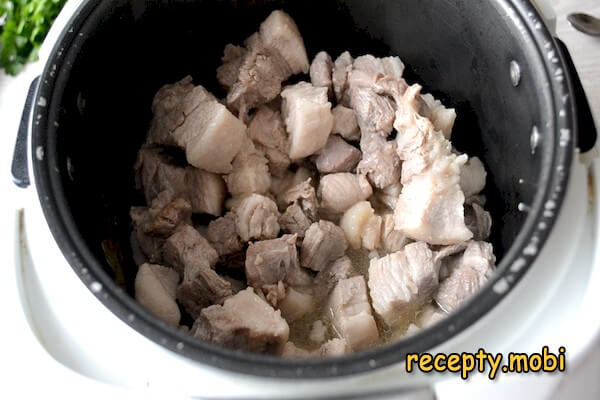
After just 30 minutes a fair amount of juice and fat has rendered from the meat – about 200 ml of liquid in the bottom of the slow cooker. More fat will keep rendering out, so the meat stews rather than fries.
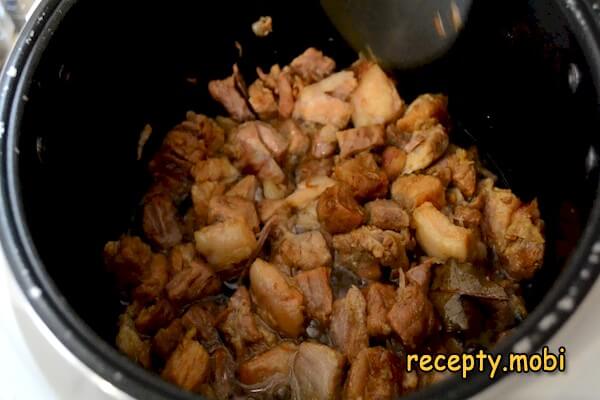
After 6 hours the volume of meat has shrunk noticeably, there is almost no fat left, and the meat itself has become very tender and falls apart at the slightest pressure.
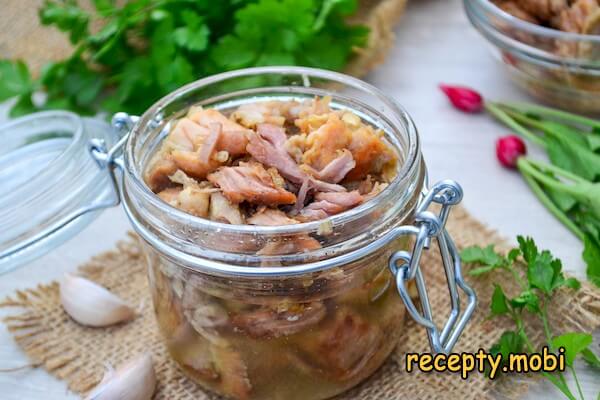
Sterilise the jars by whatever method is convenient, spoon the stew into them, then seal with metal lids. Pour the fat left in the bottom into the jars as well. I ended up with two 350 ml jars.
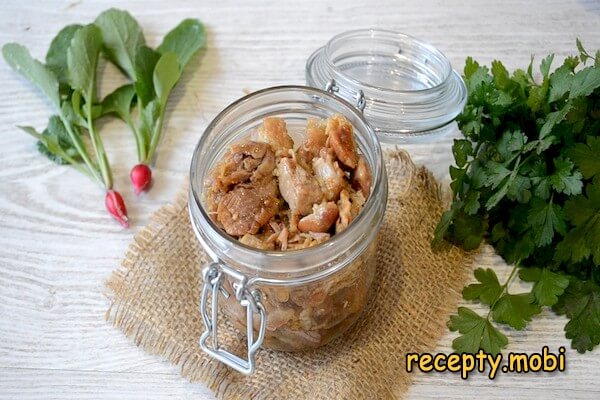
I store the jars in a cool, dark place. This stew is handy for a quick snack at home or out in the open, and it can also serve as the base for a variety of dishes.


Tips
- 1
Fatty brisket is the secret to juiciness. Lean pork would dry out over 6 hours. The fat renders out naturally and the stew comes out just right.
- 2
Six hours is the minimum for the meat to become tender. Any less and the meat will be tough. You can also set it for 8–10 hours overnight – it will be even more tender.
- 3
The fat in the jars acts as a "protective seal". The set fat on top of the meat preserves the product and keeps it from oxidising. Don't drain it off.
- 4
Small 350 ml jars are a convenient size. Once opened, a jar is eaten in 2–3 days. Litre jars risk the contents spoiling. The same principle applies to other kinds of homemade meat preserves.
Video

FAQ
Which pork should I choose? +
The ideal is brisket with layers of fat, as used here. Alternatives are neck (juicy), shoulder (versatile) and ham (leaner, but drier). Tenderloin and loin are not suitable – they dry out over 6 hours. Fresh pork is firm, pink-red in colour and has no grey film. A fat content of about 25–35% is best for stew. Defrost frozen meat in the fridge for 24 hours. Pieces of 3–4 cm work well. Remove any large sinews, as they will be unpleasant to come across in the finished product.
Can I substitute the pork? +
Alternatives are beef (leaner, cook for 7–8 hours), chicken (home-raised, overnight), turkey (lean), duck (a more luxurious option) and rabbit (tender). A 50/50 mix of pork and beef makes a "classic" stew. Don't use lamb – it has a strong flavour and aroma when cooked low and slow for a long time. For a "chicken stew", use the skin and the fat from it. For a "lean" version, use turkey breast plus about 50 g of pork fat. As a rule of thumb for the salt, use 1 tsp per 1 kg of meat; pepper and bay leaf are to taste.
How long does the stew keep? +
In the fridge, 3-4 days; in the freezer, up to 3 months. A multicooker does not heat above 100 °C, so it cannot make shelf-stable canned meat: long-keeping canned meat is only made in a pressure canner (autoclave). Do not rely on a bulging lid as a warning sign, because botulinum toxin changes neither the taste nor the colour or smell. Once opened, eat within 2 days. Don't leave it at room temperature for longer than 2 hours after opening. Label the jars with the date they were sealed – it makes them easy to keep track of. If a lid bulges, don't open it – throw it away, as it means bacteria. It is best used within the first 3–4 months, when the flavour is brightest. There is no need to freeze it, as the stew keeps for a long time on its own. For long trips, glass jars with a secure lid are convenient.
What should I serve the stew with? +
The classic options: with boiled or fried potatoes (simple and filling), with pasta or buckwheat for a quick supper, or on sandwiches with dark rye bread. Serve it with boiled rice, or stir it into soups and borscht as a base for the broth. It is good on a picnic with baked potatoes and spring onions, or alongside a cup of meat broth. With sauerkraut and pickled cucumbers it makes a winter meal. It is an all-purpose meat reserve for any occasion.
- Comment
or post as a guest
Be the first to comment.